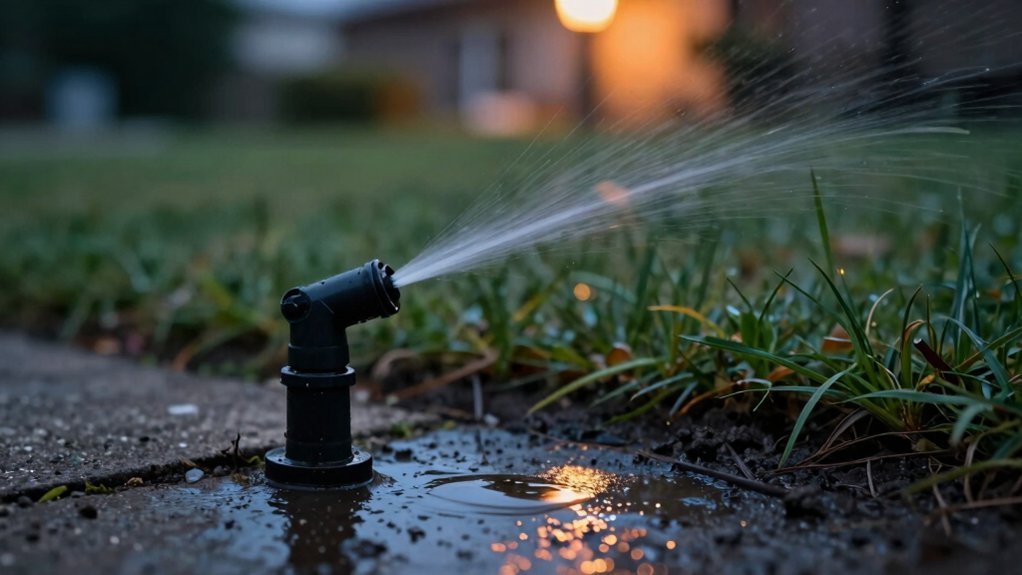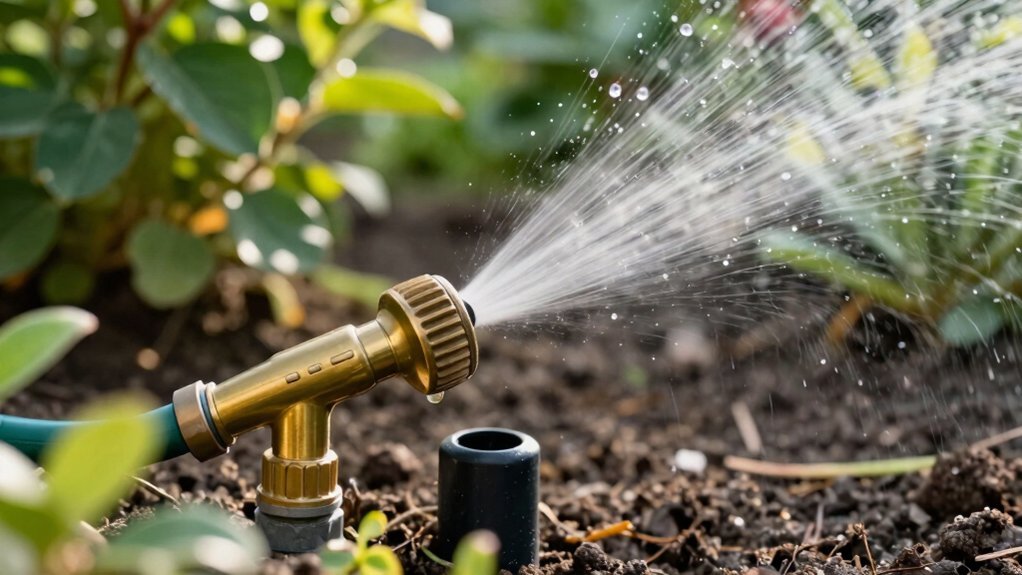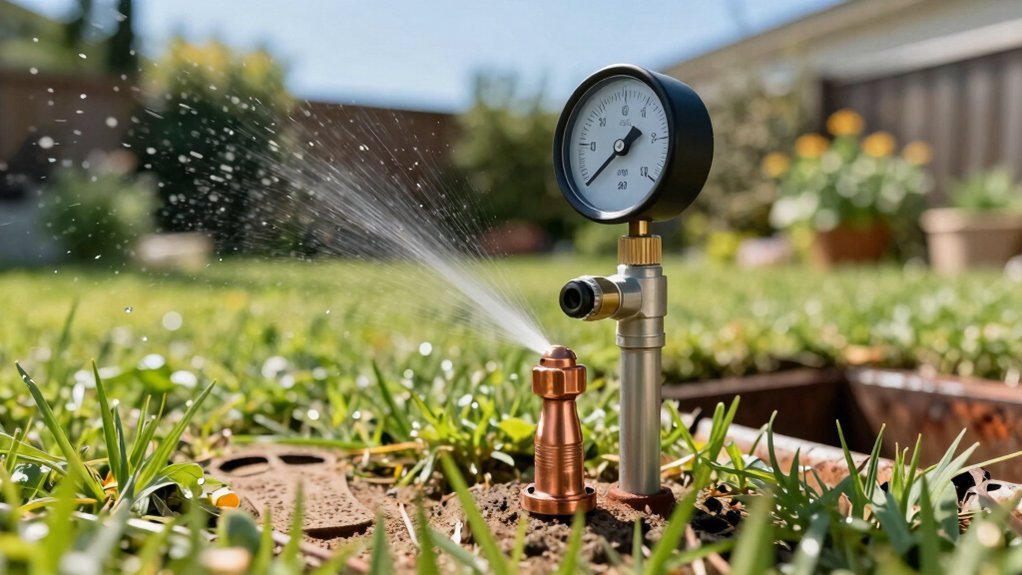
You turn on the controller, water pressure pushes through a pop‑up stem, and a spring‑loaded valve lifts the head so the nozzle sprays. Full‑circle heads rotate 360°, covering 8‑15 ft; half‑circle heads emit a 180° fan; quarter‑circle heads focus a 90° strip. Oscillating and heart‑shaped cam heads sweep a fan pattern, with adjustable tabs for width and flow. Proper spacing, pressure regulators, and backflow preventers keep the system efficient and safe, and the next sections will show you how to fine‑tune each component.
Which Sprinkler Type Is Best for Your Lawn?
Which sprinkler type suits your lawn depends on size, shape, and soil. For large yards over 4,000 sq ft., impact or traveling sprinklers deliver high sprinkler rotation speed and broad arcs, while rotor models excel in wind resistance and low evaporation. Medium lawns (1,000‑4,000 sq ft.) benefit from rotary or oscillating heads; their adjustable arcs match rectangular or square layouts, and their moderate rotation speed supports clay or loam with a watering schedule adjustment that favors deep, infrequent cycles. Small lawns under 1,000 sq ft. work best with stationary or bubbler heads; these provide precise spot irrigation, minimal runoff, and can be tuned for sandy soils with frequent, quick bursts. Choose the system that aligns with your terrain and soil to optimize efficiency. Proper soil moisture monitoring helps fine‑tune watering frequency and prevent overwatering. Designing zones based on plant water needs ensures each area receives the appropriate amount of water. Selecting the right system also depends on local climate, as regions with high evapotranspiration benefit from sprinklers with adjustable flow rates to reduce water waste.
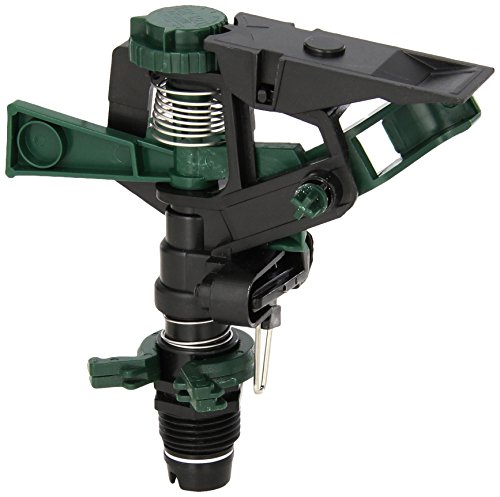
LARGE-AREA COVERAGE: Sprays up to 90 ft. in diameter, covering 6,360 sq. ft. when set to a full circle.

LARGE-AREA COVERAGE: Sprays up to 85 ft. in diameter, covering 5,670 sq. ft. when set to a full circle.
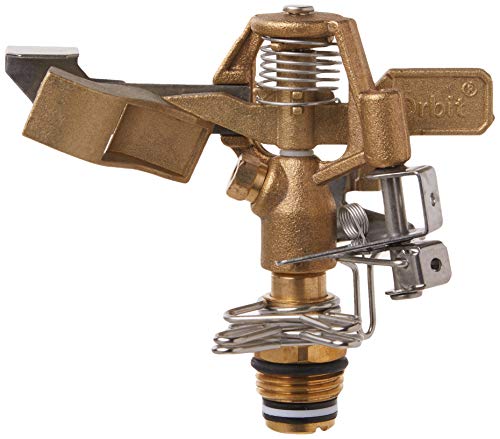
LARGE-AREA COVERAGE: Sprays up to 90 ft. in diameter, covering 6,360 sq. ft. when set to a full circle.
How Pop‑Up Sprinkler Heads Operate With Water Pressure
Choosing the right sprinkler type sets the stage for understanding how pop‑up heads use water pressure to rise, spray, and retract. In pop up sprinkler mechanics, pressurized water hits the inlet, splitting force between the stem base and the turbine chamber. When pressure reaches the ideal 15‑70 PSI range—about 30 PSI for most models—the stem lifts, filling the outer body and priming the nozzle. The spring‑loaded valve beneath the turbine chamber manages water pressure regulation, pushing against the spring if pressure exceeds design limits. As the stem fully extends, water exits the nozzle at higher velocity, creating a circular spray pattern without rotation. When pressure subsides, the spring retracts the stem, resetting the head for the next cycle. The rotating stem distributes water evenly across the arc. Proper spacing of heads ensures uniform coverage and prevents over‑watering sprinkler layout. The main line delivers water from the source to each head, maintaining consistent flow throughout the system. Zone sizing determines how many heads can be placed in a zone without exceeding flow capacity.
How Oscillating Sprinklers and Heart‑Shaped Cam Sprinklers Shape Spray Patterns
A typical oscillating sprinkler converts water pressure into a slow, sweeping motion that produces a fan‑shaped spray, while a heart‑shaped cam synchronizes the spray arm’s back‑and‑forth travel to deliver uniform coverage. Water strikes the turbine blades, spins a high‑ratio gear train (≈2088:1), and drives a hollow aluminum arm with multiple nozzles. The cam’s heart shape balances flow to the ends and center, preventing the excess at the extremes seen with a crankshaft. Adjustment tabs on the base set the sweep width, and a fine‑tuning knob modulates flow without shutting off the line. Integrating pressure regulators guarantees the turbine receives a stable pressure range, while backflow preventers protect the household supply from reverse flow. This combination yields consistent, rectangular fan patterns for even lawn hydration. The directional control mechanism uses sliding tabs with a rotary detent to precisely set the oscillation travel. Proper placement of oscillating sprinklers can reduce runoff and promote healthier root development. Using a larger‑diameter hose can increase the sprinkler’s gallons per minute delivery, especially when water pressure is sufficient. Selecting the correct sprinkler spacing based on spray radius and plant water needs maximizes coverage while conserving water.
How Full‑Circle, Half‑Circle & Quarter‑Circle Heads Cover Your Lawn
When you install a full‑circle, half‑circle, or quarter‑circle sprinkler head, each design dictates a specific spray geometry that determines how the water reaches your lawn. Full‑circle heads rotate 360°, delivering a uniform radius of 8‑15 ft for pop‑ups or 25‑50 ft for rotors; you must pair them with proper nozzle selection to match PSI and achieve consistent throw. Half‑circle heads emit a 180° semicircle, concentrating bulk flow near the head and tapering outward; adjust the arc from 40‑180° to fit edges and prevent sidewalk wetting. Quarter‑circle heads cover 90° corners; their adjustable nozzles (40‑90°) create narrow strips 4‑5 ft wide, ideal for L‑shaped lawns. Spray pattern customization across all three types guarantees overlap and uniform distribution while respecting head‑to‑head spacing guidelines. 6 zones are typically required for a 100 × 100 ft yard to ensure adequate coverage and pressure balance. Selecting the right diesel nozzle ensures the head operates within its pressure compatibility range for optimal water efficiency. Proper nozzle sizing also helps prevent leak‑free operation by maintaining the correct flow rate for each head type. Understanding soil infiltration rates can further fine‑tune watering schedules for water conservation.

PRECISION ARC CONTROL FROM 0° TO 360°: Get pinpoint accuracy for any zone shape or edge. Whether you're watering a narrow walkway or full lawn circle, fine-tuned arc settings ensure no water is wasted.

ADJUSTABLE SPRAY PATTERN FROM 0–360°: Quickly set the arc to match any area — from narrow strips to full circles. No tools needed, just twist and go.

TOOL-FREE INSTALLATION AND BROAD COMPATIBILITY: Fits most pop up sprinkler bodies for fast no-tool replacement delivering instant upgrades to your irrigation system.
How to Space Sprinkler Heads for Overlap and Uniform Water Distribution
Uniform coverage starts with head‑to‑head spacing that forces adjacent spray patterns to overlap, ensuring every square foot receives the same amount of water. You’ll calculate overlap measurements by halving the throw diameter for square grids, or using 60 % of throw for triangular layouts, then place heads at those intervals. Follow manufacturer spacing criteria to keep distance between heads within the ideal range for water flow optimization. In rectangular lawns, start at the corners and add heads along the long sides, using the geometrical shape method to maintain consistent overlap. For narrow strips, anchor strings at 10‑foot increments and position strip‑pattern nozzles accordingly. Adjust staggered rows like brickwork to reduce head count while preserving uniform distribution across irregular zones. Head‑to‑head coverage ensures an even precipitation rate across the entire zone. Proper flow rate calculations help balance pressure and avoid overspray. Properly assess soil infiltration to fine‑tune irrigation timing and prevent runoff. Overlapping spray patterns also compensate for variations in soil type across the lawn.

Multi-Angle Sprinkling Irrigation System:As a premium piece of lawn & garden watering equipment, this sprinkler compatible with drip irrigation features 3 interchangeable refraction angles (90°/180°/360°). It produces fine and uniform mist droplets,which not only protect plant roots but also save water, making it suitable for gardens, vegetable plots, greenhouses and other scenarios

ULTIMATE FLEXIBILITY FOR ANY GARDEN SHAPE – Place sprinklers exactly where you need them- Perfect for lawns, flower beds, raised gardens, and more.

For installation and maintenance of spray head sprinklers, nozzles, and risers
How Zone Timers Activate One Sprinkler Zone at a Time
Because the controller can only open one valve at a time, it cycles through the programmed zones sequentially, activating each sprinkler head only after the previous zone’s run time has elapsed. You set a single start time for the program; the controller then initiates zone 1, holds it open for its configured run time, and moves to zone 2, and so on. This strict cycle scheduling prevents pressure spikes and guarantees balanced flow management across the system. Each zone’s duration is entered via the timer dial or buttons, with lawn zones typically at 10‑20 minutes and spray zones up to 30 minutes. Zero‑minute settings let you skip zones, and manual mode lets you test a single zone instantly. The controller stops automatically after the final zone completes. The timer will automatically save the settings without needing a manual save. Proper pressure regulation ensures that each zone receives the correct water flow for uniform coverage. Understanding the solenoid operation helps diagnose why a valve may fail to open when commanded. The low‑voltage power supply that drives the valves often includes a battery backup to maintain operation during power outages.

Intelligent Irrigation Control: The Orbit Smart Sprinkler Controller manages watering with a powerful smart sprinkler that supports a completely automatic watering system

WATER YOUR YARD WITH EASE - Our Easy Set Logic sprinkler timer is the perfect choice for your yard, controlling up to 12 zones/stations for efficient irrigation.

Controls Up to 4 Zones: For 24 VAC sprinkler and drip systems; 300mA transformer powers one valve solenoid at a time
How Pressure Regulators and Backflow Preventers Keep Your Sprinkler System Safe
A pressure regulator sits between the municipal supply and your sprinklers, throttling excess inlet pressure to a steady outlet range that protects fittings, emitters, and the overall system. It uses a diaphragm and spring that compress when inlet PSI rises, forcing the T‑stem toward a fixed seat; the opening adjusts proportionally, keeping outlet pressure within 30‑45 psi for uniform droplet size and preventing fogging or overspray. This modulation also provides pressure shock protection, guarding against sudden surges that could cause leaks or blowouts, and contributes to overheating prevention by avoiding excessive flow rates. The regulator should be installed with the arrow pointing in the direction of flow to ensure proper directional flow and prevent back‑pressure issues. A backflow preventer installed downstream of the check valve blocks contaminated irrigation water from re‑entering your potable line. It maintains system pressure below component ratings, often paired with a pressure‑relief valve set 10 psi above working pressure, and can absorb surges above 175 psi via an auxiliary air reservoir, ensuring both safety and compliance. Local codes often require a double‑check valve for residential irrigation to meet health standards.
How to Choose the Right Sprinkler Head for Different Plants and Soils
Which sprinkler head you select hinges on the plant type and soil’s, because matching flow rate, coverage pattern, and pressure to those variables maximizes water use while preventing runoff and stress. For shallow‑rooted annuals and delicate flower beds, micro‑sprayers or rotors deliver fine mist with low precipitation, supporting ideal watering durations and efficient irrigation scheduling. Shrubs and medium‑depth roots benefit from spray heads that provide uniform circular or quarter‑circle patterns at 20‑30 PSI, reducing waste. Trees and deep‑rooted perennials need rotary or bubbler heads that emit slow streams or low‑pressure jets, allowing deeper soil infiltration on slow‑draining soils. Drip irrigation excels for vegetable gardens and arid zones, delivering precise low‑flow water directly to roots, conserving water and simplifying scheduling. Choose the head that aligns with plant water demand and soil infiltration capacity to achieve consistent, stress‑free growth. Understanding your region’s climate zone helps fine‑tune irrigation schedules for optimal water efficiency.

Versatile 1/2 Inch Irrigation Head: Our Automatic Rotating Sprinkler comes with a versatile 1/2 inch irrigation head, suitable for a wide range of watering and irrigation applications.

【Three Angles Of Refractive Spray】 Our irrigation sprinkler heads contain three misting nozzles with different refraction angles, namely 90 degrees, 180 degrees, and 360 degrees. When you need them to water your plants, you can choose the appropriate micro sprayer irrigation, drip irrigation spray emitters can save you precious time and water resources.
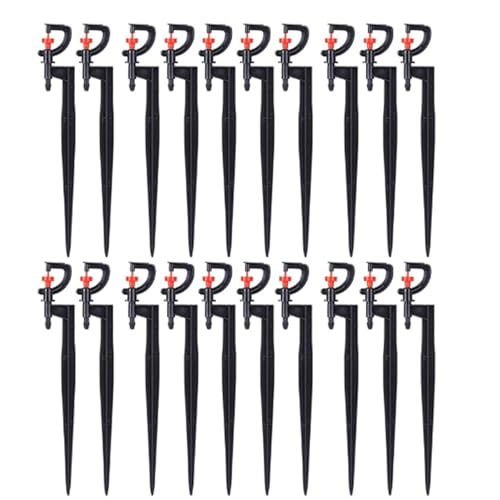
Versatile Use: Simply connect to 4/7mm tubing for instant setup. Ideal for agriculture, gardens, stadiums, industrial dust control, and even fountain projects.
How to Fix Leaks, Low Coverage, and Mis‑aligned Heads?
Ever notice a sudden drip, a patchy spray, or a head that’s pointing the wrong way? First, shut off the zone and excavate 5‑6 inches around the head. Unscrew the head counter‑clockwise, clean threads, and wrap Teflon tape before reinstalling a matching replacement or adjusting height. Turn water on slowly, flush the line, and check for leaks; tighten caps or replace damaged nozzle seals as needed. For low coverage, remove the nozzle, flush clogged screens, and replace the head if internal parts are damaged; inspect nearby pipes for cracks that could cause pressure loss. To realign a mis‑pointed head, pack sand under the elbow, level the top flush with ground, and reset orientation. Throughout, keep a bucket handy, wear gloves, and follow fixing sprinkler timing guidelines while replacing sprinkler diaphragms when internal wear appears. Valves control water flow and pressure.