You need sidewall sprinklers within two feet of the pit floor unless the shaft is entirely non‑combustible and the elevator uses no combustible hydraulic fluid. If the shaft meets those non‑combustible criteria, you can omit the pit sprinklers, but you must still install upright or pendent heads at the shaft top unless the car enclosure complies with ASME A17.1 and the belt is FT‑1 rated. The rules differ for hydraulic versus traction elevators, and fire‑service access elevators are exempt. Continue for detailed code nuances.
Pit Sprinkler Requirement: Exact Conditions and Rationale
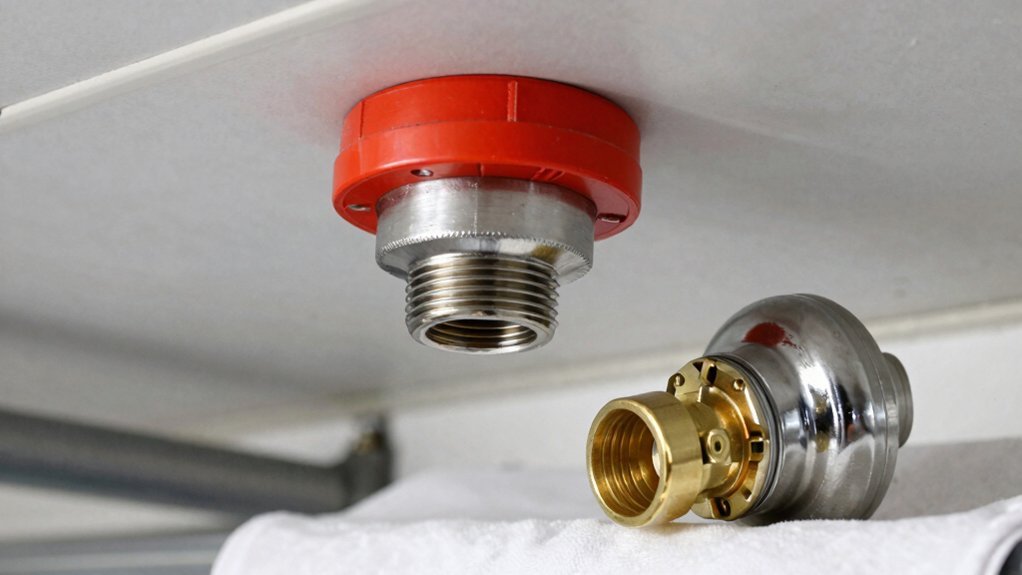
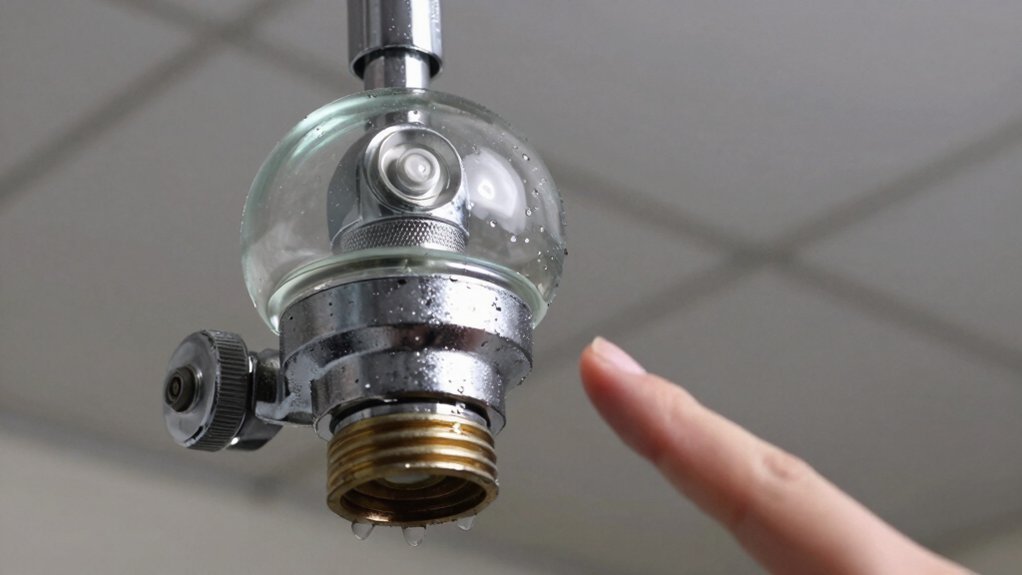
Because fire can travel up an elevator hoistway like a chimney, NFPA 13 mandates a sidewall sprinkler in the pit whenever the shaft isn’t fully non‑combustible and the elevator uses combustible hydraulic fluid. You must install the sprinkler no more than 2 ft (600 mm) above the pit floor, using ordinary or intermediate temperature‑rated heads, as specified in NFPA 13 8.15.5.1 and 4‑13.5.1. The requirement applies unless concealed hoistway conditions use the whole shaft non‑combustible and no hydraulic fluid is present, in which case the pit sprinkler may be omitted. Branch lines may serve only one floor, and glass‑bulb heads must be commercial‑type (orange, red, yellow, or green). Suspended ceiling sprinklers are not a substitute for the required sidewall unit. Red pipe markings identify fire‑suppression components throughout the building. Properly maintained fire extinguishers remain essential for spot fire suppression in areas where sprinklers may not reach. Always verify the sprinkler head flow before installation to ensure compliance with system capacity.
Top‑of‑Shaft Sprinkler Exceptions for Elevator Pits
While the pit sidewall sprinkler protects the lower shaft, the top of the hoistway may be exempt when the shaft construction is non‑combustible or limited‑combustible, and the elevator’s car enclosure meets ASME A17.1 requirements. In that case, hoistway combustibility determination drives the decision: non‑combustible or limited‑combustible classifications eliminate the need for a top‑of‑shaft head. You must verify that the car enclosure material complies with ASME A13.1 and that belt belts are FT‑1 rated per UL 62; otherwise, a top sprinkler is required. Installation configuration importance cannot be overstated—branch lines must serve only one floor, heat sensors must sit within 24 inches of the head, and conduit protection prevents premature activation. This approach satisfies NFPA 13 and IBC provisions while avoiding unnecessary hardware. Ceiling height also influences the choice between upright and pendent sprinkler types for optimal coverage. Maintaining a minimum 12‑inch clearance between any overhead fixture and the sprinkler head helps ensure unobstructed water spray and compliance with fire safety codes. Proper fire compartmentalization further reduces the spread of smoke and heat throughout the building.
Elevator Type Impact on Sprinkler Rules (Hydraulic vs. Traction)
Two main elevator drive types dictate distinct sprinkler requirements: hydraulic systems demand sidewall sprinklers within 2 ft of the pit floor and full coverage of machine rooms, machinery spaces, and control rooms per NFPA 13. If you use non‑combustible elevator construction, some jurisdictions allow pit sprinkler omission, but you still must protect pressurized fluid zones. Traction elevators, after the post 6‑4‑2019 code revision, are exempt from machine‑room and hoistway sprinklers when the hoistway is dedicated to equipment and uses ordinary or intermediate‑temperature rating systems. However, traction units lacking FT‑1‑rated suspension need top‑and‑pit sprinklers. Both types may require post 6‑4‑2019 sprinkler retrofits if existing fire‑rating documentation is absent.
Machine‑Room Sprinkler Requirements for Elevator Systems: Rules, Exceptions, and Tips
What you need to know is that machine‑room sprinkler requirements differ sharply between hydraulic and traction elevators. Hydraulic rooms always need sidewall spray sprinklers, installed no more than 2 ft above the pit floor, because combustible fluids demand ordinary or intermediate temperature ratings. Traction rooms may omit sprinklers if the space is dedicated to elevator equipment, fire‑rated walls separate it, and you follow smoke detection guidelines. In those cases, pre‑action systems trigger power disconnect sequences before any discharge, and sprinklers on hoistway tops must be upright or pendent, feeding only one floor unless they run to the roof. Fire Service Access Elevator rooms are exempt per IBC 3007.2.1. Verify all installations against NFPA 13 and local code officials. Sprinklers operate independently of smoke detectors and serve a different fire‑protection role. Building size thresholds also influence when a sprinkler system is required under the International Building Code and NFPA 13. The wet‑pipe system delivers rapid water discharge as soon as a heat‑sensitive bulb activates.
Elevator‑Specific Code Guidance: NFPA 13, ASME A17.1, and IBC
Machine‑room sprinkler rules set the stage, but the real code interplay emerges when you align NFPA 13, ASME A17.1, and the IBC for elevator shafts. NFPA 13 mandates sidewall sprinklers no more than two feet above the pit floor unless the shaft is enclosed, non‑combustible, and free of hydraulic fluid; hydraulic elevators usually need pit sprinklers, while traction units may qualify for exemption if the hoistway material meets ASME A17.1. At the shaft top, upright or pendent sprinklers are required unless the car enclosure satisfies ASME A17.1 and the belt is FT‑1 rated. IBC Chapter 9 triggers NFPA 13 requirements only when the building is fully sprinklered; fire‑service access elevators are exempt per IBC 903.3.1.1.1. Guarantee your design respects elevator power requirements and elevator noise regulation while adhering to these intersecting standards. Legal mandates require that all new residential high‑rise constructions include sprinkler systems throughout the building. The water supply in automatic sprinkler systems provides the pressure needed for rapid fire suppression. Early detection and rapid water deployment significantly reduce casualty rates in elevator shaft fires.