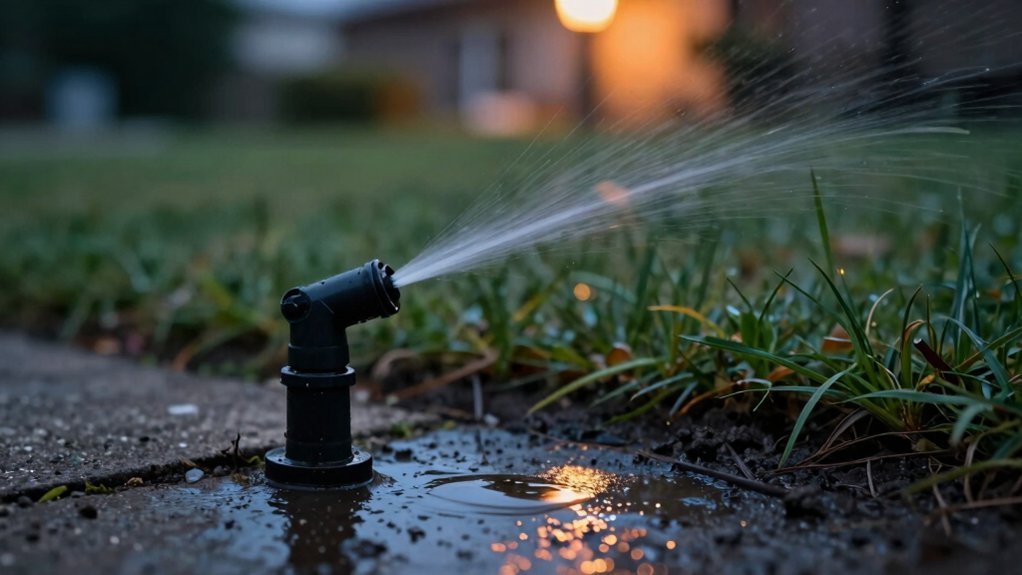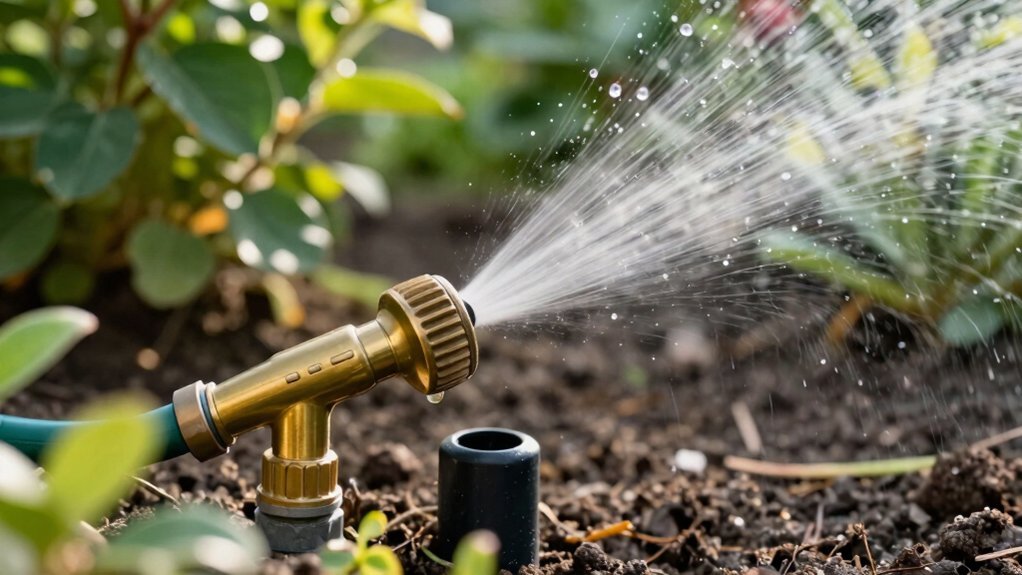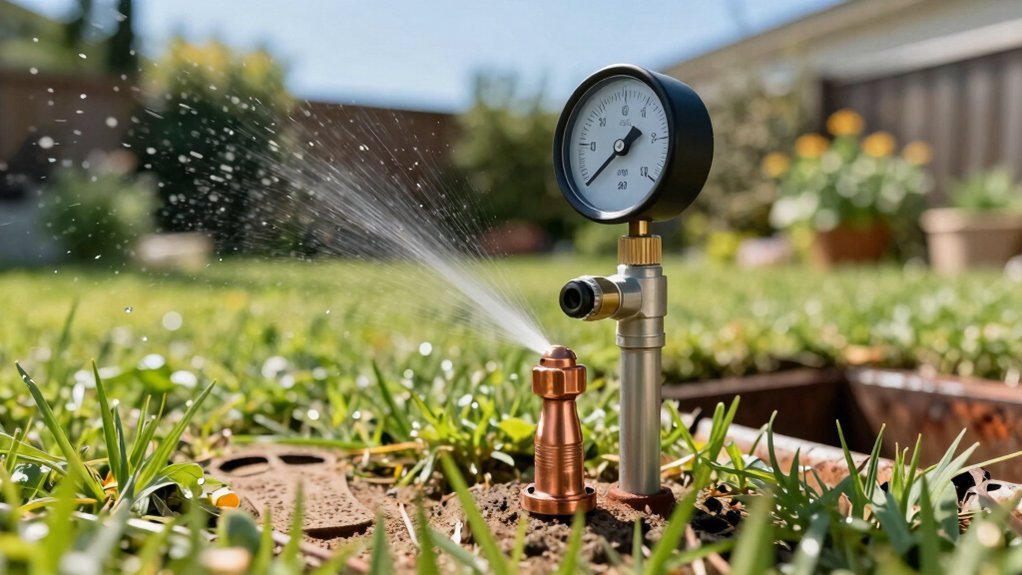
You can turn a backyard sprinkler into a low‑flow playground by setting up relay‑race lanes, tag zones, and timed spray games that keep kids active while cutting water use up to 30 percent. Use a programmable timer at 15‑30 PSI and 60‑degree heads to avoid overlap, schedule play early at 5 a.m. or before 10 a.m. to beat evaporation, and enforce slip‑resistant shoes and adult supervision for safety. Follow a quick‑setup guide with a Rain Bird 32 ETI kit and low‑flow heads, and you’ll uncover more tricks for efficient, fun watering.
Create Moving Sprinkler Games for Kids
You’ll set up a relay race that turns the sprinkler into a watery obstacle course, each child sprinting with a handful of toys while the spray sizzles around them. You observe how the water‑efficient sprinkler games demand precise timing: only one racer carries a pile of five to seven items, and only one may cross the yard at a time. After dropping the load at the far end, the child rushes back to tag the next teammate, creating a chain of speed, coordination, and splash. You note the water‑conscious sprinkler setup limits runoff by confining the spray to a narrow lane, forcing participants to stay within the damp corridor. This investigative lens reveals how a simple yard fixture transforms into a structured, engaging challenge that balances fun with responsible water use. Proper spacing and layout are essential to uniform coverage and minimize waste. Adjusting the spray radius based on soil type ensures optimal water penetration and reduces excess runoff. Understanding sprinkler head spacing helps achieve efficient water distribution across the play area.
Turn Classic Tag Into a Water‑Smart Sprinkler Game
When the sprinkler whirs to life, classic tag instantly gains a third, unpredictable opponent: a stream of water you must dodge while chasing or evading teammates. You notice how sprinkler tag dynamics reshape spatial awareness; each sprint now includes timing a spray arc and predicting its ripple. By crimping the hose, you trigger sprinkler freeze challenges: a sudden shutoff forces everyone to halt, and any movement results in elimination. You observe that late‑day play curbs evaporation, while positioning the sprinkler near trees doubles as irrigation. Rotating the nozzle each round spreads water evenly, preventing lawn damage. The game’s investigative edge lies in measuring how quickly players adapt, revealing the balance between fun, fitness, and water‑smart design. The sensor circuit uses a modified 555 timer to trigger a buzzer when water contacts the sensor. Understanding timer fundamentals helps you fine‑tune the water‑on/off intervals for optimal conservation. Sprinkler placement can be optimized by using Irrigation radius calculations to cover the most crops with the fewest devices. The nozzle’s design follows Bernoulli’s principle, converting pressure into speed to create a consistent spray pattern.
Build Relay Races That Save Water
A well‑designed relay can turn a simple water‑saving challenge into a competitive, data‑rich experiment, letting you measure how different hand‑off techniques affect loss while keeping the fun factor high. You set up bucket water challenges by lining participants in single file with a sand bucket each and an empty 5‑gallon bucket at the end. The first player pours water over his head backward into the next bucket, forcing a team hand off that tests steadiness and speed. The last player dumps the remaining water into the final bucket; the team with the most retained water wins. Alternate formats—sponge relays, cup passes, water‑flow passes—add distance, obstacles, or blind pours, each revealing how subtle changes in technique cut spillage and boost conservation. Properly grouping plants by soil type can further enhance water efficiency. Understanding sprinkler zoning helps you allocate water precisely to each relay segment. Zone capacity limits dictate how many heads can share a single water line without losing pressure.
Safety & Water‑Smart Rules for Every Game
Even with the most exciting sprinkler games, safety and water‑smart rules must dominate every play session. You’ll notice that supervised play areas require an adult who stays alert, eyes locked on children, especially the 2‑4‑year‑olds whose balance still wobbles. Clear flat ground, strip rocks, sticks, and furniture, and avoid slick concrete; grass must be swept clean to prevent trips. Set the pressure low, raise the spray to belly‑button height, and keep flow minimal to honor water conservation practices while avoiding harsh jets. Slip‑resistant water shoes or anti‑slip pads protect feet on any surface. Schedule water breaks every 20‑30 minutes, reapply sunscreen, and ban drinking from the sprinkler to keep health risks at bay. Regularly test the water for bacterial contamination to ensure it’s safe for skin contact. Remember that potable water may still become contaminated if the system’s pipes or fittings degrade over time. Checking the local water source quality can reveal if the irrigation system introduces additional pollutants.
DIY Low‑Flow Sprinkler Set‑Ups in Minutes
Keeping safety and water‑smart habits in mind, you can set up a low‑flow sprinkler system in just a few minutes. First, sketch a piping plan on graph paper, noting obstacles, slope, and tree locations. Divide the yard into a single zone so all heads fire together, then position heads for even coverage, measuring distances carefully. Gather a Rain Bird 32 ETI kit, extra hose, fittings, a 12‑inch riser, and a shrub spray nozzle; add 1‑inch PVC for the main line and 15‑inch flex pipe with male/female adapters. Excavate 13 inches at each head spot, glue PVC with primer, attach flex pipe using plumber’s tape, and connect to the faucet counter‑clockwise. Replace old heads with MP Rotator low‑flow heads—cities often reimburse this upgrade. Turn on water, tweak radius and width, and test zones. Sprinkle in sprinkler maintenance tips and low cost sprinkler upgrades to keep the system efficient and fun. Low‑flow heads can cut water use by about 30 %. Fire safety codes still require portable extinguishers even when sprinklers are installed. Proper soil type assessment helps you choose the right head for optimal water distribution. Selecting the right low‑flow sprinkler heads can dramatically improve water conservation across diverse garden zones.
Select Low‑Flow Sprinklers & Timers for Eco Sprinkler Games
When you immerse yourself into eco‑sprinkler games, picking the right low‑flow heads and smart timers is the key to turning a simple backyard into a water‑wise playground. You start by comparing budget sprinkler models: the $16 Hydro Swirl, the $17 Chuchik, and the Cadayon option all deliver under‑2 GPM rates, yet each differs in spray pattern and coverage. Next, you map sprinkler placement planning, aligning 1‑3‑inch micro sprinklers over container gardens and 35‑foot wobblers across open lawns. A 1/2‑inch pipe connector lets you link the Orbit low‑volume pack, whose 0.5‑8 GPH knob fine‑tunes flow for delicate plants. Pair these heads with a programmable timer that cycles at 15‑30 PSI, ensuring uniform coverage while slashing waste. The result is a playful, data‑driven layout that conserves water without sacrificing fun. Requires 45 PSI for optimal performance. Choosing the right lawn size is essential for efficient irrigation. Incorporating a sprinkler head with a 60‑degree coverage pattern can further reduce overlap and improve water distribution. Understanding the soil moisture retention helps fine‑tune watering intervals for optimal plant health.
Schedule Sprinkler‑Game Sessions to Cut Evaporation
How can you shave off evaporation losses while keeping the game fun? You start with early scheduling, setting the first sprinkler‑game at 5 a.m. when the air is cool and wind is calm. That window cuts midday heat loss by up to 50 % and lets the soil soak the top 6‑8 inches where turf roots live. You then plot a second session before 10 a.m., ensuring the moisture penetrates before temperatures climb. Track the week’s rain and pause the game when precipitation meets the 1‑1.5‑inch weekly quota, preserving soil water retention. For sandy lawns, keep sessions short and frequent; for clay, deepen each watering. By timing play like a scientist, you keep the lawn green and the game lively. Adjust the watering time based on soil type to maximize deep root penetration. Proper burial depth of sprinkler lines, typically 6‑12 inches, helps maintain consistent pressure and protects against frost damage.
Use Sprinkler Games to Water Your Lawn Efficiently
If you turn the lawn into a playground, each game becomes a covert irrigation system that delivers water exactly where it’s needed. You’ll notice backyard irrigation patterns emerging as kids sprint through Red Light, Green Light, forcing water to follow their path and saturate the grass beneath. By positioning a sprinkler between players, you create a moving water corridor that mimics a sprinkler‑only technique watering, and a Relay Racing with toys guarantees multiple passes over each strip, boosting moisture distribution while you conserve sprinkler water. Simon Says commands to jump over the spray generate circular coverage, and shallow pans at the spray’s edge capture runoff for wildlife. These tactics turn play into precise, efficient lawn hydration.
Day‑Night Checklist for Sustainable Play
One or two quick checks each morning, afternoon, and evening can turn a fun sprinkler session into a sustainable habit. You start by inspecting flat ground, clearing obstacles, and verifying equipment for leaks. Then you assess hazard distance and locate shade, noting any portable canopy need. Midday, you set timers and enforce timed sprinkler rest intervals, positioning heads over dry lawn patches to double‑duty irrigate while cooling. You monitor nozzle pressure, avoid peak‑heat evaporation, and watch drainage patterns. In the afternoon, you stay present, hydrate kids, reapply sunscreen, and enforce no‑running rules. Evening, you document usage, inspect for damage, and follow a seasonal rotation schedule that spaces play days. Finally, you shut down the system, store gear, drain water features, and clear the perimeter.