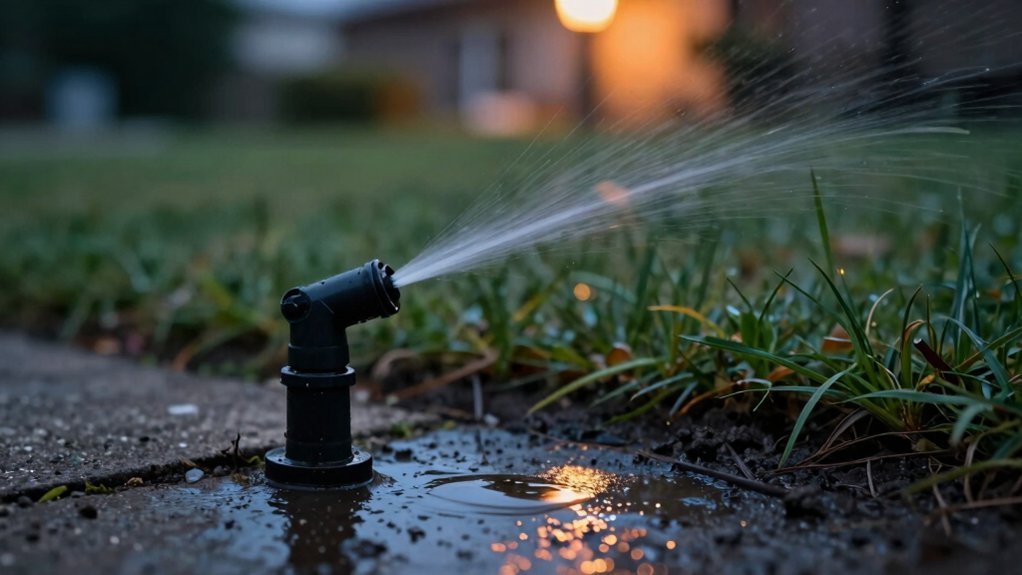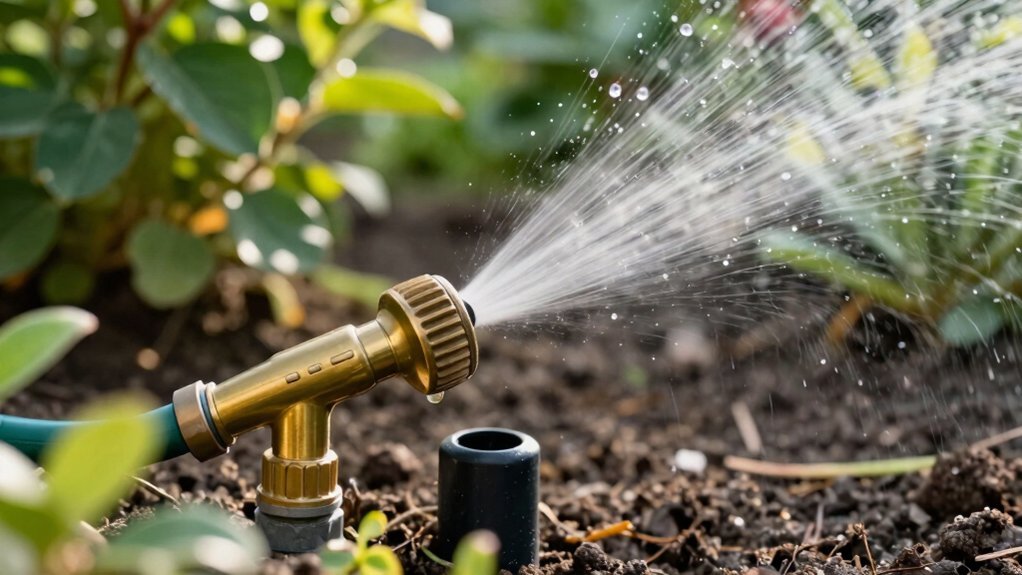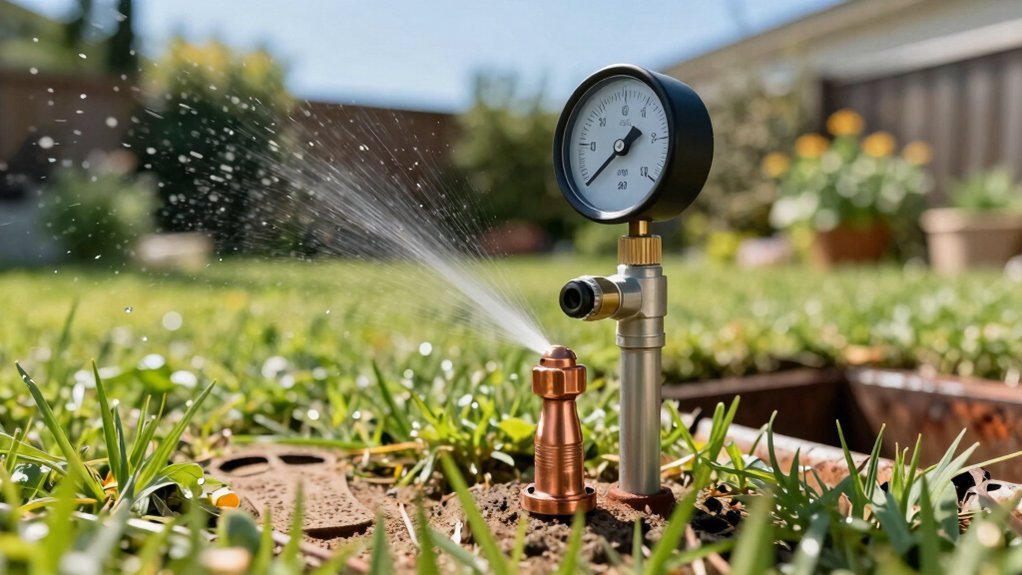
Sprinkler pumps usually last 5‑15 years, but submersible units in clean wells can hit 10‑15 years and high‑grade cast‑iron or stainless‑steel models may stretch to 15‑20 years. Fire‑pump split‑cases survive up to 40 years, while abrasive sand or aggressive water chemistry can halve that life. Daily heavy use shortens motor and bearing life, whereas weekly or seasonal operation lets the same hardware reach the upper end of its range. Proper filtration, chemical treatment, and routine inspections keep the system near its design lifespan, and the next sections show exactly how.
How Long Do Sprinkler Pumps Usually Last?
Sprinkler pumps typically run anywhere from five to fifteen years, depending on type and conditions. You’ll see submersible units in clean wells lasting 10‑15 years, while sandy or silty wells cut that to 5‑7.5 years. Residential sewage pumps average 5‑7 years, and jet or end‑suction centrifugal pumps range 5‑15 years. High‑quality cast‑iron or stainless‑steel models can hit 15‑20 years with proper upkeep. Pump installation considerations—correct alignment, proper suction lift, and adequate grounding—prevent premature stress. Off‑season storage requirements demand draining, drying, and sealing to avoid corrosion and dry‑run damage. Regular inspections and seasonal maintenance extend service life, ensuring your system stays within the 5‑15 year window typical for most irrigation applications. Properly installed wiring should last the lifetime of the system underground wires. Selecting a pump also requires evaluating the system’s head loss to match pressure needs. A well‑designed system must also account for elevation changes to maintain adequate pressure throughout the layout. Understanding flow rate requirements helps ensure the pump can meet the sprinkler’s demand without over‑working.
Which Sprinkler Pump Types Determine Lifespan?
Pump lifespan hinges on type, operating environment, and maintenance cadence. Submersible models last 1‑2 years in ponds, 5‑7 years in residential sewage, and 10‑15 years in deep wells; sand or silt cuts life to 3‑8 years. Their sealed pump cooling design protects the motor but makes repairs harder. Centrifugal pumps—end‑suction, multistage, or jet—range 10‑20+ years when the system configuration impact minimizes abrasives; harsh particles drop life to 5‑10 years. Jet pumps share centrifugal lifespans (5‑15 years) but require priming and are vulnerable to dry‑run burnout. Fire pumps differ: horizontal split‑case units survive 25‑40 years, while vertical inline units top out at 15 years due to shaft stress. Diaphragm pumps average 5‑10 years; booster pumps vary, but self‑priming designs avoid motor damage. Choose the right type, respect pump cooling design, and align system configuration impact to maximize service life. Regular valve inspection can reveal early signs of wear, and using a water quality filter helps prevent abrasive damage. Proper pressure regulation ensures optimal flow and protects both pumps and valves from overload. Accurate sprinkler head flow calculations are essential for matching pump capacity to irrigation demand.

Efficient Sump Pump: Aquastrong sump pump with 1HP powerful motor. Draining water up to 4500GPH Per Hour( 75 gallons per minute) at 5ft. Lift water up to 30ft of vertical height

Specs & Dimensions: 4.33*3.5*4.1 inches; Max flow rate: 800 GPH (3000L/H); Max lift height: up to 10 ft.; Wattage: 50W; Voltage: 110-120V

Oil-Filled Motor: Submersible sump pump motors utilise oil-filled technology to effectively mitigate motor overload issues,extend operational lifespan.Efficiently drains up to 2450 gallons per hour (GPH) and lifts water vertically up to 31 feet, tackling tough water removal jobs.
How Does Water Quality Impact Sprinkler Pump Lifespan?
When water’s chemistry skews toward acidity, alkalinity, or salinity, it triggers corrosion that eats metal components, seals, and casings, cutting performance and prompting leaks. Low‑pH water dissolves impellers and casings; high‑pH water causes p corrosion; salt accelerates rust on cast iron. Simultaneously, sand and silt act like sandpaper, eroding seals and impellers, halving lifespan in abrasive wells. Untreated minerals and organic debris create scale and clog filters, especially when bicarbonate exceeds 250 ppm. These mechanisms compound, forcing premature motor failure and reduced flow. To mitigate, embed water treatment considerations—filtration, pH adjustment, and anti‑scaling agents—into design. Schedule an annual system inspection to detect corrosion, abrasion, and scaling before they cascade into costly downtime. sprinkler water can also contain microbial growth if not properly maintained. Proper installation of a backflow preventer is essential to keep contaminated irrigation water from re-entering the potable supply.
What Can You Do to Mitigate Poor Water‑Quality Effects?
A few simple steps can dramatically reduce the impact of poor water quality on your sprinkler system. First, install a low‑velocity strainer at the intake and schedule monthly inspections of the screen, impeller, and discharge pipe. Clean filters and flush lines twice a year; automate flushing with solenoid valves during runs. Apply chemical treatments such as chlorination after each flush to neutralize residual contaminants. Pair filtration with well‑water test results to target sand, bacteria, and chemicals. Conduct professional inspections annually to verify backflow preventer integrity and replace worn parts with OEM‑grade components. Upgrade to a variable‑frequency drive and smart controller for real‑time pressure monitoring, preventing misting and overspray. Maintain even pressure across zones and use check valves to avoid low‑elevation drainage. This regimen minimizes sediment, corrosion, and chemical damage, extending pump lifespan. Install a 200‑mesh filter to capture finer particles before they reach the pump. Backflow preventers are essential for protecting potable water supplies when connecting hoses to irrigation systems. Anti‑siphon valves also guard against reverse flow, ensuring that contaminated water cannot re‑enter the municipal supply.
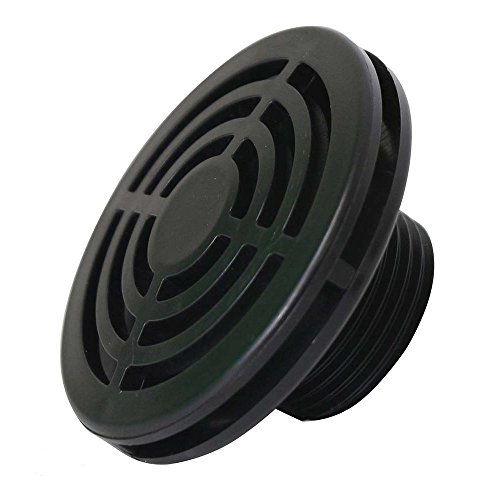
MINIMIZE AQUARIUM DAMAGE: Help eliminate the possibility of finding hidden cracks when filling aquariums with this space saving low profile strainer for fish aquariums that extends past the bulkhead.

Transparent Design:Easy to know when it's time to clean out the container bowl of the strainer, convenient for you to clean out the supply line and wash.
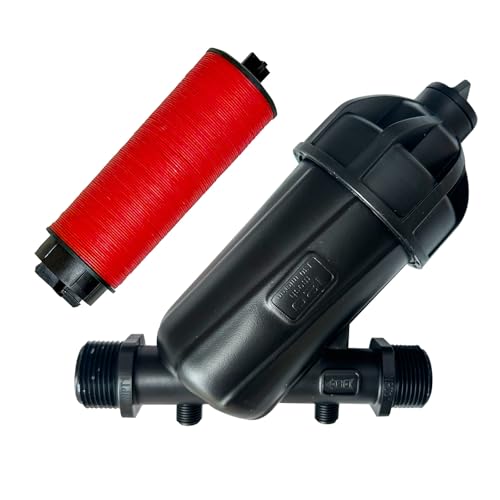
Useful Y-filter controls debris. Deep bed filter, effectively filter impurities, protects and prevents clogging of downstream Drip irrigation components
How Does Usage Frequency Affect Sprinkler Pump Lifespan?
Mitigating poor water quality sets the stage for the next factor: how often you run the system. Your pump’s lifespan scales directly with usage frequency. Daily runs push end‑suction centrifugal pumps to 5‑10 years because each start‑stop cycle adds motor heat buildup and accelerates bearing wear. Weekly operation, however, lets high‑grade cast‑iron pumps reach 15‑20 years; fewer cycles keep pressure fluctuations low and preserve valve seals. Seasonal use further reduces heat cycles, extending submersible units to 10‑15 years and underground piping to 25‑30 years. Conversely, high‑intensity daily irrigation spikes pressure fluctuations, halving expected life to 8‑20 years. Optimize schedule: limit starts, use VSDs, and match demand to pump rating to minimize motor heat buildup and pressure fluctuations. Check the control unit for automatic schedules to avoid unnecessary runs. Installing a rain sensor can automatically pause irrigation during precipitation, preventing unnecessary pump cycles and extending service life.
Why Do Bearings & Seals Matter for Sprinkler Pump Longevity?
Your pump’s bearings and seals are the linchpins of longevity; they keep friction low, retain lubricant, and block contaminants, all of which prevent heat buildup and premature motor wear. In a sprinkler pump, bearing design determines load handling, alignment tolerance, and temperature profile. Choose radial‑load bearings with proper axial clearance to absorb shaft forces without excess contact pressure. Seal material selection dictates contaminant resistance and lubrication retention; silicon‑carbide or PTFE composites survive high‑temperature cycles, while non‑contact isolators provide virtually unlimited life. When seals fail, lubricant leaks, particles infiltrate, and friction spikes, accelerating bearing wear. Conversely, premium bearings coupled with robust seals keep clearance stable, heat low, and motor life extended. Maintain these components to avoid costly failures. Properly sized water pressure ensures the pump operates within its optimal performance range. The nozzle’s pressure‑to‑velocity conversion illustrates how reducing static pressure can increase fluid speed, a principle that also applies to pump flow dynamics.
Which Maintenance Tasks Extend Sprinkler Pump Lifespan?
Keeping bearings and seals in top condition is only half the battle; regular maintenance tasks drive the rest of a sprinkler pump’s longevity. Execute a weekly visual inspection, confirming shaft rotation, fastener tightness, and seal integrity. Perform Routine water quality testing each month; high mineral content triggers filter cleaning and anti‑scale treatment. Apply Proper pump priming procedures before each season: fully evacuate air, fill suction line, and verify prime gauge readings. Rotate the shaft every 6‑8 weeks to redistribute oil and prevent false brinelling. Clean filters and flush lines bi‑annually, removing sediment and debris. Lubricate bearings with manufacturer‑approved oil during seasonal changes. Conduct annual thorough servicing: replace worn parts, calibrate performance, test electrical connections, and verify grounding. Follow these steps to maximize pump lifespan. Check for uneven watering as an early indicator of valve wear. A common cause of leaks is cracked seals that allow water to escape under pressure. Selecting the proper sprinkler head helps ensure uniform distribution and reduces stress on the pump.

Precision spray pump: the press down pump head delivers a fine and even mist, minimizing waste and providing a smooth aromatic experience,perfume atomizer spray pump,perfume spray nozzle cap

Application:The Repair Kit Fits for Star HSP20P1, For Do It Best HSPJ20P1,For Utilitech UTP20P1, For Zoeller 1333-006.Replace for part number 023705

023705 Lawn Sprinkler Irrigation Pump Repair Kit for 2 HP lawn sprinkler irrigation pumps
What Warning Signs Indicate Your Sprinkler Pump Is Near Replacement?
When pressure drops below the gauge’s normal range, you’ll notice sprinklers spraying shorter distances, trickling instead of delivering a steady stream, and inconsistent coverage across the lawn. This symptom flags pump issues that demand immediate attention. Listen for grinding, squealing, or knocking noises; they often indicate bearing wear or cavitation. Excessive vibration or irregular rumbling suggests imbalance or internal leaks. Frequent shutdowns, motor stalls, or circuit‑breaker trips point to electrical failures or suction leaks. Look for puddles, damp soil, or continuous flow after shutdown—signs of pipe breaks or faulty seals. Finally, monitor energy and water bills; sudden spikes reveal inefficiency and escalating repair costs. Apply maintenance tips: inspect seals, clean filters, and test voltage regularly to confirm whether replacement is inevitable. Consider checking the filter condition to prevent clogging that reduces pressure. Low water pressure can also be caused by a clogged sprinkler head that restricts flow. The main line transports water from the source to the pump, ensuring adequate supply for the system.
Do Variable‑Speed Drives Really Lengthen Multistage Pump Life?
If you install a variable‑speed drive (VFD) on a multistage pump, you’ll immediately reduce mechanical stress by soft‑starting and soft‑stopping the motor, which protects seals, bearings, and impellers from shock loads. The VFD gradually accelerates and decelerates, eliminating sudden torque spikes that cause wear. It also tailors pressure to 20‑95 % of capacity, preventing over‑driving and cavitation. VFD related energy savings arise because the motor runs only as fast as needed, cutting heat and extending motor winding life. Modern VFD cooling technology advantages keep internal temperatures low, further reducing thermal stress. Together, these controls lower maintenance frequency and can push service life well beyond the 10‑15 year baseline of non‑VFD pumps.


Complete Factory-Assembled Duplex System — Two CRE 10-4 pumps on SS AISI 304 base with AISI 316 manifolds, isolation/non-return valves, dual pressure transmitters, dry-run protection, and single-point power connection with individual disconnects. Factory tested and ready to install.

Parameters: Power: 10HP, Input Voltage: 208V-230V/60Hz/1 or 3 ph, Output Pipe Diameter: NPT 1”, Air Flow: 39cfm, Max Working Pressure: 150 psi, Motor RPM: 3600, 80 Gallon Tank & Air Dryer. Note: Conversion between single-phase and three-phase not possible
How to Build a Sprinkler Pump Replacement Schedule That Prevents Failures?
A well‑structured replacement schedule hinges on tracking operating hours, duty cycles, and environmental stressors, then aligning maintenance tasks with seasonal demand. First, log daily checks—power, filter, pressure, temperature—in a spreadsheet. Flag any deviation >5 % for immediate service. Next, script weekly filter cleaning, dust removal, bearing lubrication, and alignment verification; automate reminders with a cron‑like job. Monthly, trigger filter and startup tests; quarterly, run interior cleaning, seal inspection, and cable seal checks. Encode seasonal protocols as conditional branches: spring → inlet clean, shaft rotation; fall → drain, dry storage. Add annual overhaul after each season, swapping worn parts. Include upgrade path options and system requirements considerations in the decision matrix to forecast when capacity or efficiency gains justify replacement, preventing failures.

【Perfect Compatibility】Direct replacement for K-Rain contactor 1522 pump start relay. This pump start relay meets strict electrical safety standards, It effectively acts as a bridge between low-voltage control circuits and high-voltage pump motors, protecting sensitive electronics. Pump start relay model 1522 with 3 HP at 110v /220v 24v coil.

VERSATILE COMPATIBILITY: Fits multiple garden sprayer sizes including 3L, 5L, and 8L capacities, making it a universal replacement part

【Spin Down Filters Compatibility】1-1/2" Spin down filters for Rusco Vu Flow. Replacement Rusco spin down sediment filter can meet the needs of large water flow and is suitable for most water treatment systems.