You’ll find that modern sprinkler systems need electricity mainly for the controller and the valve solenoids, while the pump draws most of the power and fire‑sprinkler heads can be fully mechanical. The solenoids require 24 VAC (22‑28 VAC at 60 Hz) to create the magnetic pull; feeding them DC eliminates reactance and overheats the coil. Controllers run on low‑voltage AC or battery, and hybrid units switch between mains and backup. Pumps consume far more energy per acre‑foot than controllers, so proper maintenance can cut costs dramatically. If you keep going, you’ll uncover more details on off‑grid options and fire‑sprinkler head types.
How Sprinkler Controllers Power Valves and Pumps
Sprinkler controllers power valves and pumps through a combination of low‑voltage signaling and household‑level electricity. You connect low‑voltage wires from the controller’s pump terminals to a pump start relay; the relay then switches household voltage to the pump motor only while a zone is active. This arrangement isolates the controller from high‑current loads and guarantees that the pump runs solely during irrigation timing and scheduling. Alternate power sources for controllers include AC mains, battery packs, and hybrid units that blend both. Battery‑operated models drive valve solenoids directly, eliminating the need for external electricity and lasting up to a year per charge. Hybrid controllers let you switch between AC and battery, offering flexibility for remote or backup operation while maintaining precise zone control. The forward flow design of many Hunter valves makes them especially reliable in low‑flow situations. Understanding the solenoid mechanism helps troubleshoot why a valve may fail to open. Standard solenoid types are typically interchangeable across many brands when voltage and pressure ratings match. Some systems employ manual valve overrides for zones that do not require electronic control.

【Automatic Pump Control】:Automatically activates your irrigation pump when the sprinkler controller starts watering. Helps coordinate your irrigation system for smooth and efficient operation.

【Perfect Compatibility】Direct replacement for K-Rain contactor 1522 pump start relay. This pump start relay meets strict electrical safety standards, It effectively acts as a bridge between low-voltage control circuits and high-voltage pump motors, protecting sensitive electronics. Pump start relay model 1522 with 3 HP at 110v /220v 24v coil.

✅【Broad Pump Applications】: Direct replacement for K-Rain 1522 pump start relay, rated for single-phase pumps up to 3 HP at 110/220V and controlled by a 24V AC coil, this relay is suitable for irrigation pumps, sprinkler pumps, well pumps, and other compatible water-pump systems.
Why Sprinkler Valve Solenoids Require 24 VAC and How to Wire Them
Because the coil’s inductance and resistance are tuned to 24 VAC, the voltage supplies enough electromotive force to pull the valve while the AC reactance limits current to safe levels. You’ll find that a 24 VAC transformer delivers 22‑28 VAC at 60 Hz, keeping the inrush current around 0.45 A and the holding current near 0.25 A—well within power limitations. Wire the solenoid with two wires directly to the transformer’s secondary; no polarity concerns exist because the AC cycles. Avoid DC, which removes reactance, causing 12 VDC to push 0.4‑0.5 A and overheat the coil. For coil maintenance, inspect connections for corrosion, verify voltage stays within spec, and replace worn seals to preserve reliable actuation. Thread size must match the valve body to ensure a proper seal and prevent leaks. Most sprinkler solenoids are polarity‑agnostic and function correctly regardless of wire orientation. Regular checking of water quality can reveal hard water issues that may shorten valve life.
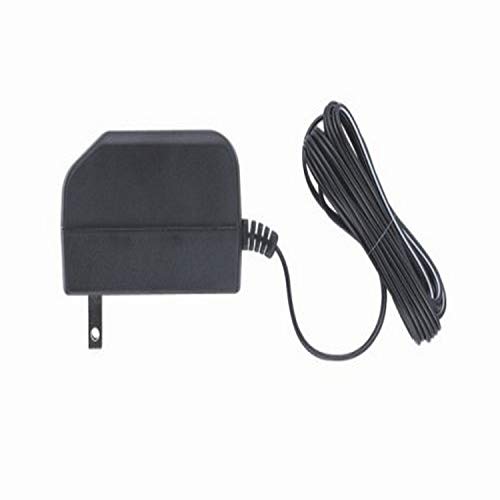
For replacing 110 VAC to 24 VAC 750mA max transformers on indoor controllers

【COMPATIBILITY】 Designed specifically for Orbit 57040 57096 Sprinkler System indoor sprinkler controllers and Rain Bird UT1 SST Series irrigation timers,Compatible with Rain Bird SST400I/SST400IN/SST600I/SST600IN /SST900I/SST900INpower adapters for rain bird ut1 sst .for rain bird ut1

POWER:24vac Power supply Input volatage is 120VAC @ 60Hz; Output rating is 24VAC @ 300mA.
Energy Consumption of Sprinkler Pumps vs. Controllers (kWh/AF)
Typically, a sprinkler pump’s electricity use dwarfs that of its controller, measured in kilowatt‑hours per acre‑foot (kWh/AF). You’ll find that a pump’s kWh/AF equals 1.0241 × TDH divided by overall efficiency, while a controller typically consumes under 0.05 kWh/AF. Assuming 70 % plant efficiency, lifting water 1 ft costs about 1.02 kWh/AF; adding 30 psi (≈69 ft head) raises the figure to roughly 70 kWh/AF. Seasonal energy usage spikes when you run a 400‑hp pump 12 h day⁻¹, reaching 1.3 million kWh annually. Proper pump maintenance can cut that demand by up to 30 %, keeping head losses low and preserving efficiency. By contrast, controller energy remains flat across seasons, making the pump the dominant cost driver in any irrigation budget. Extending a pump’s service life through regular inspection and cleaning can also reduce overall energy consumption, especially when water quality is poor. Implementing smart scheduling further enhances water use efficiency and can lower pump run‑time. Understanding system head loss helps you design more efficient layouts.
Mechanical vs. Electric Fire Sprinkler Heads: Power Requirements
While the pump’s electricity consumption dominates irrigation budgets, fire‑protection systems hinge on a different power dynamic. Mechanical heads rely on a thermosensitive element that melts at about 155 °F; they need no external power, just pressurized water. Each head operates independently, so only the zones experiencing heat release water, meeting sprinkler water requirements without drawing electricity. Electrically operated heads integrate sensors, control panels, and actuators, demanding continuous power to detect flame signatures and trigger valves. This architecture speeds activation and can improve overhead sprinkler coverage, but it creates a dependency on electricity that can fail during outages. In contrast, mechanical heads remain fully functional during power loss, offering reliability at the cost of slower response. Sprinklers and smoke detectors are separate safety systems, with sprinklers not containing detectors. Research shows that sprinkler activation can reduce fire damage by up to 70 %. Thermal activation ensures that only sufficient heat can trigger a sprinkler, preventing accidental discharge from mere contact.

Standard 1/2" NPT (National National Pipe Thread)Threaded End Fire Sprinkler Fitting.
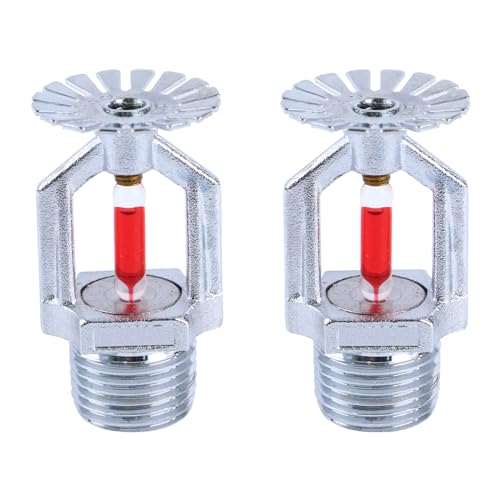
Standard 1/2" NPT (National National Pipe Thread)Threaded End Fire Sprinkler Fitting.

UL, CUL & FM Certified-FM Approved 3053441 and UL / CUL Listed EX6430. 1/2 " NPT (National Pipe Thread) American thread fire sprinkler heads. Underwriter Laboratories Listed. These 1/2 inch NPT pendent fire sprinkler heads fit new installation and replacement for residential, commercial and industrial fire protection systems. Trusted by contractors and property managers, they offer inspector-verified, code-compliant fire safety solutions and support bulk ordering for construction projects
Off‑Grid Sprinkler System Options (Low‑Power & No‑Power)
If you need an irrigation setup that runs without relying on the grid, several low‑power and no‑power options can meet that requirement. A battery‑powered controller, such as Rain Bird’s 9‑volt unit, drives up to four zones via Bluetooth, wiring directly to solenoids and eliminating grid dependence. DIY water pump technologies include hydraulic ram pumps, built for around $200 with poly tubing and drip valves, delivering pressure from a natural water source. Low‑pressure sprinklers operate at 10‑25 psi, cutting pump horsepower and saving energy; wobbler heads achieve 50 % savings while maintaining >95 % uniformity. Solar irrigation sensors paired with a 4‑panel array, MPPT controller, and battery bank power a 1.5 HP pump, providing reliable off‑grid drip irrigation. Mechanical low‑pressure nozzles such as Rain Bird Maxipaw further reduce energy demand. The Rainbird Bluetooth adapter is powered by a 9V battery and connects directly to the solenoid valve, allowing remote control without hardwired power. To verify proper operation, you can trace the wiring from the controller to the solenoid using the diagram provided in the system manual. Using a pancake compressor can provide a quick burst of pressure to clear clogged sprinkler heads, though it must be matched to the system’s pressure rating. Proper hose diameter selection ensures adequate flow for multiple sprinklers without excessive pressure loss.

Smart Automatic Watering Control: The Orbit Programmable Digital Hose Watering Timer transforms a faucet into an automatic watering system using a reliable single outlet hose timer

EFFICIENT SPRINKLERS FOR YARD - Add wireless sprinklers easily with our battery-powered controller and 1" FPT jar-top valve.

Smart Automatic Watering Control: The Orbit Programmable Digital Hose Watering Timer transforms a faucet into an automatic watering system using a reliable dual outlet hose timer