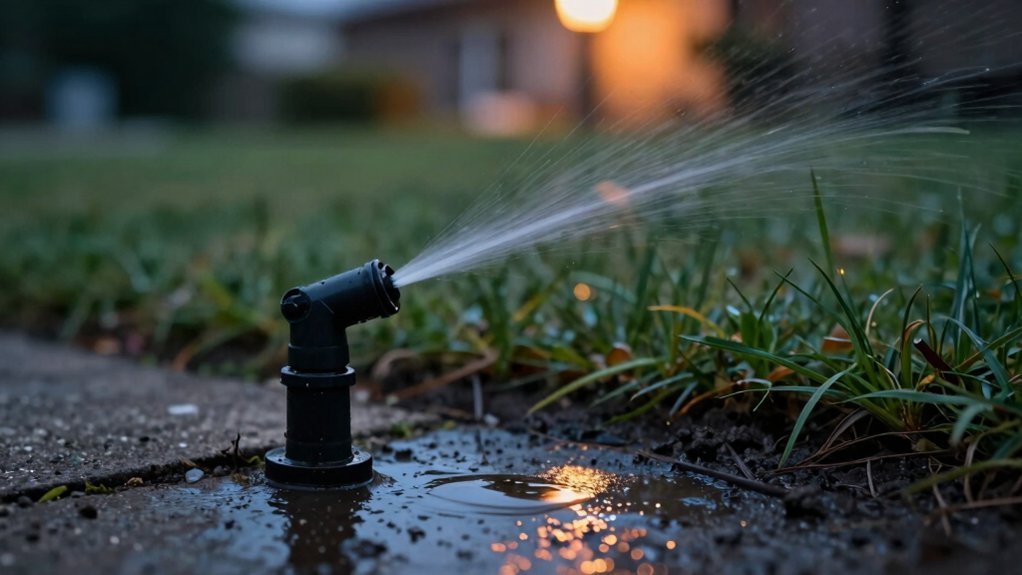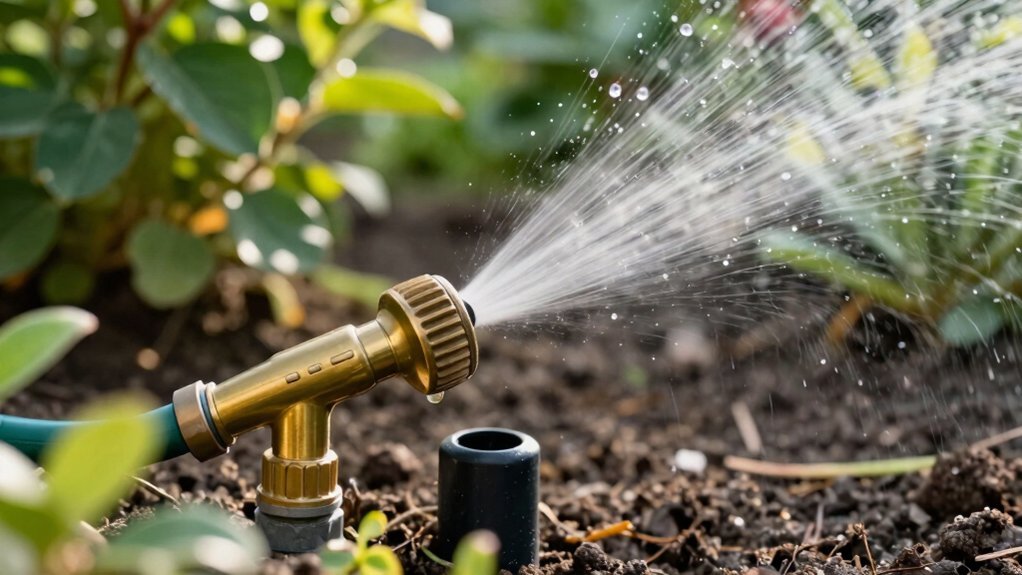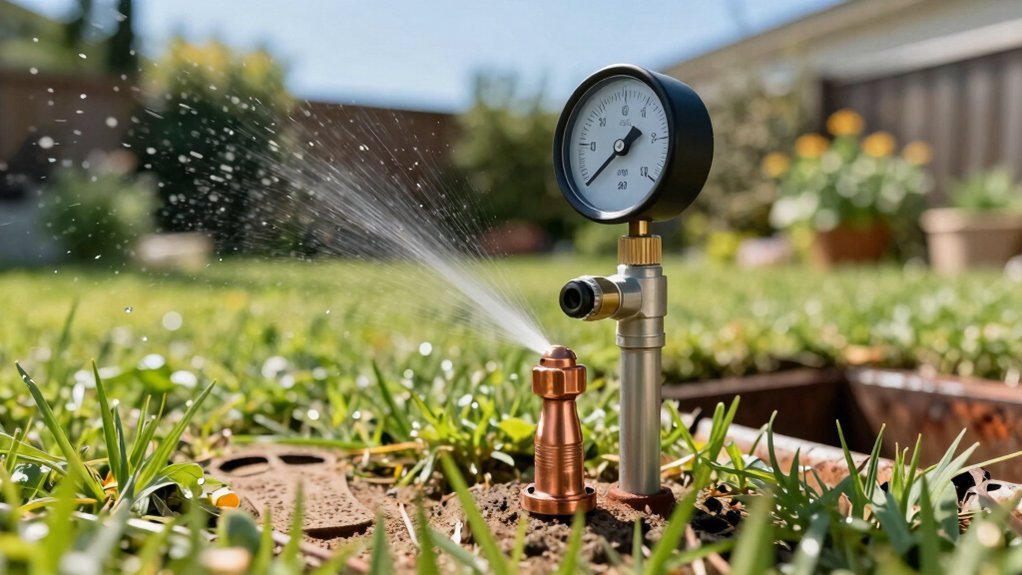
You must install a code‑approved backflow preventer on any sprinkler system that draws potable water, because IPC 608.16.5 mandates protection against back‑siphonage and back‑pressure to protect the public supply. Acceptable devices include atmospheric vacuum breakers, pressure vacuum breakers, and reduced‑pressure principle assemblies, each with specific elevation and valve‑placement rules. Dual‑water or high‑hazard loops require a reduced‑pressure assembly, while low‑hazard residential loops can use a pressure vacuum breaker. Maintenance schedules and testing frequencies vary, and an air‑gap can replace a mechanical device when strict separation criteria are met—continue to uncover the exact requirements and best‑practice tips.
Do Sprinkler Systems Need a Backflow Preventer?
Do you need a backflow preventer for your sprinkler system? You must install an approved device whenever potable water feeds irrigation, per IPC 608.16.5. Choose an atmospheric vacuum breaker, pressure vacuum breaker, or reduced‑pressure principle assembly based on hazard level. Position the unit at the required installation locations: PVB ≥ 6 in above flood rim (IPC) or 12 in (IRC); RP ≥ 12 in above grade for testing access; bottom of assembly ≥ 12 in higher than the highest head. No downstream valves may follow an AVB. Schedule preventive maintenance: visual checks weekly, inspections monthly, and certified testing annually. Keep the assembly accessible for field testing, and follow local permit and licensing rules to guarantee compliance and protect potable water from back‑siphonage and back‑pressure contamination. Backflow contamination can occur when pressure drops, allowing chemicals or fertilizers from the irrigation system to enter the drinking water supply.

Prevents contaminants from entering the main water supply through sprinkler heads

PREVENT WATER BACKFLOW - Our automatic anti-siphon valve with an atmospheric vacuum breaker protects your irrigation system and culinary system from water contamination.

MULTIPLE PROTECTIONS: We offer a replacement service for any non-human-caused faults within 5 years. We’re committed to giving customers top-quality products. Every Backflow preventer 1 inch gets strict checks before leaving the factory. Backflow valve’s your ideal pick. If you run into any issues while using it, feel free to reach out
Which Water Sources Trigger Backflow Requirements for Sprinklers?
Having covered the types of backflow preventers you must install, you now need to know which water sources actually trigger those requirements. Potable‑water connections—public mains, drinking‑grade wells, or any line used for cooking—activate Backflow source contamination risks. Any sprinkler linked to these supplies must carry an atmospheric‑type vacuum breaker, pressure‑type vacuum breaker, or reduced‑pressure principle device, even on hose‑end attachments. Non‑potable sources—ditches, lakes, ponds, or non‑drinking wells—do not require protection unless backpressure exists; then a reduced‑pressure assembly is mandatory. Dual‑system compliance considerations arise when a single line serves both irrigation and potable uses, or when fire‑sprinkler loops share the circuit; in those cases, a reduced‑pressure principle backflow preventer safeguards against cross‑contamination. Proper installation and regular testing are essential to maintain system integrity and protect public health, and the reduced pressure zone assembly is especially effective for high‑risk connections. Installing the preventer near the water main ensures easy access for inspection and compliance with local plumbing codes. An anti‑siphon valve can provide additional protection in areas prone to high vacuum conditions.
Which Backflow Devices Are Approved for Potable‑Water Sprinklers?
You’ll find that only four backflow devices meet the code‑approved criteria for potable‑water sprinklers: atmospheric vacuum breakers (AVB), pressure vacuum breakers (PVB), reduced‑pressure principle (RP) assemblies, and spill‑resistant pressure vacuum breakers (SVB). AVBs protect against back‑siphonage in low‑hazard zones but lack back‑pressure protection, so you must install one per valve and obey local prohibitions. PVBs handle both back‑siphonage and back‑pressure, require a 12‑inch clearance above grade, and suit residential low‑to‑medium risk. RP assemblies deliver the highest protection for fertilizer or pesticide use, demanding a 12‑inch clearance below for testing. SVBs combine PVB functionality with spill resistance, allowing easy backflow testing protocols and integration into seasonal shutdown procedures. Modern sprinkler systems rely on rapid fire suppression to minimize damage and protect occupants. Sprinklers and smoke detectors operate as separate safety systems and do not share detection components. The system’s main pipe distributes water from the source to each valve, ensuring consistent pressure throughout the network.

Prevent impure water from flowing in reverse and contaminating the clean water supply; Connect to the water source such as a hose bibb or faucet

【Choose certified products】ONDAQUA holds the UPC Certification issued by IAPMO, and our products are also compliant with the ASSE 1020-2020 standard

【What do you get 】: 2 × Vacuum Breakers, 2 × Washers, 1 × Tape (About 350" long)
Do Dual‑Water Sprinklers Change Backflow Rules for Preventers?
A dual‑water sprinkler system—delivering both potable and reclaimed water—doesn’t waive the backflow‑prevention rules; it simply forces a reassessment of hazard classification and device selection. You must treat the reclaimed line as a high‑hazard source because it can carry chemicals, fertilizers, and microbes. If you add chemical injection systems or the introduction of fertilizers, the code upgrades the required assembly to a reduced‑pressure principle backflow preventer. Install the device at the service connection, 12 inches above the highest head, with an upstream shut‑off valve and upward‑facing test cocks for annual inspection. Double‑check or atmospheric breakers remain permissible only for low‑hazard, potable‑only loops. Non‑compliance triggers service disconnection. The installation includes a ball valve as the shutoff valve before the double check. Properly supporting the pipe prevents physical damage and maintains system integrity. Remember that most solenoids are polarity‑agnostic and will operate correctly regardless of wiring direction. Modern sprinkler controllers often run on low‑voltage DC to improve energy efficiency and enable solar backup options.
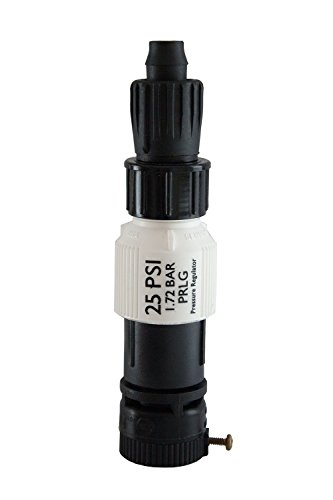
Ensure accurate and reliable drip system performance with this all-in-one faucet to drip irrigation connection kit. Connect your drip irrigation system to your water supply, keep out debris with a filter, maintain optimally low flow water pressure, and prevent backflow all with a single pre-assembled unit.

Versatility: The dual check valve is designed for smaller supply lines, ideally for laboratory equipment, processing tanks, sterilizers, dairy equipment and similar applications. It is especially recommended for boiler feed lines to prevent the return pressure from being lower than the system pressure during supply. Compatible with all major brands

Serial number visible in any installed orientation reduces labor time
When Can an Air‑Gap Replace a Mechanical Preventer?
Dual‑water systems still demand backflow protection, but an air‑gap can replace a mechanical preventer when the installation meets the strict separation and elevation criteria defined by code. You must guarantee the gap equals at least twice the supply pipe’s inside diameter, minimum one inch, and locate the outlet above the flood‑level rim. Verify that the gap complies with local plumbing codes and that no contaminant can reach the water source. When these conditions are satisfied, the air‑gap becomes the preferred backflow preventer for sprinkler system modifications, eliminating mechanical parts and maintenance. Remember, the gap must remain clear of debris, and you’ll need regular inspections to confirm integrity and prevent pressure loss. Sprinklers can reduce fire‑related property damage by up to 70 % and significantly improve occupant safety, underscoring the importance of reliable backflow protection. fire damage reduction The thermal activation of a sprinkler is triggered only by sufficient heat, not by touching the head. The wet‑pipe system offers rapid response due to its constantly water‑filled network.

CLEAN HOME PRODUCT prevents wastewater from backing up into your dishwasher, eliminating the risk of contaminating your clean dishes – OVERALL HEIGHT with plastic body: 9 in. – CAP HEIGHT: 2 1/2 in. – CAP DIAMETER: 1 7/8 in. – Pre-Drilled Hole Size Requirement: 1 1/2 in.

Kitchen air gap prevents backflow. Over all height- 2-7/16 inch

Designed to funnel minor relief valve discharges, due to line pressure fluctuations and /or minor check valve fouling, into the drainage system
What Permits and Inspections Do You Need Before Installation?
Where do you start before you cut the first pipe? Begin with plan submissions to the municipality, county, or state fire office. Your drawings must include the certified contractor permit number and show pipe routing, supports, and sprinkler head locations. Verify contractor qualifications: a State Fire Marshal permit, NICET Fire Protection Layout Technician Level III certification, and proof of insurance. Pay the $120 State Fire Marshal fee and attach the permit to your bid package. Schedule a pre‑installation inspection; the inspector will confirm hydrostatic test results, valve labeling, and integration with fire alarm systems. Submit as‑built drawings, material certifications, flushing reports, and NICET technician credentials for final approval. Only after these permits and inspections are cleared can you activate the system. Check local fire codes for sprinkler system permits before beginning any work. Remember to call 811 before digging to prevent damage to underground utilities. Some jurisdictions also require a water usage permit for residential sprinkler installations.
How Often Must Sprinkler Backflow Devices Be Tested?
After securing permits and completing inspections, you move to the testing schedule for your sprinkler backflow devices. Follow the standard testing schedules: most devices require annual testing, while EPA recommends a six‑month interval for high‑risk sites. RPZs often need semi‑annual checks; PVBs may stay on an annual cadence. Local codes can tighten this—Connecticut mandates yearly tests, California adds a post‑install/repair test, and Ohio EPA insists on certified inspector qualifications. Align tests with other maintenance (HVAC, fire inspections) to reduce downtime. Document results per district format, and retest failed units within 10‑30 days. Remember, high‑hazard or recycled‑water connections may demand quarterly testing, and fire‑sprinkler backflow valves must meet NFPA 25 annual requirements. Proper testing also supports system reliability and helps maintain compliance with fire protection standards.
What Common Mistakes Void Backflow Protection on Sprinklers?
Debris and mineral buildup, freezing temperatures, improper installation, DIY plumbing errors, and component wear are the primary ways you can nullify backflow protection on sprinkler systems. Poor winterization leaves preventers exposed; ice expands, cracks seals, and creates clogged valves. Dirt, sand, and sediment lodge between check‑valve poppets, while hard‑water deposits stiffen springs and prevent full closure. Incorrect angle, height, or pipe size reduces pressure differentials, causing check‑valve chatter or failure. DIY shortcuts—skipping hose‑bib vacuum breakers, bypassing devices, or using non‑compliant parts—introduce direct paths for contamination. Worn gaskets, cracked relief‑valve housings, and corroded springs leak under pressure, compromising the barrier. Regular flushing, proper insulation, manufacturer‑approved installation, and scheduled component replacement keep the backflow device functional and avoid voiding protection. Water‑resistant valve designs mitigate moisture intrusion, extending service life. Installing conduit with water‑proof conduit further protects wiring from corrosion caused by prolonged moisture exposure. Freezing conditions below 20 °F can cause water in exposed pipes to solidify, increasing the risk of backflow device failure.
Which Device Is Best for Low‑Hazard vs. High‑Hazard Sprinklers?
When you’re selecting a backflow device for a sprinkler system, the hazard level dictates the appropriate assembly. For low‑hazard irrigation, apply Hazard based device selection using a Double Check Valve Assembly (DCVA) or a Pressure Vacuum Breaker (PVB). Install the PVB at least 12 inches above the highest head, assure Code compliant device placement, and match the assembly’s GPM to the zone. High‑hazard applications demand a Reduced Pressure Zone Assembly (RPZ/RPZ). The RPZ provides dual check valves, a relief valve, and required drainage; it satisfies IPC 608.16.5 and other codes. Size the RPZ to system flow, accommodate pressure drop, and schedule annual certified testing. Both selections must respect local code mandates and climate‑specific insulation.

Protects against backsiphonage where a potential high health hazard exists.
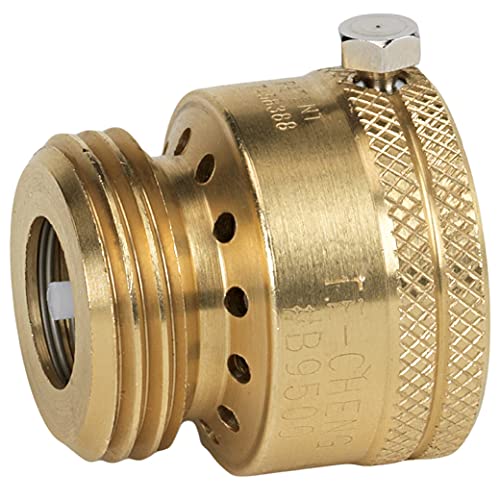
FUNCTIONALITY: Homewerks Vacuum Breaker will help prevent water backflow to the main water supply. 3/4-Inch self draining vacuum, breaker, Male hose thread

Protects against backsiphonage where a potential high health hazard exists.
How Can You Keep Maintenance Costs Low While Staying Compliant?
How can you keep maintenance costs low while staying compliant? Schedule bi‑annual professional service (spring startup, fall winterization) and monthly visual checks. Use water filtration equipment to protect valves and backflow preventers, reducing debris‑related failures. Deploy sprinkler system monitoring to log pressure, flow, and controller alerts; set thresholds for low/high pressure to trigger early repairs. Choose high‑efficiency heads and smart controllers that adjust watering based on weather and soil moisture, cutting run‑time and component wear. Replace only failed heads ($25‑$50) and repair valves ($75‑$200) instead of whole lines ($300‑$800). Insulate exposed pipe and backflow preventer before freeze, and remove controller batteries. This regimen averages $50‑$100 annual upkeep versus $400‑$800 for neglect, keeping you NFPA‑compliant and budget‑friendly.