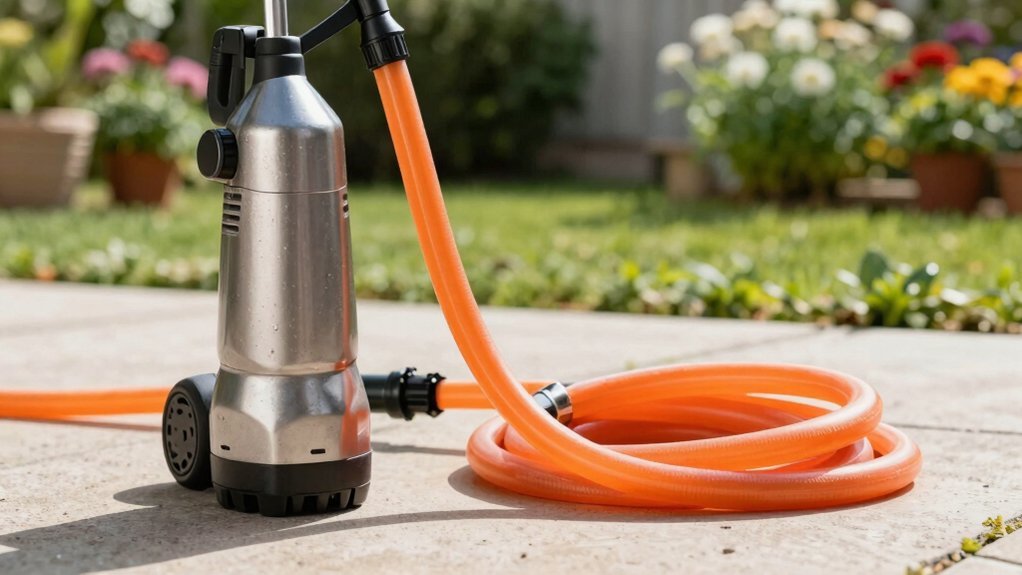
A typical garden hose pumps 9–17 GPM, with most 5/8‑inch models sitting around 12–13 GPM at normal residential pressure (45–60 PSI). If your water pressure is lower, say 40 PSI, expect about 6 GPM; at 60 PSI you can reach 10 GPM. Larger diameters and shorter lengths boost flow, while longer or narrower hoses cut it. Adjusting nozzle size or fixing kinks also tweaks output, and the next sections will show you how to fine‑tune it for any task.
What GPM Should You Expect From a Typical Garden Hose?
A typical garden hose delivers between 9 and 17 gallons per minute, with most models hovering around 12–13 GPM. You’ll notice that hose material composition directly influences internal friction; reinforced rubber or polyurethane reduces turbulence, preserving flow. When you connect the hose to a municipal supply, water source capacity—often limited to 5–10 GPM per fixture—sets an upper bound, so even a high‑capacity hose can’t exceed that source. A 5/8‑inch hose at 40–50 PSI typically reaches 17–24 GPM, but real‑world measurements usually fall within the 12–13 GPM sweet spot because of pressure loss and nozzle restrictions. Shorter lengths and larger diameters mitigate friction, while longer runs and narrow 1/2‑inch hoses drop below 10 GPM. Adjusting nozzle size or removing flow restrictors can fine‑tune the delivered GPM to match your irrigation needs. The flow rate is also affected by Bernoulli’s principle, which relates pressure and velocity along the hose. A hose‑connected pressure washer can still be useful for light cleaning tasks when the psi is sufficient for the job.
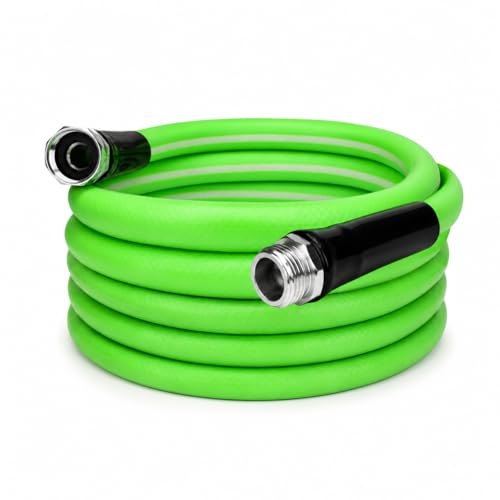
UNCO hybrid polymer garden hose is perfect for watering tasks such as patio gardens, balconies, or RV hookups, offering durability and convenience in one compact design.
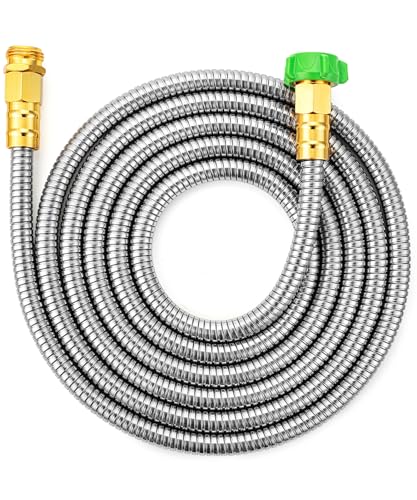
UNCO stainless steel garden hose is a compact and durable watering solution ideal for tight spaces, RVs.

Custom Length and Environmental: Newly introduced re-usable hose, the hose can be turned into any length according to your needs. You can remove the fitting and subtract the length that has worn out over the years, re-attach the fitting and it becomes a brand new hose
How Does Household Water Pressure Determine Garden Hose GPM?
When your home’s water pressure rises, the hose’s flow rate climbs because pressure directly drives the velocity of water through the pipe. You’ll notice that a 50 PSI median yields roughly 8 GPM on a standard 5/8‑in. hose, while 40 PSI drops to about 6 GPM and 60 PSI pushes it toward 10 GPM. Basic pressure metrics—static versus dynamic—matter: static pressure measures the source, but once the hose opens, friction reduces it by 5‑10 PSI, creating the dynamic pressure that actually determines flow. Ideal pressure levels sit between 45 PSI and 60 PSI for most residential systems; regulators trim anything above 80 PSI to protect fittings. Use a bucket test to verify GPM: fill a known‑volume container for one minute, then apply the volume ÷ time × 60 formula. Consistent readings confirm that your pressure is within the ideal range for the hose’s diameter and length. Most residential hoses operate effectively between 40 and 80 psi, making this range a key benchmark for optimal performance. Selecting the proper hose diameter, such as a 5/8‑in. hose for heavy‑duty irrigation, ensures adequate flow without excessive pressure loss. Pressure loss over longer hose runs can significantly reduce GPM, so keeping the hose length within recommended limits helps maintain efficiency.
How Do Hose Diameter and Length Shape Garden Hose GPM?
The flow rate of a garden hose is governed primarily by its internal diameter and its length, because both dimensions dictate the frictional resistance the water must overcome. A 1/2‑inch hose yields 5‑9 GPM at 40‑60 PSI, while a 5/8‑inch hose lifts that to 9‑17 GPM, and a 3/4‑inch hose reaches 15‑25 GPM. As length increases, resistance grows: a 50‑ft 1/2‑inch hose drops to 14 GPM, a 100‑ft version to 7 GPM. Conversely, a 75‑ft 5/8‑inch hose maintains 18 GPM at 45 PSI, and a 100‑ft 3/4‑inch hose can still deliver 48 GPM at 65 PSI. Pairing larger diameters with longer runs mitigates pressure loss, and selecting hose material composition with low internal roughness further enhances water flow optimization. Matching hose size to task length preserves efficiency and maximizes usable GPM. Understanding pressure rating helps ensure the hose can safely handle the required water force. Garden hose threads are specifically designed for low‑pressure, flexible hose applications, distinguishing them from high‑pressure NPT connections. Choosing the correct thread type prevents leaks and ensures a secure connection.

SOLID BRASS: The PowerBlast Super Sweeper water sprayer nozzle is constructed from solid machined brass, made from 100 percent metal with no plastic parts; 7 GPM 80 PSI. 3/4-Inch Thread Inlet

Flexible & Lightweight Design: Measuring 2 feet (0.6m) in length with a 3/4-inch diameter, this PVC hose combines polymer-reinforced rubber construction with corrosion-resistant brass/aluminum fittings; The short hose is lighter than conventional hoses, it delivers superior abrasion resistance and extended service life through its advanced material engineering
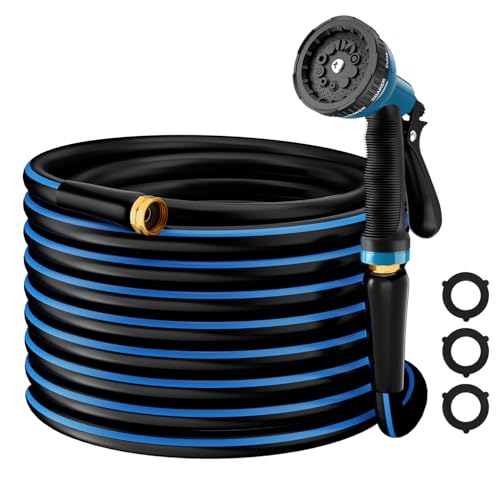
【Effortless Handling】Enjoy an enhanced watering experience with Besiter's PVC garden hose. The vibrant color adds flair to your outdoor space while signifying a lightweight design for easy handling. Despite its feather-light feel, this hose is engineered for lasting durability as a reliable companion for your watering needs.
How to Quickly Measure Your Garden Hose GPM at Home?
Knowing the exact GPM helps you verify whether a hose’s diameter and length are delivering the expected flow, so you can quickly measure it at home with a simple bucket‑and‑stopwatch test. First, uncoil the hose fully, remove kinks, and open the bib to full pressure. Place a 5‑gallon bucket under the hose end, start a timer the moment water contacts the bucket, and stop when the fill line is reached. Convert seconds to minutes (seconds ÷ 60) and divide the bucket volume by the elapsed minutes to obtain GPM. Repeat two to three times, averaging results to smooth out pressure variations and improve water flow stability. If you prefer a non‑physical approach, input hose length, diameter, and dynamic pressure into an online calculator that applies the Hazen‑Williams equation for friction loss. Understanding nozzle psi is essential to prevent emitters from being starved of water. Regularly inspect the nozzle for clogs, as a clean nozzle can significantly boost pressure. Longer hoses experience greater friction loss due to increased surface contact and turbulence.

The pure brass inlet and outlet metal thread are heavy duty and enhance durability. No hassle from frequently installs and uninstalls from hose/faucet.
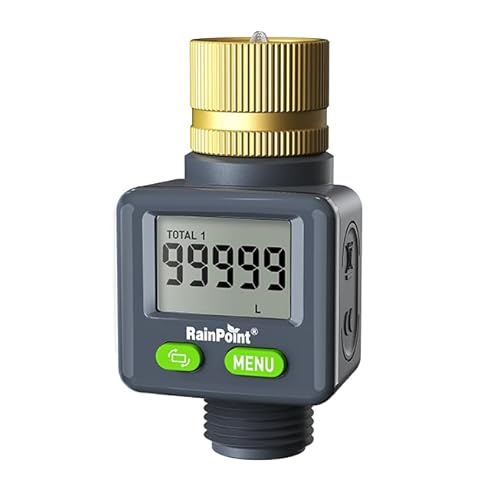
4 Measurement Modes: Short press the menu button to switch between measurement modes from FLOW RATE (AUTO) / LAST / TOTAL 1 / TOTAL 2. Flow Rate Mode: Real-time water flow rate. Last Mode: Last-time water usage. Total 1 & Total 2 Mode: The total water consumption for different time periods can be calculated as needed. You can measure the total water consumption for a single transaction or multiple transactions.

Pure Brass Inlet & Metal Thread: Durable heavy-duty brass construction ensures exceptional durability and effortless installation or removal.
How to Boost or Reduce Garden Hose GPM for Different Garden Tasks?
Boost or reduce your hose’s gallons‑per‑minute (GPM) by adjusting three controllable variables—length, diameter, and pressure—so each garden task receives the ideal flow. To optimize water flow for high‑demand tasks, shorten the hose and select a larger diameter; a 50‑ft ¾‑inch line can deliver ~40 GPM versus 20 GPM at 100 ft. Raise pressure to 40‑50 PSI, but avoid exceeding hose ratings to prevent damage. For low‑flow tasks, extend length, switch to a ½‑inch hose, or lower pressure below 40 PSI; a 100‑ft ½‑inch line drops to ~7 GPM. Install adjustable nozzles or inline restrictors to fine‑tune output, and always remove kinks, leaks, and clogs. If you need to disable water pressure entirely, close the supply valve before adjusting other variables. This systematic approach lets you match GPM precisely to watering, bucket‑filling, or drip‑irrigation needs. Consider the pressure drop that occurs when linking multiple hoses together. Also, ensure the hose’s pressure rating exceeds the maximum PSI you plan to use to avoid bursts. A typical garden hose uses about 5‑10 gallons per minute at standard pressure, translating to 300‑600 gallons per hour.