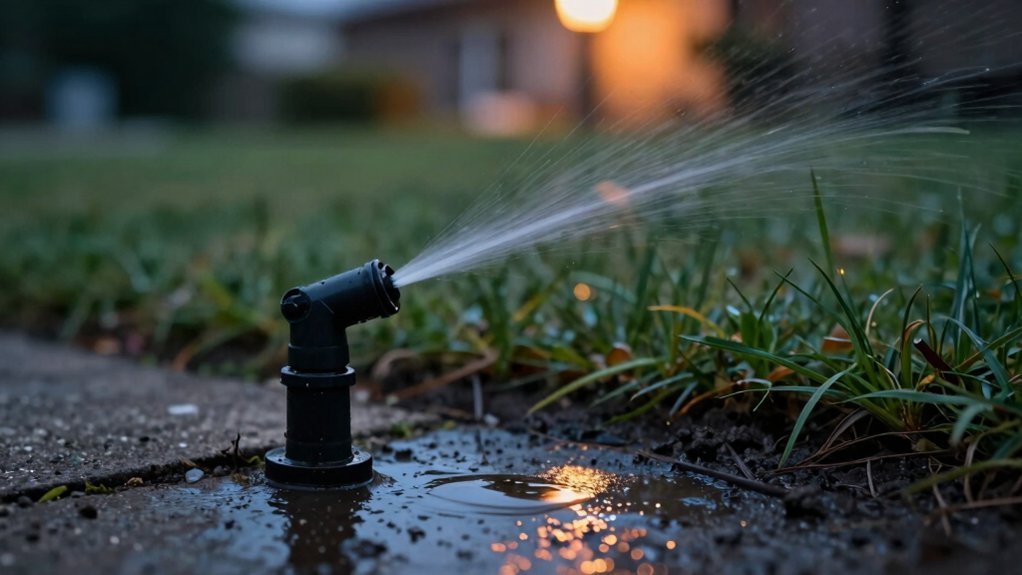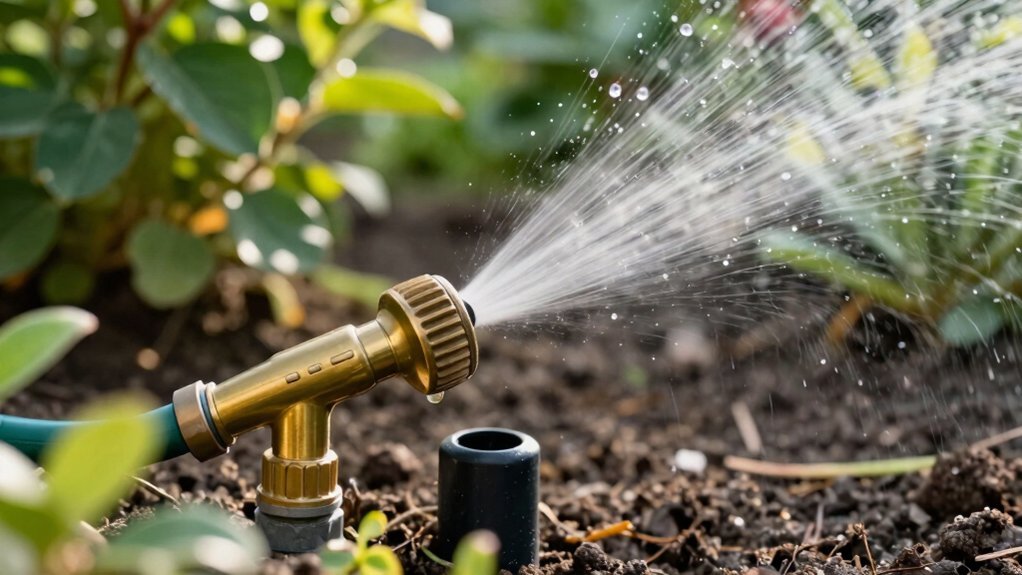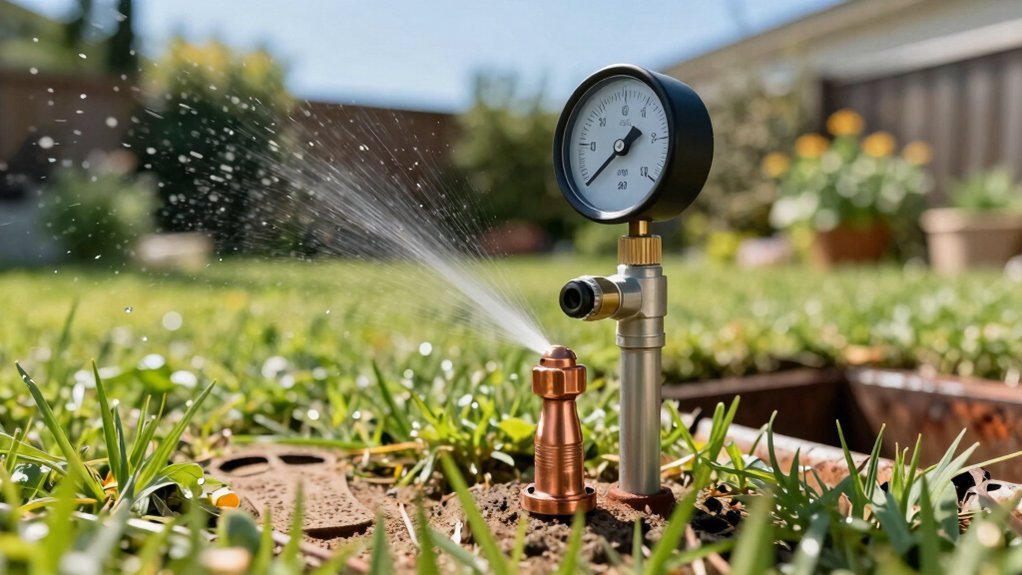
You’ll find the ten most common heads—Rotary (Rain Bird, Hunter), Fixed‑Spray (Toro, Melnor), Impact (Rain Bird, Orbit), and Drip (Orbit, Toro)—ranked by water‑use efficiency, pressure range, and coverage pattern. Rotary heads excel on medium lawns and slopes, delivering large droplets at 30‑50 PSI. Fixed‑Spray heads give precise, low‑precipitation output for delicate beds. Impact heads cover large areas with adjustable arcs, while drip systems supply water directly to roots, cutting runoff. The guide also compares brand‑specific features, so you can match any garden size or terrain.
Choosing the Right Sprinkler Head – Quick Decision Guide
Where should you start when picking a sprinkler head? First, map your garden zones and decide whether you need surface or subsurface delivery. If you aim to conserve moisture and reduce evaporation, consider mulching sprinklers that apply water directly to the mulched layer, or subsurface irrigation that feeds roots below the soil surface. For small lawns or flower beds, fixed spray heads deliver a steady, uniform pattern at 20‑30 PSI, spaced 3‑18 ft for head‑to‑head coverage, avoiding waste on non‑plant areas. When watering trees, planters, or shrubs, flood bubbler heads provide low‑volume, deep infiltration without spray, minimizing runoff. Choose the head whose pressure range, flow rate, and pattern match the plant type, soil condition, and layout constraints. Properly assessing soil type helps you select a head that delivers water at the optimal rate for infiltration. Effective zone planning ensures each plant group receives the right amount of water. Efficient systems rely on proper pressure regulation to maintain consistent flow across all zones.
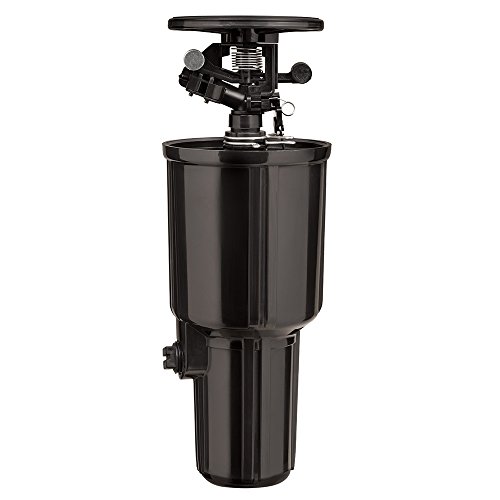
For watering areas with up to 35 feet of spacing between sprinkler heads; 3-inch pop-up riser height ensures that the nozzle clears medium grass

HEAVY-DUTY STEEL SHAFT – 5/8" powder-coated structural steel resists bending and rust

ADJUSTABLE ARC & SPRAY DISTANCE: Includes a preinstalled 3.0 GPM nozzle with an arc that adjusts from 40° to 360°, ideal for both full and part circle coverage. Delivers a spray distance of approximately 22 to 52 feet, with optional nozzles (sold separately) allowing further customization.
Rotary Sprinkler Heads – Ideal for Medium Gardens & Slopes
After mapping your zones and selecting a fixed‑spray or bubbler head for small areas, turn to rotary sprinkler heads when you need broader, more uniform coverage on medium‑size lawns and sloping terrain. Rotary heads deliver multi‑trajectory streams that rotate, producing low precipitation rates and larger droplets that infiltrate slow‑draining soils without runoff. Their performance characteristics include adjustable radii from 15 to 70 ft, pressure compatibility above 30 PSI, and reduced wind drift, misting, and evaporation. Installation considerations focus on pop‑up design placement, ensuring the tapered neck clears compacted or sloped ground, and spacing heads according to PSI to achieve ideal overlap. Gear‑driven models provide quiet, precise operation, while color‑coded nozzles simplify field identification and system maintenance. Proper spacing also depends on the sprinkler head radius to maintain uniform water distribution. Understanding water pressure requirements helps prevent uneven coverage and system strain.
Fixed Spray Heads – Perfect for Small Beds & Delicates
How can you guarantee delicate plants receive just the right amount of water? Fixed spray heads deliver precise, low‑precipitation output that matches targeted soil types and delicate spray patterns. You select a full‑circle, half‑circle, quarter‑circle, or fan nozzle, then adjust radius and arc to fit a narrow bed or compacted soil. Operating at 15‑30 PSI, the head maintains a consistent mist‑like fan, avoiding runoff on shallow‑rooted groundcovers. Space heads 3‑18 feet apart for overlapping coverage, ensuring uniform distribution without exceeding the 18‑foot radius. The non‑rotating design eliminates moving parts, reducing maintenance and displacement risk. Pop‑up models retract after cycles, preserving garden aesthetics while providing reliable irrigation for flower beds, shrubs, and young trees. Proper system design also requires checking water pressure to prevent uneven distribution. Using a low‑flow nozzle can further cut water use by up to 50 %. Water conservation benefits extend beyond the garden, reducing municipal demand and supporting sustainable landscaping.
Impact Sprinkler Heads – Power for Large Lawns & Slopes
A single impact sprinkler can cover up to 90 feet in diameter, delivering 3–10 gpm at 30–50 psi and providing a 20°‑360° adjustable arc that handles large lawns, slopes, and commercial green spaces with uniform, low‑precipitation spray. In a residential application you’ll appreciate the heavy‑duty brass body, laser‑cut steel sled base, and double‑weighted arm that stabilize rotation and extend throw distance to 22‑52 feet. Adjustable collar and diffuser screw let you shrink the radius by up to 25 % for precise high efficiency watering while the straight‑through flow design prevents clogging with reclaimed water. Larger droplets resist wind drift, and the rubber O‑ring filter blocks sand and mineral buildup, ensuring consistent coverage on uneven terrain without runoff. The system’s performance is also influenced by pipe size which affects water pressure and flow rate. Understanding sprinkler coverage helps you match head selection to zone size for optimal water use. Properly accounting for soil infiltration rate can further refine head spacing to avoid over‑watering.
Drip Irrigation – Direct‑to‑Root Watering for Low‑Flow Gardens
Impact sprinklers excel at covering wide areas, but when you need pinpoint efficiency for garden beds, drip irrigation takes over. You’ll install in‑line tubing with emitters spaced 6‑ to 24‑inches, or use drip tape for long rows, and you can punch‑in emitters to achieve drip watering customization for varying soil textures. The system delivers water directly to the root zone, cutting runoff, evaporation, and erosion, which saves up to 80 % of water versus traditional sprinklers. By pairing emitters with soil moisture monitoring sensors, you can adjust flow rates in real time, ensuring each plant receives only the water it needs. This precise delivery reduces weed growth, prevents drying in sandy beds, and works on sloped gardens without pooling. Integrated zone design allows both drip and sprinkler heads to coexist by balancing pressure and flow rates. Proper pressure regulation ensures the low‑flow drip emitters operate efficiently without damaging the existing irrigation network.
Micro‑Spray Heads – Gentle Coverage for Young Plants
Micro‑spray heads provide a gentle, low‑pressure mist that delivers water uniformly to young plants, seedlings, and delicate vegetables where drip emitters can’t reach the foliage without causing runoff. You operate them at 10‑30 PSI, selecting flow rates from 6.6 GPH to 31 GPH to match plant size and growth stage. Adjustable nozzles let you set spray diameters between 20 in and 26 ft, choosing 360°, 180°, or strip patterns to avoid canopy wetting. The fine mist reduces leaf splash, limiting disease while promoting deep root uptake. Because droplets fall slowly, they enhance moisture retention benefits and achieve minimized evaporation rates, extending watering intervals. Connect the head via barbed or threaded fittings to 1/4‑in tubing, stake it 5‑10 ft above the canopy, and fine‑tune flow with the built‑in knob for ideal coverage. Climate type influences how often you need to water, as arid regions may require more frequent irrigation than humid zones. Properly sizing the system ensures water pressure remains within optimal ranges for consistent performance. The system’s reliability depends on valve sequencing to prevent pressure spikes and maintain even distribution.
Comparative Overview of Top Sprinkler Head Brands
Moving from gentle misting to broader lawn coverage, the leading sprinkler‑head manufacturers each prioritize water‑use efficiency while tailoring performance to specific landscape scales. You’ll find Toro’s precision spray heads and pressure‑regulation circuitry among the most favorable features, delivering uniform coverage and preventing misting even on large lawns or sports fields. Hunter’s PGP series offers adjustable arc and radius, while its robust construction provides exceptional durability for residential and commercial sites. Orbit integrates remote control and app scheduling, with the Heavy‑Duty Tripod model delivering strong coverage and weather‑proof reliability. K‑Rain’s SuperPro combines gear‑driven rotary action with built‑in pressure regulation, promising low‑maintenance, durable operation. Melnor’s XT series emphasizes snap‑to‑hose convenience and precise control, minimizing waste in garden applications. The Gear‑driven system ensures smooth and quiet operation across all models. Toro’s heads are also noted for their high water‑use efficiency, which helps reduce overall consumption while maintaining coverage. Selecting the right sprinkler can significantly improve water conservation in any garden setting. Modern systems often incorporate moisture sensors that trigger watering only when soil dryness reaches a defined threshold, further enhancing water‑saving capabilities.

PRECISION ADJUSTABLE ARC, 0° TO 360°: Set exact spray angles for any landscape layout, from tight corners to full circle zones, with simple top adjustment
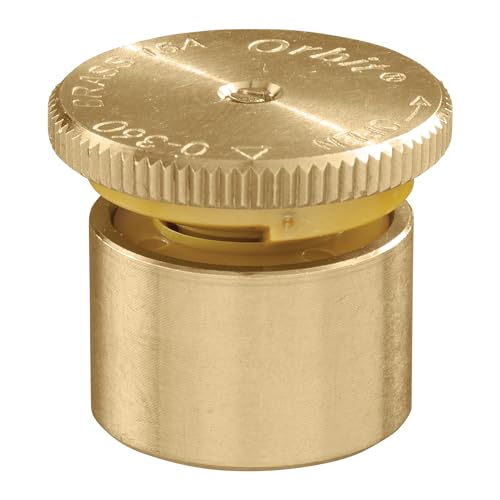
UNIVERSAL COMPATIBILITY: Designed to fit all major brands of pop-up spray heads, making it easy to replace existing nozzles and maintain your irrigation system. Delivers up to a 15-foot spray distance for efficient landscape watering (distance may vary based on PSI and other factors).

ADJUSTABLE SPRAY PATTERN FROM 0–360°: Quickly set the arc to match any area — from narrow strips to full circles. No tools needed, just twist and go.
Rain Bird Rotary Sprinkler Heads – Adjustable Arc for Uniform Coverage
Rain Bird’s rotary sprinkler heads let you fine‑tune the spray arc from a tight 20°‑40° for precise garden beds up to a full 360° for complete lawn coverage, with each 90° turn of the adjustment screw adding or subtracting a quarter‑circle. You achieve arc adjustment precision by rotating the plus/minus screw clockwise to expand the right‑hand stop or counter‑clockwise to shrink it, using a flat‑head screwdriver or the dedicated rotor tool. The gear‑drive rotor delivers large droplets that create uniform watering patterns across distances of 8‑24 feet, while the radius screw shortens reach up to 35 % without nozzle replacement. Low‑pressure design minimizes debris ingress, and regular flushing clears blockages, preserving consistent performance and water‑saving efficiency. The radius adjustment slot is lined up with the nozzle to ensure accurate reach control. Properly aligning spray patterns helps prevent over‑watering zones and maximizes irrigation efficiency.

COMPATIBLE WITH HUNTER AND OTHER SPRAY BODY MODELS: Designed for use with Hunter spray bodies and other standard female-threaded sprinkler heads. Easy to install with a secure, leak-free connection and no special tools required.

5 pcs of Rainbird R-VAN 14 (45-270 degrees) in a bag

Approved for sale/meets pressure regulation legislation requirements in: CA, CO, HI, VT, MA, ME, NY, OR, RI, WA, and Washington DC
Hunter PGP Sprinkler Heads – Precision Pattern Control for Pros
When you install a Hunter PGP rotor, its pop‑up design silently rises, then disappears after the cycle, while the through‑the‑top adjustment screw lets you fine‑tune the spray arc—clockwise expands the right‑hand limit, counter‑clockwise narrows it—so you can eliminate backsplash onto walkways or structures. The rotor’s 22‑ to 52‑foot radius, 0.5‑14.1 GPM flow, and 25‑70 PSI pressure range give you a 0.4 in/hr precipitation rate that matches most garden needs. Use the top‑screw and radius screw to set a 25° or 13° trajectory, then lock the head with a channel wrench. Follow detailed installation guides to align the 4‑inch pop‑up height and 3/4‑inch inlet, and apply maintenance tips such as cleaning the dirty‑water screen and inspecting the non‑strippable drive for ideal longevity. The right‑limit adjustment can be fine‑tuned by turning the head on its fitting and using channel lock pliers on the top of the head.

The Hunter adjustment wrench consists of a 3/32 allen key, two convenient finger loops for gripping

FULL-CIRCLE OR PART-CIRCLE COVERAGE, ADJUSTABLE 50° TO 360°: Easily customize spray patterns to fit narrow strips or wide open zones with a smooth-turning arc adjustment. Ideal for sprinklers for yard setups, narrow strips, large lawns, or custom irrigation zones.
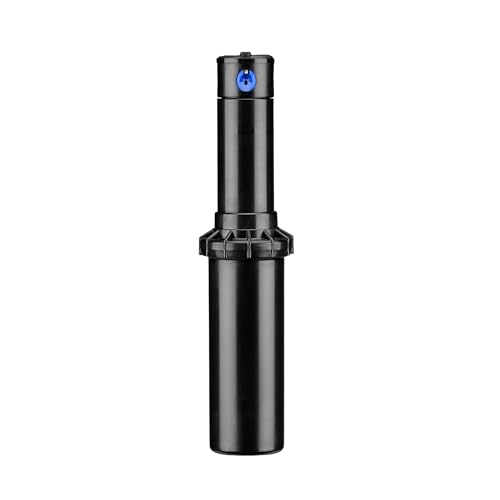
ADJUSTABLE 40° TO 360° ARC WITH EASY SETUP: Hunter PGP sprinkler head offers a fully adjustable arc for precise watering; headed and slotted setscrew allows quick radius adjustments with a Hunter wrench or flat-blade screwdriver sold separately.
Orbit Smart Sprinkler Heads – App‑Controlled Scheduling & Real‑Time Tweaks
The Hunter PGP rotor’s mechanical adjustments give you fine‑grained control over spray arcs, but the Orbit Smart head replaces that hands‑on tuning with a cloud‑based interface that lets you set, modify, and monitor every zone from your phone. Its wireless connectivity links the controller to a responsive user interface that pulls local weather data—rainfall, wind, cloud cover, freezing temperatures—to generate dynamic schedules. You can create up to four programs, each with multiple start times, and tailor run times per zone based on soil type, plant type, sprinkler type, sunlight, slope, and head count. Real‑time tweaks are a single tap: adjust zone duration, apply rain delays from 12 hours to 32 days, or disable watering during precipitation. Notifications alert you to system issues, while EPA WaterSense labeling guarantees measurable water savings. The app also displays the connection status of the controller, ensuring you know when the system is online.

DITCH THE DIAL – Upgrade to smart irrigation with the free Rachio app for precise, easy control.

Smart Irrigation Control Anywhere: The Orbit B-hyve Indoor Smart Sprinkler Controller provides smart sprinkler timer functionality for efficient yard irrigation

Smart Irrigation Control Anywhere: The Orbit B-hyve Indoor Smart Sprinkler Controller provides smart sprinkler timer functionality for efficient yard irrigation