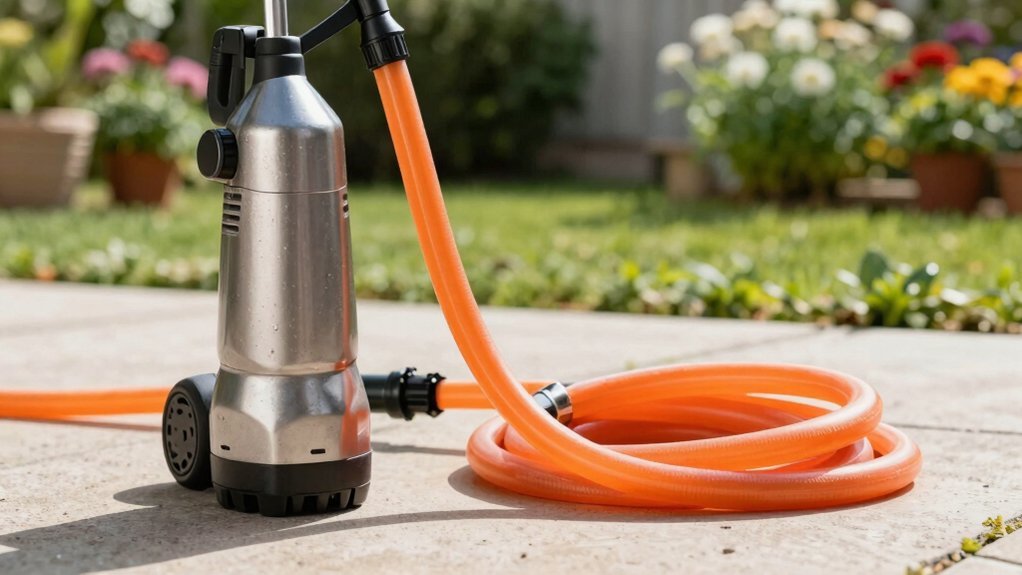
You’ll use roughly 600‑1,200 gallons per hour with a typical ½‑inch to ¾‑inch hose at 40‑60 PSI, but the exact figure depends on diameter, length, and pressure. A quick bucket test—time how many seconds it takes to fill a known‑volume container, then multiply (seconds ÷ 3600) by 60—gives you the GPH. Wider hoses, shorter runs, and higher PSI boost flow, while longer or narrower hoses reduce it. Keep reading to find how to fine‑tune these variables for ideal water use.
Calculate Your Hose’s Hourly Water Use
How much water does your hose actually use each hour? First, capture a minute of flow in a known‑volume container and note the gallons collected; multiply by 60 to get gallons per hour (GPH). Use that GPH figure to compute Estimated monthly usage by multiplying by the number of watering hours per week and then by four weeks. To Improve measurement accuracy, repeat the test under typical pressure (≈60 PSI) and with your hose’s actual length, since longer runs can cut flow by up to 75 %. Record any nozzle or obstruction effects, because they lower effective GPH. Finally, log each session in a spreadsheet, apply the weekly frequency, and you’ll have a precise, data‑driven picture of your hose’s water consumption. Hose diameter also plays a critical role in determining flow capacity, with larger diameters allowing significantly higher GPM rates. Choosing the appropriate garden hose diameter ensures optimal pressure and flow for your specific watering needs. Proper garden hoses typically operate best within the 40‑80 psi range.
Determine GPH From Hose Diameter
Because flow scales directly with hose diameter, you can estimate gallons per hour (GPH) by converting the known gallons‑per‑minute (GPM) values for each standard size. Take the ½‑inch hose: 7 GPM at 100 ft translates to 420 GPH; at 50 ft it’s 14 GPM or 840 GPH. For the ⅝‑inch hose, 12 GPM at 100 ft yields 720 GPH, and 24 GPM at 50 ft gives 1,440 GPH. The ¾‑inch hose delivers 20 GPM (1,200 GPH) at 100 ft and 40 GPM (2,400 GPH) at 50 ft. Use these conversions for flow rate adjustment when selecting a hose. The maximum hose diameter—¾ inch—provides the highest GPH, making it ideal for large‑area irrigation or high‑volume tasks. Length determines reach and influences the total water volume delivered over time. Selecting the correct thread size ensures a secure, leak‑free connection between hose and sprinkler. Longer hoses increase friction loss which reduces water pressure.

EXTREMELY DURABLE - Abrasion-resistant outer cover and crush-resistant anodized aircraft aluminum fittings

Outdoor hose is made of double-reinforced, commercial grade rubber and vinyl with a rugged, abrasion-resistant red cover that won’t mar surfaces

Light Weight - Expertly developed hybrid material from rubber and polymer, the thickness of lawn hose is 3mm. This hose is lighter than traditional rubber hose while being abrasion-resistant and durable.
Assess GPH Impact of Hose Length and PSI
You’ll see that both hose length and supply pressure directly shape the gallons‑per‑hour (GPH) you can expect. A 25‑ft hose at 50 PSI delivers roughly 10 GPM, while extending to 100 ft cuts the flow to about 8 GPM—a 75 % drop in flow rate variation due to friction. Pressure gradient impact intensifies with length: at 45 PSI a 50‑ft 1/2‑in hose yields 13 GPM, but a 75‑ft version falls to 9.8 GPM. Larger diameters mitigate loss; a 100‑ft 3/4‑in hose at 60 PSI still reaches 22 GPM versus 8 GPM for 1/2‑in. To maximize GPH, keep hoses short, choose wider diameters, and maintain home pressure between 40‑60 PSI. Adjusting these variables lets you predict and control water use precisely. Pressure loss over longer runs can be calculated using the Darcy‑Weisbach equation, which accounts for hose material and flow velocity. Consider elevation changes when planning your layout to avoid unexpected pressure drops. Regularly inspect for kinks and blockages to prevent avoid flow reduction.
Easy Formulas To Estimate Garden‑Hose GPH
A quick way to estimate a garden‑hose’s gallons‑per‑hour (GPH) is to multiply its measured gallons‑per‑minute (GPM) by 60; the GPM can be obtained from a simple bucket test, a stopwatch timing, or an online calculator that factors hose length, diameter, and pressure. Use the bucket test: (container gallons ÷ fill seconds) × 3600 = GPH. If you prefer timing, record minutes to fill a known volume, then compute GPM = volume ÷ minutes and multiply by 60. Online tools apply the Hazen‑Williams equation, using a C factor of 135 for flexible hoses, and automatically adjust for water pressure effects. Remember that hose material influences friction loss; rubber or reinforced polymer hoses retain higher flow under the same pressure, giving more accurate GPH estimates. Determine the home’s flow by measuring how many gallons fill a 5‑gallon bucket in a set time. Use a secure connector to ensure the hose sections stay firmly attached during testing. Understanding Bernoulli’s principle helps explain why pressure changes affect flow rate. The spray angle also plays a crucial role in how far the water can travel before losing momentum.
Real‑World Garden‑Hose Flow Scenarios (Sprinkler, Soaker, Continuous Run)
When you attach a sprinkler, a soaker, or simply let the hose run free, the flow you see depends on hose size, length, and pressure. A 5/8‑inch, 50‑ft sprinkler at 45 PSI delivers 24 GPM (1,440 gal/hr), but extending to 100 ft cuts flow by ~75 %, halving soaked yard coverage. Switching to a 3/4‑inch hose boosts continuous‑run output to 38 GPM (2,280 gal/hr) over 50 ft, illustrating water‑efficient design when pressure stays high. Soaker hoses run slower: a 25‑ft, 1/2‑inch line yields 9.5–10 GPM (≈600 gal/hr), while 50 ft at 45 PSI drops to 13 GPM (780 gal/hr). Free‑flow ends peak at 24 GPM for 25‑ft, 1/2‑inch, but 100‑ft reduces to 6 GPM (360 gal/hr). Use these data points to match hose diameter and length to the irrigation method, optimizing coverage and minimizing waste. Modern systems often incorporate sensor‑based controls to adjust flow in real time, further enhancing water efficiency. Consider the pressure drop that occurs with longer hose runs to ensure adequate performance across your garden. Efficient irrigation also benefits from soil moisture sensors that prevent over‑watering by detecting when the ground has reached optimal saturation.

Flexible & Lightweight Design: Measuring 10 feet (3.05m) in length with a 3/4-inch diameter, this PVC hose combines polymer-reinforced rubber construction with corrosion-resistant brass/aluminum fittings; The short hose is lighter than conventional hoses, it delivers superior abrasion resistance and extended service life through its advanced material engineering

Light Weight - Expertly developed hybrid material from rubber and polymer, the thickness of lawn hose is 3mm. This hose is lighter than traditional rubber hose while being abrasion-resistant and durable.
How To Measure Garden‑Hose Flow Accurately At Home?
How can you verify the exact gallons‑per‑minute your hose delivers without a fancy meter? Grab a 5‑gallon bucket, place the hose tip inside, and start a stopwatch the moment you open the faucet fully. When the bucket fills, note the time in minutes and divide 5 by that number to get GPM. For longer runs, attach a pressure gauge to the spigot, record the dynamic PSI, and feed hose length, diameter, and pressure into an online calculator that uses the Hazen‑Williams equation; this accounts for friction loss and yields a precise flow estimate. Incorporate the measured GPM when you perform pressure regulator installation or adjust your sprinkler system setup for ideal performance. Garden hose pressure can be limited by the hose’s diameter and length, which affect the achievable PSI. Understanding the thread pitch differences helps ensure you select the right adapters for accurate measurements. Knowing the standard ¾‑inch GHT size can prevent mismatched fittings that reduce flow efficiency.

Pure Brass Inlet & Metal Thread: Durable heavy-duty brass construction ensures exceptional durability and effortless installation or removal.

DISCOVER THE ONLY WATER PRESSURE GAUGE KIT YOU WILL EVER NEED. High Quality Glycerin Filled, 0 to 14 Bar, Standard 3/4 GHT (Garden Hose Thread) for all standard outdoor Patio Fixtures, RV Lines, Garden Hoses, Spigots, Faucets And Washing Machine Outlets, Plus 5 Adapters so you can measure in multiple possible settings and locations.
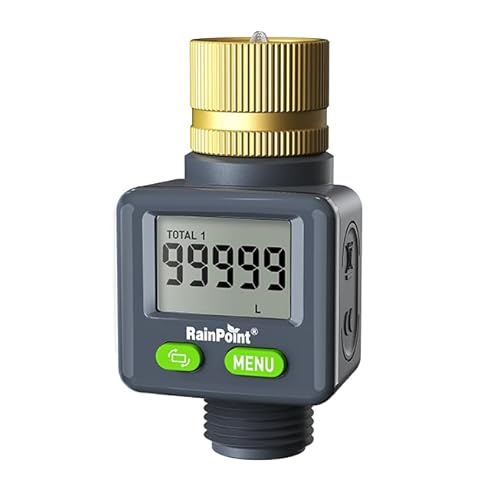
4 Measurement Modes: Short press the menu button to switch between measurement modes from FLOW RATE (AUTO) / LAST / TOTAL 1 / TOTAL 2. Flow Rate Mode: Real-time water flow rate. Last Mode: Last-time water usage. Total 1 & Total 2 Mode: The total water consumption for different time periods can be calculated as needed. You can measure the total water consumption for a single transaction or multiple transactions.
Tips To Reduce Garden‑Hose Water Waste Without Losing Performance
Most homeowners waste up to 30 % of their hose water on leaks and inefficient delivery, but a few simple tweaks can slash that loss without sacrificing performance. First, install automatic shut off valves at the spigot; they cut flow instantly when you finish watering, eliminating drips from sprayer valves. Pair this with soil moisture sensors that trigger the valve only when the ground is dry, preventing over‑watering by up to 40 %. Next, replace leaky sections and tighten all connections—each repaired joint saves roughly 5 % of total flow. Add a thin mulch layer to retain moisture, reducing watering frequency by 20 %. Finally, consider a DIY drip line for high‑need beds; it delivers water directly to roots, cutting evaporation and runoff while maintaining plant health. Create depressions around plants to form reservoirs that further reduce water waste. Understanding the typical water flow rate of a garden hose helps you gauge energy usage for any pump you might use. Proper sprinkler design can significantly lower overall water consumption.

Durable Material: Our garden hose shut off valve are made from high-quality solid brass, resistant to corrosion, ensuring long-lasting performance, allowing quick and effortless flow control. Garden Hose Shut Off Valve with Patented Design.
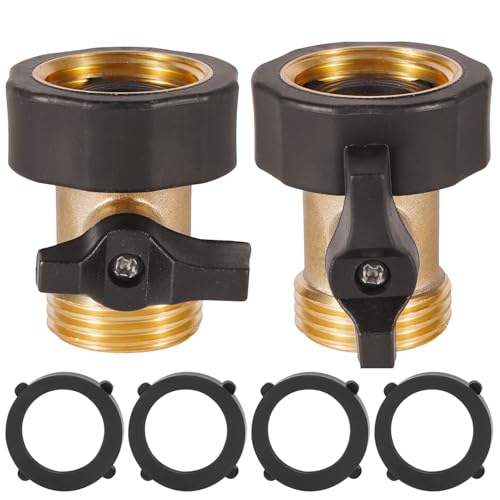
Brass Material: Made from durable brass for long-lasting performance and rust resistance.

🎯 164ft Long-Range Remote Control & Multi-Timer Management🎯Ditch the back-and-forth trips to the spigot! Our advanced RF remote (battery included) controls the water valve from up to 164ft/50m away. Conveniently start, stop, or adjust watering schedules for your balcony, garden, or lawn from the comfort of your couch. One remote can pair with and manage multiple timers for customized zone watering.
When It’s Time To Upgrade Your Garden‑Hose For Higher GPH?
If your hose consistently delivers under 10 GPM or you notice a 75 % drop in flow once the length exceeds 50 feet, it’s a clear signal that the current diameter and pressure can’t meet your garden’s water‑hour demand. Measure the actual GPM with a bucket and stopwatch; if you’re below 9 GPM, calculate the loss: a 5/8‑inch hose falls to 12 GPM at 50 feet but only 7 GPM at 100 feet, while a 3/4‑inch model holds 20 GPM at 100 feet. Compare these numbers against your task threshold of 15 GPM. When the data shows a shortfall, prioritize efficient flow optimization by switching to a larger‑diameter hose. High capacity upgrade options—such as moving from 1/2‑inch to 3/4‑inch—can triple your GPH, reduce friction loss, and lower water‑bill waste. Implement the upgrade promptly to sustain performance.

High-Pressure Performance: Guitrees Heavy Duty Rubber Garden Hose handles working pressures up to 200psi and bursts above 1000psi, ensuring a reliable water source for your gardening, agriculture, and construction needs.
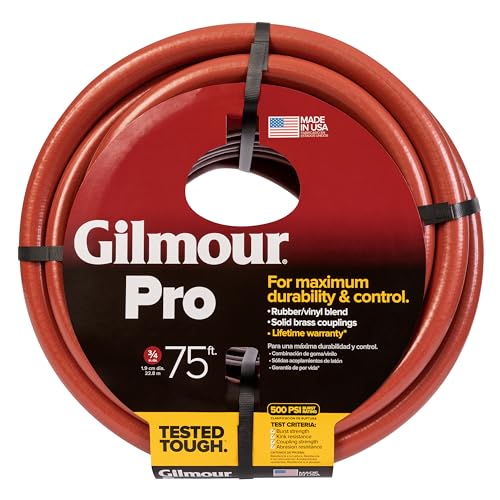
Outdoor hose is made of double-reinforced, commercial grade rubber and vinyl with a rugged, abrasion-resistant red cover that won’t mar surfaces

Heavy-Duty & Lightweight Water Hose: This garden hose features a 3/4-inch diameter and a lightweight, flexible construction of reinforced PVC and rubber. It is built with corrosion-resistant brass/aluminum fittings for durable, heavy-duty performance in demanding tasks, offering greater abrasion resistance and a longer service life than conventional hoses.