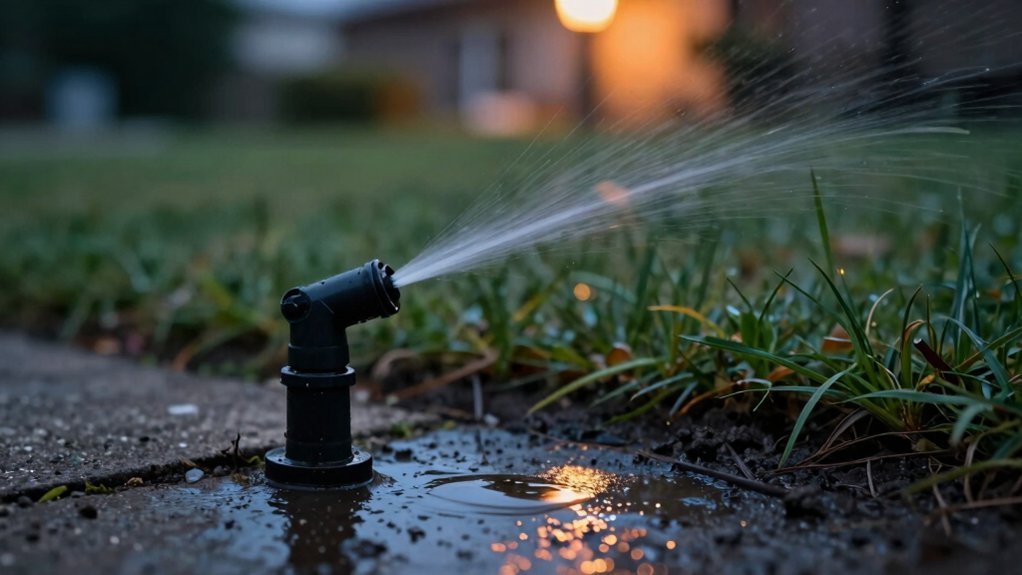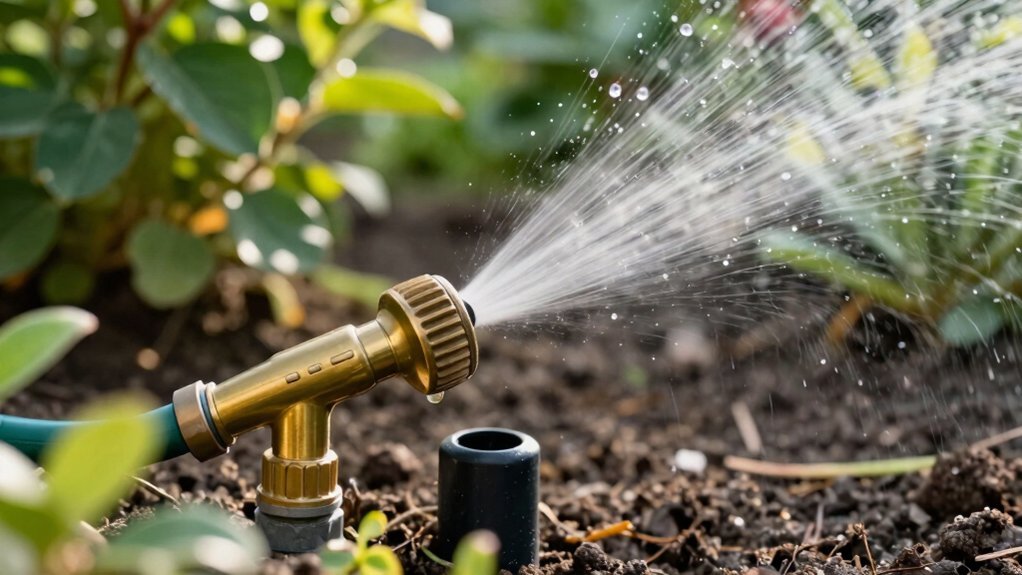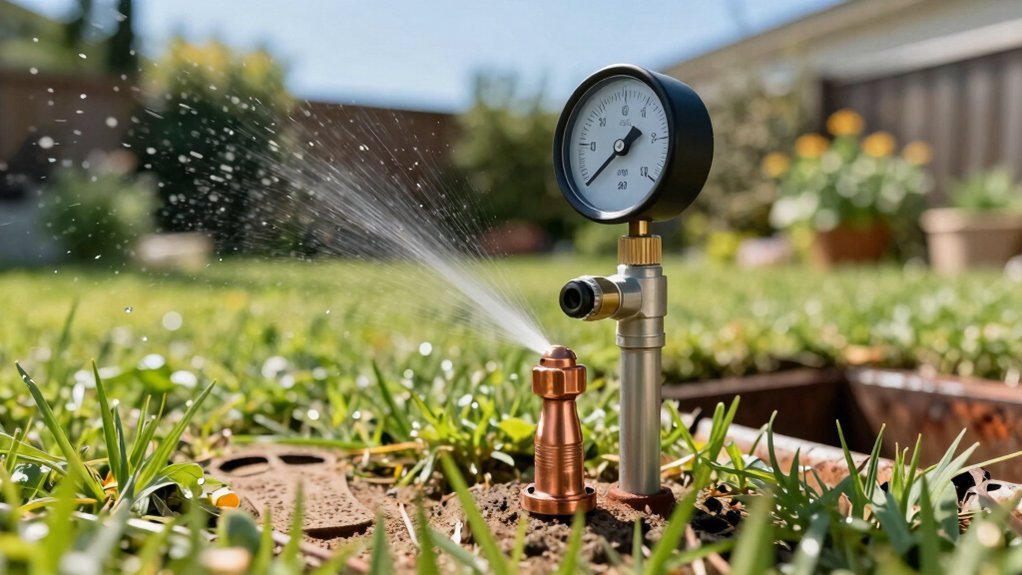
You’ll need roughly 25‑30 impact heads per acre for high‑density vegetable rows, 10‑15 per acre for larger crops, 60‑80 micro‑sprinklers per acre for delicate greens, and about 2‑5 rain‑gun heads per acre depending on throw diameter and pressure. Triangular spacing cuts head count by ~20% versus rectangular, while rotary heads require >30 PSI and spray heads need 20‑30 PSI. Adjust flow rates and pump size to match discharge (240‑600 LPM) and pressure (3.5‑5 kg/cm²). The next sections break down calculations for each system.
How to Choose the Right Sprinkler Type for Your Acre (Sprinkler Heads per Acre)
Choosing the right sprinkler type hinges on matching the crop’s water demand and the field’s geometry to the head‑count per acre that each device delivers. You’ll compare sprinkler operating pressure and sprinkler wetted pattern to guarantee uniform delivery. For high‑density vegetable rows, ½‑inch impact heads need 25‑30 per acre, producing a 7 m diameter pattern at 16‑40 m head pressure. Larger crops benefit from 1‑inch impact heads (10‑15 per acre) covering 18 m, while rain guns—1½‑inch (3‑5 per acre) or 2‑inch (2 per acre)—offer broader 22‑40 m patterns with lower head counts. Micro sprinklers, ideal for delicate greens, require 60‑80 heads per acre, delivering a tight spray radius. Use rectangular or triangular spacing formulas to align line and lateral spacing, ensuring overlap and eliminating dry shadows. Properly grouping plants by soil type and sun exposure can further refine zone design and improve water efficiency. The overall layout should also consider uniform water distribution to maximize coverage and reduce waste.

PERFORMANCE Package: Experience efficient irrigation with our farm irrigation sprinkler, delivering a robust flow rate of 1.2-3.6 m³/h and a spray radius of 12-17m and working pressure capabilities of about 1.5-4.0 bar. Ideal for large area watering , this lawn sprinkler ensures your garden or agricultural land stays lush and hydrated
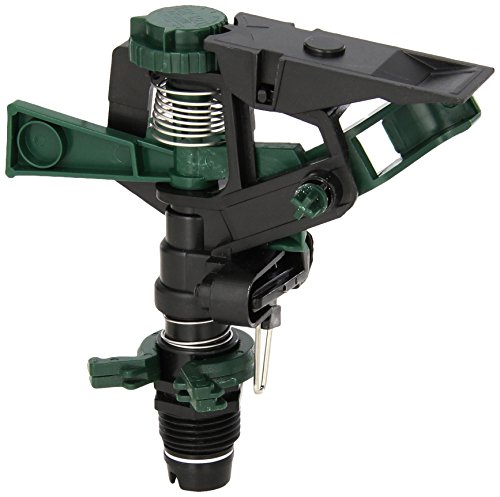
LARGE-AREA COVERAGE: Sprays up to 90 ft. in diameter, covering 6,360 sq. ft. when set to a full circle.

UNDERHILL SI100F IMPACT SPRINKLER: Solid Brass Sprinkler Head with high uniformity nozzles. 1-Inch Full Circle model. Our water sprinklers are ideal to use as a large area garden, yard, lawn, field sprinkler, or golf course sprinkler.
Key Factors That Influence Sprinkler Choice
A solid sprinkler system hinges on four key factors—water pressure, area size and shape, water‑efficiency goals, and plant‑soil characteristics—each of which dictates the head type, spacing, and flow rate you’ll need. First, verify water pressure requirements: fixed spray heads need 20‑30 PSI, while rotary heads demand above 30 PSI and perform best when spacing matches pressure in feet. Next, map area size and shape; small rectangles suit spray heads, large open spaces need rotors covering 15‑50 ft, and irregular plots benefit from adjustable multi‑stream heads to avoid dry spots. Then, target irrigation system efficiency by selecting high‑efficiency or pressure‑regulating heads, which can cut water use 50‑70 %. Finally, align heads with plant‑soil type—lawns with rotary sprinklers, beds with bubblers or drip—to optimize coverage and minimize runoff. Properly calibrating the system can also prevent over‑watering, which is essential for soil moisture management. Uniform coverage can be achieved by using overlapping spray patterns that follow the recommended spacing guidelines. Modern systems often incorporate smart controllers to adjust watering schedules based on real‑time weather data.
Triangular vs. Rectangular Spacing Patterns
A 30‑foot rotary head placed in the middle of a 60‑by‑30‑foot lawn will cover the area with fewer heads when arranged in a triangular (diamond) pattern than in a rectangular grid. In a triangular layout you space heads at 60 % of the throw diameter, which cuts overlap and yields uniform water coverage with roughly 20 % fewer units than a rectangular grid that uses 50 % spacing. The diamond pattern staggers rows like bricks, minimizing dry spots and reducing installation cost. However, implementing it demands complex layout planning: you must mark corner heads, then stagger each subsequent row and verify that spacing multiples align with the longest edge. For small, regular lawns, the rectangular method remains simpler, but for larger or irregular parcels the triangular arrangement delivers superior efficiency and consistency. Consistent geometric grid ensures even water distribution across irregularly shaped areas. Properly calculating the required flow rate per head helps prevent pressure loss and maintains optimal spray performance. Selecting the appropriate spray radius based on plant water needs further refines head placement and conserves water. Understanding pressure differential is essential for maintaining consistent flow across the system.
Calculating Sprinkler Heads per Acre for Rain‑Gun Systems
Triangular layouts cut head count, but when you switch to rain‑gun systems the focus shifts to flow, pressure, and coverage radius. To calculate heads per acre, start with the spray radius: a medium rain‑gun covers 100 ft (≈0.5 acre) at 3.5 kg/cm², while a big‑range unit reaches 170 ft (≈1.2 acre) at 5 kg/cm². Divide the target acreage by the effective area per gun, adjusting for soil moisture monitoring data that may shrink or expand the wet zone. Account for discharge rates—240–440 LPM for smaller, 350–600 LPM for larger models—and guarantee the pump supplies the required 7.5–30 HP while maintaining minimum water availability of 30 m³ h⁻¹. Integrate water conservation strategies by matching irrigation period to crop demand, minimizing runoff and over‑watering. Sprinkler head flow rates are essential for accurate water demand calculations. Understanding nozzle inches per hour helps optimize pressure and flow for both sprinklers and pressure washers. Proper pipe sizing ensures that the system can sustain the needed pressure without excessive loss.

Adjustable From 40-360 Degrees

Approved for sale/meets pressure regulation legislation requirements in: CA, CO, HI, VT, MA, ME, NY, OR, RI, WA, and Washington DC

Convenient, economical 5-pack of High Efficiency Adjustable Spray Nozzles
Determining Sprinkler Heads per Acre for Impact Systems by Crop
Typically, you’ll need 2.5‑5 ft spacing between impact heads, depending on the crop’s water demand and canopy height, which translates to roughly 150‑250 heads per acre for standard 120‑acre pivots. For corn, use the tighter 2.5‑3.5 ft LEPA spacing, yielding about 250‑300 heads per acre and a per‑acre cost near $75‑$117. Soybeans tolerate the broader 4.5‑5 ft LESA spacing, reducing head count to 150‑200 per acre and costing $50‑$67. Wheat falls between, often employing variable stream spacing of 3‑4 ft, resulting in 200‑240 heads per acre. Automated head control lets you adjust flow rates per zone, optimizing water use and maintaining uniform moisture despite canopy variations. Choose the configuration that matches your crop’s evapotranspiration and soil texture for efficient, cost‑effective irrigation. Accurate watering requires calculating sprinkler runtime to deliver the desired inch of water. Proper pressure regulation ensures consistent flow across the system. Modern systems often incorporate moisture sensors to further reduce waste.

LARGE-AREA COVERAGE: Sprays up to 85 ft. in diameter, covering 5,670 sq. ft. when set to a full circle.
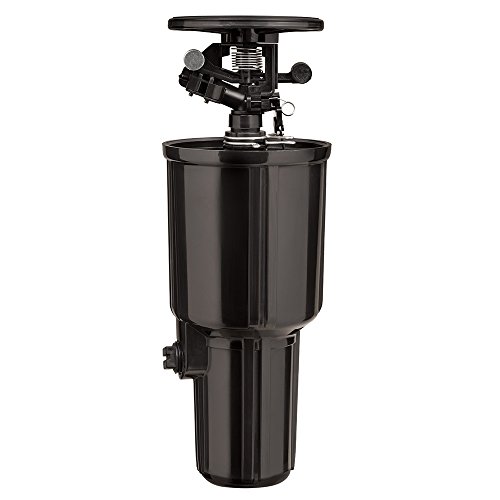
For watering areas with up to 35 feet of spacing between sprinkler heads; 3-inch pop-up riser height ensures that the nozzle clears medium grass
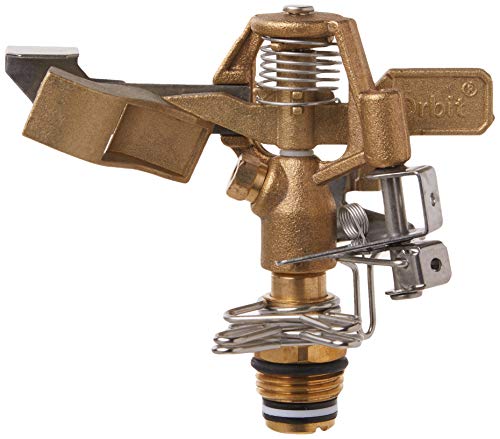
LARGE-AREA COVERAGE: Sprays up to 90 ft. in diameter, covering 6,360 sq. ft. when set to a full circle.
Micro‑Sprinkler Head Counts and Spacing for Delicate Vegetables
Most delicate vegetable crops benefit from micro‑sprinkler heads spaced 6–7 ft apart, matching the nozzle’s throw diameter and limiting head‑to‑head distance to roughly 50 % of that throw. You’ll place heads on a regular grid, using a 10‑ft throw for a 10‑ft radius and keeping the spacing at 5 ft to avoid overlap. Pair this with drip tape patterns that align with row spacing; set emitter spacing variations between 8 and 12 in for sandy soils and 12–16 in for clayey beds. For single‑row crops, keep tape orifice spacing ≤1.5 × plant spacing; double‑row layouts require equal spacing. Adjust run times to 30 min per cycle, limit stake assemblies to 40–45 per line, and monitor water distribution to maintain uniform root‑zone moisture while minimizing foliage wetting. Micro sprayers use significantly less water than traditional sprinklers. Optimized pressure ensures consistent spray patterns across varying terrain. Understanding soil moisture retention helps fine‑tune irrigation schedules for optimal plant health. Properly integrating drip irrigation with a sprinkler system can further improve efficiency by allowing targeted zone control.

ADJUSTABLE SPRAY PATTERN FROM 0–360°: Quickly set the arc to match any area — from narrow strips to full circles. No tools needed, just twist and go.
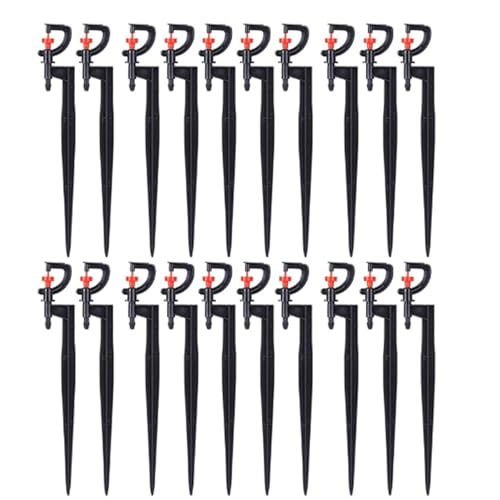
Versatile Use: Simply connect to 4/7mm tubing for instant setup. Ideal for agriculture, gardens, stadiums, industrial dust control, and even fountain projects.
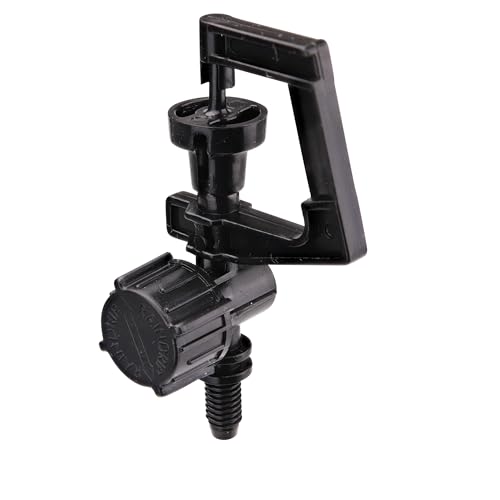
Releases water with a rotary spray in a uniform, full-circle pattern; amount of water flow is adjusted by turning the dial on the sprinkler; Ideal for watering groundcover, flower beds, planting beds, vegetable gardens, and new plantings for germination
Reference Sprinkler Head Counts per Acre for Each System
When you size an irrigation system, the head count per acre hinges on the nozzle size, spray radius, and available pressure. For impact sprinklers, ½‑inch heads need roughly 25‑30 per acre, while 1‑inch heads drop to 10‑15, depending on crop type and water pressure considerations. Rain guns are far less dense: a 1½‑inch gun uses 3‑5 heads per acre, a 2‑inch gun about 2, and a 2½‑inch gun only 1. Spray heads require spacing ≤15 ft and 20‑30 PSI to achieve uniformity assessments; they’re ideal for small‑to‑medium plots. Rotary heads demand spacing tied to PSI, performing best above 30 PSI on medium‑large areas. Use the rectangular or triangular spacing formulas to translate line and lateral spacing into precise head densities for any system. Water pressure directly limits the number of spray heads that can operate effectively on a single line. Proper zone design also considers maximum flow rate to prevent pressure loss across the system. Modern systems often employ staggered activation to balance pressure and improve fire suppression efficiency.

ZINC ALLOY IMPACT SPRINKLER HEAD: Heavy duty lawn impact sprinkler head for yard, lawn and grass Irrigation. The sprinkler head can be adjusted from full circles of 360 degrees to partial circle patterns that turn 20 degrees to 340 degrees. Adjust the spray range and radian of water to make the irrigation in the garden fun
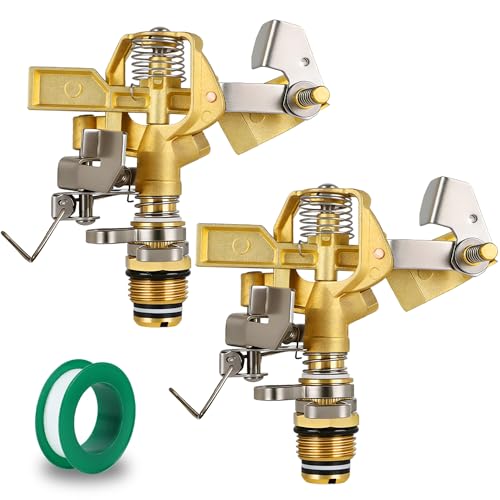
All-Metal Construction: Crafted from brass and zinc alloy, with stainless steel springs and a precision-jet arm. Designed to withstand outdoor elements without rusting, deforming, or fading, ensuring long-lasting performance.

METAL IMPACT SPRINKLER WITH SPIKE: Heavy duty lawn impact sprinkler head with step spike for yard, lawn and grass Irrigation. The lawn sprinkler can be adjusted from full circles of 360 degrees to partial circle patterns that turn 20 degrees to 340 degrees. Adjust the spray range and radian of water to make the irrigation in the garden fun