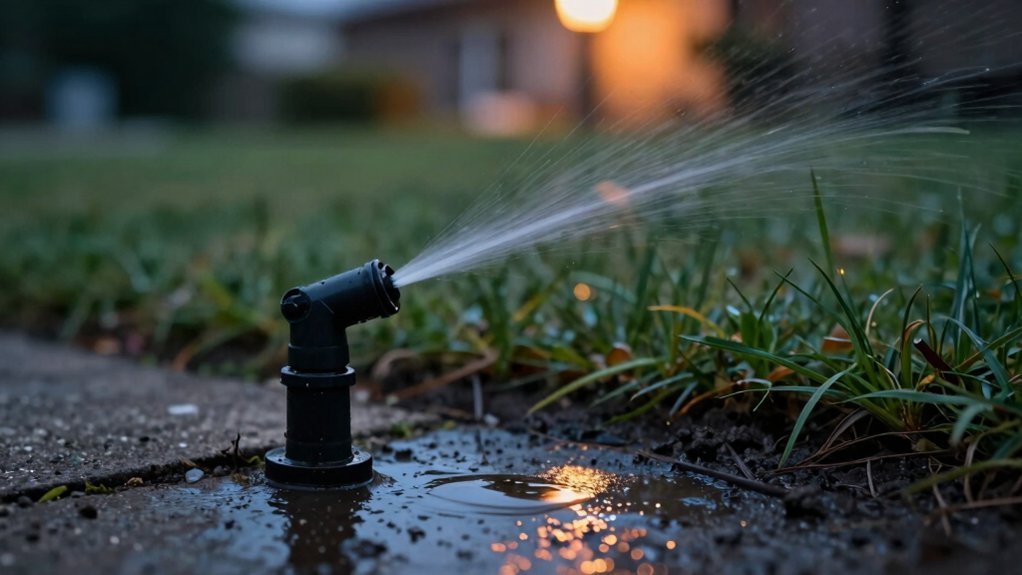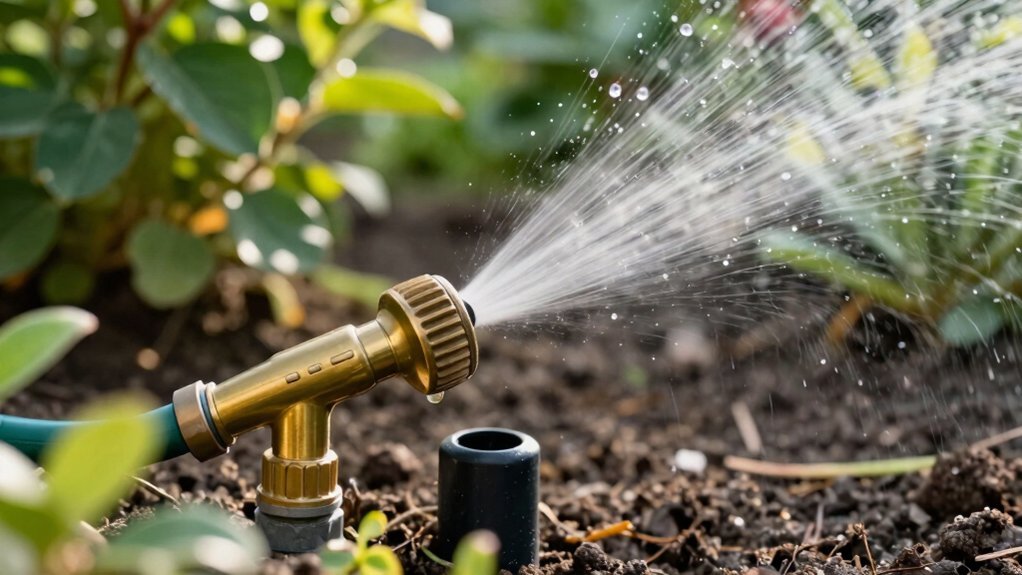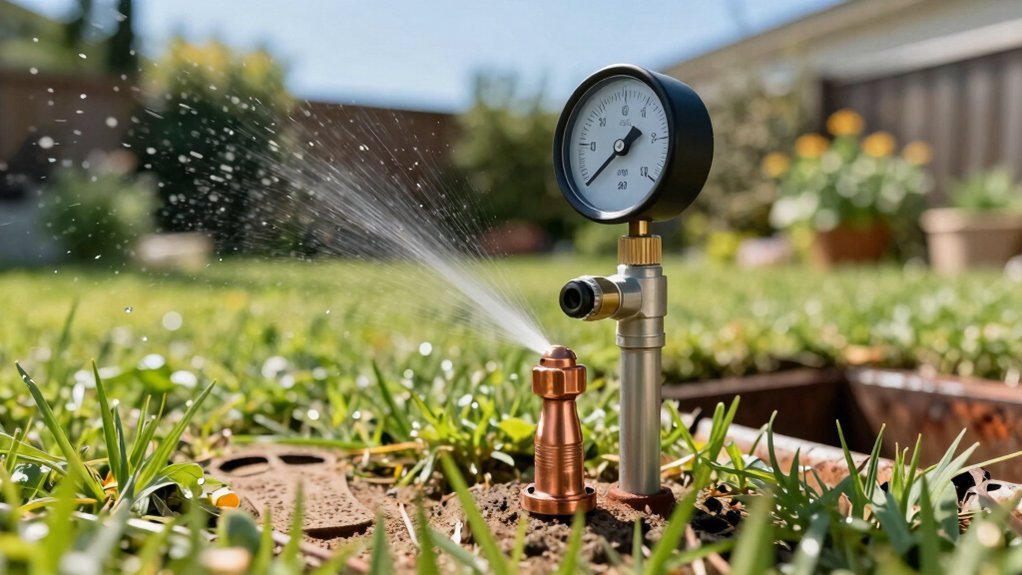
You’re likely using 500–1,000 gallons per hour, so a typical residential sprinkler can easily consume thousands of gallons each week if it isn’t carefully sized and timed. Fixed spray heads deliver 1–2 GPM, rotary heads 0.5–1 GPM, and pop‑up stations can hit 16 GPM, meaning a 6‑zone system running 15 minutes per zone uses about 1,920 gallons per day. Over‑watering, pressure imbalances, and faulty programming quickly inflate that number, but smart controllers and proper zoning can slash usage dramatically. Keep reading to uncover the exact steps and tweaks that can halve your water use.
How Much Water Does a Typical Sprinkler Use?
When you run a typical residential sprinkler, it usually draws between 500 and 1,000 gallons per hour, which translates to roughly 8 to 16 gallons per minute per zone. A fixed spray head delivers 1–2 gpm, a rotary head 0.5–1 gpm, and a rotor sprinkler 2–4 gpm, while pop‑up stations can hit 16 gpm. A six‑zone system at 15 minutes per zone consumes about 1,920 gallons per watering day; a four‑zone, 45‑minute cycle at 12 gpm uses roughly 4,300 gallons weekly. To optimize sprinkler runtime, you must align zone duration with the 1–1.5 inch weekly water need. Monitoring sprinkler efficiency requires tracking flow per head, adjusting pressure, and logging actual usage against the calculated 8–16 gpm baseline. This data‑driven approach prevents over‑watering and reduces waste. Understanding sprinkler head flow rates helps size the system correctly. Proper soil moisture monitoring can further refine water application and conserve resources.
Calculate Your Sprinkler Water Usage in Simple Steps
Knowing the exact flow of each zone lets you turn vague estimates into concrete numbers, so start by measuring the flow rate per zone. Place a tuna‑can container in each zone, run the sprinkler for 15 minutes, then read the water depth with a ruler. Multiply the depth by 4 to get inches per hour; convert to gallons per minute (GPM) by calculating cubic feet per minute and multiplying by 7.5. Record each station’s GPM, then compute daily usage by multiplying GPM by runtime and by the number of zones. Scale to monthly totals using watering‑day frequency. Adjust runtimes for seasonal adjustments and use online calculators to fine‑tune schedules, thereby maximizing efficiency while staying within local restrictions. The meter shows a complete circle of the sweep hand equals 7.5 gallons. Understanding nozzle inches per hour helps you select the right nozzle size for optimal coverage. Hose diameter also influences the flow rate, with larger diameters allowing more water to pass through at a given pressure. Accurate flow‑rate calculation ensures you meet the one‑inch‑per‑week recommendation without waste.
How Sprinkler Head Design Impacts Water Usage
If you choose the right nozzle type, head spacing, and pressure‑flow match, you can keep each zone’s water demand within the system’s capacity and avoid waste. Proper nozzle selection drives flow rate: a 25 L/min rating permits two 360° pop‑ups or twenty spray heads, while quarter‑arc heads consume less per unit. You must calculate total GPM by multiplying each head’s charted flow by its count, then compare the sum to the zone’s design capacity. Monitoring water pressure allows you to verify that each head operates within its rated throw—5′, 8′, 12′, or 15′—and prevents low‑pressure drop that reduces efficiency. Head‑to‑head spacing must follow performance charts to guarantee even overlap without exceeding friction‑loss limits, ensuring uniform distribution and minimal runoff. Water pressure directly influences the number of heads that can be supported on a single line. The system’s overall effectiveness is also limited by pipe diameter and elevation changes, which increase resistance and reduce usable flow. Designing zones based on soil type helps balance infiltration rates and prevents over‑watering. Selecting a nozzle with the appropriate flow coefficient ensures that the system operates efficiently across varying pressure conditions.

PRECISION ARC CONTROL FROM 0° TO 360°: Get pinpoint accuracy for any zone shape or edge. Whether you're watering a narrow walkway or full lawn circle, fine-tuned arc settings ensure no water is wasted.

ADJUSTABLE SPRAY PATTERN FROM 0–360°: Quickly set the arc to match any area — from narrow strips to full circles. No tools needed, just twist and go.

TOOL-FREE INSTALLATION AND BROAD COMPATIBILITY: Fits most pop up sprinkler bodies for fast no-tool replacement delivering instant upgrades to your irrigation system.
Hidden Mistakes That Inflate Sprinkler Water Usage
Choosing the right nozzle, spacing, and pressure‑flow match keeps a zone’s demand within capacity, but the real water‑waste culprits lie in hidden mistakes that slip past design calculations. You’ll find that improper programming of start‑times and cycle‑lengths creates overlap between zones, causing simultaneous discharge that exceeds pump capacity and forces higher pressure. Landscape zoning errors—such as placing heads too close to driveways or ignoring slope—produce overspray onto hardscape, wasting gallons equivalent to a hot‑tub’s volume annually. Leaks in valves, cracked pipes, or stuck heads leak thousands of gallons unchecked. Mixing rotors with low‑IPH sprays in the same zone forces longer runtimes, while pressure imbalances trigger misting or under‑coverage, inflating total water use. Regular audits of these variables prevent hidden waste. Adjusting irrigation schedules to avoid watering during peak sunlight reduces evaporation and conserves water, especially when paired with shade‑timed watering practices. Optimal timing aligns watering with plant uptake cycles, further minimizing waste. Implementing a smart controller can automatically adjust run times based on real‑time weather data and soil moisture levels.

Easy Use App Control: Take charge of your sprinkler system from anywhere with the easy-to-use Hioazo app. Access watering schedules and monitor in real-time, so you won’t have to run back and forth to the garage anymore. Work indoor with 2.4GHz WIFI and 24VAC.

12 ZONE CONTROL FOR COMPLETE LANDSCAPE COVERAGE: Easily manage up to 12 irrigation zones with precision. Ideal for residential yards, commercial properties, or multi-zone setups that require tailored watering.

Intelligent Irrigation Control: The Orbit Smart Sprinkler Controller manages watering with a powerful smart sprinkler that supports a completely automatic watering system
Simple Tweaks to Cut Sprinkler Water Usage by 50
Often a few targeted adjustments can halve your sprinkler system’s water consumption. Install a WaterSense‑labeled smart controller and program planned irrigation schedules that pull real‑time weather and soil‑moisture data; the controller will skip cycles when temperature, humidity, or precipitation make watering unnecessary, cutting use up to 15,000 gallons per year. Shift watering to early morning or dawn, using the cycle‑and‑soak method to let soil absorb water before runoff. Implement zoning by plant needs: group sun‑exposed lawns, shade‑tolerant beds, and trees into separate hydrozones, then assign pressure‑regulated heads and drip lines accordingly. Adjust each zone’s run time and frequency seasonally, and limit zones to six sprinklers with individual valves to prevent overlap. These precise tweaks consistently achieve a 50 % reduction. Early watering reduces evaporation and improves root absorption. Understanding temperature thresholds helps prevent watering during frost‑prone periods. Consider disabling irrigation when temperatures dip below freezing point to avoid pipe damage.

EFFORTLESS AUTO WATERING - Orbit B-hyve XD Smart Hose Timer controls watering based on precise local weather data, ensuring your plants receive the perfect amount of water.

Intelligent Irrigation Control: The Orbit Smart Sprinkler Controller manages watering with a powerful smart sprinkler that supports a completely automatic watering system

Indoor WiFi sprinkler timer puts control of your sprinkler system in the palm of your hand with intuitive Rain Bird mobile app
When to Call a Pro About Sprinkler Water Usage Issues
When you notice uneven watering, low pressure, pooling, or an unexplained spike in your water bill, those symptoms usually signal a malfunction that DIY fixes can’t reliably resolve. You should call a pro when any zone consistently dries out while neighbors stay soggy, when pressure gauges read below 30 psi despite clean filters, or when acoustic tests detect hidden leaks. A certified technician will perform sprinkler system auditing, mapping flow rates, head specifications, and valve timing to pinpoint inefficiencies. If a backflow preventer or master valve fails, only a licensed expert can safely replace it. Professionals also redesign efficient watering schedules, balancing run time against evapotranspiration data, and can reduce usage by 20‑30 % through calibrated adjustments. Selecting the right garden hose fitting material can prevent future leaks and extend system lifespan. Understanding low‑flow head technology can further cut water consumption without sacrificing lawn health. Proper sprinkler irrigation can boost yields of water‑intensive crops such as corn and soybeans while conserving resources.
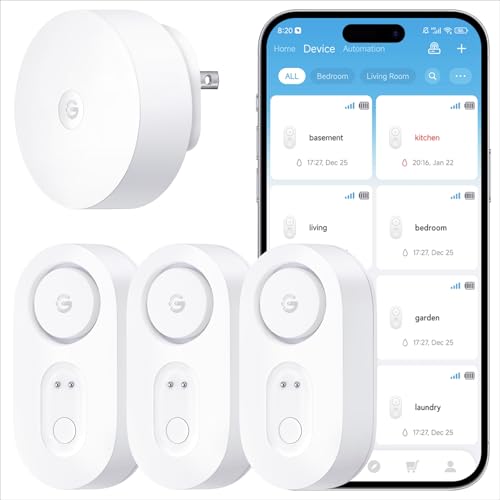
Breakthrough 1804 ft Connectivity: Engineered with advanced Sub-1G long-range wireless tech, our leak detector maintains robust signals over unprecedented distances—reaching up to 1804 feet even through 5 dense walls. Secure every critical space in expansive properties, from deep basements to detached garages and distant outbuildings.

【Complete Leak Detection Kit】 This water leak detector tool includes a compact detector unit, headphones for clear audio monitoring, and a USB Type-C charging cable. Everything you need for comprehensive underground water leak detection — right out of the box
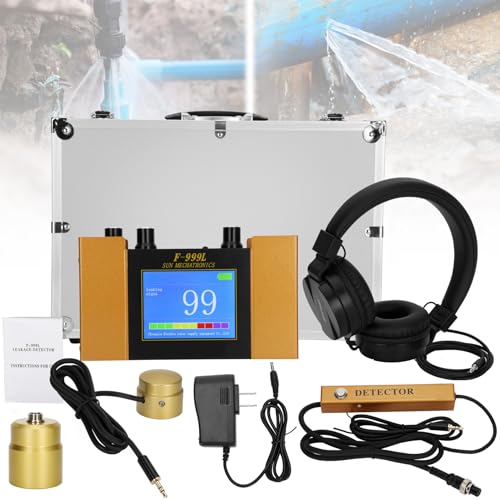
DIGITAL DISPLAY: This underground pipeline leak detector for both household and outdoor use is equipped with a high-definition LCD display, which can visually present the detection data and help you accurately locate the leak points. It is an essential professional testing tool for plumbers, construction workers and water supply personnel.The higher the value displayed by the leak detector, the closer it is to the leakage point