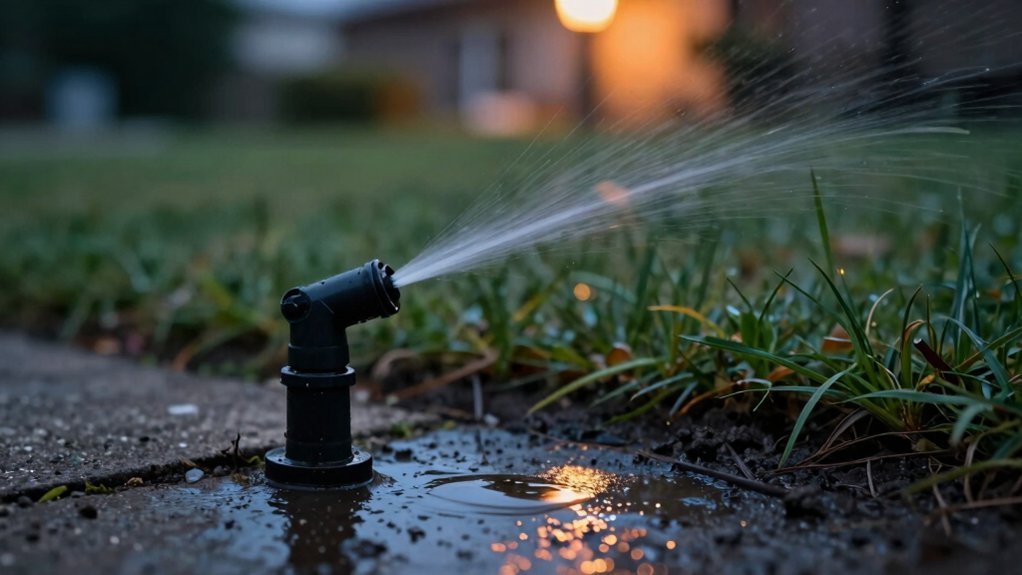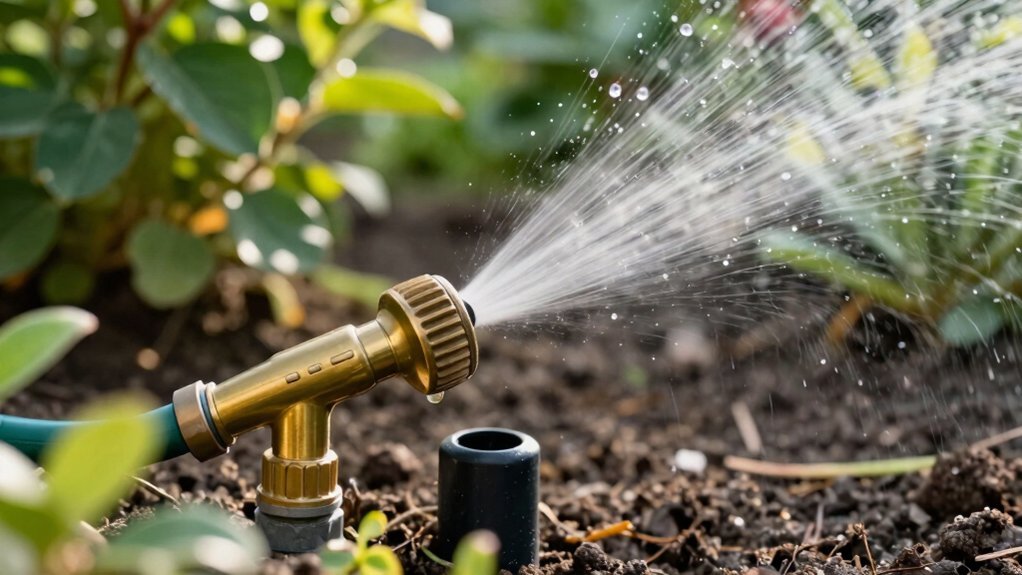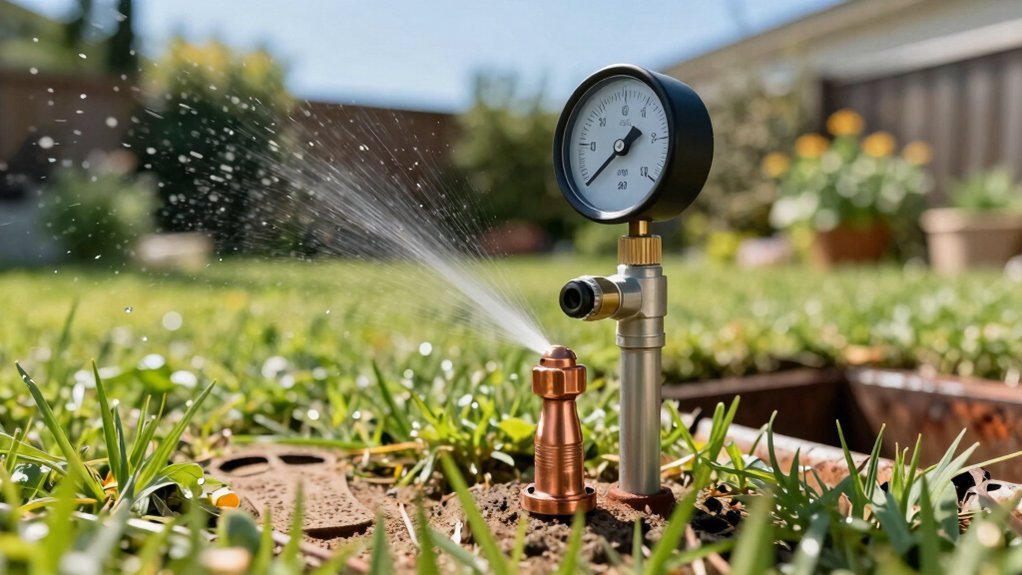
All right, you can swap a standard 1/2‑inch sprinkler head for a drip line, but you’ll need a 10‑15 psi regulator, pressure‑compensating emitters, and a quick filter swap. Obviously you’ll want to turn off the water, attach a swivel adapter to the riser, run ¼‑inch tubing under 30 feet (or ½‑inch for longer runs), and cap any unused risers. Now test the flow with a bucket or flow‑meter, adjust the regulator, and you’ll see water use drop 30‑70 %. Honestly, it depends on your existing valve setup, but the basics stay the same—keep the backflow preventer in place and flush the line each spring. Keep reading for a step‑by‑step guide and zone‑balancing tips.
Why Sprinkler‑to‑Drip Conversion Is Worth It
All right, if you’ve been watching your water bill climb while the sprinklers sputter in the wind, you’ve probably wondered whether there’s a smarter way to keep your garden happy. You’ll see soil savings the you swap to drip because water goes straight to the roots, cutting evaporation and wind drift. Now, a typical drip line runs at 10‑20 psi, so you won’t need a high‑pressure pump—just a regulator and a pressure‑compensating emitter like Rain Bird 4‑ft drip tape. Obviously, you’ll notice a 30‑70 % drop in usage, which translates to a thinner bill and healthier plants. Look, consistent moisture prevents stress, and the targeted flow keeps weeds at bay. Honestly, it depends on your layout, but most homeowners find the conversion worth the modest upfront cost. A filter is essential on the downstream side of the valve to keep emitters from clogging. Understanding timer programming helps you fine‑tune watering cycles for maximum efficiency. Properly sizing the system ensures the required gallons per minute to meet coverage needs without over‑pressurizing the line. Modern systems can incorporate smart controllers to further reduce waste.
How to Choose the Right Sprinkler‑to‑Drip Conversion Kit
All right, before you start hunting for the perfect kit, think about the size of the area you’ll be feeding and the pipe you already have under the grass. You’ll need kit compatibility with your existing 1/2″ or 3/4″ male thread riser, so check whether the adapter fits directly or needs a reducing coupler. Now, look at drip flow: a filter regulator keeps pressure in the 10‑30 PSI range, and a swivel adapter lets you attach poly tubing or dripline. For a small garden, a single riser and a 6‑outlet manifold will do; larger beds may need multiple risers and extra caps. Obviously, you want a kit that includes end caps to seal unused outlets and a pressure regulator to avoid over‑watering. Honestly, it depends on your layout, but brands like Raindrip and Toro have kits that match most pop‑up heads. Identifying sprinkler head type helps ensure the conversion kit fits correctly. Understanding the role of a nozzle in directing flow can prevent mismatched pressure settings. A nozzle actually converts pressure into speed, lowering static pressure as flow accelerates.
Let’s Install Your Drip Tubing – A Step‑by‑Step Sprinkler‑to‑Drip Guide
All right, before you start snipping and laying out drip tubing, make sure the water’s shut off—nothing worse than a surprise spray when you’re trying to tighten a fitting. Now, grab the conversion fitting you screwed onto the exposed riser and attach the soil tubing hose. Push the hose onto the tubing adapter, then secure it with a clamp; a 1/2‑inch hose fits most kits, but you can step up to 3/4‑inch if you need extra flow. Next, install the pressure regulator—most home kits ship a 15‑psi unit, which keeps your emitters from blowing out. Run the hose to each plant, making gentle bends around garden beds. Seal any unused risers with caps, and double‑check that the backflow preventer sits snugly. Look, you’re almost done; just trim excess hose and you’ve turned a sprinkler into a drip line. Use a 1/2‑in riser cap to prevent debris and insect intrusion. You can also employ a metal detector to verify the exact location of the underground riser before cutting. Proper valve maintenance can significantly extend the lifespan of your irrigation system. Sprinkler donuts can reduce water waste by delivering water more directly to the root zone.
Testing and Balancing Flow After Sprinkler‑to‑Drip Conversion
When you finally flip the valve and the drip line starts humming, the first thing you’ll want to do is check that every emitter is getting the right amount of water—otherwise you’ll end up with soggy patches or thirsty corners. All right, start with a quick flow calibration: open the valve, let the system run a minute, then cap the tattletail and flush for 30 seconds to clear debris. Now grab a flow‑meter or a simple bucket test, measure the output at each manifold outlet, and compare it to the 1‑GPH or 2‑GPH specs. Use flow mapping to plot emitter spacing, noting rows and distances, and adjust any ¼‑inch runs that exceed 30 feet. Obviously, if pressure spikes above 25 PSI, install a regulator at the riser. Look, after you balance the zone, run the system again and verify flags stay wet uniformly—if some stay dry, trim tubing or add a T‑elbow. Honesty, it depends on your layout, but these steps keep you from over‑ or under‑watering. Ensure the low‑voltage controller is properly powered to maintain consistent operation. Remember to relieve pressure before making any adjustments to avoid water damage. Consider adding a drip flow regulator to fine‑tune water distribution across longer runs.
Managing Valve Zones: Keep Sprinklers or Switch Fully to Drip
If you keep sprinklers and drip emitters on the same valve, you’ll end up with a mess of pressure spikes and uneven watering. Look, each valve should run either spray heads or drip, never both. Zone zoning lets you keep the old spray zone exactly as it is while you convert another zone fully to drip. That way you maintain drip compatibility with a pressure regulator set to 10‑15 psi, and you avoid the 30‑50 psi surge that kills emitters. Now, pick a valve, pull the pop‑ups, plug the old fittings, and attach a Rain Bird drip kit with a filter and pressure regulator. Obviously, you’ll test the new zone before moving on. All right, repeat for each zone you want to switch, and you’ll keep your garden happy without a single pressure nightmare. Proper zone sizing also depends on maximum flow capacity to ensure consistent coverage. Some systems use manual valves for zones that don’t require electronic control. Faulty wiring can also prevent a zone from activating, so inspect connections before troubleshooting.
Maintaining Your Sprinkler‑to‑Drip System for Long‑Term Savings
A good start is to check your pressure regulator before the first summer run, because a drip line that’s seeing 35 psi will sprout clogs faster than a garden gnome on a trampoline. Now, you’ll want to do soil drip maintenance each spring: flush the lines, inspect screen filters on each riser, and replace any clogged emitters. Look at the controller and set run times to 30‑40 minutes, adjusting for deeper root growth. Obviously, leaks are a no‑go, so cap unused risers with ½‑inch PVC plugs and Teflon tape. All right, when a valve sputters, that’s drip system troubleshooting—turn off water, remove the emitter, and clean with a thin wire. Honesty, if you’ve got surface water, use a media filter; otherwise a simple screen will do. Keep tubing under 30 feet for ¼‑inch runs, switch to ½‑inch for longer stretches, and you’ll preserve efficiency and savings year after year. Use a mesh filter in each sprinkler body to prevent debris from entering the drip line. Properly shielding sprinkler valves with weather‑resistant covers helps avoid damage from rain, debris, and accidental impact. Selecting the right nozzle type can also improve spray uniformity and reduce waste. Regularly inspect wiring for signs of moisture intrusion to prevent corrosion and electrical hazards.