You’ll see low‑voltage signals open a solenoid valve, letting water flow from the main line into Schedule 40 or 80 PVC pipes sized for the zone’s pressure (30‑50 psi). The pressure differential pushes water to pop‑up heads, which rise and spray calibrated arcs matched to soil type, slope, and plant needs. Backflow preventers block reverse flow, while zone‑specific valves and flow sensors fine‑tune timing. If you keep going, you’ll uncover more details on head selection and maintenance.
How a Residential Sprinkler System Moves Water to Your Lawn
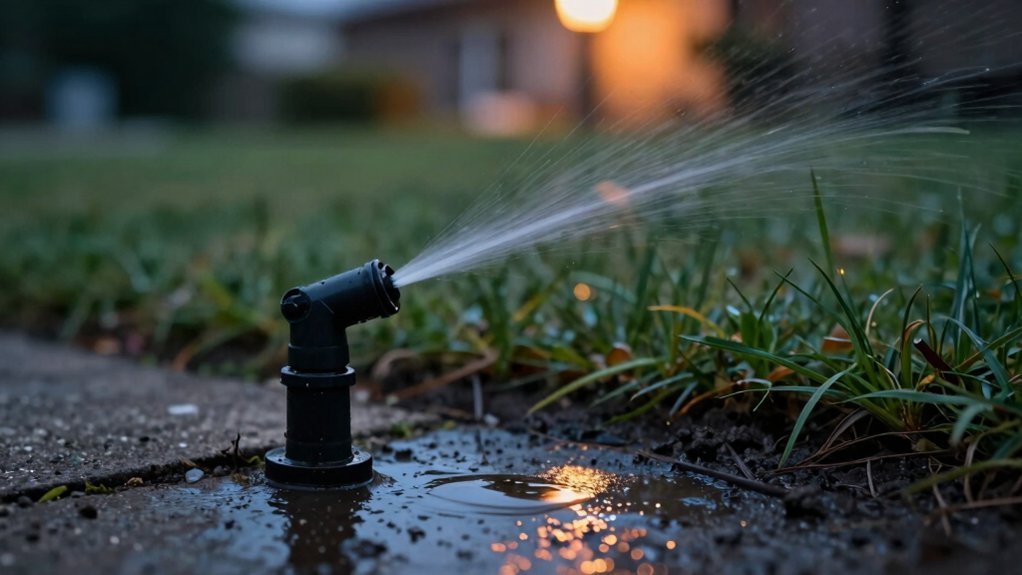
When you turn on the controller, low‑voltage signals open the selected valve, allowing pressurized water from the home’s main supply to surge into the underground PVC network. The valve’s opening creates a pressure differential that pushes water through the main line, then into lateral PVC pipes that branch toward each zone. As water reaches each zone, pressure builds to the designed head, forcing the pop‑up sprinkler heads—often made of brass, plastic, or composite materials—to rise. Rotating or fixed heads then emit water in calibrated arcs, while gear‑driven models maintain constant flow. You fine‑tune sprinkler timing adjustments in the controller to match evapotranspiration data, ensuring each zone receives the exact volume required. This systematic flow from source to head optimizes coverage, reduces runoff, and conserves water. The backflow prevention device protects the potable water supply from contamination. A properly installed double‑check valve near the main supply further safeguards against back‑contamination. Understanding backflow hazards helps homeowners decide when extra protection is needed. Installing a backflow preventer is often required by local codes to prevent contaminated irrigation water from re‑entering the drinking water system.
What Underground PVC Pipes, Valves, and Backflow Preventers Do in a Residential Sprinkler System
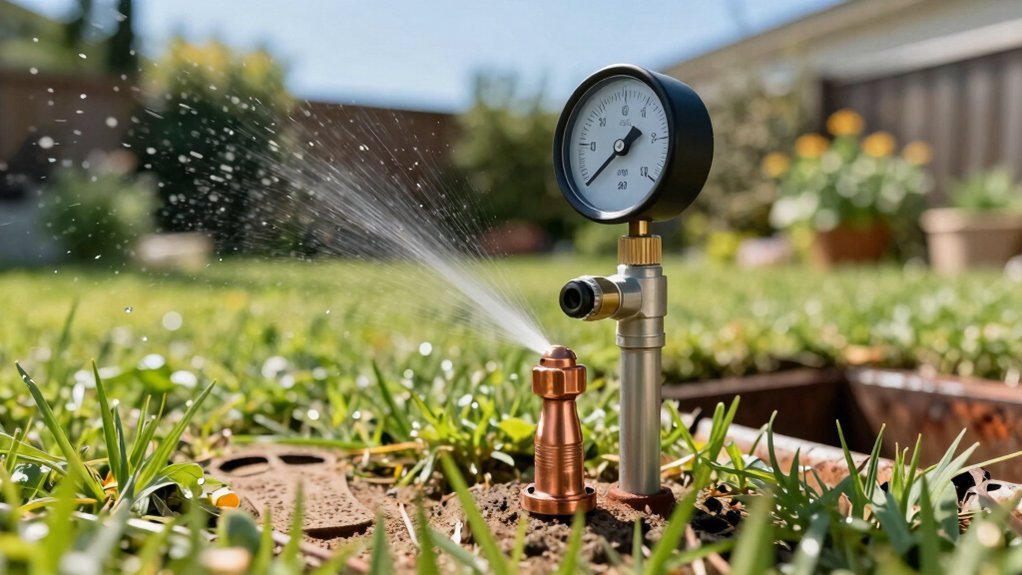
Because the underground network is the backbone of a residential sprinkler system, PVC pipes, control valves, and backflow preventers each serve distinct, data‑driven functions. You’ll select Schedule 40 PVC for typical zones, benefiting from its 6‑8‑inch burial depth in warm climates and 12‑14‑inch depth in cold zones for pipe protection against freeze‑thaw and impact. Schedule 80 is reserved for high‑pressure sections, despite higher cost. Adhesive bonding with primer and cement creates secure joints; you must observe a 10‑15‑minute cure before pressurizing. Valves isolate zones, allowing independent timing and flow rates, while valve boxes protect them and simplify maintenance. Backflow preventers sit at the main entry, blocking reverse flow, satisfying system regulations, and requiring annual testing to verify compliance and water‑quality safety. Deeper trenches are recommended for 4 inch sprinkler heads to accommodate their height and prevent surface damage. Schedule 40 PVC is generally acceptable for most irrigation lines, but local codes may require a specific rating or material approval. Proper soil moisture monitoring can further optimize watering schedules and conserve water. A well‑designed system also includes a pressure regulator to maintain consistent flow across varying terrain.
Choosing the Right Sprinkler Head for Your Residential Landscape
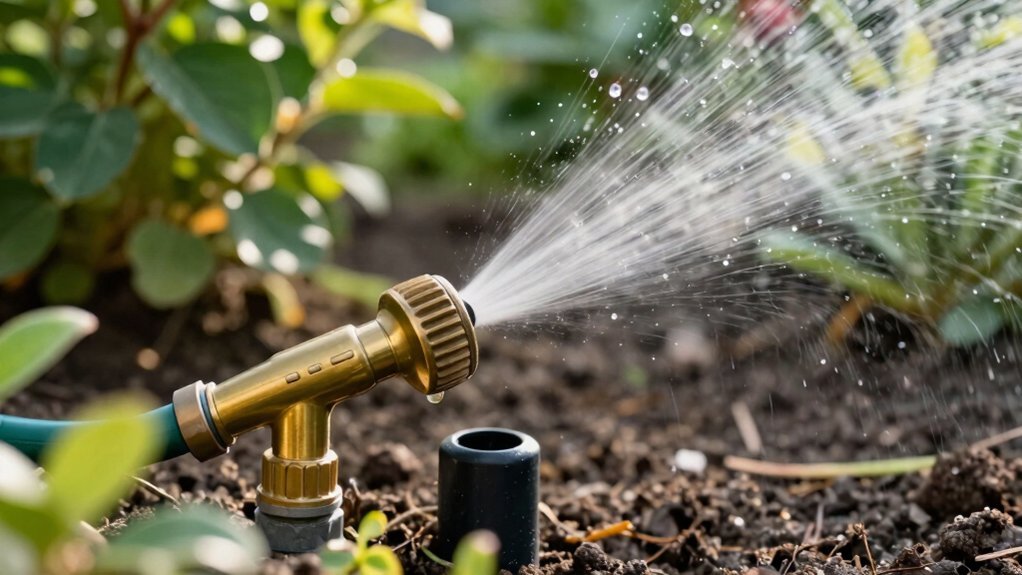
If you want ideal water distribution and efficiency, start by matching the sprinkler head type to the size, shape, and terrain of each zone. For lawns under 30 sq ft, a fixed‑spray head offers precise arcs and low‑pressure operation, simplifying water pressure management. For larger, irregular areas, a rotary head with a gear‑driven nozzle delivers 20‑80 ft coverage; its adjustable spray patterns enable a supreme nozzle configuration that reduces overlap. Pop‑up heads protect high‑traffic zones while providing 5‑35 ft radii; choose 2‑inch heights for tight spaces, 4‑inch for turf, and 6‑12‑inch for shrubs. Multiple‑stream heads excel on slopes, operating at 30‑40 psi and emitting thin streams that improve uniformity. Select material (plastic or brass) based on durability needs, and align each head’s pressure range with your system’s 30‑50 psi baseline. Properly assessing soil type helps fine‑tune head selection for optimal absorption. Understanding water pressure variations across the system can prevent uneven watering and extend sprinkler lifespan. Properly calculating zone flow capacity ensures each zone stays within recommended flow limits for consistent coverage.
Zoning and Solenoid Valves: Delivering Precise, Automated Watering in a Residential Sprinkler System
By dividing your yard into zones that reflect plant type, soil composition, and sun exposure, you can match water delivery precisely to each area’s needs. You assign lawns, shrubs, sunny and shady sections to separate zones, then program the controller to send 24 VAC pulses to the appropriate solenoid valve. Each valve’s electromagnetic coil retracts a plunger, opening a diaphragm that lets 12‑16 bar pressure flow for the programmed interval. This isolates zone water distribution optimization, preventing overspray and conserving volume. For Solenoid valve troubleshooting, monitor voltage, listen for coil clicks, and manually bleed water to confirm zone activation. Wiring integrity, valve box placement, and anti‑siphon positioning further guarantee systematic, data‑driven performance. Turning a solenoid a quarter turn and listening for water flow can quickly reveal which zone it controls, helping to identify bad solenoids efficiently. Understanding the pressure‑balanced design ensures the valve remains stable despite fluctuating water pressure. Some sprinkler systems incorporate built‑in pressure regulators to maintain consistent flow across all zones.
Typical Residential Sprinkler Problems and Easy Fixes
When a residential sprinkler system underperforms, the root cause usually falls into one of three data‑driven categories: nozzle obstruction, head misalignment, or hydraulic loss. You’ll notice brown spots or weak streams when sand, dirt, or mineral deposits clog nozzles; a quick brush or nozzle swap restores flow. Misaligned heads, often caused by soil compaction or traffic, tilt low or high, spraying sidewalks or missing zones—adjust the height or replace cracked casings. Hydraulic loss appears as low pressure, uneven spray, or straight‑line wet patches indicating underground leaks; verify main valve openness, check for cracked PVC, and call a professional if needed. Faulty flow sensors and inconsistent watering schedules amplify these issues, so calibrate sensors and synchronize program times to maintain uniform coverage. Regular maintenance, such as debris removal from sprinkler heads, helps prevent many of these problems. Additionally, inspecting seal integrity on each head can catch early signs of wear before leaks develop. Selecting the appropriate sprinkler head type based on garden layout and plant water needs further reduces waste and improves overall efficiency.
Quick Checklist for Maintaining an Efficient Residential Sprinkler System
Maintaining an efficient residential sprinkler system starts with a systematic, data‑driven inspection that quantifies coverage, flow, and pressure across every zone. Begin with a common sprinkler inspection checklist: walk each line, note misting, misdirected heads, and obstructions; place containers in dry spots to measure spray distance and confirm at least 80 % head‑to‑head overlap. Verify make, model, and flow rate match across the zone, then replace broken heads, clean clogged nozzles, and align for ideal pressure. Test valves, backflow preventers, and insulation for leaks or freezing risk. Confirm controller schedules respect local restrictions, rain sensor is clear, and watering depth stays within ¼‑½ inch. Finally, keep documenting sprinkler maintenance records after each visit to track trends and guide future adjustments. Routine inspections also help detect early leaks, which is essential for fire safety compliance and protecting property. Regular maintenance supports early fire suppression by ensuring the system can activate quickly and effectively.