You’ll find that modern fire‑sprinklers actually protect the environment rather than harm it. They cut greenhouse‑gas emissions by about 98%, drop peak heat release from 13,200 kW to 300 kW, and shrink energy output by a factor of 76. Water use falls 39% on average, with sensors and efficient nozzles shaving another 30%‑plus. Smoke and particulate matter drop dramatically—up to 95% for PM10—while dry‑pipe systems limit heavy‑metal runoff. Keep reading to uncover how these benefits add up.
How Fire Sprinklers Cut Emissions and Water Use
When a fire breaks out, sprinklers slash water consumption and emissions by delivering water only where it’s needed. You’ll see that a single home fire uses roughly 280 gallons in ten minutes, versus 3,524 gallons from a fire‑department hose—a reduction of up to 91 %. Each head releases just 20‑60 gallons per minute, targeting the blaze before it spreads, which curtails polluted runoff and protects aquifers. Modern systems tap greywater or rainwater, enabling water recycling potential while preserving quality through nitrogen inerting. Yet you must meet sprinkler maintenance requirements: regular testing, head cleaning, and pressure checks maintain the system’s efficiency. By demanding these standards, you champion evidence‑based, evidence that cuts water waste, reduces pollutant discharge, and supports broader sustainability goals. The duration a sprinkler stays active depends on heat level and the fire’s size. Sprinklers are activated by thermal expansion of a fusible link, not by simple contact. Additionally, the integrated heat‑sensing technology ensures rapid response precisely to temperature thresholds.
Emission Reductions From Sprinkler‑Activated Fires
Sprinklers don’t just cut water use—they slash emissions too. You’ll find that sprinkler‑activated fires cut greenhouse gas emissions by roughly 98%, slashing carbon dioxide, methane and nitrous oxide releases by 97.8%. The peak heat release rate drops from 13,200 kW to just 300 kW, and total energy output shrinks by a factor of 76. Because the flames are tamed early, combustible material consumption falls below 3%, compared with 62‑95% in unsprinklered blazes. That means far less building material burns—often under 1.2 tons versus 1.15 tons in typical residential fires—directly limiting toxic particulate and pollutant output. These figures illustrate how sprinkler systems deliver decisive greenhouse gas reductions while dramatically curbing combustible material consumption. Rapid detection of heat by sprinklers allows them to activate within seconds, preventing fire spread. Heat‑sensitive glass bulbs trigger the system almost instantly when temperatures rise above the design threshold. Standard sprinkler heads are typically set to activate at around 155 °F (68 °C) activation temperature to balance early fire control with preventing false activations.
Water Savings Achieved With Sprinkler Systems
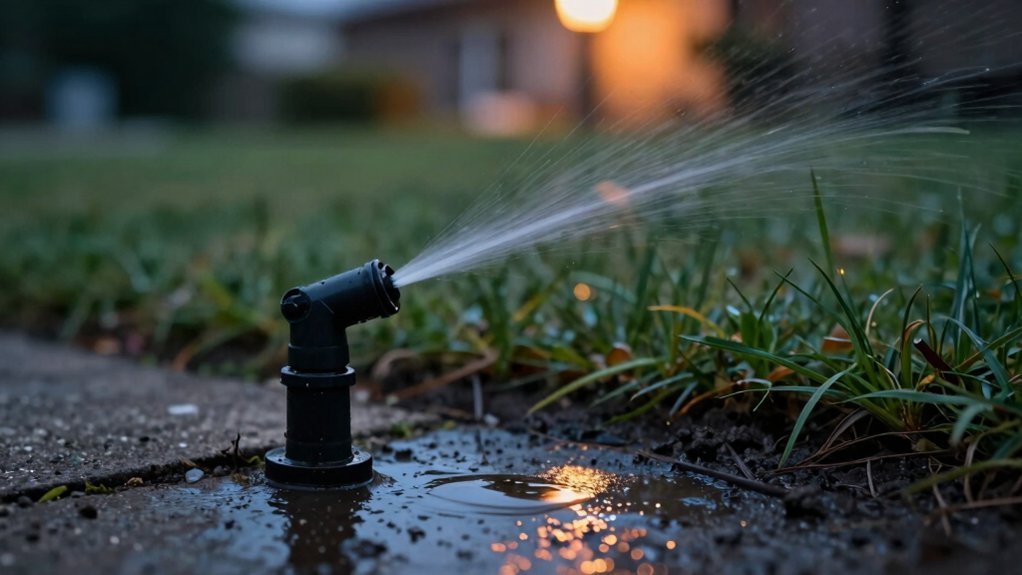
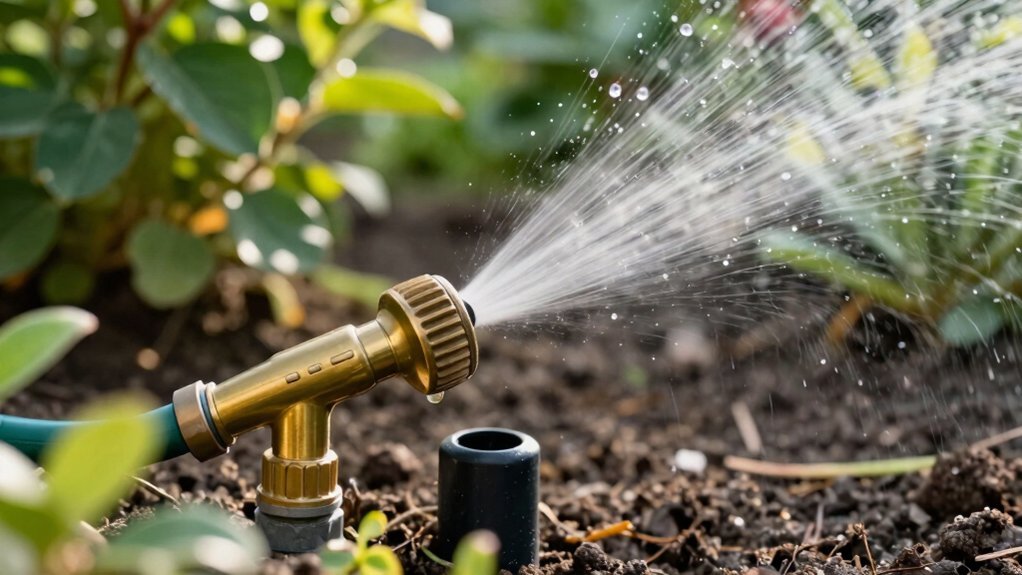
If you install automatic shut‑off devices, you’ll see water use drop dramatically—by 39 % on average in a year‑long California study, with peaks up to 51 % and lows no lower than 11 %. You’ll also notice that rain and soil‑moisture sensors cut consumption further; Arkansas data shows a 66.2 % drop with moisture sensors and a 22.1 % reduction with rain sensors. The best sprinkler upgrades include efficient nozzles and rotating heads, which shave up to 30 % off your bill while delivering uniform coverage. Zoning, scheduling, and smart controllers keep runoff low and pressure steady, turning every drop into cost‑saving water conservation. Regular audits and maintenance lock in these gains, proving that a well‑tuned system can slash waste without sacrificing lawn health. The matched precipitation rates of efficient nozzles ensure water is absorbed evenly, minimizing runoff. Proper soil type assessment helps tailor irrigation to the specific infiltration capacity of each area. Modern systems often incorporate soil moisture sensing to prevent over‑watering. Implementing smart irrigation scheduling further enhances efficiency by aligning watering times with low‑evaporation periods.
How Sprinklers Lower Smoke‑Related Pollution
Because fire‑generated smoke spreads faster than flames, you’ll notice that a well‑tuned sprinkler system can cut particulate matter dramatically—studies show a single 2‑hour spray slashes dust by 75 % and PM2.5 by over 70 %, while a brief 1‑minute, 30‑second burst reduces PM10 exposure by 95 %. You can see that the 115‑bar spray pressure delivers the sharpest particulate matter reduction, and even a 100‑bar burst with a dust suppressant rivals that performance. The data reveal that a single targeted spray can achieve over 90 % PM cut, limiting the inhalable toxins that irritate lungs. By suppressing smoke at its source, sprinklers deliver clear respiratory health benefits, cutting exposure to carcinogenic particles and easing asthma triggers. This evidence backs the call for mandatory sprinkler installation in high‑risk structures. Sprinklers also complement fire extinguishers by controlling fire spread and reducing the need for extensive manual suppression. Moreover, compliance with NFPA 13 requires that elevator shafts be protected by a wet‑pipe system to meet fire‑resistance ratings. Early detection and automatic activation further enhance life‑safety outcomes.
Heavy‑Metal Risks in Non‑Sprinkler Fire Water
Heavy‑metal contamination from fire‑suppressant water is a growing concern, and the data make that clear. You’ll see that sprinkler runoff metal concentrations often dwarf those in regular irrigation, yet non‑sprinkler fire water carries even harsher loads. Tests on Phos‑Chek LC‑95 W and eight other retardants reveal chromium, cadmium, arsenic, lead, vanadium, manganese, antimony, and thallium far exceeding EPA drinking‑water limits—some up to 2,880 times the regulatory ceiling. Post‑fire discharge water quality shows spikes of cadmium a1,000 fold in Arroyo Seco and multi‑order‑of‑magnitude rises in lead and other metals across urban watersheds. These metals leach from soil, accumulate in treatment sludge, and threaten aquatic life. You must demand stricter monitoring and tighter controls to protect downstream ecosystems. Properly designed sprinkler systems can significantly reduce fire‑related metal runoff. Dry‑pipe systems keep pipes empty until a fire‑triggered valve fills them with water, reducing the volume of contaminated water released. Large‑area ESFR systems can also mitigate runoff by limiting the amount of water applied per incident.
Why Sprinkler Waste Has Lower Pollutant Loads
While many assume all fire‑suppression runoff is equally hazardous, data show that sprinkler‑generated waste carries markedly lower pollutant loads than non‑sprinkler fire water. You’ll see that precise timing and targeted discharge cut water use, achieving reduced chemical runoff while still quelling dust. Studies reveal that 115‑bar sprays lower PM2.5 by 72 % and TSP by 40 % in minutes, meaning less contaminant volume reaches the soil. Efficient irrigation creates smaller return flows, so salts and residues stay confined and are filtered naturally by vegetation. By maximizing irrigation efficiency, you limit erosion and keep sediment loads low. This evidence‑based approach supports advocacy for sprinkler adoption: it safeguards air, water, and ecosystems without sacrificing fire‑safety performance. The flow rate of a sprinkler system directly influences its pollutant reduction capability. Understanding gallons per minute calculations helps size systems for optimal environmental outcomes.
How EcoSmart Filters Capture Metals and Sediment
The lower pollutant loads achieved by precise sprinkler timing set the stage for a practical solution to the heavy‑metal dilemma: EcoSmart filters. You’ll see the system uses a polished 304 stainless‑steel housing that resists corrosion at 150 psi, while a basket strainer grabs sediment before water reaches the hybrid cartridge. Inside, the cartridge sequesters zinc, lead, mercury, chromium and nickel, meeting EPA detection limits in independent labs. Because the cartridge holds both metals and bacteria, you must track cartridge replacement frequency to avoid breakthrough. Sediment disposal considerations are simple: after flushing, the basket can be emptied into standard trash, and the spent cartridge is discarded according to complying with NFPA25 requirements and protecting storm‑drain ecosystems. Proper backflow prevention is essential to keep contaminated water from re‑entering the potable supply. The backflow preventer is typically installed near the water main or at the point where the irrigation line connects to the household supply. Local plumbing codes often require a backflow preventer for any outdoor irrigation system.
Best Practices for Maintaining Efficient Sprinklers
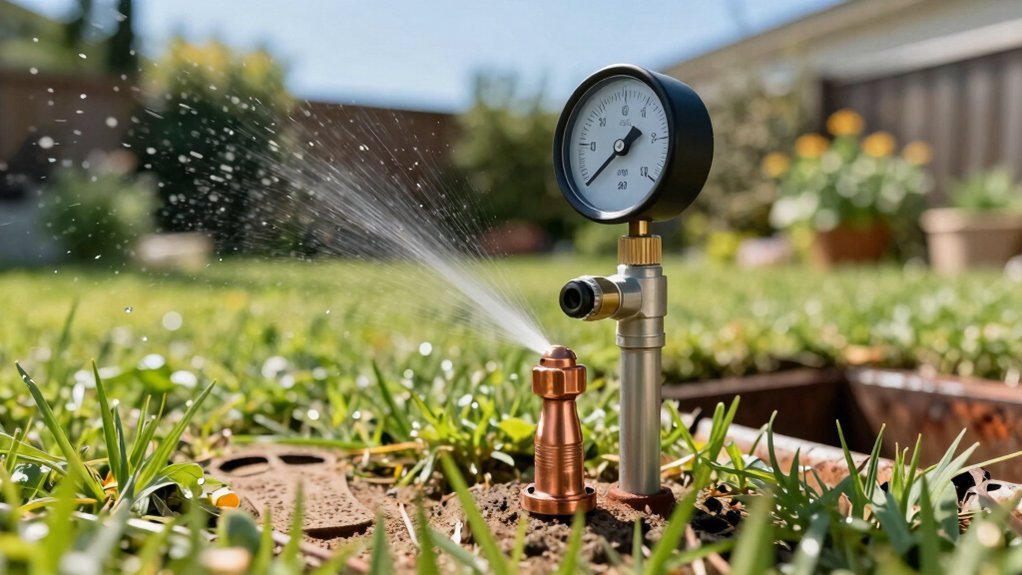
Most lawns run best when you keep water pressure between 40 psi and 65 psi, because any sudden spike or dip signals a blockage, a cracked pipe, or a mis‑set regulator. You should start by reviewing pressure regulator selection; install a reliable unit after the meter or use pressure‑regulating heads to maintain a consistent flow. Conduct monthly sprinkler head inspections, unclogging with slender wire and cleaning built‑in filters. Remove the last nozzle on each line to flush debris before each season. Integrate soil moisture monitoring to pause watering when the ground is already saturated, and pair it with rain and freeze sensors for automatic shut‑off. Adjust spray patterns to target only planting zones, reposition misaligned heads, and schedule watering at pre‑dawn to curb evaporation. Regular professional audits catch hidden leaks and guarantee optimal performance.
Combining Energy‑Efficient Appliances With Sprinklers for Maximum Sustainability
Optimizing sprinkler pressure already cuts water waste; pairing that efficiency with ENERGY STAR‑rated appliances amplifies the impact. You’ll find that when a household runs a solar‑powered sprinkler system alongside high‑efficiency washers and HVAC units, total energy use drops dramatically, creating carbon sequestration opportunities through lower emissions. Evidence shows a 97.8% reduction in greenhouse gases for homes with sprinklers, and ENERGY STAR appliances add another 10‑15% cut in electricity demand. Smart, connected appliances synchronize with sprinkler controllers, preventing overlap and maximizing renewable energy integration. By leveraging recycled greywater for fire suppression and coupling it with low‑energy appliances, you shrink runoff, curb pollution, and push the household carbon footprint toward net‑zero. This dual‑strategy delivers measurable climate benefits while safeguarding property and the environment.