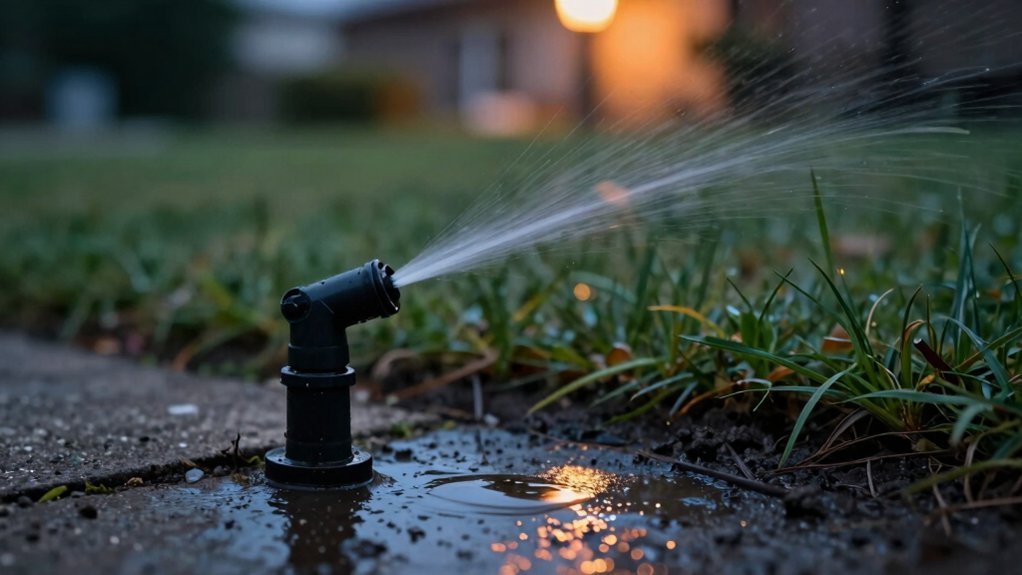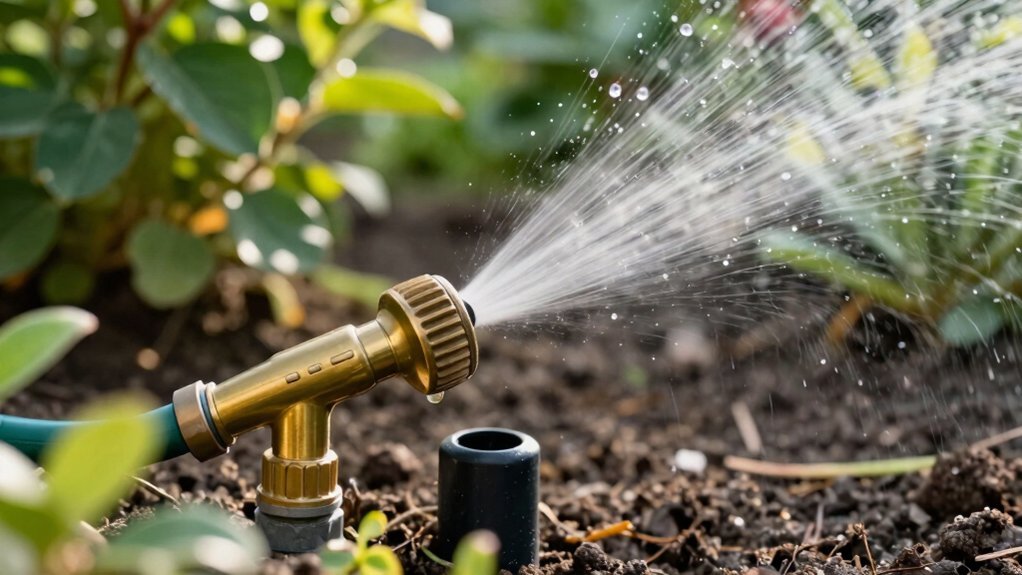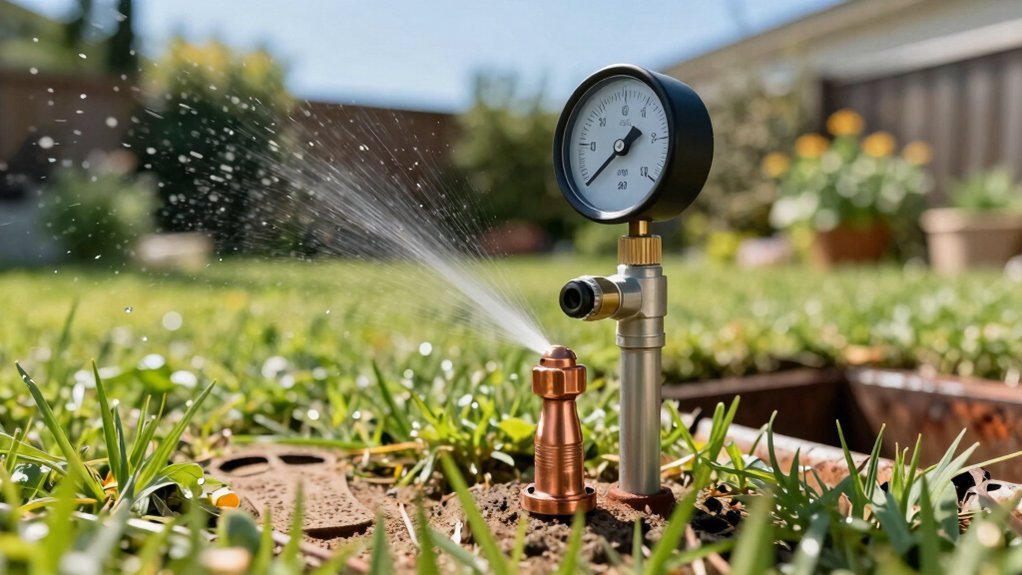
A typical residential sprinkler head will shatter if you hit it with about 15–20 lb‑ft of torque or cause a pressure spike near 55 psi, while commercial brass or stainless‑steel heads can take far higher forces before bursting. Impacts from carts, tools, or ladders can crack the glass bulb instantly, and sudden pressure spikes from pipe friction or elevation changes add stress. If you keep an eye on torque and pressure limits, you’ll avoid most breakages—and the next section shows how to pick the most durable heads.
How Much Force Bursts a Sprinkler Head?
A typical sprinkler head will burst when the pressure exceeds its design limit by roughly 20–25 psi, so anything above 45–50 psi for drip emitters or 55–60 psi for spray/rotator heads is enough to snap the component. You’ll notice that sprinkler head burst pressure hinges on both the head type and system layout. Drip emitters, optimized for ~20 psi, hit burst pressure limits near 40‑45 psi, while spray and rotator heads, designed for ~30 psi, fail around 55‑60 psi. Friction losses from pipe diameter, fittings, and elevation—0.433 psi per foot—add to the stress, especially when many heads fire together. Insulating above‑ground lines and installing pressure regulators keep pressures within safe margins, preventing accidental bursts. The thrust on a nozzle can be estimated using the momentum‑change formula F = ṁ(V_out – V_in) for precise pressure‑force analysis. This transformation follows the principle of energy conversion where pressure energy becomes kinetic energy as the fluid accelerates through the nozzle. Proper nozzle selection also influences spray uniformity and droplet size, which are essential for efficient coverage and minimizing waste.
Which Sprinkler Head Designs Offer Highest Durability?
If you need a sprinkler head that will outlast harsh weather and constant use, focus on designs that combine robust materials with protective engineering. Material based designs like the brass Orbit BRS, stainless‑steel K‑Rain SuperPro, and bronze Impact heads resist rust and wear, while all‑metal components keep corrosion at bay. Pressure regulated designs such as the Rain Bird 5000 Series, Hunter PGP‑adj, and gear‑driven rotors with built‑in regulation maintain steady flow, preventing stress spikes that can crack weaker parts. Choose gear‑driven rotors with enclosed bodies for dirt protection, and opt for impact heads when you need simple, hard‑water‑tolerant units. These choices give you the longest service life with minimal upkeep. Understanding the valve’s pressure‑triggered opening is essential for reliable operation. Selecting a hose with a high kink‑resistance rating further enhances durability in demanding garden setups. Hunter’s premium cost is often offset by lower water waste and reduced repair frequency over time.
How to Identify High‑Durability Sprinkler Heads?
Strong, long‑lasting sprinkler heads reveal themselves through material, design, and performance specs, so start by checking for brass or stainless‑steel construction, gear‑drive or impact mechanisms, and a low RTI (≤ 50) for quick activation. You’ll spot sprinkler head impact resistance in brass impact models that stay reliable under heavy use. Look for stainless‑steel finishes and special coatings that boost sprinkler head weatherability, especially in fire‑protection units. Upright designs signal rugged industrial intent, while quick‑response heads indicate fast thermal sensitivity. Verify the RTI rating—≤ 50 means rapid fire detection. Cross‑check K‑factor values to match flow needs, and confirm the head’s intended application, whether F1FR for factories or pop‑up rotors for irrigation. These checks let you identify truly durable heads. Proper installation can extend a sprinkler head’s life by up to 15 years when aligned with manufacturer guidelines. Understanding sprinkler flow rate helps ensure the selected head delivers adequate water volume for the protected area. When wiring a new sprinkler timer, be sure to follow local electrical codes to avoid safety hazards and ensure reliable operation.
Residential vs. Commercial Sprinkler Head Durability
Why does durability differ so dramatically between residential and commercial sprinkler heads? You’ll notice residential heads last 20‑50 years, but dry lofts, dusty garages, and kitchens with high humidity erode them faster. Their metal parts face temperature extremes and moisture, so corrosion resistance matters; many carry polyester or nickel coatings, yet they’re still more vulnerable than commercial units. Commercial heads use copper or steel, designed for decades under harsh conditions, and they’re often coated with PTFE for superior corrosion resistance. Maintenance also splits: you perform annual, pre‑winter checks, while facilities schedule frequent, professional inspections across large zones. Because commercial systems must meet stricter regulations, they’re built tougher and tested to 50‑year lifespans, whereas residential heads are simpler, less robust. Proper water maintenance, pressure] can significantly extend the functional life of any sprinkler head. Automated watering conserves water by delivering precise amounts only when needed.
What Everyday Actions Shatter Sprinkler Glass Bulbs?
Ever wonder which routine tasks can instantly shatter a sprinkler’s glass bulb? You’ll find that ordinary impacts—like bumping a cart, swinging a tool, or brushing a scissor lift too close—can crack the bulb in seconds. Even a ladder strike or forklift collision delivers direct force that shatters the glass. Heat exposure from torches, unit heaters, or bright lights expands the fluid, prompting sudden breakage. Dropping a sprinkler during handling creates microscopic cracks that grow into full failure, a classic case of gradual degradation. Freezing temperatures build pressure in water lines, while prolonged sunlight fades fluid color and weakens the bulb. Keep clearances tight, avoid blunt objects, and protect the head from heat to prevent accidental activation. Check head height before mowing to avoid striking the bulb. Maintaining a minimum clearance of at least 12 inches between fixtures and sprinkler heads helps ensure unobstructed water spray and proper system operation. Driving over a sprinkler head can cause a vehicle under to suffer suspension damage and may also rupture the irrigation line.
How Much Water Damage Does a Broken Head Cause? Quick Repair Tips
How much water can a single broken sprinkler head waste? You can lose up to 15 gallons per minute, which adds up to 225 gallons in a 15‑minute cycle and thousands per season. That surge creates hidden water leaks, floods the yard, and saturates soil around the foundation, leading to mold, siding rot, and even cracks. Your water bill spikes by $20‑plus monthly, and larger misaligned heads double typical household costs.
Quick repair tips: run the system manually, walk each zone, and watch for geysers or pooling. Shut off any zone with a broken head immediately. Adjust or replace misaligned or damaged heads on the spot. If you spot underground line leaks, call a pro for same‑day replacement. Regular inspections keep hidden water leaks and sprinkler misalignment from turning into costly damage. Bi‑annual inspections are essential to catching issues early and conserving water.