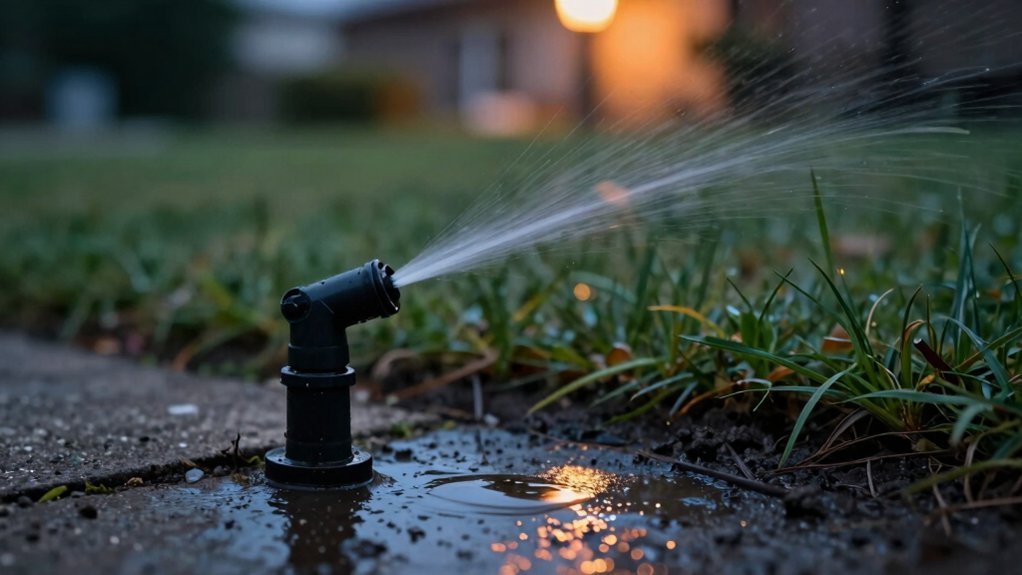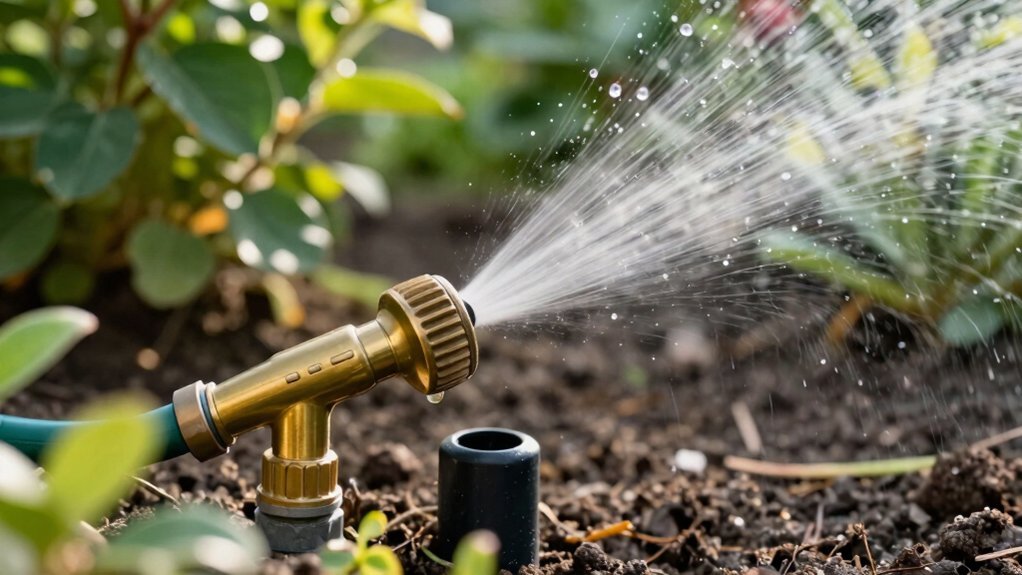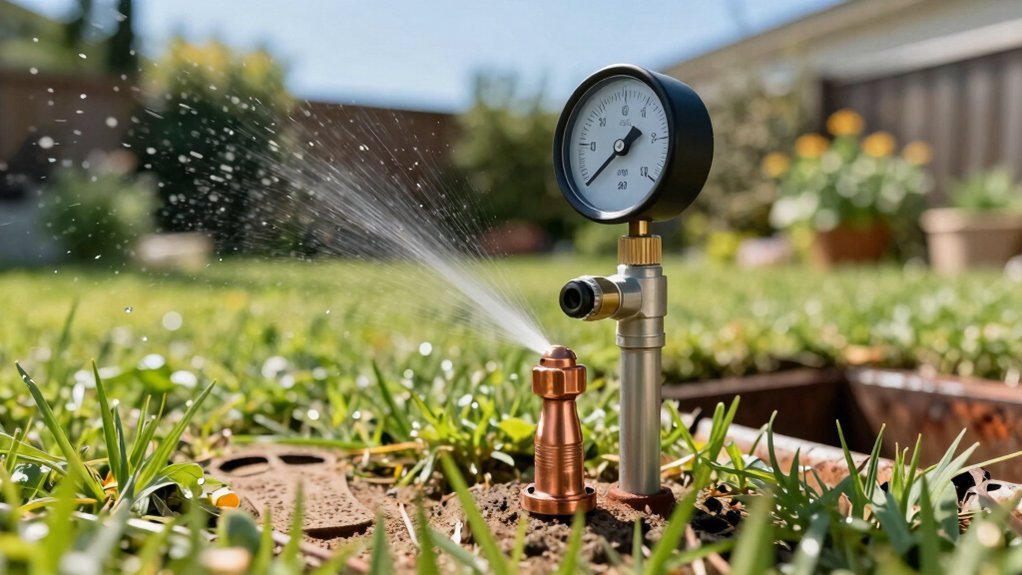
You get water from the municipal line, through a backflow preventer, into a pressurized PVC mainline that feeds solenoid‑controlled zone valves. When a valve’s coil energizes, a magnetic field lifts a steel plunger, opening a dump port so water rushes to pop‑up heads that spray a fan‑shaped pattern at 20‑30 psi. The system zones the yard, lets you set schedules, and uses smart controllers to adjust for weather and soil moisture, cutting waste and boosting plant health. Keep going to uncover more details on design and troubleshooting.
How an Automatic Sprinkler System Moves Water From Source to Heads
How does water travel from the municipal supply to each sprinkler head? You connect the supply line to the city meter, then a tee diverts flow toward the irrigation system. A backflow preventer, installed after the meter, blocks reverse flow and serves as the main shutoff. PVC mainline pipe, buried 2‑6 ft, carries pressurized water to the zone valves; a master valve may sit upstream for whole‑system control. When a zone valve opens, water runs through lateral PVC or poly tubing to swing joints that position the heads below ground. The heads pop up under pressure, delivering a fan‑shaped spray within the 20‑30 psi water pressure recommendations. Regular sprinkler head maintenance—checking for clogs, proper alignment, and seal integrity—keeps flow consistent and prevents leaks. Electrical current activation ensures the sprinkler valves open automatically when a fire is detected. The backflow preventer is typically a double‑check valve that meets local plumbing code requirements. Proper installation of a backflow preventer is essential to protect the potable water supply from contaminated irrigation runoff. It is also advisable to install a backflow preventer on any hose bib that could be used for garden watering to prevent potential contamination.
How Automatic Sprinkler System Valves & Solenoids Control Flow
A solenoid valve is fundamentally a miniature electromechanical gate that lets you start or stop water flow to a sprinkler zone with a single 24 VAC pulse. When the controller energizes the insulated copper coil, a magnetic field pulls the steel plunger, opening the dump port and allowing pressure in the bonnet chamber to lift the diaphragm off its seat. The diaphragm’s lift equalizes pressure and initiates flow within one second. When the signal drops, the spring returns the plunger, sealing the dump port; pressure builds above the diaphragm, forcing it down onto the seat and stopping flow. Solenoid design variations—such as coil turn count or plunger geometry—affect response time and power draw, while diaphragm maintenance considerations include periodic inspection for wear, ensuring the seal remains intact to prevent leaks or delayed closure. The filter screen on the diaphragm bottom filters water flow and protects the valve from debris. Understanding the pressure‑balanced design helps prevent uneven watering caused by fluctuating line pressure. Some sprinkler valves incorporate an internal pressure regulator to maintain consistent flow despite varying supply pressures. Regularly inspect the valve for low pressure symptoms to catch issues early.
Compare PVC and Polyethylene Pipes for Sprinkler Lines
When a solenoid valve opens, the water travels through the line that connects the controller to the sprinkler heads, and the choice of pipe material directly influences how efficiently that flow is delivered. PVC offers rigid, schedule‑40 or class‑200 walls that handle up to 140 psi and 140 °F, providing superior pressure retention for static, low‑velocity systems. Its chemical compatibility with acids, alkalis, and oils makes it ideal for fertilizer‑laden soils, but its UV radiation resistance is limited, so burial or shielding is required in sunny locations. Polyethylene tubing, typically black and flexible, tolerates UV radiation better and eases installation, yet it caps at roughly 100 psi and 110 °F and has narrower chemical compatibility. Poly’s lower cost and lighter weight suit low‑pressure layouts, but expect a 10‑15‑year service life and occasional cleaning to prevent clogs. Larger pipe sizes are used for runs from source to start of delivery system. Use of approved PVC ensures compliance with local plumbing codes and pressure rating requirements. Proper sizing of the main line is crucial to maintain consistent flow throughout the irrigation network. Garden hose threads are typically straight‑seal and differ from NPT’s tapered design.

【PVC Female Coupling】FNPT female threads on both ends for connecting two pipes or PVC fittings with MNPT male threads. Rotate to remove for easy maintenance and cleaning later.

Critical Sizing Note - Please Read Before Buying: This 2" PVC tee has an actual inner diameter of 2.375 inches (60.33 mm). It is specifically designed to fit standard 2" PVC SCH40 pipes, which have an outer diameter (OD) of 2.375" (60.33 mm). Please measure your pipe's OD to ensure it matches 2.375" before ordering. If your pipe's outer diameter measures only 2.00", this fitting will be too large
Divide Your Yard Into Zones for Targeted Watering
Because water pressure and plant water requirements differ across a landscape, you’ll want to split your yard into separate irrigation zones, each controlled by its own valve and schedule. Assign each zone to plants with similar demand—lawns, shrubs, vegetables—to match flow rates and timing. This approach showcases the advantages of zoned irrigation: reduced runoff, precise water use, and protection of low‑water natives from overwatering. When configuring zones, calculate tubing capacity (e.g., 200 gph for ½‑inch pipe) and install pressure regulators where needed. Set schedules that reflect root depth and exposure, e.g., 20‑30 min for lawns, 10‑20 min for flower beds. Regularly inspect valve operation and adjust timers to maintain irrigation zones efficiently, ensuring consistent moisture delivery and system reliability. Measure water using a tuna can to verify that each zone delivers the recommended 1/2 inch per week. Properly soil testing helps fine‑tune watering schedules for varying soil moisture retention. Uniform flow across zones prevents pressure drops and ensures even distribution. Consider the maximum zone area to avoid exceeding pipe flow limits and maintain adequate spray patterns.

BUILT-IN FLOW CONTROL FOR ZONE PRECISION: Control water flow to each irrigation zone and prevent overwatering. Helps improve system efficiency, reduce misting, and support healthier landscapes.

EFFICIENT SPRINKLERS FOR YARD - Add wireless sprinklers easily with our battery-powered controller and 1" FPT jar-top valve.

Intelligent Irrigation Control: The Orbit Smart Sprinkler Controller manages watering with a powerful smart sprinkler that supports a completely automatic watering system
Select Rotation, Oscillation or Fixed Heads for Desired Coverage
Choosing the right sprinkler head—rotation, oscillation, or fixed—lets you match head shape to zone size, soil type, and water pressure, ensuring efficient water use and minimal runoff. Rotation heads give circular spray, cover 15‑50 ft, and need 30‑50 PSI; their adjustable arc and radius provide pattern adjustability for large lawns, reducing head count and trenching. Oscillation heads rock back‑and‑forth, using tabs and a fine‑tuning knob to set full or half coverage; they excel at rectangular pattern adjustability, delivering even distribution without mist drift. Fixed heads stay stationary, produce a set circular pattern, and suit zones under 30 × 30 ft with PSI < 40; adjustable nozzles allow limited pattern adjustability for irregular spaces. Select based on PSI, soil, and area to achieve efficient coverage. The fixed point is the reference for rotation adjustments. Proper soil moisture management helps prevent over‑watering and promotes healthier plant growth. Understanding sprinkler radius is essential for calculating optimal head spacing and conserving water. For gardens with varying terrain, consider zone‑specific watering to tailor irrigation to each area’s needs.

Package Include: 50 drip emitters, 50 barbed coupling (on the emitter, take it down for using), enough to create a small irrigation system. The dripper is 5.1'' long, can be stably installed on the soil directly

ADJUSTABLE ARC & SPRAY DISTANCE: Includes a preinstalled 3.0 GPM nozzle with an arc that adjusts from 40° to 360°, ideal for both full and part circle coverage. Delivers a spray distance of approximately 22 to 52 feet, with optional nozzles (sold separately) allowing further customization.

The #1 best-selling brass impact sprinkler
Wet vs. Dry Irrigation Systems: Pros, Cons & When to Use
If you need a fire‑suppression system that works instantly and costs less to install, a wet sprinkler system is usually the better choice; it keeps water under pressure in the pipes at all times, delivering immediate discharge when a head activates. Wet systems excel in heated, temperature‑controlled spaces because they offer rapid response, low installation cost, and minimal component count, but they carry water damage risks and require corrosion prevention measures to counter constant moisture exposure. Dry systems, by contrast, fill pipes with pressurized air or nitrogen, eliminating freezing hazards and protecting sensitive equipment, though they introduce a short delay, higher upfront cost, and more complex maintenance. Choose wet for standard indoor environments above 40 °F, and dry for unheated warehouses, garages, or cold‑storage zones where freeze protection and equipment safety outweigh the slower activation. The wet‑pipe system is the most widely installed fire‑sprinkler design worldwide. Understanding the dry‑pipe principle helps explain why some installations keep pipes empty until a fire triggers a valve. A sprinkler will only fire when its thermal element reaches the activation temperature, not from mere contact.
Smart Controllers: Weather‑Based Scheduling & Soil‑Moisture Adjustments
Wet sprinkler systems give you instant fire suppression, but they don’t adapt to changing environmental conditions. Smart controllers replace static timers with weather‑based scheduling, using real‑time evapotranspiration data, temperature, wind, solar radiation, and humidity. They integrate soil‑type and sprinkler application rates to compute precise run times, cutting waste by up to 7,600 gallons per year. Signal‑based, historic ET, and on‑site sensor models let you retrofit existing valves without rewiring. Remote app control helps you meet regulatory compliance requirements, such as odd‑day or nighttime watering restrictions. By aligning irrigation with actual plant demand, you lower water bills, protect plant health, and extend system life, fitting comfortably into multi‑year maintenance cycles. Regular maintenance can also mitigate controller wear and prolong its service life. Rain sensors detect moisture and automatically shut off the system to prevent over‑irrigation.

Indoor WiFi sprinkler timer puts control of your sprinkler system in the palm of your hand with intuitive Rain Bird mobile app
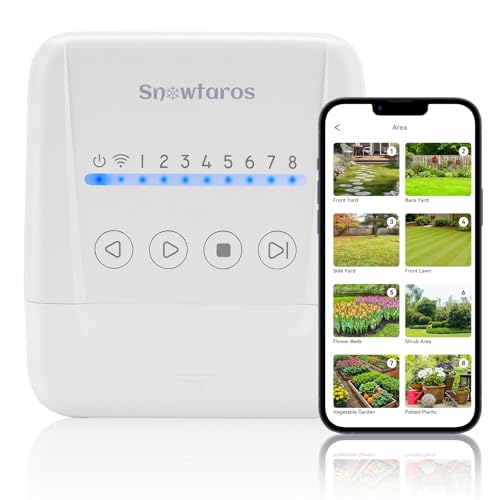
8 Zones Flexible Custom Scheduling --- This smart sprinkler controller supports 8 independent custom watering schedules with adjustable run times, start times and frequency. The Quick Run function allows instant watering without disrupting plans, and you can name and picture for zones for clear garden/yard irrigation management.

Advanced Smart Irrigation Control: The Orbit B-hyve XR Smart Sprinkler Timer manages underground watering with a powerful smart sprinkler timer system featuring WiFi-enabled connectivity
How to Wire Your Valves for Reliable Low‑Voltage Operation
When you install a low‑voltage sprinkler system, the key to reliable operation is a well‑organized wiring scheme that keeps each valve’s hot lead and the shared common lead clearly separated and securely terminated. Use 16‑ or 18‑gauge copper multi‑strand cable; a 6‑strand bundle supports four zones plus a white common, while a 7‑strand bundle adds a spare zone. Route each color‑coded hot wire to its controller terminal, then attach the common wire to the COM screw. Trim solenoid leads to fit tight, silicone‑filled waterproof caps, and secure splices with watertight nuts before taping the assembly. Keep slack in the trench, place splices in valve boxes, and verify color‑zone documentation to maintain voltage delivery optimization and waterproof connection integrity. Run the wire through PVC conduit from the ground to the controller to protect it from damage as it exits the trench.
Testing Your Automatic Sprinkler System & Troubleshooting Common Issues
Why test your sprinkler system regularly? You must conduct periodic inspections to verify that valves, gauges, and heads respond as designed and to catch identifying system anomalies before they cause failure. Follow NFPA 25: perform an annual full inspection and functional test, weekly gauge checks on dry or pre‑action lines, and monthly pressure checks on wet pipe networks. Quarterly, activate the water‑flow alarm; quarterly, examine heads for corrosion, paint, or obstructions. Use the test valve on wet systems, release pressurized air on dry systems, and confirm detection‑trigger sequences on pre‑action units. If pressure readings drift, flush suspected obstructions and inspect pipe interiors every five years. Replace damaged heads, consult contractors for corrosion, and document each test to maintain compliance and safety. Check gauge on the sprinkler riser and open the drain to run a garden hose outside, ensuring the outside alarm device activates.
Measuring Water Savings & Cost Benefits of an Automated System
If you quantify water use before and after installing an automated irrigation system, the data reveal measurable savings and clear financial returns. Sensor based optimization and demand responsive scheduling cut consumption by 20‑50 % in residential landscapes, translating 15,000 gallons to 7,500‑12,000 gallons annually. Rain sensors alone trim water use 22.1 % and soil‑moisture sensors 66.2 % over three years, delivering 87 % and 200 % ROI within the first year. Automatic shut‑off valves add a 39 % reduction, preserving pressure and preventing break‑loss. WaterSense sprinklers save roughly 5,600 gallons and $60 per year, while flow‑reduction heads save $280 per six‑month season. Collectively, these metrics demonstrate quantifiable cost benefits and operational efficiency.