You’ll find a fire sprinkler won’t trigger until the ambient heat reaches a precise, high‑temperature threshold—about 57‑68 °C (135‑155 °F) in homes and 68‑79 °C (155‑174 °F) in commercial spaces—so ordinary smoke or slight temperature swings can’t set it off. The heat‑sensitive bulb or fusible link must melt or shatter, a component engineered to tolerate only extreme heat and impact, making accidental activation exceedingly rare. This design confines water discharge to the fire zone, and the system runs for a set duration before a manual shut‑off is needed, so you’ll uncover the exact mechanics and safety margins if you keep exploring.
How Does Fire Sprinkler Activation Detect Heat but Not Smoke?
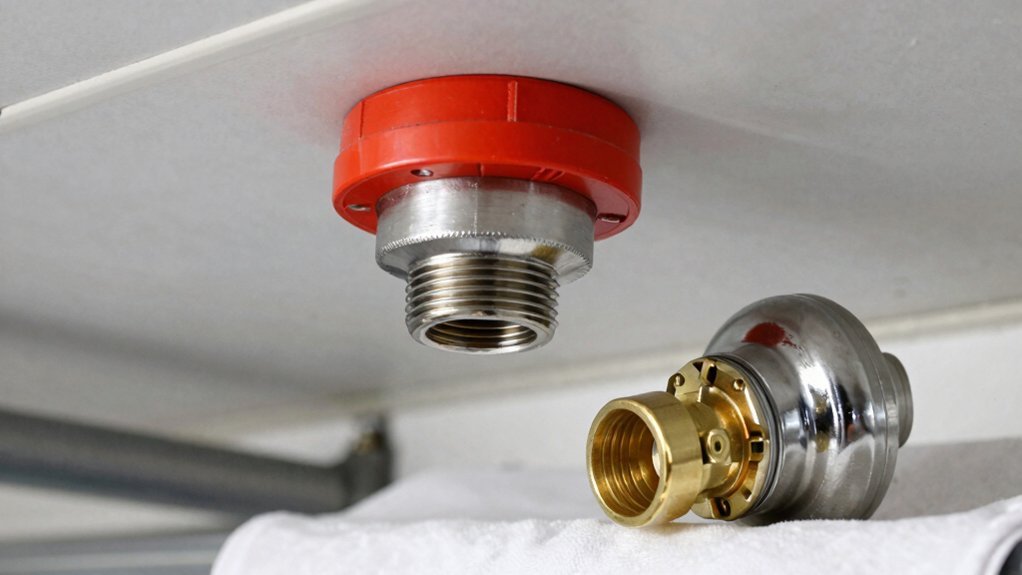
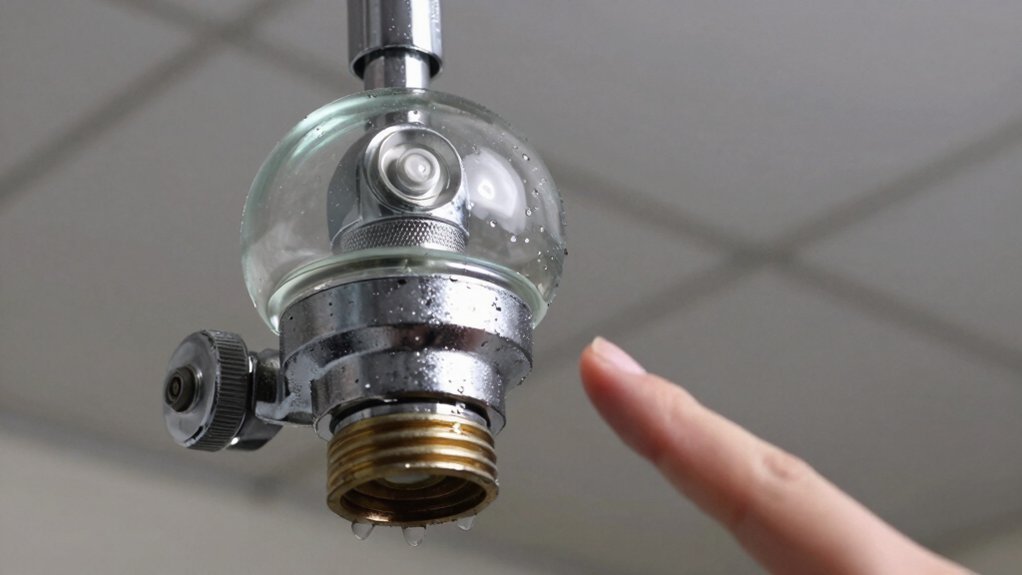
How exactly does a fire sprinkler know when to fire without being fooled by smoke? You rely on heat‑sensitive components that ignore airborne particles and trigger only when convective heat reaches predefined heat sensitivity thresholds. In a glass‑bulb head, liquid expands as temperature rises, building pressure until the bulb shatters and releases the spring‑loaded valve; the liquid’s color code signals the activation point. A fusible link head uses a metal eutectic alloy that melts at a specific temperature, allowing levers to separate and open the valve. Each sprinkler operates independently, so only the head exposed to sufficient heat initiates water discharge. This design confines suppression to the fire zone, prevents false activations from cooking or candles, and guarantees reliable, localized response. The system’s design ensures that only critical temperature triggers activation, not smoke.
What Temperature Triggers Fire Sprinkler Activation in Homes vs. Businesses?
Heat‑sensitive sprinkler heads disregard smoke because they respond only when ambient temperature reaches a preset threshold, and those thresholds differ between residential and commercial installations. In homes, typical activation temperatures sit between 57 °C (135 °F) and 68 °C (155 °F); the glass bulbs are usually orange or red, indicating the ordinary 135‑170 °F range. Commercial systems raise the baseline to about 68 °C (155 °F) and can extend to 79 °C (174 °F) for intermediate zones, using yellow bulbs for that rating. Both sectors employ a 30 °C safety margin above expected ambient heat to prevent false trips. Sprinkler bulb color coding—orange/red, yellow, green, blue, mauve, black—provides a quick visual cue of the specific temperature class and guarantees compliance with the ordinary, intermediate, and high classifications. The NFPA 13 standard defines the required testing procedures and certification for these temperature‑rated sprinkler heads. Modern studies show that properly maintained systems can reduce fire‑related property loss by up to 70 % and increase occupant survival rates by more than 50 % fire safety impact. Sprinklers and smoke detectors operate as separate safety systems and do not contain each other’s components.
Why Is Unintended Fire Sprinkler Activation So Rare?
Unintended sprinkler discharge hardly ever occurs because every component is engineered to tolerate only extreme, sustained heat and mechanical impact. You’ll find that manufacturers meet rigorous design specifications, limiting defects to one in 16 million heads. The glass bulb and fusible link require direct, forceful impact or temperature above 56 °C (residential) or 63 °C (commercial) for a sustained period, so casual contact, steam, or sunlight never reaches the trigger point. Redundant safety mechanisms, head guards, and proper environmental placement further reduce risk. Even intentional sabotage attempts are thwarted by the same high‑energy thresholds and robust mechanical construction. Regular NFPA 25 inspections, corrosion checks, and correct installation keep accidental activations exceedingly rare. Steam can raise ambient temperature and pressure enough to activate sprinkler heads when it contacts the heat‑sensitive element. Faulty pressure valves can also cause unintended activation by creating sudden spikes that trigger the heat‑sensitive components. The system’s pressure‑regulating tank maintains stable water pressure, preventing fluctuations that could otherwise lead to accidental discharge.
What Exactly Triggers Fire Sprinkler Activation During a Real Fire?
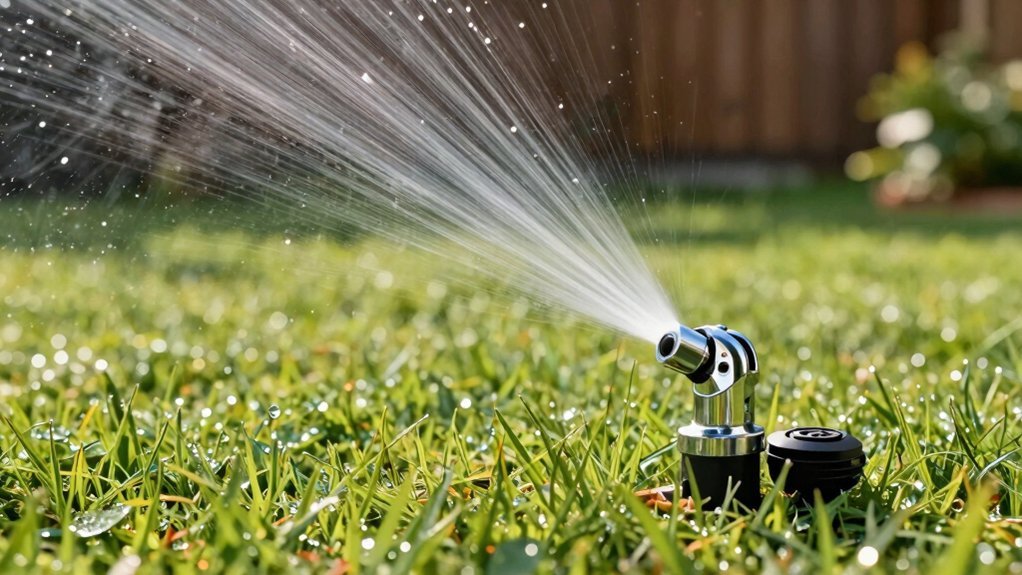
When a fire ignites, the ceiling‑mounted sprinkler heads receive the first sustained heat surge, and once the temperature of the surrounding air reaches the element’s calibrated threshold—typically between 57 °C and 74 °C—the heat‑sensitive component (either a glass bulb or a fusible link) fails, instantly opening the valve and releasing water. The bulb’s glycerin‑based liquid expands, shattering glass, while a fusible link melts, both creating a rapid valve breach. Localized heat patterns drive hot air upward, concentrating on the nearest head, so only the sprinkler directly above the flame activates. Pressurized water then follows water‑flow regulations, exiting through the deflector plate to form a spray pattern that targets the fire while limiting discharge to the affected zone. This independent, temperature‑driven response guarantees precise activation without reliance on smoke or other contaminants. The duration of sprinkler operation is influenced by system type and fire size. In many installations, a dry‑pipe system remains empty until a fire opens a valve, then fills the pipes with water before any sprinkler can discharge. Proper maintenance procedures are essential to ensure reliable operation over time.
How Long Does Fire Sprinkler Activation Last and How Is It Controlled?
Most fire‑sprinkler systems run for a limited, predefined period: pump‑and‑tank domestic setups discharge water for about ten minutes, while mains‑connected residential systems keep flowing until a fire‑fighter manually closes the isolator valve. In care homes or apartments, you’ll see a 30‑minute run, and concrete‑floor buildings may extend that to 60 minutes to allow evacuation. The discharge rate variations average 15‑26 gpm, so water consumption scales with head count and fire intensity. Control hinges on manual system operation: after the fire is contained, personnel shut the isolator valve or close a local stop‑gate. Automatic water‑flow switches trigger alarms, but they don’t stop flow; only human intervention does. Understanding these limits helps you predict water usage and coordinate fire‑fighter response. Sprinklers often co‑operate with fire extinguishers to provide layered protection. Proper system design ensures compliance with fire safety codes and optimizes water distribution for effective suppression.
What Are Common Misconceptions About Fire Sprinkler Activation?
Understanding how long a sprinkler runs only you to the next set of myths that often cloud public perception. You might think a single sprinkler triggers the whole system, but each head reacts only to its own heat source; one activation rarely spreads beyond the fire zone. Hollywood’s all‑heads‑simultaneous scenes fuel the myth that smoke or steam can set off sprinklers—yet they respond solely to temperatures of 135‑165 °F, not to smoke alarms. Accidental discharges are exceedingly rare, under one in 16 million heads per year, and usually stem from physical damage, not design flaws. Recognizing these facts improves public safety awareness and aligns fire department response with the actual, targeted behavior of modern sprinkler systems. Properly designed systems significantly reduce fire‑related injuries and fatalities, and early detection plays a crucial role in limiting damage. Pulling a fire alarm typically triggers the fire alarm system which then sends a signal to the sprinkler control valve to activate the sprinklers in the affected area. Elevator shaft codes often require sprinklers to protect vertical openings that could allow fire spread between floors.