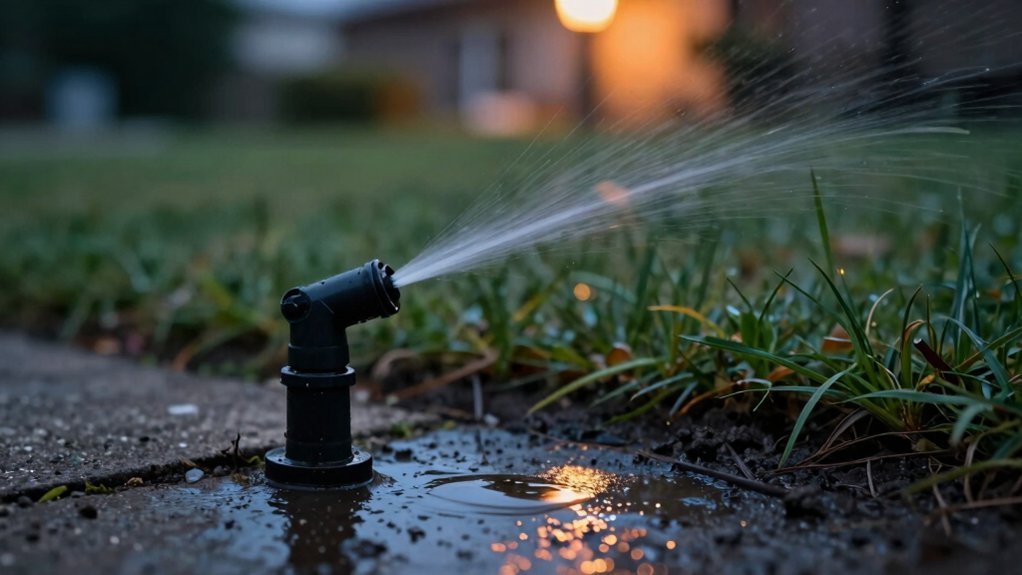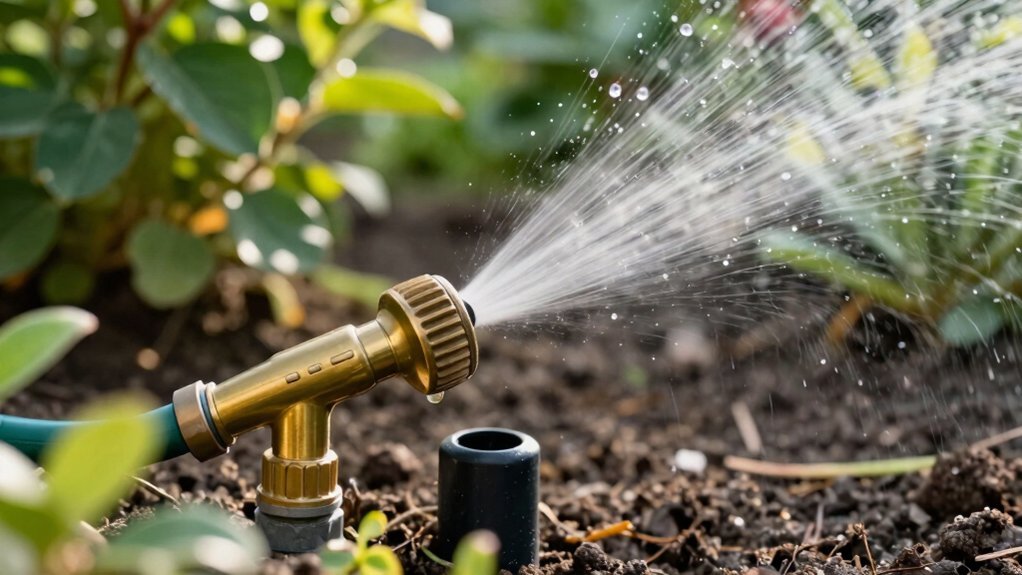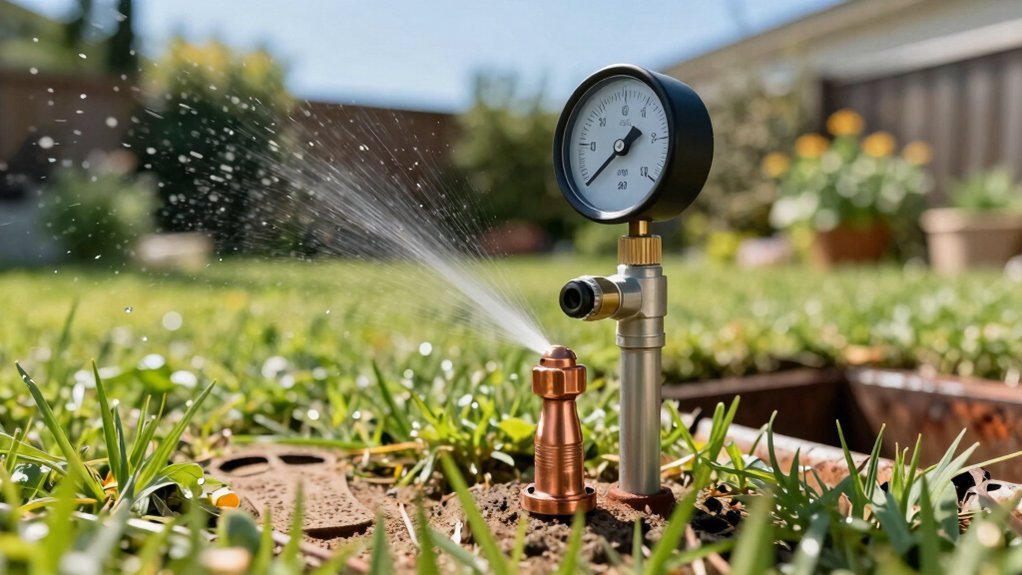
Water your new grass by delivering a gentle spray for 5‑15 minutes, 3‑4 times a day during the first two weeks, keeping the top 1.5 inches of soil consistently moist but not runoff. Use low‑pressure heads to avoid displacing seeds and adjust frequency if it’s hot or windy. After two weeks, shift to longer, less frequent sessions—once daily or every other day for 15‑20 minutes—to encourage deeper roots. Continue fine‑tuning for soil type and weather, then move to the mature lawn’s 1‑inch‑per‑week rule; the next sections will guide you through those adjustments.
How to Water Your New Grass With a Sprinkler
A good way to water new grass with a sprinkler is to set the system for short, frequent bursts that keep the top 1.5 inches of soil consistently moist without creating runoff. First, choose an oscillating or MP rotator head that delivers gentle, uniform spray; this guarantees optimal sprinkler coverage while protecting seed placement. Conduct a cup test to verify output, then schedule two to three daily sessions of 5‑10 minutes each during the first two weeks. Water in the early morning or late afternoon under ideal weather conditions—cool, low‑wind, and no rain forecast—to minimize evaporation and fungal risk. Adjust duration based on soil type; keep the top layer damp, not soggy, and avoid puddles that could dislodge seeds. Maintain consistent moisture by checking the soil daily and re‑watering if the surface begins to dry. Proper spray radius selection helps ensure even distribution across the lawn. Efficient sprinkler heads such as rotary or impact models can further reduce water waste while delivering uniform coverage. Understanding soil infiltration rates helps you fine‑tune watering intervals for optimal root development.
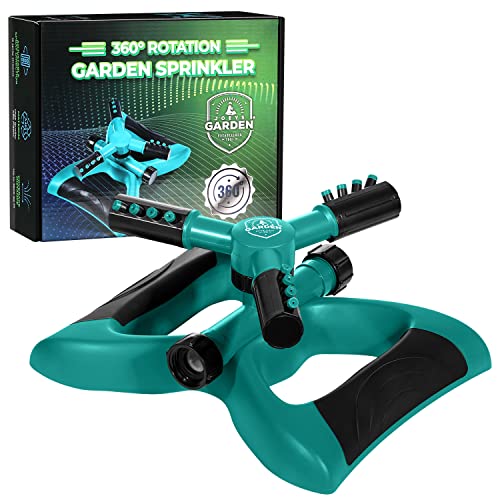
MADE FOR FAMILIES & LAWNS: From a kids' backyard water day to evenly watering large lawns and gardens, this rotating sprinkler covers wide areas fast — built for parents and homeowners alike.
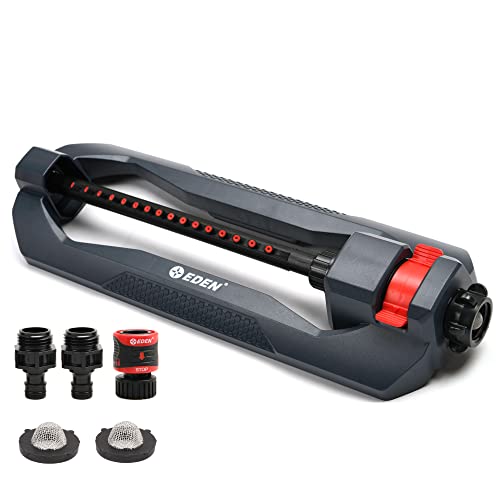
16 PRECISION NOZZLES- Provides even, consistent watering coverage for lawns and gardens up to 3,600 sq. ft..

FULL-SIZE COVERAGE– Get the power of a full-sized oscillating sprinkler in a space-compact form—covering up to 4,000 sq. ft. to easily water large lawns, gardens, and newly seeded areas.
Set Up the First Two Weeks to Water New Grass
If you start watering as soon as you seed, set up an automatic timer to deliver short, frequent bursts—2‑4 times daily—for the first two weeks, keeping the top 1.5 inches of soil consistently moist without runoff. During seeding preparation, guarantee the seed to soil contact is firm yet not compacted; a light rake or roller will settle the seed without burying it. Program the timer for early‑morning and mid‑day cycles, each lasting 5‑15 minutes, to apply roughly ⅛‑¼ inch of water per session. Monitor the surface moisture; the top inch must stay damp but never puddled. Adjust frequency for heat, wind, or light rain, adding extra bursts when conditions dry the seed bed quickly. This regimen establishes a uniform moisture envelope, promoting rapid germination. Sprinkler head height also influences the required watering depth and frequency.

【Easy Programming Program】Through the Sprinkler Timer to program, you can set the Start Time, Watering Duration is 1min-3h59min, Watering Frequency from 1h to 12h or 1 day to 7 days, so you can customize your watering time, and can be more accurate.

20 precision nozzles provide maximum coverage up to 4,000 sq. ft. for healthy grass and growing gardens

Sprinkler head dial easily adjusts to set spray area to either left, right, center, or full to meet all watering needs
Optimal Session Length for Weeks 1‑2 (Surface Moisture)
Because the seed bed must stay continuously damp without runoff, each watering session in weeks 1‑2 should last only 5–15 minutes per zone, delivering roughly ⅛–¼ inch of water. You’ll run the sprinkler in short bursts, repeating the cycle three to four times daily to hit ideal frequency patterns. Monitor the soil surface; if it feels dry after a session, add another 5‑minute pass, especially on hot, windy days. Adjusting watering needs is essential: increase cycle count when temperatures exceed 85 °F, but never exceed 15 minutes per zone to prevent runoff. Keep the top inch moist, not saturated, and use a gentle spray head to avoid displacing seeds. This regimen maintains surface moisture while protecting germination. Consistent watering is crucial for preventing seed desiccation during the first weeks. Automated watering systems can further ensure precise timing and water conservation. Properly calibrated sprinkler timers help achieve these short, frequent cycles without waste. Understanding soil absorption rates helps fine‑tune watering duration to avoid over‑saturation.
Extend Watering in Weeks 3‑4 for Deeper Root Development
Most gardeners shift to longer, less frequent watering sessions in weeks 3‑4 to push roots deeper into the soil. Begin a gradual frequency reduction, watering once a day or every other day, while extending each session to 15‑20 minutes per zone. Aim for a deep soak before sunrise; this timing maximizes absorption and limits evaporation. During each session, guarantee water penetrates at least 6‑8 inches without creating surface puddles. Implement manual checks by probing soil moisture at 4‑6 inches depth and inspecting sod for dry spots. Adjust duration to 30 minutes on days approaching the first mow, maintaining the deep‑wetting pattern. This regimen cultivates stronger, drought‑resistant roots, preparing the lawn for later, less intensive watering cycles. Use rain gauge cups to verify that each session delivers the proper amount of water. Ensure the sprinkler system’s flow rate is calibrated to achieve the target inch of water across the lawn area. Calculate required GPM for each zone to confirm the system can meet the demand. On Ginger Island, sprinklers can be placed on any irrigable plot, making automation possible for island farms.

Effortless Watering Automation: The Orbit Mechanical Water Timer helps manage lawn and garden irrigation with a reliable mechanical water timer design and hose faucet timer control

Smart Automatic Watering Control: The Orbit Programmable Digital Hose Watering Timer transforms a faucet into an automatic watering system using a reliable single outlet hose timer

Smart Automatic Watering Control: The Orbit Programmable Digital Hose Watering Timer transforms a faucet into an automatic watering system using a reliable dual outlet hose timer
Adjust Watering for Soil Type & Weather (Weeks 5‑8)
After establishing deep root growth in weeks 3‑4, you now fine‑tune irrigation based on soil texture and weather through weeks 5‑8. Identify your soil type first. In sandy soil, water daily with short bursts (5‑10 minutes) to compensate for rapid drainage; monitor moisture each morning and adjust duration as needed. In clay soil, water every other day with longer cycles (30‑40 minutes) to penetrate deeper layers, but avoid oversaturation in clay soil; excess water can cause root rot. When weather turns hot and dry, extend each session to roughly 40 minutes every other day to reach the roof zone. Conversely, reduce watering in cool moist conditions and shift to a two‑to‑three‑day schedule, ensuring the soil stays evenly damp but not soggy. Track wind, humidity, and rain to fine‑tune timing and volume throughout weeks 5‑8. Proper soil moisture monitoring helps prevent both underwatering and waterlogging. Consistent moisture from a sprinkler also supports photosynthesis by supplying water essential for the plant’s energy production. Roof sprinkler systems can provide evaporative cooling for the surrounding microclimate, reducing ambient temperature and easing irrigation stress.
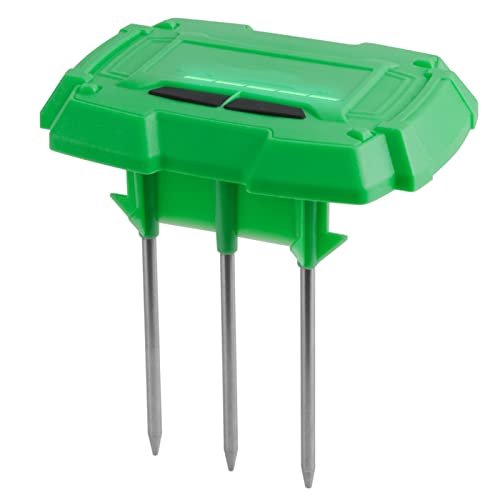
Build Automated Irrigation Systems: Single WiFi Moisture Sensor works as an add on only. It rmust be used with TTV103WRF/TTV203WRF WiFi Sprinkler Timer (not included) and TWG004WRF WiFi Hub (not included). Only ONE WiFi Moisture Sensor can be used per zone of WiFi water timer.To ensure the stability of data transmission, please install it within 10 meters of the WiFi water timer hub.

【Long-Range WiFi】The HWG023 Gateway transmits signals up to 820 ft and can penetrate 3-4 walls—meaning RAINPOINT WiFi water timer to be placed at the back of your yard, greenhouse while the Hub stays inside near your router
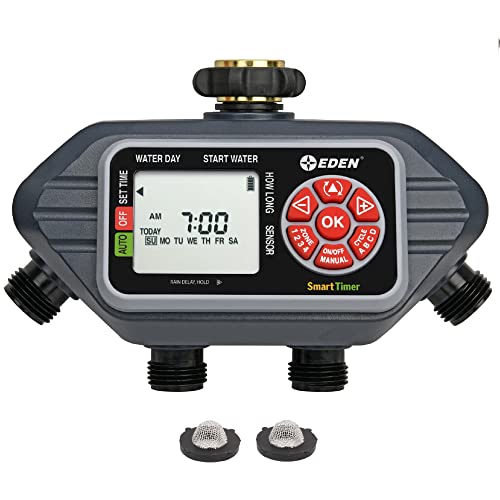
4 INDEPENDENT WATERING ZONES- Four valves operate like separate timers, allowing you to water four different areas from one faucet with fully independent schedules.
Transition to a Mature Lawn: Water New Grass 1‑Inch‑Per‑Week
When your grass reaches the 4‑inch stage, shift to the 1‑inch‑per‑week watering rule: apply enough water to deliver one inch of depth over the entire lawn, typically in one or two deep‑soak sessions. Use a rain gauge or container to verify output, then adjust for temperature, wind, and soil drainage. Aim for adequate moisture that penetrates 6‑8 inches, encouraging deep root development while avoiding surface runoff. Limit watering to 2‑3 times per week, extending each session to 15‑20 minutes per zone for uniform infiltration. During hot, dry periods add a second session if needed, but skip when rainfall meets the one‑inch target. This schedule sustains mature turf, promotes soil drainage, and prevents over‑watering. Proper pressure regulation ensures the spray reaches the intended distance without causing runoff. Zone planning helps match water needs to plant types and soil conditions, improving overall efficiency.
Quick Checklist: Daily Sprinkler Timing & Duration
Having established the one‑inch‑per‑week rule for mature turf, shift focus to the daily sprinkler schedule that keeps new grass germinating. Use soil moisture monitoring to confirm the top 1‑2 inches stay consistently damp. In the first week, set irrigation scheduling for three 20‑minute sessions—early morning, mid‑day, and late afternoon—delivering roughly 6 inches total. For seeded lawns, run spray heads 5‑10 minutes two to four times daily, aiming for ⅛‑¼ inch per session. Adjust timing based on temperature, wind, and rainfall; skip a cycle after a rain event. Switch to short 5‑minute bursts with oscillating sprinklers during germination, then reduce to once‑daily watering once seedlings emerge. Maintain precise timing to guarantee uniform moisture distribution. Proper timing also helps prevent fungal disease outbreaks by avoiding prolonged leaf wetness. Understanding sprinkler pressure ensures even coverage and reduces water waste. Longer hoses can cause noticeable pressure drop due to friction loss in the system.

WATER YOUR YARD WITH EASE - Our Easy Set Logic sprinkler timer is the perfect choice for your yard, controlling up to 12 zones/stations for efficient irrigation.

Effortless Irrigation: This hose timer features a full-view LCD display, schedule watering in 3 minutes—faster than brewing coffee. It supports customized timed watering or programs, with adjustable run times from 1–300 minutes and frequencies (every 6/12 hours, or once every 1–7 days). Your garden and lawn will stay in great condition even while you’re away on business or travel

【Easy to Program】Rotate the dial and press the buttons to set clock, how often (watering frequency), how long (watering duration), start time, auto, and off. Watering Frequency from 1Min to 23h59Min or 1 to 7 days, each Watering Duration is 1min-23h59min. The sprinkler timer can customize your watering time to meet your flexible watering needs.