You should run your sprinkler long enough to deliver 1–1.5 inches of water within the first 24 hours. On sandy soil, aim for 10‑15 minutes per zone; on loam, 20‑30 minutes; on clay, 45‑60 minutes, adjusting for slope by splitting cycles into shorter intervals. Guarantee a 10 % overlap and verify depth with a tuna‑can or rain gauge. Consistent early‑morning watering promotes deep root establishment and reduces evaporation, and the next sections will show how to fine‑tune this schedule.
How Much Water Does New Sod Need in the First 24 Hours?
Because new sod must stay moist to kick‑start root growth, you need to deliver at least one inch of water within the first 30 minutes after installation, ensuring the moisture penetrates six inches deep. You then verify proper moisture saturation by inserting a screwdriver three to four inches into the soil; it should feel damp, not dry. Aim for a total of 1–1.5 inches of water in the first 24 hours, spreading it evenly to avoid overwatering concerns that can cause root rot or fungal growth. Deep watering, not shallow frequent sprays, creates a uniform moisture front, supporting root establishment while conserving water. Monitor temperature‑induced evaporation and adjust volume accordingly to maintain the six‑inch saturation zone without creating soggy conditions. Frequent light irrigation helps keep the soil consistently moist without waterlogging during the crucial establishment period. In regions with strict water use regulations, a sprinkler system can provide precise control to meet legal limits while still delivering the needed moisture. Adjust the irrigation schedule based on soil type to prevent runoff and maximize absorption.
Follow a Daily Watering Schedule for Week 1 (Timing, Duration, Amount)
A typical week‑1 schedule calls for three to four short watering sessions each day, each lasting 10–15 minutes, to deliver roughly 1 inch of water total. You’ll start early, between 2 AM and 10 AM, then repeat mid‑day and late afternoon if temperatures rise. Establish sprinkler pattern before the first run: set heads to overlap 10 % and aim for uniform distribution across the sod. Inspect sprinkler coverage after each session; adjust heads that miss edges or create puddles. Each session should be 10–15 minutes, not exceeding 20 minutes, to avoid deep‑soil saturation that wastes water. Keep the soil moist but not soggy, targeting 1‑1.5 inches per zone daily. Monitor temperature and soil moisture, tweaking duration only when conditions change. Properly size the irrigation zone using flow rate to ensure consistent water delivery. Remember that the required runtime can be calculated by dividing the total water volume by the sprinkler’s gallons per minute flow rate. Also, consider the soil infiltration rate to prevent runoff and promote healthy root development.

SMART PROGRAMMABLE TIMER – Hands-free watering made easy: set your schedule once and let the system take over. Customize start time, watering duration (1–399 min), and frequency (every 1–12 hours or every 1–7 days). No more standing outside with a hose – enjoy effortless lawn care even when you're away from home

【Easy Programming Program】Through the Sprinkler Timer to program, you can set the Start Time, Watering Duration is 1min-3h59min, Watering Frequency from 1h to 12h or 1 day to 7 days, so you can customize your watering time, and can be more accurate.

【Easy to Program】Rotate the dial and press the buttons to set clock, how often (watering frequency), how long (watering duration), start time, auto, and off. Watering Frequency from 1Min to 23h59Min or 1 to 7 days, each Watering Duration is 1min-23h59min. The sprinkler timer can customize your watering time to meet your flexible watering needs.
Cut Back Watering in Week 2: When, How, and Why
By day 10 you should start scaling back watering, shifting from multiple daily sessions to one or two and gradually tapering to a total of 1–1.5 inches per week. In week 2, water twice daily at first, then cut to three or four days per week after the 14‑day mark. Aim for 1–1.5 inches weekly, spread over one or two sessions, and monitor soil dampness between applications. Check corners by peeling back sod; white roots signal you can ease up. This reduction encourages roots to seek deeper moisture, preventing shallow growth and avoiding overwatering. Maintaining proper soil moisture supports airflow, reduces pest and fungal risk, and prepares the lawn for mowing. Adjust for weather, especially on cloudy days, to stay within the weekly water goal. Consistent moisture also promotes healthy photosynthesis and stronger root development. Proper irrigation helps prevent disease by avoiding prolonged leaf wetness. Applying water in the early morning reduces evaporation loss and maximizes soil absorption.
Adjust Sprinkler Runtime for Soil Type and Slope (New Sod Watering)
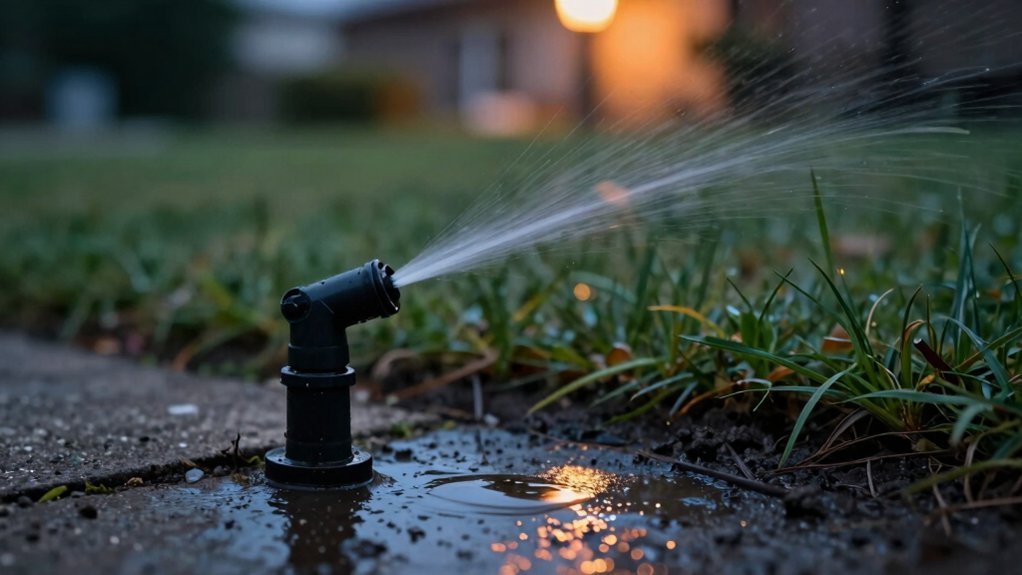
When you set the sprinkler for new sod, match the runtime to both soil texture and slope so the water penetrates to 4‑6 inches without runoff. For sandy soil, use short, frequent bursts—10‑15 minutes several times a day—and adjust nozzle spray patterns to a fine mist that slows infiltration. Monitor soil moisture levels to keep daily delivery at 1‑1.5 inches, extending sessions on hot days. Clay requires a longer, slower application—45‑60 minutes initially—using a broader spray to avoid pooling; track moisture to prevent soggy conditions and aim for 1.5 inches daily. Loam performs best with 20‑30 minute runs, calibrated to ½‑1 inch per hour; adjust timing based on observed moisture. On slopes, lengthen cycles to 45‑60 minutes, split into 15‑minute intervals, and position heads to distribute water evenly uphill, continuously monitoring moisture to curb runoff. Proper soil infiltration rates ensure water reaches the root zone efficiently. Understanding sprinkler head spacing helps achieve uniform coverage across the lawn. Selecting the appropriate sprinkler head height maximizes coverage while minimizing overspray.
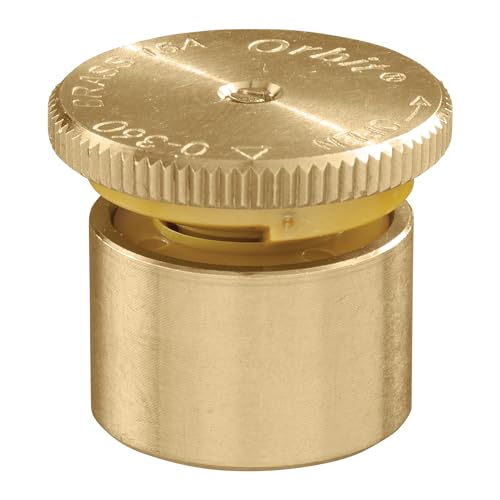
UNIVERSAL COMPATIBILITY: Designed to fit all major brands of pop-up spray heads, making it easy to replace existing nozzles and maintain your irrigation system. Delivers up to a 15-foot spray distance for efficient landscape watering (distance may vary based on PSI and other factors).

PRECISION ARC CONTROL FROM 0° TO 360°: Get pinpoint accuracy for any zone shape or edge. Whether you're watering a narrow walkway or full lawn circle, fine-tuned arc settings ensure no water is wasted.

What You’ll Receive: You will get 10 high-quality 12-van adjustable arc nozzles. This generous pack provides plenty of replacements for your lawn or garden needs
How to Use a Tuna Can or Rain Gauge to Verify the 1‑Inch Rule
You can verify the 1‑inch‑per‑week guideline with a simple tuna‑can test: place several flat‑bottomed cans across the lawn, run the sprinkler for the prescribed interval (15 minutes for spray heads, 30 minutes for rotors), then measure the water depth in each can with a ruler, average the readings, and compare the result to the 1‑inch target. Distribute cans randomly, including positions near heads and farther out, to capture water‑supply factors across the zone. Record each depth, compute the mean, and note any outliers that signal uneven distribution. If the average falls short, adjust sprinkler nozzle settings to increase coverage or flow. Re‑test after each tweak until the average meets the one‑inch benchmark, confirming proper irrigation without waste. The tunic and test helps ensure the lawn receives the optimal amount of water. Using a metal detector can also help locate underground sprinkler lines before testing. Call 811 before any digging to have utilities marked and avoid damaging hidden pipes. For accurate detection, follow a step‑by‑step guide that outlines equipment, safety, and marking techniques.

Lets user calculate average rainfall or sprinkler output in a given timeframe
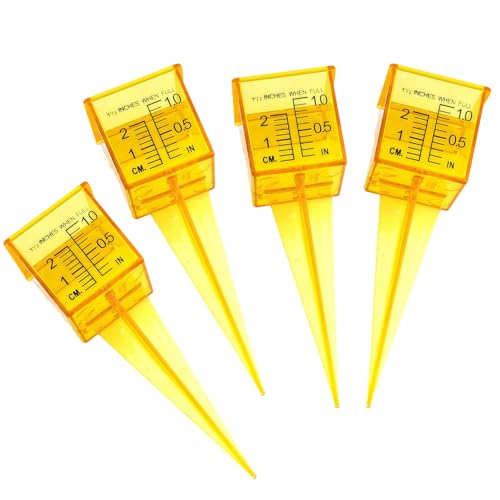
Durable Construction for Outdoor Use:Crafted from robust plastic material, this gauge is built to endure exposure to wind and rain, providing reliable service in outdoor environments for accurate water measurement

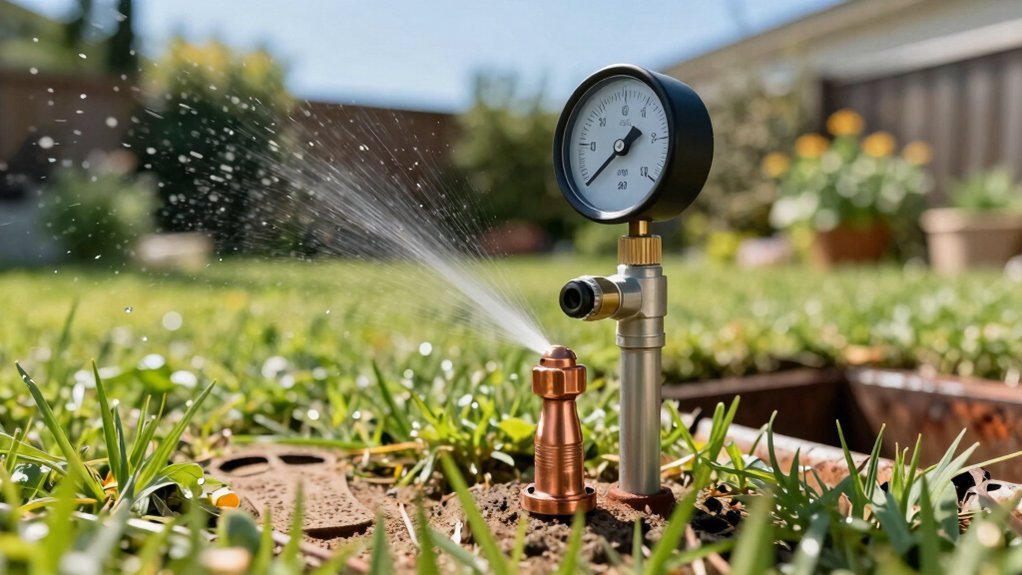
A-SHA ADAPTER: Underhill Adapter connection for female nozzles; ideal for connecting to a water pressure test gauge to measure dynamic pressure; gauges sold separately; from a trusted USA-based company
Signs Your Sod Is Getting Enough Moisture (Feel, Depth, Visual Cues)
A freshly laid sod patch that stays emerald‑green, with blades standing upright and no footprints left behind, tells you the moisture level is spot on. You perform moisture content checks by probing the top inch with a screwdriver; the soil should feel consistently damp and the sod firm, not spongy. Visual sod health indicators include upright blades, vivid green color, closed seams, and no visible footprints or cracks. Root development shows when a corner resists lifting after a week, and roots appear white and firm. Soil depth moisture checks reveal dampness to ½‑1 inch initially, extending to 6 inches as roots deepen. Absence of yellowing, pooling, or fungal growth confirms adequate hydration without over‑watering. Consider the climate zone when planning your watering schedule to match regional precipitation patterns. An automated sprinkler system can deliver consistent moisture across the entire lawn, reducing manual effort and water waste.
Top 7 Watering Mistakes That Kill New Sod (and How to Fix Them)
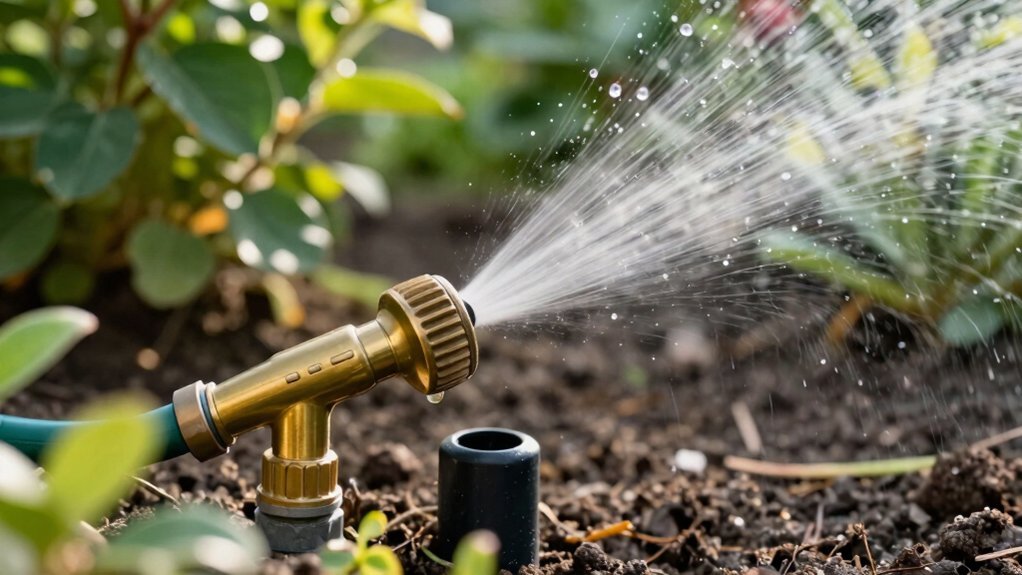
If you ignore the science behind watering new sod, you’ll quickly create conditions that choke root development and invite disease. Common mistakes include overwatering, which creates soggy soil, triggers fungal growth, and produces overwatering indicators like yellow, soft sod that lifts. To fix it, skip 1–2 sessions until the soil feels moist, not saturated. Underwatering yields blue‑gray, crunchy turf and shallow roots; increase frequency in full sun or heat. Watering too often keeps moisture at the surface, preventing deep rooting and wasting up to 50 % of water. Apply deep irrigation 2–3 times weekly after establishment. Incorrect depth leaves the top inch dry or wets beyond six inches; aim for 6–8 inches of saturation. Poor methods—fine mist or single long cycles on slopes—cause drift and runoff; match sprinkler heads to soil type and terrain. Address soil compaction issues by avoiding repeated shallow watering and allowing the ground to dry between cycles. Using a flathead shovel helps ensure the soil is properly leveled before sod installation, reducing uneven water distribution. Proper sprinkler head height promotes uniform coverage and helps maintain the target soil moisture zone. A well‑designed sprinkler timer can automate these practices, ensuring consistent watering intervals and conserving water. Understanding how the valve, nozzle, and riser work together can prevent inefficient spray patterns that waste water.

Effortless Watering Automation: The Orbit Mechanical Water Timer helps manage lawn and garden irrigation with a reliable mechanical water timer design and hose faucet timer control

ULTIMATE FLEXIBILITY FOR ANY GARDEN SHAPE – Place sprinklers exactly where you need them- Perfect for lawns, flower beds, raised gardens, and more.

WATER YOUR YARD WITH EASE - Our Easy Set Logic sprinkler timer is the perfect choice for your yard, controlling up to 12 zones/stations for efficient irrigation.
Switching From New Sod to Regular Lawn Watering (Post‑Month Schedule)
After correcting the common watering mistakes that stunt new sod, you now shift to a post‑month schedule that supports deep root development while conserving water. Begin adjusting duration by extending each run until the gauge records one inch, typically 45‑60 minutes, and water early morning to cut evaporation. The shift in schedule starts with every‑other‑day runs in week 4, then moves to a 2‑3‑day cycle delivering one inch per week. Monitor soil depth (3‑4 inches) and watch for dry patches; increase runtime locally if needed. Confirm rooting with a tug test—white roots mean the sod anchors. Once roots are established, maintain the infrequent, deep‑penetration approach, aligning with the six S’s for eco‑efficient lawn care.

Smart Automatic Watering Control: The Orbit Programmable Digital Hose Watering Timer transforms a faucet into an automatic watering system using a reliable single outlet hose timer

Experience the Revolution - The valves have been fully upgraded, reducing flow resistance by 40%. The screen structure has also been improved, achieving an IP65 waterproof rating. It has passed 20,000-cycle lab testing, making the product more durable.

Effortless Irrigation: This hose timer features a full-view LCD display, schedule watering in 3 minutes—faster than brewing coffee. It supports customized timed watering or programs, with adjustable run times from 1–300 minutes and frequencies (every 6/12 hours, or once every 1–7 days). Your garden and lawn will stay in great condition even while you’re away on business or travel