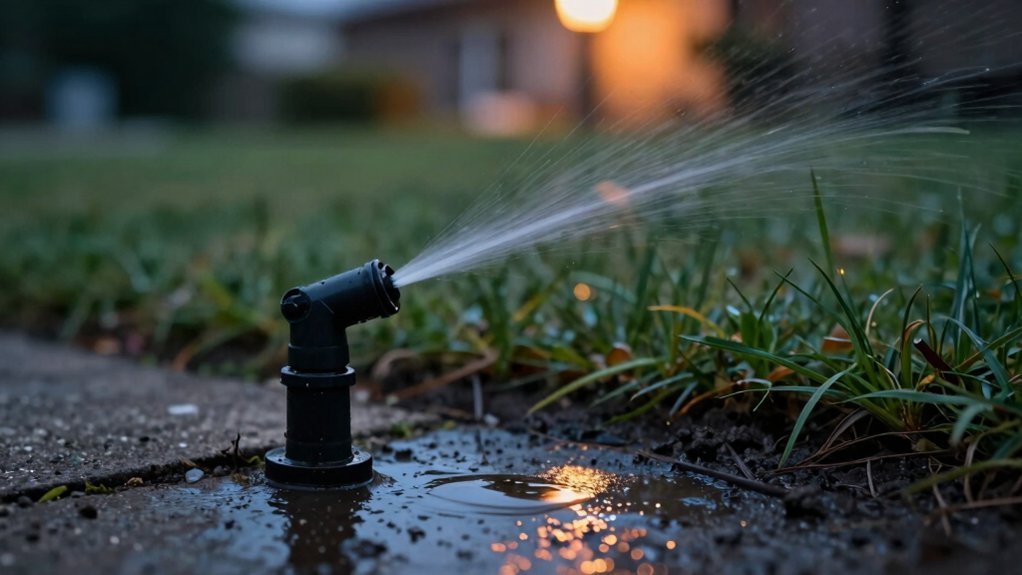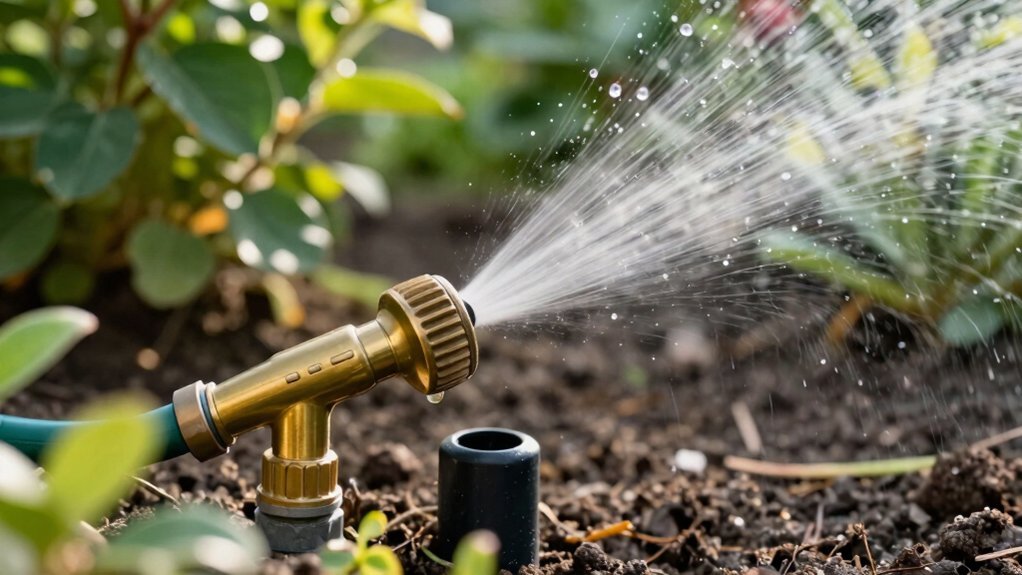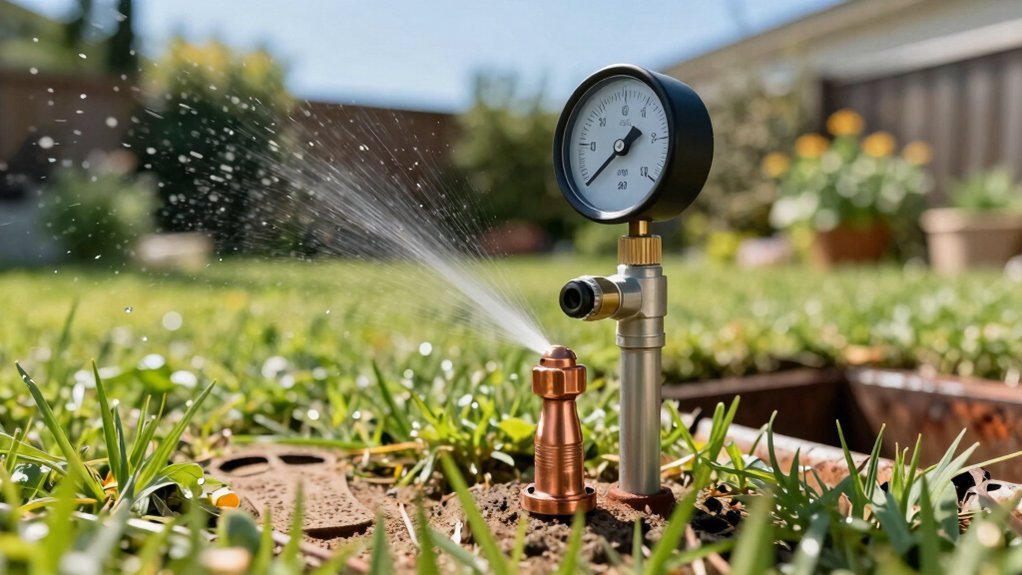
Set your sprinkler timer for 4 – 6 am, before sunrise, when temperatures are lowest, wind is calm, and humidity is high. This timing cuts evaporation by about 15 % and lets water soak deep into the root zone before the day heats up, reducing runoff and disease risk. Use rotary heads or drip lines for uniform delivery, and adjust run times if it’s over 90 °F. Following these steps will keep your garden healthy, and the next sections show how to fine‑tune seasonal schedules.
Why Early‑Morning Watering Beats Midday and Evening
Because temperatures are lowest at dawn, early‑morning watering lets the water soak into the soil before heat drives evaporation. At this hour, ambient air is cool, wind is calm, and humidity is higher, which together create reduced evaporation loss and improved water absorption. The droplets penetrate the root zone before midsday peaks trigger rapid vaporization, so you retain up to 15% more moisture compared with afternoon irrigation. Calm breezes prevent drift, ensuring the spray lands exactly where intended, while the lack of solar radiation eliminates sun‑induced heating of water films on foliage. Consequently, the lawn receives sufficient moisture without excess leaf wetness, lowering fungal risk and maximizing irrigation efficiency. High evaporation rates during midday make water loss significant. Adjusting watering duration based on soil type helps achieve deep root penetration while conserving water. Monitoring local frost dates ensures you avoid watering when cold temperatures could damage plants. Early‑morning schedules also align with water‑conserving practices by reducing overall usage.
Set Your Sprinkler Timer for Early‑Morning Watering (4 am–6 am)
Early‑morning watering works because the soil is cool and the air is still, so you should set your sprinkler timer to start between 4 am and 6 am. This window aligns with pre‑sunrise temperatures, reducing evaporation by roughly 15 % compared with midday runs. By initiating flow before sunrise, droplets settle into the soil while wind speeds are low, preventing dispersal and ensuring uniform coverage. The cool, damp conditions also let grass blades dry quickly, limiting fungal risk. To maintain consistent scheduling, program the controller for a daily 4–6 am start and lock the cycle length to match runoff rates. This precise timing maximizes soil absorption, delivering moisture directly to root zones and sustaining plant hydration throughout the day. Proper zoning ensures each plant type receives the appropriate amount of water. Understanding runoff rates helps prevent over‑watering and promotes efficient water use. Effective zone design further optimizes water distribution by matching valve flow to specific plant needs.
Choose the Best Sprinkler Head for Deep Penetration in Early‑Morning Watering
One key factor in achieving deep soil penetration during early‑morning watering is matching the sprinkler head to your system’s pressure and lawn size. Choose a rotary head when your pump delivers above 30 PSI and you need coverage beyond 15 ft; rotary heads provide higher sprinkler head capacity and steadier sprinkler flow rates, delivering water as a focused stream that soaks slowly. For medium lawns, models like K Rain SuperPro or Toro RapidSet give adjustable radii of 20‑50 ft, ensuring uniform infiltration on sloped or slow‑draining soils. Verify that the head’s built‑in pressure regulator aligns with your zone’s PSI to prevent runoff. Avoid spray heads on windy sites, as their fine mist reduces penetration and wastes water. Sprinklers placed on Ginger Island work just as they do on the mainland, but you must first unlock the farmhouse upgrades to access them. Properly assess soil type to choose a head that matches infiltration rates.
Use Drip or Soaker Systems When Early‑Morning Sprinklers Aren’t Ideal
When your garden’s layout or wind conditions make early‑morning sprinkler coverage unreliable, switch to a drip or soaker system that delivers water directly to the root zone. Position drip lines along plant rows and set emitters at a 12‑inch spacing to guarantee uniform moisture. Run the system 30‑45 minutes before sunrise in spring and fall, extending to 60 minutes in summer when soil dries faster. Check soil moisture to 6 inches; adjust duration to keep the root zone consistently damp. Perform drip line maintenance weekly: flush each line, clear debris, and replace worn tubing. Inspect emitters for clogging after each season; use a fine‑mesh filter and a pressure regulator to prevent blockages. This approach minimizes evaporation, reduces disease risk, and conserves water. Consider the soil type to select appropriate emitter spacing. Combine drip irrigation with your existing sprinkler system to maximize water efficiency and flexibility. Understanding water pressure is essential for maintaining even flow across the entire drip network.
How to Shorten Run Times When It’s Over 90 °F
If your garden’s layout or wind conditions make early‑morning sprinklers unreliable, you’ve already switched to drip or soaker systems; now, when temperatures soar above 90 °F, you need to shorten run times to prevent runoff and evaporation. First, split each zone into two 5‑minute cycles instead of one 15‑minute burst; back‑to‑back cycles let water soak before the next pulse hits. Use a smart controller’s run/soak feature to pause 10‑15 minutes between cycles, reducing surface runoff on slopes or clay. Replace fixed heads with rotating nozzles or add pressure regulators to lower application rate. Measure output with catch cans, then adjust to 10‑20 minutes for spray zones, 25‑35 minutes for rotors. Monitor soil moisture and flex daily schedules, cutting frequency to every 4 days while keeping each run at least 5 minutes. This keeps water at the root zone and limits evaporation. Understanding sprinkler head flow rates helps size the system correctly. Selecting the appropriate nozzle size can further optimize water distribution and minimize waste. Choosing the right sprinkler nozzle type ensures compatibility with your equipment and maximizes efficiency.
How Should I Adjust Watering for Spring, Summer, Fall, and Winter?
Because weather and plant physiology shift dramatically through the year, you’ll need a seasonal watering plan that matches each period’s temperature, precipitation, and soil‑moisture dynamics. In spring, irrigate only after five dry days, using early‑morning or night cycles to avoid runoff; monitor soil moisture and adjust watering frequency as new growth appears. Summer demands 4‑6 a.m. runs, three to four days weekly; employ repeat short cycles for clay soils and keep evaporation low. In fall, cut back frequency, favor night or early‑morning watering, and watch forecasted rain; early evening can serve as a backup if needed. Winter watering occurs only when temperatures stay above 40 °F—apply deep, infrequent cycles, reduce by 50 % in shady microclimates, and inspect the system before use. Check local sprinkler ban dates to ensure compliance with regional restrictions. Remember to locate the main water valve before any major adjustments to avoid accidental flooding. When temperatures dip below 32 °F, it is crucial to shut off irrigation to prevent frozen pipes and damaged sprinkler heads.
Use Smart Controllers to Auto‑Schedule Early‑Morning Watering With Weather Data
Smart controllers let you automate early‑morning watering by pulling real‑time weather data and adjusting run times on the fly. You connect the device to Wi‑Fi, enable detailed weather data monitoring, and let it ingest hyper‑local forecasts, temperature, humidity, wind, and evapotranspiration (ET) values. The system then creates efficient zone based water scheduling, skipping cycles when rain is predicted and extending runs during heat spikes. Use the mobile app to set early‑morning start times, customize each zone’s flow, and integrate soil‑moisture sensors for on‑the‑spot overrides. By applying ET‑based seasonal adjustments and seven‑day predictive modeling, you cut waste by 15‑25 %, keep plants hydrated, and stay compliant with local watering restrictions. Modern sprinklers often incorporate moisture sensors to further reduce water use. Adding a rain‑activated sensor can automatically shut off irrigation when rainfall is detected.
Prevent Nighttime Foliar Wetting to Stop Disease
Smart controllers let you schedule watering for the early morning, but the real benefit comes when you stop watering after sunset. By ending irrigation before 6 p.m., you prevent dew‑laden foliage from staying wet overnight, which curbs fungal spore germination. In humid seasons, reduce irrigation during humid seasons to limit leaf wetting and keep the thatch layer dry. Pair this timing with a balanced approach: apply fungicides only when disease pressure spikes, and reinforce cultural controls such as mowing short and improving airflow. Monitor plant response weekly; if disease signs appear, shift to a late‑morning window (8–10 a.m.) for 1–2 months in spring or fall. This precise schedule minimizes moisture‑related pathogens while conserving water. Frost damage can occur if irrigation continues when temperatures drop below freezing, risking pipe rupture and wasted water.