You can expect a modern sprinkler timer to give you about 10‑15 years of reliable service if you keep it dry, match it to your controller, and stay on top of maintenance. Good water pressure, clean water, and high‑grade parts will stretch its life, while damp, sun‑exposed spots and mismatched components will wear it down faster. Regular seasonal checks—cleaning filters, flushing valves, and insulating exposed pipes—keep it ticking. Watch for a weak battery, erratic zones, or frequent glitches as signs it’s time for a swap, and you’ll uncover how to choose the right upgrade for your system.
How Long Do Sprinkler Timers Typically Last?
If you’re wondering how long a sprinkler timer will stick around, expect roughly ten to fifteen years for most modern controllers, while the timer modules themselves usually survive five to ten years before they start showing wear. You’ll notice that timer location importance can shave years off that estimate; a unit tucked in a damp, sun‑exposed box corrodes faster than one sheltered in a climate‑controlled garage. Choose a controller that offers broad controller timer compatibility, because mismatched voltage or communication protocols accelerate wear. Regular maintenance—tightening connections, cleaning contacts, and checking firmware—keeps the brain and its peripheral timers in sync. In practice, most homeowners replace the timer module after a decade, while the controller itself often reaches the fifteen‑year mark before technology upgrades become inevitable. Proper water can extend valve life, and hard water often accelerates corrosion. Power surges can also shorten a controller’s lifespan.

Intelligent Irrigation Control: The Orbit Smart Sprinkler Controller manages watering with a powerful smart sprinkler that supports a completely automatic watering system

Precise Fit: Designed specifically for Orbit and Hydro-Rain sprinkler timer locks, ensuring a secure and proper fit.

This timer is so easy to program you won't need the instructions
What Makes a Timer Last Longer: or Shorter?
When you keep pressure steady, protect water quality, choose high‑grade parts, and design the layout correctly, the timer can easily hit its ten‑to‑fifteen‑year sweet spot. Proper installation practices prevent over‑pressurizing valves and keep flow consistent, so the controller isn’t forced to compensate for misting or weak spray. Compatible component selection matters because mismatched heads or fittings create turbulence that wears diaphragms and seals faster. Clean water eliminates sand and mineral buildup that would otherwise abrade nozzles and corrode wiring. Avoiding undersized zones and respecting head‑to‑head spacing reduces strain on the timer’s circuitry. By regulating pressure, filtering water, and using professional‑grade, compatible parts, you extend the timer’s life; neglect any of these factors and you’ll see premature failures. Regularly inspect wiring for signs of wear or loose connections, as faulty wiring can cause erratic behavior or complete shutdown. Understanding the electrical load of the system helps prevent overloads that could damage the controller. Properly sized low‑voltage supply ensures stable operation and reduces stress on electronic components.
Seasonal Maintenance Tasks for Sprinkler Timer Longevity
Keeping your sprinkler timer in top shape means treating each season like a mini‑maintenance cycle. In spring, deep‑clean filters and heads, turn the water on slowly to avoid hammer, and inspect pipes for winter damage. Test each zone for leaks and pressure, then program the controller for the growing season. Summer calls for visual zone checks while running, trimming weeds that block heads, and confirming spray patterns cover intended areas; adjust the schedule three times for hotter weather. Fall repeats the deep clean, flushes valves, and drains water before freeze, while you tweak the controller for cooler temps. Winterize by insulating exposed pipes, setting rain mode, and fully draining the system. Follow proper seasonal maintenance schedules and use sprinkler timer troubleshooting techniques to catch issues early, extending your timer’s lifespan. Properly blow out your irrigation system with compressed air prevents frozen water damage. Remember that water can freeze inside pipes when temperatures drop below 32 °F and cause cracks. Freeze damage can be avoided by draining the system before the first freeze.

【Easy to Program】Rotate the dial and press the buttons to set clock, how often (watering frequency), how long (watering duration), start time, auto, and off. Watering Frequency from 1Min to 23h59Min or 1 to 7 days, each Watering Duration is 1min-23h59min. The sprinkler timer can customize your watering time to meet your flexible watering needs.

Effortless Irrigation: This hose timer features a full-view LCD display, schedule watering in 3 minutes—faster than brewing coffee. It supports customized timed watering or programs, with adjustable run times from 1–300 minutes and frequencies (every 6/12 hours, or once every 1–7 days). Your garden and lawn will stay in great condition even while you’re away on business or travel
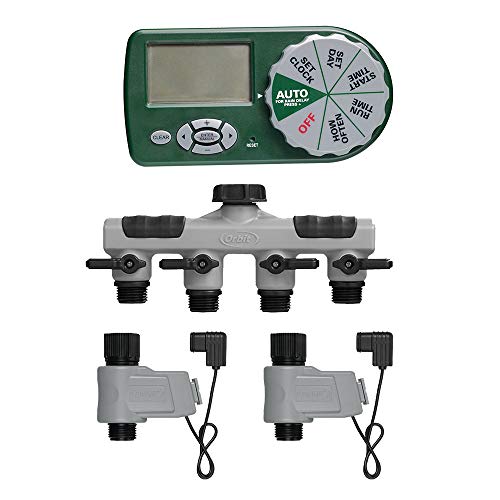
EFFORTLESS WATERING: Automate your watering routine by turning your hose faucet into a 4-station sprinkler system.
When to Replace Your Sprinkler Timer (Battery, Glitches, Age)
Typically, you’ll know it’s time to replace your sprinkler timer when the battery can’t hold a charge beyond a season, the unit starts misfiring zones, or it’s simply past its useful age. Look for corrosion in the battery compartment, random zone activation, or a battery that drains within a year—these signal imminent failure. If your controller is over ten years old and you see erratic scheduling, stuck responses, or diagnostic resets that won’t clear glitches, the electronics are likely obsolete. Age‑related wear shows up as frequent breakdowns after fifteen years and unavailability of replacement parts after twenty. Check rain sensor to prevent unnecessary timer replacement and extend the system’s overall lifespan. Properly shutting off water pressure before opening the system helps avoid leaks and damage.

Country Of Origin: China

Effortless Watering Automation: The Orbit Mechanical Water Timer helps manage lawn and garden irrigation with a reliable mechanical water timer design and hose faucet timer control

Smart Automatic Watering Control: The Orbit Programmable Digital Hose Watering Timer transforms a faucet into an automatic watering system using a reliable single outlet hose timer
How Sprinkler Timer Lifespan Compares to Other Irrigation Parts
Even though a sprinkler timer often feels like the brain of your irrigation system, its lifespan is generally shorter than the pipes and fittings but comparable to the valves that control water flow. You’ll notice timers typically last 8‑12 years, aligning with valve life of 8‑15 years, while solenoid components can push toward 20 years. In contrast, sprinkler heads wear out in 3‑10 years and pipes or fittings endure 25‑40 years, sometimes up to a century for PVC. Backflow preventers sit midway at 5‑10 years for internal parts but a 20‑year body. Proper installation is key to component reliability; improper installation can accelerate timer failure, cause valve sticking, and shorten head durability. Regular maintenance keeps the whole system near its 20‑30‑year benchmark. Electrical surges can dramatically shorten timer lifespan. Understanding the main water valve location helps prevent accidental damage during repairs. The pressure regulator maintains consistent flow, protecting all downstream components. Most sprinkler solenoids are polarity‑agnostic and will function correctly regardless of wiring direction.

【COMPATIBILITY】 Designed specifically for Orbit 57040 57096 Sprinkler System indoor sprinkler controllers and Rain Bird UT1 SST Series irrigation timers,Compatible with Rain Bird SST400I/SST400IN/SST600I/SST600IN /SST900I/SST900INpower adapters for rain bird ut1 sst .for rain bird ut1

POWER :Input volatage is 120VAC 60 Hz; Output rating is 24VAC 500 mA. Compatible with Rain Bird UT1 SST Series Orbit timer,sprinkler timer,sprinkler system,irrigation system, irrigation setup.Used this for sprinkler system power supply,sprinkler power supply ,sprnkler system box power adapte.

【Exact matching】 Sprinkler key for Sprinkler Irrigation Box,Controller Box,Timer Box.Compatible with Irritrol Rain Dial-R Irrigation Timer Box RD600 RD900 RD1200
Choosing a Sprinkler‑Timer Upgrade That Fits Your System
Since timers usually outlast most components but fall short of pipe longevity, picking the right upgrade is key to keeping your whole system running smoothly. Start with a system compatibility assessment: measure the 24 V AC line, count zones (4‑16 typical), verify 30‑50 PSI pressure, match backflow preventer type, and confirm PVC or poly pipe can handle up to 100 GPM flow. Then run a cost benefit analysis. Basic digital units cost $50‑$150 and last 5‑10 years, while smart controllers run $200‑$500 and save 30 % water, recouping in 2‑3 years. Factor in $200‑$400 professional install, $100‑$300 annual low‑flow head savings, and the 15‑year refresh that avoids $1,000+ emergency repairs. Choose the upgrade that aligns with your wiring, zoning, and budget. A pump may be required when elevation changes exceed the system’s pressure capacity. Understanding soil moisture sensors can further enhance water efficiency and prolong system life. Properly shielding the sprinkler from the trampoline’s metal frame helps prevent corrosion and extends equipment durability.

Smart Irrigation Control Anywhere: The Orbit B-hyve Indoor Smart Sprinkler Controller provides smart sprinkler timer functionality for efficient yard irrigation
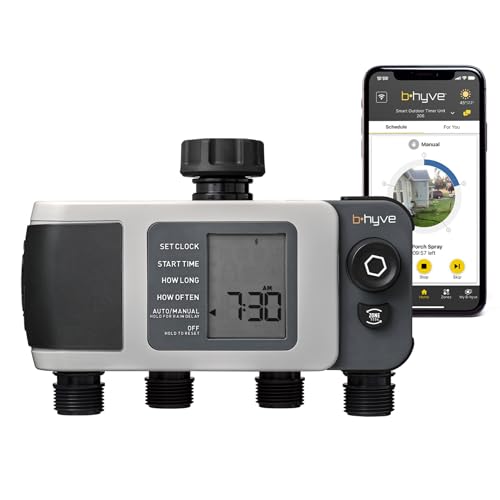
Automated Smart Watering: The Orbit 4-Port Smart Hose Watering Timer delivers effortless auto watering through an intelligent watering timer system

Smart Irrigation Control Anywhere: The Orbit B-hyve Indoor Smart Sprinkler Controller provides smart sprinkler timer functionality for efficient yard irrigation