Your home’s water supply usually sits at 40‑70 psi, so a garden‑hose nozzle can’t exceed that range; it merely converts the source pressure into a focused jet. A typical 68 psi input will launch water up to about 25 ft, and a nozzle rated for 100 psi will safely handle the peak spikes you might see. The trigger’s 5.4 lb squeeze correlates with the kinetic energy you feel. If you keep reading, you’ll uncover how to measure and optimize these values.
What PSI Your Home’s Water Supply Actually Gives You?
When you turn on a faucet, the water that reaches your home is usually already pressured by the municipal system, but the actual PSI at your tap can differ markedly from the city main. Municipal lines often exceed 100 PSI, yet they must be reduced to a safe range—typically 40‑80 PSI—by pressure‑regulating valves (PRVs). A well‑tuned PRV targets around 50 PSI, balancing flow and pipe integrity, while 60 PSI serves as a common household standard. Pressures below 30 PSI cause low flow, prompting you to address overcoming low water pressure through pipe cleaning or booster pumps. Conversely, pressures above 80 PSI risk leaks and appliance wear, so you should install a PRV to keep pressure within the 40‑70 PSI window, thereby maximizing water pressure efficiency and protecting fixtures. Replacing stop valves can also help maintain proper pressure. For optimal garden hose performance, aim for a pressure between 40 and 80 psi. Garden hose threads are typically sized for low‑pressure applications, so using a GHT compatible nozzle ensures a proper seal without over‑tightening. Selecting a hose with a larger 5/8 inch diameter can further improve flow for extensive irrigation tasks.
How to Measure Real Garden Hose Nozzle PSI With a Simple Gauge?
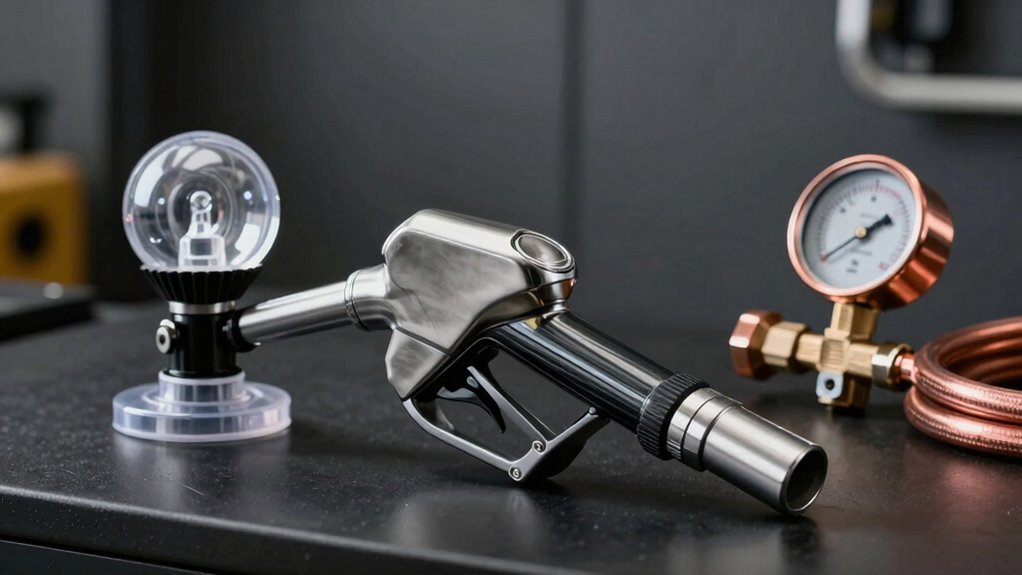
You can get an accurate reading of your hose‑nozzle pressure with a simple liquid‑filled gauge by first attaching it to the spigot, turning the faucet fully on, and noting the stabilized static pressure before any nozzle is engaged. After confirming static psi, close the spigot, remove the gauge, and reinstall it inline just before the nozzle. Open the nozzle, pull the trigger, and watch the needle settle; this gives the operating psi. For dynamic verification, insert a pitot tip into the spray stream and record the reading after stabilization. Compare static and dynamic values to perform gauge calibration and to validate your nozzle selection criteria. Document each measurement, repeat at multiple points, and account for friction loss when evaluating overall system performance. Use a Hunter MP gauge to ensure precise pressure readings. Understanding nozzle flow rate helps you match pressure to desired water coverage. When connecting a pressure washer to a garden hose, verify that the hose can handle the increased water pressure without bursting. Selecting the correct nozzle spray pattern is essential for achieving optimal cleaning results and maintaining safety.
Water spray hose nozzle easy adjustment multiple spray patterns and flow volume are at your fingertips

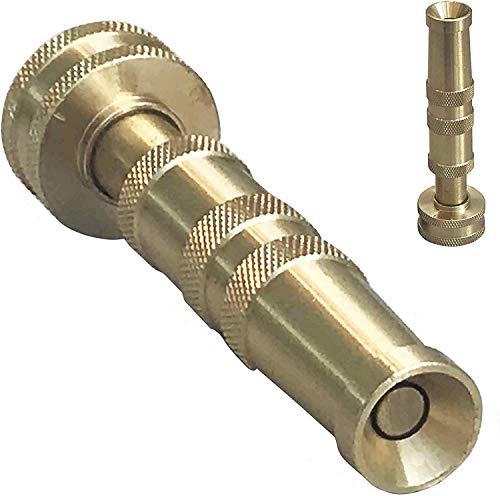
HEAVY-DUTY & PREMIUM BRASS MATERIAL: Our set includes 2pcs brass hose shut off valve with brass handles & 2pcs brass hose jet nozzles. The solid brass material ensures durability and longevity, while the rugged design allows it to withstand accidental drops and bumps. Extremely durable and resistant to rust. You can use it for extended periods without worrying about wear and tear, and it can withstand high water pressure without cracking or leaking.

IP67 Waterproof: The circular dial is enclosed in a 304 stainless steel case for corrosion resistance. The PRV-Tex Vent design can reduce fogging of windows inside or moisture damage from the infiltrating water such as being installed in environments exposed to moisture or rain. Offer clear reading and rain-resistant.
Which Garden Hose Nozzle Rating Really Matters for 40‑70 psi?
After confirming both static and dynamic PSI with a gauge, the next step is to decide which nozzle rating actually matters for a typical residential supply of 40‑70 psi. You should match the nozzle’s rated pressure to the maximum allowable pressure of your system; a 100‑psi rated nozzle comfortably exceeds the 70‑psi ceiling, preserving safety margins and preventing premature wear. The rating also indicates how the nozzle handles variations in input water quality—higher‑rated brass or stainless models resist corrosion from mineral‑rich water better than low‑rated plastics. For everyday watering, a nozzle rated 80‑100 psi provides consistent flow, while high‑pressure cleaning tasks benefit from the jet setting that approaches the upper limit of the residential range. Choose the rating that aligns with both pressure capacity and water‑quality resilience. The Gilmore Pro model can handle up to 125 psi, offering an extra safety margin for fluctuating supply pressures. Selecting the appropriate hose length helps maintain pressure, especially when the hose is coiled for storage. Long hose pressure loss can be mitigated by using a larger diameter hose. The flow rate of a hose is directly affected by its diameter and length.

SOLID BRASS: The PowerBlast Super Sweeper water sprayer nozzle is constructed from solid machined brass, made from 100 percent metal with no plastic parts; 7 GPM 80 PSI. 3/4-Inch Thread Inlet
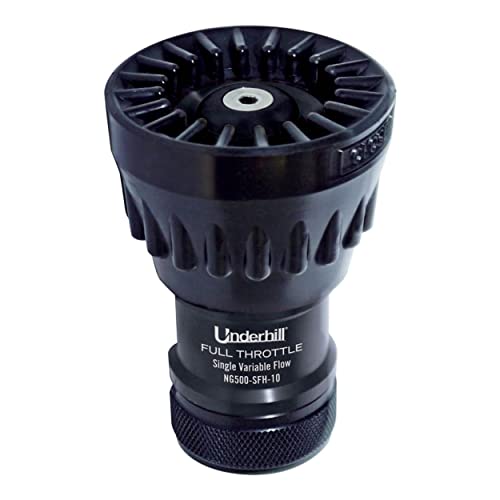
DURABLE: The Magnum NG500-SFSH-10 UltraMax Full Throttle High Flow nozzle is an adjustable water sprayer nozzle constructed from durable materials. 39-100 GPM 80 PSI. 1-Inch Thread Inlet.

【100% Metal Construction】The AUTOMAN garden hose nozzle is built using heavy duty metal. It better stands up to impacts and resists corrosion. Our metal nozzles are also coated a coating film that makes the model exposed to rain and UV for several months without noticing any breaking, failing, or even rusting. Our garden nozzle is 100% metal and high quality to prevent leaks, rusts, and corrosions, much stronger and more sturdy than the plastic water nozzles.
How Input PSI Determines Stream Reach – What 68 psi Means?
If you feed a nozzle 68 psi, the stream’s kinetic energy rises enough to push water up to roughly 25 feet in a focused jet, because pressure converts directly into velocity through the nozzle’s restriction. At this pressure, brass jet nozzles achieve a coherent jet that maintains momentum beyond 20 feet, while mist patterns lose 20‑30 % of distance. For ideal nozzle selection, choose a model rated at least 100 psi to avoid exceeding its design limit, ensuring the 68 psi input is fully utilized without deformation. User pressure management becomes critical: keep hose length short, minimize elevation loss, and avoid sudden throttling, which would drop flow rate and shorten reach. By balancing input PSI with nozzle aperture, you sustain the 25‑foot target range consistently. Using a 40‑degree tip can improve spray pattern and performance for low‑pressure setups. The flexible tubing of the hose also contributes to maintaining pressure by reducing friction loss along its length. Selecting a hose with a pressure rating that meets or exceeds the washer’s output prevents dangerous ruptures and ensures consistent performance. Properly cleaning the hose before repairs helps remove debris that could affect flow and pressure.

High Pressure Performance: Engineered for maximum efficiency, this heavy-duty nozzle delivers up to 100 PSI (6.8 BARS) of water pressure, providing the power needed for deep cleaning, car washing, and outdoor maintenance with ease

7 ADJUSTABLE WATERING PATTERNS: Each carefully selected pattern has an unique purpose,and each spray pattern will meet all of your watering needs. To change patterns simply twist the nozzle.Turn the spray nozzle dial to choose appropriate pattern easily with a faucet on the handle.
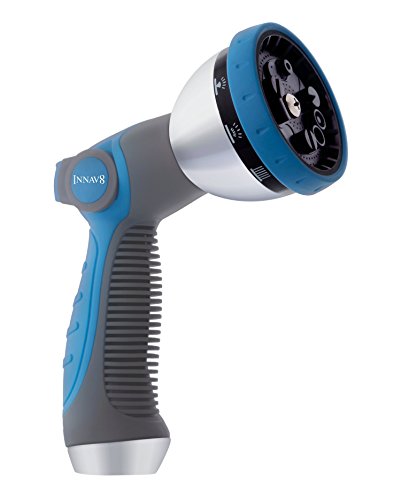
THUMB CONTROL DESIGN: This nozzle was designed to operate effortlessly simply by pushing the switch up with your thumb to turn it on and control the water flow. Stop overtaxing those fingers by squeezing trigger handles, this nozzle will have zero strain on your fingers and will prevent Arthritis pain.
What a 5.4 lb Squeezing Force Tells You About Stream Power?
A 5.4 lb squeezing force—equivalent to 2,430 g—indicates the peak effort needed to actuate the nozzle’s trigger, and it directly correlates with the kinetic energy transferred to the water jet. This force level sets a ceiling for squeezing force limitations; any increase beyond it would demand disproportionate hand fatigue, reducing usable duration. You’ll notice tactile user feedback as the trigger reaches its mechanical stop, signalling that the jet stream has reached its designed pressure envelope (≈1.1 lb jet force). In practice, the Ottoman nozzle delivers that jet force with a moderate effort, while Green Mount pushes the limit to 6.3 lb, sacrificing comfort for higher volume. By comparing these values, you can infer that a 5.4 lb actuation yields a balanced trade‑off between stream power and ergonomic sustainability. The momentum‑change formula explains how the mass flow rate and velocity difference determine the resulting thrust. This transformation follows the continuity principle which dictates that a reduction in cross‑sectional area must increase fluid velocity. The Bernoulli principle shows that as the nozzle narrows, static pressure drops while fluid speed rises.
Common Misconceptions About “High‑Pressure” Garden Hose Nozzles
The 5.4 lb squeeze you just examined sets a clear limit on how much kinetic energy the nozzle can impart, but it doesn’t magically generate pressure; the nozzle merely restricts flow, creating back‑pressure much like covering a hose with your thumb. You often hear “high‑pressure” labels, yet the nozzle can’t exceed the source’s 40‑80 psi. Misconceptions arise because a smaller orifice raises nozzle pressure rate impacts, but the pump’s flow rate remains the bottleneck. Spray pattern impressions—mist, shower, or jet—suggest power, but they merely redistribute the same energy. An oversized nozzle lowers pressure and reduces cleaning efficiency, while an undersized one risks over‑pressurizing the hose. Remember, the nozzle’s role is to shape flow, not to create pressure. The overall cleaning effectiveness also depends on water flow rate and hose diameter. The sprinkler spray pattern is determined by the nozzle’s geometry and the pressure supplied.
Choosing the Right Garden Hose Nozzle for Your Pressure Range
You’ll want to match the nozzle’s pressure rating to the actual PSI your supply delivers, because a nozzle that can’t handle the input pressure will leak or fail, while an over‑rated one offers no performance gain. First, measure your home’s static pressure; most residences sit between 40–60 PSI, with occasional spikes up to 80 PSI. Select a nozzle rated for at least that maximum, preferably with a safety margin of 20 % to accommodate transient spikes. Brass models provide superior nozzle material durability and can tolerate up to 550 PSI, making them ideal for high‑flow tasks. Guarantee the hose you pair with the nozzle has a burst rating three times higher than the expected pressure, and verify water supply consistency before finalizing your choice.

【Universal Fit for Standard US Hoses】: This high pressure water hose nozzle is equipped with a 3/4 Inch GHT Thread Garden Hose Quick Connector, connect fittings with rubber washers for a leak-free seal. Designed to match standard American garden hoses perfectly so that you can connect and disconnect in seconds — no tools, no hassle. The solid brass build and watertight rubber seal guarantee zero leaks.
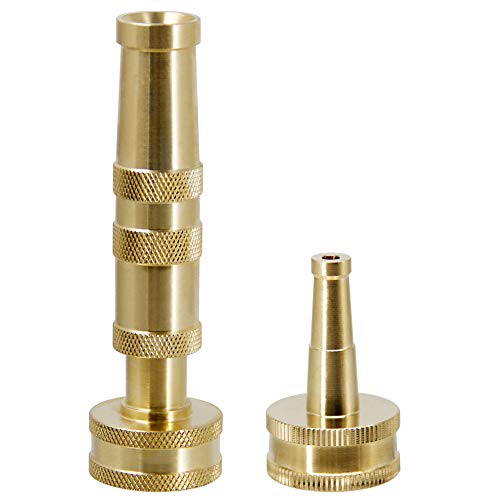
Heavy-Duty Brass Construction: Crafted from 100% solid brass, this heavy-duty garden hose nozzle outperforms plastic models with unmatched durability and corrosion resistance. Built to withstand high-pressure water flow, it ensures years of reliable service without cracking or warping.

Package Included: 2 PCS high pressure hose jet nozzles, 2 PCS hose shut off valves, 4 PCS extra rubber washers.
Tips to Maximize Nozzle Performance Within Home PSI
15 you match nozzle angle to your home’s PSI, you can extract the most efficient spray without overloading the system. Choose a 15‑degree tip for high‑pressure spot cleaning, a 25‑degree tip for general surface preparation, and 40‑ or 65‑degree tips for broad coverage within typical residential PSI limits. Rotate 5‑in‑1 nozzles to switch degrees quickly, and adjust orientation to switch between fan and jet modes. Maintain a consistent distance from the target, work from high to low points, and test on an inconspicuous area first. Employ water conservation techniques by using the smallest effective spray area and turning the trigger off between passes. Clean nozzles regularly, release pressure before swaps, and store dry to prevent mineral buildup. Quick release mechanisms make swapping nozzles faster and safer. Selecting the proper nozzle size ensures optimal pressure distribution across varied surfaces. Turbo nozzles provide a fine mist that is ideal for delicate plants and water conservation. Understanding vinyl siding PSI helps prevent damage while achieving a thorough clean.
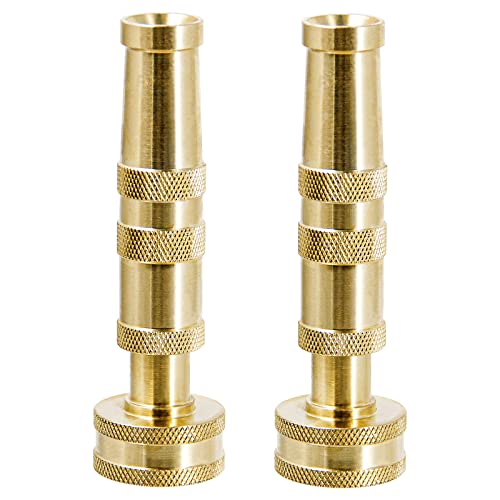
Heavy-Duty Construction: Solid brass construction ensures durability and long-lasting performance for all your outdoor watering needs

The Slip resistant grip, trigger and head are rubberized for comfortable use

💦【 Adjustable Spray Gun for Targeted Cleaning】 Easily adjust water pressure and spray direction to tackle different cleaning tasks — from yard work and car washing to pet area cleanup.
Bottom‑Line Takeaways for Garden Hose Nozzle Pressure
Matching nozzle angle to your home’s PSI maximizes efficiency, but the real takeaway is understanding the pressure limits you’re actually working with. Your supply delivers 40‑70 psi, and most garden nozzles operate safely within that range; turbo‑jet models tolerate up to 125 psi, while brass jet variants survive 550 psi. Automatic pressure regulation in high‑end units prevents over‑pressurization, protecting nozzle durability features such as brass bodies and rubberized handles. Expect a jet stream to reach six feet, and a brass nozzle to spray up to 25 feet, depending on pressure. Stream force peaks at 1.2 pounds for premium designs, but the peak squeezing force required—5.4 pounds—remains well below the structural limits of durable construction. Choose a nozzle whose rating exceeds your home’s static pressure for reliable, long‑lasting performance.