You’ll see sprinkler‑system water solidify once ambient temperatures drop to 32 °F or lower for a sustained period, because that’s when water’s supercooling limit is breached and ice expansion creates pressure that can crack PVC or CPVC pipes. A “hard freeze” is defined as 28 °F or below for at least two hours, and the risk rises sharply when temperatures stay sub‑32 °F for 12‑hour blocks, especially in stagnant, small‑diameter sections. If you keep going, you’ll uncover the exact steps to protect and winterize your system.
Why 32 °F Causes a Wet‑Pipe Freeze
Why does 32 °F trigger a wet‑pipe freeze? At 32 °F water reaches the ice nucleation mechanisms threshold set by common impurities—soot, bacteria, mineral particles—present in municipal supply. These nucleators lower the supercooling limit, allowing the liquid to solidify without the extreme -51 °F needed for pure water. Once ice forms, it expands, generating pressure that the pipe wall must absorb. Pipe material thermal properties dictate how quickly that temperature propagates: copper conducts heat rapidly, so its wall reaches 32 °F faster than plastic, while insulation slows the transfer. Stagnant water in small‑diameter sections freezes first, creating a blockage that concentrates pressure downstream. Within six hours of sustained sub‑32 °F exposure, the expanding ice can exceed material strength, leading to cracks or bursts. Proper winterization, such as draining the system, removes water and prevents the buildup of pressure that causes pipe failure. Frozen pipe damage can be avoided by insulating exposed sections and ensuring proper drainage before the first freeze. Applying a heat lamp can gently raise pipe temperature and reduce the risk of ice formation.
What Temperature Defines a “Hard Freeze” for Sprinkler Systems?
What temperature truly marks a “hard freeze” for sprinkler systems? A hard freeze occurs when air temperature stays at 28 °F or lower for at least two consecutive hours, allowing ice to form in the ground and any standing water. When temperatures dip into the mid‑20s °F or below, you must drain the system rather than rely on insulation alone. This threshold distinguishes a hard freeze from a freeze warning (32 °F+ for two hours) and a mild freeze (high‑20s °F). During a hard freeze, ice expansion can crack underground pipe sections, cause sprinkler heads damage, and exacerbate condensation buildup issues that corrode fittings. Prompt winterization—draining, insulating backflow devices, and covering above‑ground piping—prevents these failures and maintains warranty coverage. Homeowners should also check local freeze forecasts to time their winterization activities correctly. Proper soil moisture monitoring helps predict how quickly the ground will freeze and protects root zones from desiccation.
Why PVC and CPVC Pipes Fail Below 20 °F
When temperatures drop below 20 °F, the reduced ductility of PVC and CPVC causes them to fracture rather than bulge, and the rapid pressure spikes from ice plugs exceed their limited strain capacity. You’ll see material fatigue accelerate because the polymer matrix stiffens, limiting strain energy absorption. Thermal mismatch between the cold pipe wall and warmer interior water creates localized stress concentrations at joints and fittings. Ice plugs form, sealing sections and trapping water; as water freezes it expands ≈9 %, forcing a ≈3 % diameter increase that the brittle pipe cannot accommodate. The resulting pressure surge exceeds the pipe’s strain limit, initiating a single‑point crack in PVC (rough surface) or multiple initiation sites in CPVC. Insufficient support, incompatible sealants, and solvent‑cement defects further amplify stress, leading to sudden rupture. Improper drainage can allow water to remain in the system, increasing freeze‑risk. Flex Seal can provide a temporary barrier, but its waterproofing film may not adhere well to the smooth polymer surfaces of PVC and CPVC.
How Long Must Temperatures Stay Below Threshold to Rupture Pipes?
Typically, a pipe will rupture only after the ambient temperature remains below the critical threshold for a sustained period—usually ranging from 24 hours up to several days—depending on pipe material, insulation, and exposure. You must monitor the cumulative freeze hours; if temperatures stay under 32°F for more than 24 hours, the water column begins to expand, and each additional 12‑hour block raises internal pressure. Pipe insulation effectiveness slows heat loss, extending the safe window, but once the insulation’s R‑value is exceeded, the pipe core reaches 20°F within 6 hours, and the pressure rise accelerates. Waterflow valve reliability becomes critical: a stuck valve prevents pressure relief, so a valve that fails after 48 hours of sub‑40°F exposure can trigger rupture. In practice, 1–3 days of continuous sub‑critical temperature typically cause structural failure. Fire alarm systems often detect sprinkler activation and can signal a shutdown of water flow to prevent further damage. The 155 °F activation threshold for standard sprinklers is a key reference point for designing freeze‑resistance strategies. Steam can cause sprinkler activation when it reaches activation temperature and pressure levels.
Early Warning Signs of an Imminent Sprinkler Pipe Freeze
After the temperature threshold has been exceeded for the required duration, the first physical cues appear on the pipe surface and system performance. You’ll notice frost on exposed sprinkler pipes, ice buildup on valves, and condensation on attic piping. Low or no water pressure, sudden pressure drops during tests, and reduced flow signal internal ice restriction. Listen for cracking or popping sounds from forming ice, and faint hissing near shut‑off valves. Inspect for water stains on ceilings, damp pipe penetrations, and puddles near basement connections. Track low‑temperature alarms and repeat freeze incidents in the same spots. Early identification of freeze patterns relies on monitoring high‑risk locations such as unheated garages, attic drains, and backflow preventers. Prompt detection lets you intervene before rupture. Proper winterization includes draining hoses to remove water that could freeze and expand. Using a pressure regulator can also help prevent bursts caused by high water pressure. Regularly checking the drain valve ensures any remaining water is cleared before freezing conditions set in.
Step‑by‑Step Winterization for Mild Freezes
If temperatures dip into the 28‑32 °F range for several hours, begin the winterization sequence by confirming all backflow devices are intact, closing shut‑off valves, and opening test cocks to relieve pressure before you start draining the system. Next, rotate each test cock to a 45‑degree angle with a flat‑head screwdriver, then remove internal backflow components—bonnets, poppets, retainers, check valves. Insert a suction tube into each valve and manually extract standing water, disposing of it in a sealed container. Apply system insulation techniques: wrap exposed pipe sections with foam sleeves, seal joints with heat‑shrink tubing, and cover above‑ground fittings with insulated blankets. Follow winterization best practices by documenting each step, verifying open drain valves, and leaving isolation valves off for the season. This schematic approach prevents rupture during mild freezes. Empty the freshwater tank before adding antifreeze. Properly insulating the hose can further protect against freezing damage. Use self‑regulating heat tape to safely keep the hose above freezing temperatures. Water in a garden hose can reach up to 140 °F when exposed to direct sunlight.
Full Drainage Procedure When a Hard Freeze Is Expected
When a hard freeze is forecast, you must move from mild‑freeze winterization to a full drainage sequence that eliminates every water pocket in the system. Begin the shut off sequence by locating the main valve where the line enters the house, usually in the basement, and turn it fully closed. Verify zero pressure, then open the backflow preventer drains, adjusting test port screws to 45° and letting the collected gallon flow outdoors. Next, disable the controller clock and manually rotate each zone valve solenoid 180° to open every valve, releasing trapped water through the manifold. Open low‑point and automatic freeze drains on main, lateral, middle, and end lines, ensuring each is angled to avoid debris. Conduct a drain inspection to confirm all water has exited before insulating exposed pipe. The backflow preventer should be drained completely to prevent freezing damage. Properly protecting the system also helps avoid the cross‑connection risk that could contaminate the potable water supply. Ensuring backflow protection is essential for compliance with local code requirements. Installing a sprinkler backflow preventer provides a critical barrier against contaminated water entering the potable supply.
Cost‑Effective Repairs and Prevention Tips After a Freeze
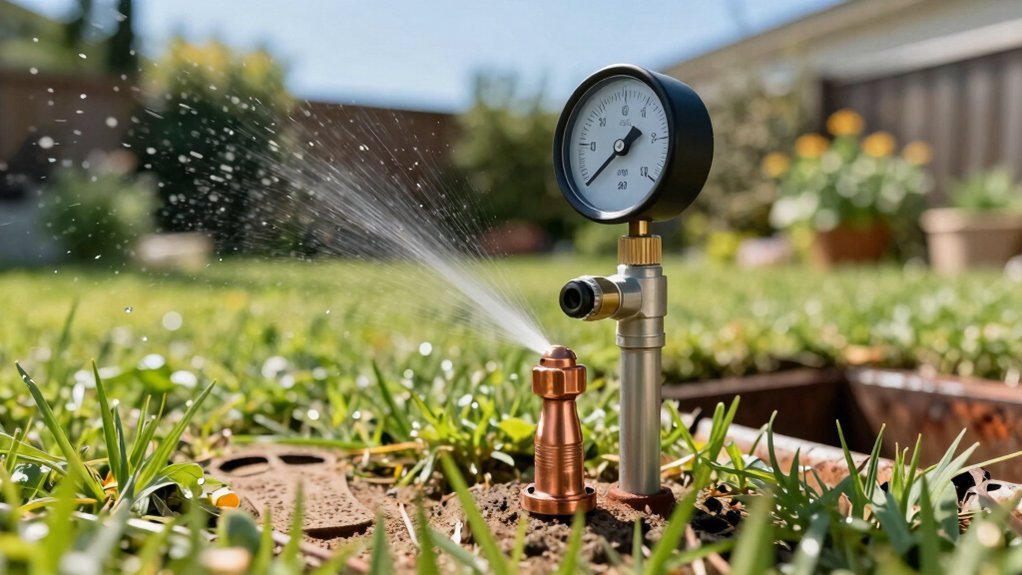
Even a brief freeze can leave hidden cracks, burst fittings, and clogged drains, so you should start by inspecting every accessible component, documenting damage, and prioritizing repairs that restore pressure integrity before the system re‑pressurizes. Use a pressure gauge to verify each zone, replace compromised elbows, and reseal joints with approved epoxy. Install self monitoring systems on critical valves to log temperature excursions and pressure drops, enabling early detection of future anomalies. Apply cost saving upgrades such as rigid polyurethane foam insulation around exposed runs and UL‑listed heat tape on high‑risk sections, reducing energy consumption. Consider nitrogen upgrades for dry‑pipe lines to eliminate condensation, and add automatic low‑point drains with pressure‑activated valves. Document all actions, schedule a professional fire‑protection inspection, and verify compliance with NFPA standards before returning to service. Use open cell insulation on most pipes, but not the backflow or spigot, to provide protection if temperatures dip just below 32°F. Proper burial depth of sprinkler lines, typically 6 to 12 inches, helps maintain consistent water pressure and guards against frost damage.