You won’t set off a sprinkler with steam alone because the glass bulb or fusible link needs a sustained temperature of about 135 °F–170 °F, while steam at 212 °F condenses and loses heat before reaching that threshold. The bulb’s rating matches fire‑heat ranges, and its tamper‑resistant design prevents brief spikes from triggering. Photoelectric detectors also ignore steam, focusing on light disruption. If you keep reading, you’ll see how to prevent false alarms and what to do if a head does fire.
Understand How Heat‑Sensitive Sprinkler Heads Work and Why Steam Isn’t Enough
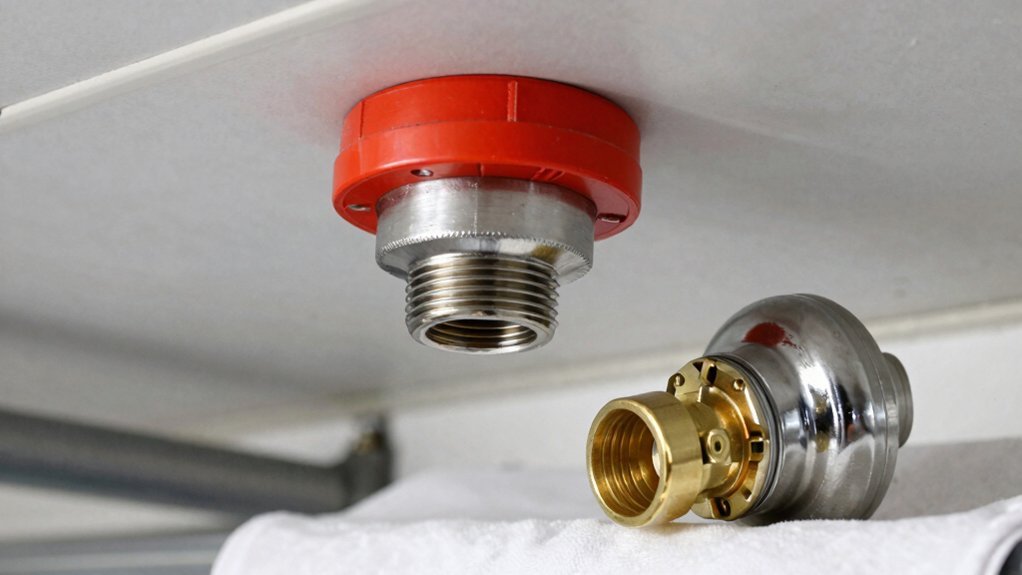
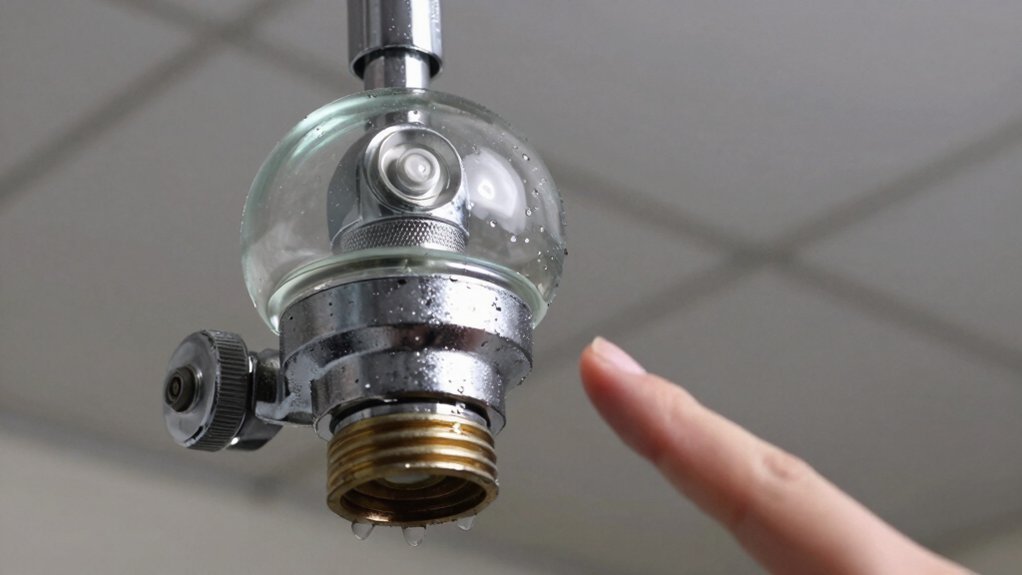
One key component of a sprinkler head is the heat‑sensitive trigger, typically a glass bulb filled with a glycerin‑based liquid. When ambient temperature exceeds the calibrated range, the liquid expands, shattering the bulb and releasing water. You must match the bulb’s rating to the required sprinkler activation temperatures—135 °F to 170 °F for standard units, higher for kitchen or industrial heads. Sprinkler tamper resistant mechanisms, such as sealed caps and reinforced gaskets, block accidental rupture from transient spikes. Steam, however, dissipates quickly and never sustains the heat needed to expand the glycerin or melt alternative fusible metal links. Consequently, steam fails to meet the thermal energy threshold, preventing false activation while preserving system integrity. Photoelectric detectors rely on light disruption, which is not triggered by steam. Sprinkler systems operate independently of smoke detection, each serving a distinct role in fire protection.
Steam‑Trigger Temperature Thresholds for Sprinklers
Since the glass‑bulb mechanism only reacts to sustained heat, you must compare steam’s temperature profile to the sprinkler’s calibrated activation range. Steam at 212 °F (100 °C) sits below ordinary (135–170 °F) and intermediate (175–225 °F) thresholds, so it won’t trigger those heads unless it superheats or condenses into a hot liquid film. For high‑temperature ratings (250–300 °F) you gain a safety margin; the bulb only activates when steam exceeds ~250 °F, which occurs in true boiler‑room conditions. Apply proper sprinkler temperature selection by matching the ceiling’s maximum ambient plus 20 °F, per NFPA 13 Table 7.2.4.1. Include sprinkler temperature derating considerations for mechanical spaces, using Tables 9.4.2.5 to adjust for background heat and steam‑line proximity. This guarantees you avoid false trips while maintaining fire protection integrity. The system also incorporates a thermal fuse that prevents activation from brief temperature spikes. Understanding response time helps ensure the system reacts quickly enough to suppress a fire before it spreads. Properly managing cold weather thresholds can prevent sprinkler damage and conserve water.
Debunk Common Myths About Steam Triggering Sprinklers
Although steam can fog a room, it doesn’t activate fire sprinklers because the heads respond only to heat, not to moisture or particles. Your sprinkler’s detection mechanisms rely on a fusible link or glass bulb that expands at 135‑165 °F. Steam never reaches that temperature, so the operational limitations prevent false triggers. You might hear that steam sets off alarms, but those are smoke detectors using photoelectric or ionization sensors, not sprinkler heads. Accidental discharges occur under 1 in 16 million heads per year, mostly from mechanical damage, not moisture. Remember, sprinkler systems are temperature‑based, isolated from steam‑related particles, and designed to fire only when a genuine fire raises ambient heat above the preset threshold. The activation temperature for most standard sprinklers is typically set around 155 °F (68 °C). The duration of operation can vary widely depending on fire size and system design.
Preventing Steam‑Triggered Sprinkler False Alarms
When steam builds up around a sprinkler system, the key to avoiding false alarms is to control humidity and temperature exposure before the detector can react. Implement air circulation adjustments: run exhaust fans during and after showers or cooking, and keep them on for 20 minutes to purge vapor. Verify fan health by cleaning filters and replacing worn motors. Deploy moisture control methods: install kitchen hoods, ventilate laundry rooms, and position smoke detectors at least 10 feet from high‑steam zones. Relocate detectors away from direct steam paths and avoid placing them in bathrooms, kitchens, or near HVAC returns. Switch to heat or photoelectric detectors where code permits, and schedule semi‑annual cleaning with vacuum or compressed air. These steps minimize steam‑triggered false alarms while maintaining compliance. CPVC pipe exposure must also be considered to prevent thermal damage from steam‑induced heat. Properly designed sprinkler shafts can meet fire safety codes and avoid costly retrofits. Additionally, using burial‑rated wire ensures reliable connections in wet environments.
What to Do When Steam Triggers a Sprinkler? Diagnosis & Next Steps
A burst of steam in a bathroom can instantly trigger a sprinkler head, so you must act fast. Press the hush button if safe, then evacuate cautiously to avoid slips. Call building management or the fire department; don’t tamper with the head or water flow. Document time, location, and observations. Verify no fire: sprinklers fire at 155‑200 °F, not steam. Inspect the bulb, fusible link, and nearby heat sources. Quantify water discharge (10‑40 gpm per head) and assess damage to ceilings, electronics, and documents—watch for corrosion and mold. Contact a certified fire‑protection technician per NFPA 25 to test pressure, flow, and heat‑sensitive elements. Drain, dry, replace the head, ventilate, and update equipment restoration plans while noting water freeze risks in cold zones. Heat‑sensitive glass bulbs activate automatically at a set temperature, ensuring rapid response to fire conditions. Proper water supply sizing helps maintain adequate pressure for effective fire suppression. Early detection reduces casualty risk by suppressing flames before they spread.