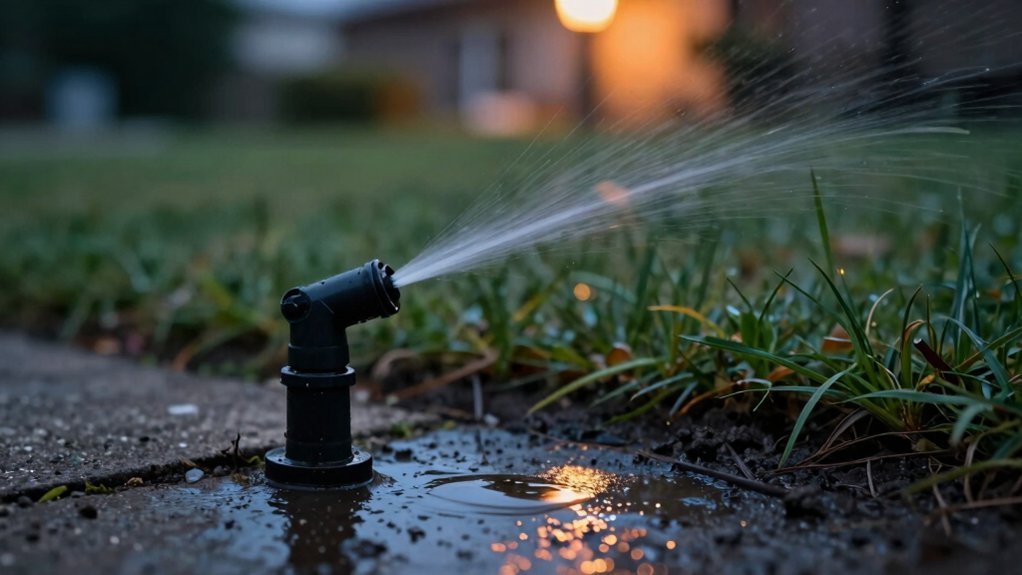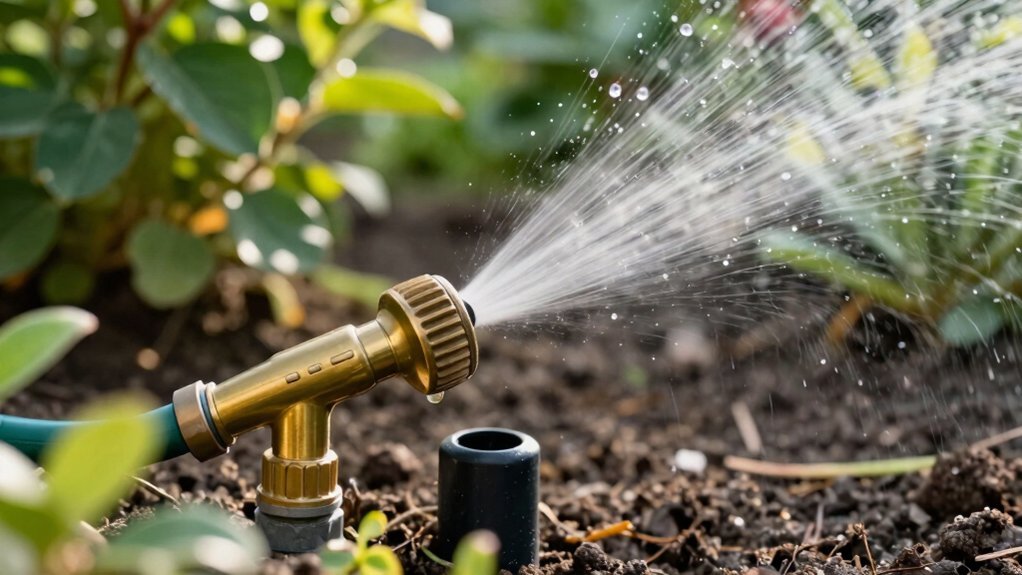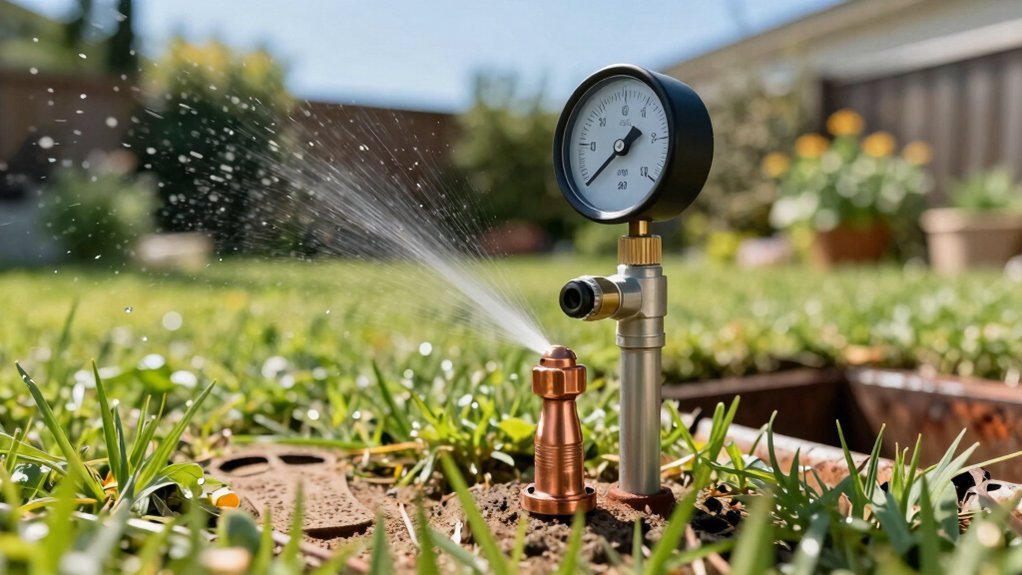
If nighttime lows stay at or below 32 °F for three straight nights, you must blow out your sprinkler system to prevent water from freezing and cracking PVC or polyethylene pipes. Check frost projections, ground temperature (≤ 28 °F), and pressure drops in valve boxes as confirming signs. Use a compressor matched to your pipe size—20‑50 CFM at 50 PSI for residential PVC, 30‑60 CFM up to 80 PSI for larger lines—and follow a zone‑by‑zone pressure‑ramp procedure. Ignoring these steps risks pipe rupture, while a proper blowout safeguards your system; the next sections detail each step.
Is a Sprinkler Blowout Required in Your Climate?
How can you tell if your climate demands a sprinkler blowout? Check climate patterns and frost projection data. If average nightly lows dip below 32°F for more than three consecutive days, water in pipes will freeze and expand, raising burst risk. Regions such as Eastern Washington and New England show first‑frost timing in late September to mid‑October; schedule a blowout before those dates. When ground temperature reaches 28°F or lower, ice force can crack steel hulls and sprinkler heads. In semi‑arid zones with early dormancy at 50°F, irrigation demand ends, making a fall blowout ideal. Align the operation with local weather forecasts, targeting the October‑November window to avoid hard‑freeze damage. Backflow preventer is the most vulnerable component outside the house. Proper winterization also includes draining excess water from the system to prevent pipe rupture. Consider using a hair dryer to gently thaw any frozen sections before the blowout. Understanding the freezing point of water helps you recognize when pipe damage is imminent.

IDEAL WINTERIZING KIT: TianPtion 17 inch Upgraded rv winterizing kit will prevent your equipment pipe system from breaking in cold weather due to water freezing when winter coming(include rv and sprinkler system pipes) through blow out pipe inside water; No need antifreeze, healthier and more environmentally friendly; Save a lot money & time

RV winterizing kit:This winterize sprinkler system blow out adapter supports 1/4", 3/8", 1/2", 3/4" and 1" MNPT and FNPT connections, making it compatible with most residential and RV irrigation systems.

Heavy-Duty Brass & Flexible Rubber Hose: Built with premium solid brass and reinforced EPDM rubber, this flush hose is corrosion-resistant, pressure-resistant (up to 300 PSI), and safe for long-term use. It’s lead-free (less than 0.25%) and performs reliably in extreme temperatures from -22℉ to 250℉.
How to Recognize the First Signs You Need a Sprinkler Blowout?
After noting that your climate’s frost schedule dictates when a blowout is required, you can start watching concrete indicators that signal the need to act now. Track nighttime lows; a dip to 32 °F or below, especially if it repeats for three consecutive nights, is a primary weather check trigger. Observe leaf color change and early frost forecasts—these seasonal cues align with the first hard‑freeze window. Monitor system performance: pressure drops, water pooling in valve boxes, or condensation on pipe insulation indicate residual moisture. Apply system insulation tips such as wrapping exposed lines and sealing drip emitters; if insulation fails, water remains trapped. Combine these data points to schedule a blowout before ground freezing escalates the risk. Understanding frost damage thresholds helps prevent costly pipe bursts. Exposed pipe freezing can occur when temperatures drop below 20 °F (‑6 °C). Texas homeowners should also consider the soil freeze depth when planning blowout timing.
Which Compressor and Adapters Are Safe for a Sprinkler Blowout?
When you choose a compressor for a sprinkler blowout, match its CFM rating and pressure capability to the pipe material and system size—portable units delivering 20‑50 CFM at 50 PSI work for most residential PVC or polyethylene lines, while rotary‑screw or diesel models (30‑60 CFM, up to 80 PSI) are safer for larger or commercial installations. Focus on compressor capacity considerations: a minimum of 20 CFM clears small loops, 30 CFM handles typical residential zones, and 60 CFM covers commercial or long‑run lines. Use a pressure regulator to cap PSI at 50‑80 PSI, respecting PVC and polyethylene limits. Select adapters that match the blowout port thread (usually 1/2‑in. NPT) and include a quick‑release coupling to avoid leaks. When buying, compare compressor rental options—daily rates for portable units versus weekly contracts for high‑capacity rotary‑screw or diesel machines—to balance cost and performance. Safety glasses and a secure, leak‑free connection complete the setup. Reciprocating compressors are commonly available in 29‑gallon tanks with 165 PSI and 5.3 CFM at 90 PSI, making them a versatile choice for many residential blowouts. Properly sizing the compressor prevents insufficient airflow that can leave water trapped in the lines. Understanding the pressure requirements of sprinkler systems helps avoid over‑pressurizing delicate pipe materials.

20 Gallon Air Compressor: Our 3KW oil-free motor drives the compressor up to a speed of 1680 r/min and 10.6 CFM@ 90 PSI air delivery. It is ideal for supporting a variety of pneumatic and air tools, such as nail gun, impact wrench, spray gun, pneumatic screwdriver, best for tire inflation, auto repair, spray painting, woodwork nailing, etc.

2 HP 115V/230V 15/7.5 Amp dual voltage induction motor

MOVE EASILY FROM ONE JOB TO THE NEXT: Sturdy flat free tires make for easy handling and maneuverability, allowing you to easily move from job to job, the ideal air compressor for the DIY-er, or Contractor
How Do You Perform a Proper Sprinkler Blowout – Step‑by‑Step?
Before you start, shut off the main water supply, open the main hose bib to let residual water drain, and disable the controller and timer. Wear safety glasses, then attach the air compressor to the blowout port with the correct quick‑connect adapter. Keep backflow valves closed, open the farthest zone head, and pry the backflow preventer valve with a flathead screwdriver. Open the compressor valve slowly, watching the pressure gauge to stay below the machine’s max. When water spray appears, keep pressure steady until only a fine mist exits each head. Proceed zone‑by‑zone, starting at the highest elevation, allocating roughly two minutes per zone. Shut each head off as soon as spray stops. After the final zone, release residual air by opening backflow and manual drain valves, then disconnect the compressor. This sequence fulfills proper winterization techniques and addresses key sprinkler maintenance considerations. Skipping winterization can cause extensive damage to the irrigation system. Understanding ground temperature helps predict how quickly water cools in the hose during winter. Ensure that all connections are sealed and protected with water‑resistant conduit to prevent corrosion and electrical hazards. Properly installing a control valve ensures reliable operation and protects the system from pressure spikes.

Blow out plug adapter fitting to winterize underground irrigation sprinkler systems, outdoor pipes, RV, boat, watercraft, motorhome, camper, travel trailer, water lines, homes, cabins, faucets, spigots, garden hoses, sillcocks, and hose bibbs by blow out method.

Blowout plug adapter fitting to easily winterize underground irrigation sprinkler systems, outdoor pipes, water lines, homes, cabins, faucets, spigots, garden hoses, sillcocks, and hose bibbs by blow out method.
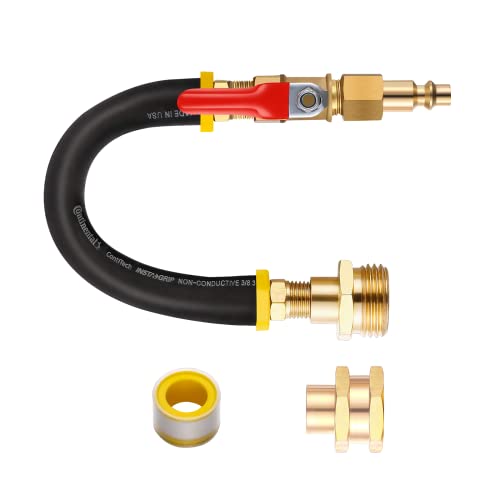
MULTIPURPOSE:The winterizing kit with shut off valve come with 3/4 male and female garden hose connector,When with male garden hose end is typically used to winterize recreational vehicles(RV), watercraft, garden hose, camper, boat and travel trailer. The fitting with female garden hose end is typically used to winterize sprinkler systems, garden hoses, and outdoor plumbing.
What Pressure Is Safe for PVC and Polyethylene Pipes?
If you’re setting up a sprinkler winterization or any system that will see compressed‑air blowouts, you need to stay well below the pressure limits of the pipe material. For PVC, use the 73 °F water ratings as a baseline: Schedule 40 ½‑in. 450 PSI, Schedule 80 ½‑in. 630 PSI, Schedule 40 1‑in. 370 PSI, Schedule 80 1‑in. 520 PSI, Schedule 40 4‑in. 220 PSI. Apply temperature derating—at 110 °F the rating halves, at 140 °F a ½‑in. Schedule 40 drops to 280 PSI. For polyethylene, common pressure ratings are 4 Bar (58 PSI) to 6 Bar (87 PSI), with PN10 at 10 Bar (145 PSI). Use a safety factor of 2.0 (or 2.5 for C900 class) and consider pipe age; after ten years capacity declines. Keep air pressure well under the derated hydrostatic rating to protect joints and seals. Local plumbing codes also dictate that only approved materials may be used for irrigation systems. Understanding the thread pitch differences helps ensure compatible fittings are selected. Using a fuel nozzle size guideline can prevent accidental cross‑fueling when handling different fuel types.
What Mistakes Could Ruin Your Sprinkler System During a Blowout?
One of the most common ways a blowout can wreck your sprinkler system is neglecting to disconnect hoses from outdoor faucets; trapped water freezes, expands, and bursts the connected pipework. You must also shut off the main water supply before any air pressure is applied; otherwise water refills the lines and freezes, causing catastrophic pipe rupture. Uninsulated, exposed pipes lose heat quickly, so apply insulation or heat tape to all above‑ground sections. Use a controlled pressure ramp: start at 40 psi and increase gradually, zone‑by‑zone, to avoid cracking PVC or polyethylene fittings. Finally, verify low‑point drains are fully opened and that backflow device valves release residual water; incomplete draining leaves ice that expands and splits lines. Backflow preventer must be installed and fully opened to allow water to escape during the blowout. The double‑check valve provides a secondary barrier against back‑pressure, ensuring that water cannot re‑enter the system during a freeze. Following these Best practices and Timely maintenance steps prevents costly failures. Proper cross‑connection protection helps safeguard the potable water supply from contamination. Neglecting to install a backflow preventer can expose the municipal water system to potential contamination.
When DIY Sprinkler Blowout Isn’t Enough: Call a Professional?
Why settle for a risky DIY blowout when a professional can guarantee safe, complete winterization? You’ll typically exceed 80 PSI on standard lines, and flexible poly pipes demand ≤50 PSI—exceeding those limits blows gaskets, cracks valve bodies, and detaches heads. Professionals cycle zones every 2 minutes, keeping pressure below buildup thresholds and ensuring full zone draining; DIY often leaves low‑spot water, causing incomplete zone draining and freeze expansion that cracks PVC or brass. They bring 10 CFM compressors, heavy‑duty airflow, and calibrated backflow‑preventer protocols, eliminating specialized heads damage. Their timed sequence clears check‑valve traps, drains main supply lines, and verifies valve positions, cutting repair costs from four‑figure bills to zero. If you lack the equipment or data, call a pro. Pressurizing the system after the PVB can prevent damage. Using a pressure‑rated hose ensures the hose can handle the higher PSI without bursting. Properly sizing the pump ensures the system operates within the required flow rate and pressure limits.

Brass Material: Brass, for your health and safety, certified to contain less than 0.25% lead. Hose Material: EPDM Rubber, EXTRMELY durable, more excellent corrosion resistance

Powerful air flow,new design inner supercharging construction and tapered air flow nozzle for high volume powerful blow-off.

【Main Function】The Boltigen upgraded rv winterizing kit with pressure guage can prevent your waterline system equipment from freezing even damaging in cold winter, causing huge loss. Compared with antifreeze, using the Boltigen upgraded rv winterization kit is healthier, and environmentally friendlier.
Low‑Risk Alternatives to a Sprinkler Blowout for Mild Climates?
Most homeowners in mild climates can avoid a full‑blowout by combining simple manual drainage with targeted insulation and controller shutdown. First, shut off the main water supply, then open each valve box and turn solenoids 180° to let zones drain. Release residual pressure by opening the farthest sprinkler head per zone and leave valves slightly ajar. Next, install automatic drains at the lowest points of the line; they evacuate water without compressor blowout and require only a shallow trench and a few fittings. Wrap exposed pipe, backflow preventer, and valve assemblies with insulating blankets or self‑sticking foam tape. Finally, set the controller to rain mode, power it down, and use a smart Wi‑Fi unit with freeze alerts. This schematic approach eliminates blowout risk while protecting components down to 28 °F. Adding auto drains at low points further ensures water removal during freeze events. Incorporating a check valve can prevent backflow and help maintain system pressure during winter.

Waters your lawn automatically the whole season
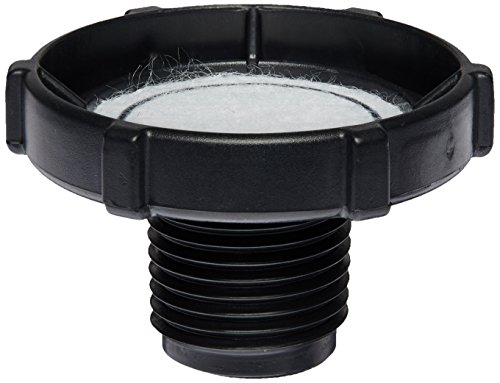
Item Package Dimension: 1.64L x 1.53W x 1.21H inches

Automatically drains water from underground sprinkler systems