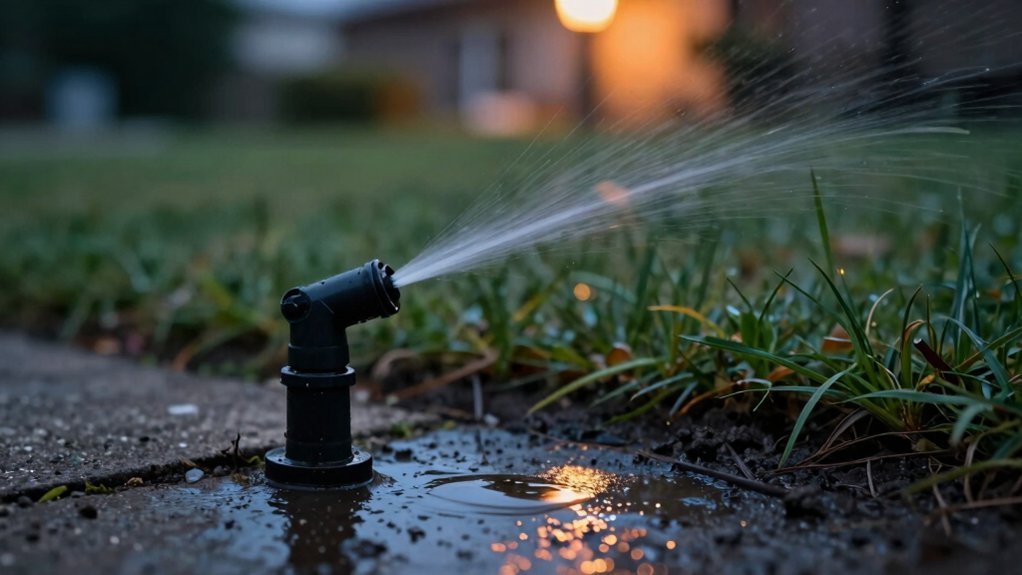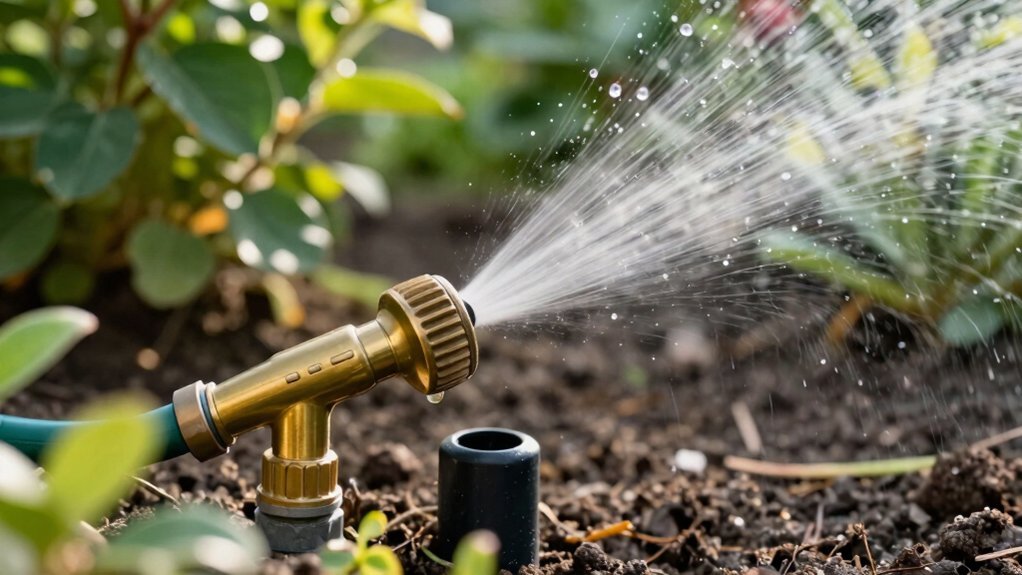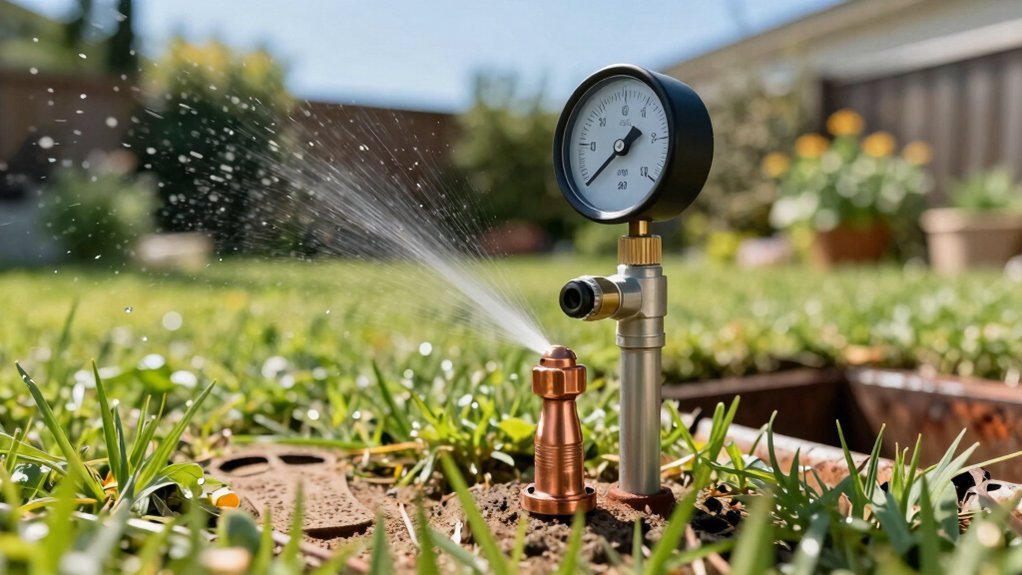
You should bury sprinkler lines deep enough to protect them from frost, soil movement, and traffic—generally 8‑12 inches in mild zones, 12‑18 inches where the frost line is deeper, and at least 4 inches below the surface for residential pipe plus an extra 4 inches for commercial systems. Adjust for soil type (sandy or clay may need a few inches more) and guarantee the trench depth equals pipe diameter plus 4 inches plus any riser or head height. Proper compaction and drainage will keep the system efficient, and the next sections will show how to fine‑tune these calculations.
What Is the Recommended Sprinkler Line Burial Depth?
Most professionals advise burying sprinkler lines 8 to 12 inches deep, with the standard measure taken from the pipe’s top to the surface. You should select a depth that satisfies proper burial methods while accommodating local climate, soil type, and traffic. In warm zones, 6–8 inches suffices if you protect the pipe; temperate areas need 6–12 inches; cold or frost‑prone sites require 12–18 inches to stay below the frost line. Sandy or loamy soils demand at least 8 inches for drainage, whereas clay may need deeper placement to prevent freezing. Align the trench depth 2 inches deeper than the pipe, and use reinforced pipe for pressures beyond standard levels. Integrate these choices into seasonal maintenance schedules to avoid accidental damage during aeration, equipment passes, or freeze‑thaw cycles. Trench depth should be verified with a sharp spade before backfilling. Proper spacing calculations ensure uniform water distribution across the landscape. The spray radius of each head must be considered when planning layout to achieve consistent coverage. Using a metal detector can help locate existing underground lines before digging.
What Do Residential and Commercial Codes Require for Minimum Depth?
If you’re planning a sprinkler system, you must follow the depth requirements set by residential and commercial codes. Residential codes mandate a minimum burial of 6–12 inches, typically 8–12 inches, with the trench depth equal to pipe diameter plus 4 inches; a one‑inch supply line must sit at least 5 inches below the surface to guarantee Piping freeze protection and shield it from mowing or aeration. Commercial codes raise the floor to 12–18 inches, reflecting higher pressure and heavy‑equipment exposure, and still require the pipe‑diameter‑plus‑4‑inch rule. Local ordinance enforcement often ties these minima to the frost line, so you must verify municipal specifications before digging. Aligning with these standards balances safety, durability, and cost. Properly accounting for soil type helps ensure water reaches the root zone efficiently. Some municipalities also require a permit inspection before backfilling to confirm compliance. Calling 811 before any excavation helps identify existing underground utilities and prevents accidental damage.

For installation and maintenance of spray head sprinklers, nozzles, and risers

【PACKAGE INCLUDES】Includes 12 pieces in 3 common sizes: 7x 2" double male, 2x 6" double male, and 3x 2" double female fittings. The perfect versatile set for any sprinkler head height adjustment or irrigation repair.

ULTIMATE FLEXIBILITY FOR ANY GARDEN SHAPE – Place sprinklers exactly where you need them- Perfect for lawns, flower beds, raised gardens, and more.
How Do Climate Zones Shape Sprinkler Line Burial Depth?
How do climate zones dictate the depth at which you bury sprinkler lines? In cold zones you must exceed the local frost line—12 inches in mild northern areas, up to 48 inches or more in extreme regions—so the pipe never freezes, which prevents burst pipes and avoids uneven water pressure. Follow the International Plumbing Code’s 6‑inch minimum below the frost level, but aim for 12 inches or deeper when using half‑inch pipe to maintain consistent soil coverage. In mild climates, 8‑10 inches suffices; 10 inches adds a buffer against occasional cold snaps and protects lines from shovels and lawnmowers. Warm zones need only 6‑8 inches, sometimes as shallow as 4 inches, because freezing risk is negligible, allowing you to keep heads flush with grade while preserving even pressure and reliable coverage. Properly draining the system before the first freeze can prevent pipe bursts and extend the lifespan of your irrigation network. Freezing temperatures can also cause valve seals to stiffen, reducing system efficiency. Regularly inspect for leaks after thawing to ensure optimal performance.
Which Soil Types & Foot‑Traffic Levels Need Extra Protection?
Climate zones set the frost‑line depth, but once the pipe is buried, the surrounding soil and traffic dictate whether you need additional safeguards. In sandy soil you must bury 8–12 inches to meet soil moisture retention requirements and prevent pipe uplift during heavy rains; the low cohesion also raises environmental damage risks, so a minimum depth of pipe diameter + 4 inches is prudent. Clay soil’s expansion when wet and its freeze‑thaw cycles demand 10–12 inches, especially where foot‑traffic is high, to avoid cracking and erosion. Rocky terrain requires at least 6 inches, but 8–12 inches mitigates puncture risk and environmental damage. Low‑traffic lawns suffice with 6–12 inches, while high‑traffic zones need 12–18 inches for durability and compliance with moisture retention standards. Smart sprinkler heads typically require deeper trenches to accommodate built‑in valves and electronics. Using Schedule 40 PVC may be prohibited for irrigation due to pressure‑rating limitations and code restrictions. Proper drainage systems help prevent soil saturation that can lead to foundation damage.
How to Include Supply Lines, Risers, and Pop‑Up Heads in Depth Calculations?
When you calculate trench depth, start by adding the pipe‑diameter plus four inches to the combined heights of the supply line, any risers, and the pop‑up head. Measure each component: the pipe’s external diameter, the riser’s vertical extension, and the head’s flush‑level requirement. Sum these dimensions, then apply the standard 8‑12‑inch baseline for typical grass protection. Adjust for frost line depth, adding a buffer of at least two inches in cold zones. Verify head trajectory remains unobstructed by confirming the pop‑up sits flush or a quarter‑inch above grade. Integrate components by verifying that riser placement raises the head to the desired elevation without exceeding the trench’s total depth. This analytical approach guarantees consistent coverage and protects the system from freeze damage. Selecting the appropriate spray pattern ensures uniform water distribution while minimizing runoff. Properly sizing the main valve helps maintain steady pressure throughout the network. Understanding soil permeability is essential for preventing waterlogging and ensuring efficient irrigation.

Smart Irrigation Starts Here - The Rain Bird 1806VAN 1800 Series Pack of 5 features 6-inch pop-up sprinkler heads with a fixed spray, variable arc nozzle and 1/2 in. female threaded inlet, made in the USA and built for precise irrigation in lawns, garden beds, and landscaped areas in residential and professional systems.
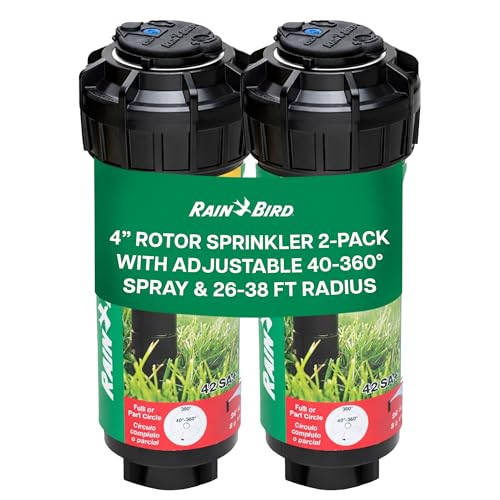
Professional Gear-Driven Rotor Sprinkler Head - The Rain Bird 42SA+ (W42003HC) heavy duty simple adjust gear-driven rotor sprinkler is designed as an in ground sprinkler head solution for medium to large lawn zones. It features an adjustable 40 - 360 degree part-circle and reversing full-circle rotation pattern and a 26 - 38 ft spray distance to deliver consistent, even irrigation coverage.

HEAVY DUTY, LONG LASTING SPRINKLER BODY: Built with an extra-thick body and cap for maximum durability, this pop-up sprinkler resists cracking and leaks, delivering dependable performance season after season for your lawn or garden.
How to Properly Trench, Measure, and Compact Your Sprinkler Pipes?
After calculating the required trench depth for pipe diameter, risers, and pop‑up heads, you now need to focus on actually digging, checking, and stabilizing the trench. Mark the line with paint or flags, then use a shovel or trenching machine to achieve a clean, straight channel 8‑12 inches deep. Verify depth every few feet with a tape measure, keeping the top of each head within ¼ inch of grade. Lay durable pipe materials, avoiding sharp bends, and backfill in 2‑inch layers, compacting each with a plate tamper to eliminate air pockets. Maintain the minimum depth (pipe diameter + 4 inches) before compaction, and adjust for frost line or clay soils as required. This systematic approach guarantees uniform trenching, proper alignment, and long‑term pipe stability. Proper water distribution sprinkler head placement ensures even coverage across the irrigated area. Consider flow rate when sizing pipe diameter to balance pressure and coverage.
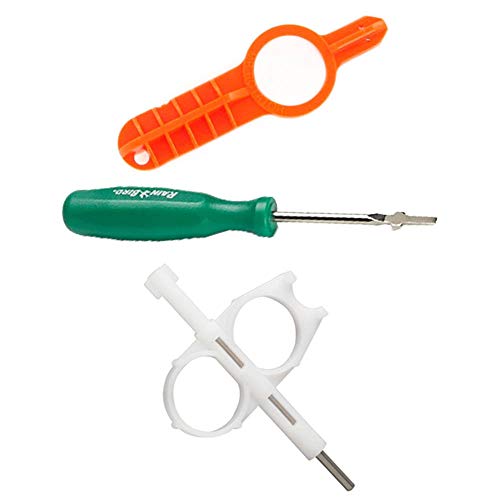
Hunter Key

The product is 3/4"Pipe Nipp Extractor

Rainbird Rotor Adjustment Tool
What Common Shallow‑Burial Mistakes Lead to Damage?
If you bury sprinkler lines too shallow, you invite a cascade of failures: surface loads can crack the pipe, lawn equipment can strike and break heads, and in frost‑prone regions the pipe may burst when ice expands. Shallow burial often stems from neglecting the 7‑inch minimum, which leaves pipes vulnerable to damage from landscaping equipment and routine foot traffic. Inadequate depth also raises heads, compromising sprinkler performance and increasing breakage risk from mowers and edgers. Ignoring local frost lines places pipes within the freeze zone, causing ice‑induced bursts. Failure to locate existing utilities before digging can intersect gas or electrical lines, creating safety hazards and costly repairs. Finally, inconsistent trench depths expose sections to mechanical stress, leading to cracks, leaks, and premature system failure. Driving over sprinkler heads can also cause vehicle under‑carriage damage and pose safety hazards. Proper insulation can prevent water in exposed pipes from solidifying when temperatures drop below 20 °F (‑6 °C).

Reliable Equipment Protection: The Orbit Round Sprinkler Valve Box helps protect valves, meters, filters, and irrigation controls from wear while providing dependable coverage

Connects Outdoor Sprinkler And Landscape Lighting

Great for growing shrubs and plants, and flower bed areas
How to Balance Cost, Maintenance, and Long‑Term Performance for Burial Depth?
Balancing cost, maintenance, and long‑term performance hinges on selecting a burial depth that meets climate, soil, and usage demands without inflating expenses. You evaluate climate impact first: temperate zones tolerate 6‑12 inches, frost‑prone areas require 12‑18 inches, and warm regions can accept 6‑8 inches. Next, adjust for soil type; sandy or loamy soils need at least 8 inches, while clay may demand deeper placement to avoid freezing. Cost efficiency tradeoffs appear when deeper trenches increase labor and material costs, whereas 8‑12 inches standardizes excavation and minimizes overruns. Depth based performance adaptations guarantee maintenance access—8‑10 inches allow easy repairs and prevent mower damage. Aligning these factors extends system lifespan, satisfies codes, and balances budget with durability. Modern sprinkler systems often include moisture sensors to further reduce water waste. Proper backflow protection, such as an anti‑siphon valve, is essential to prevent contamination of the water supply.