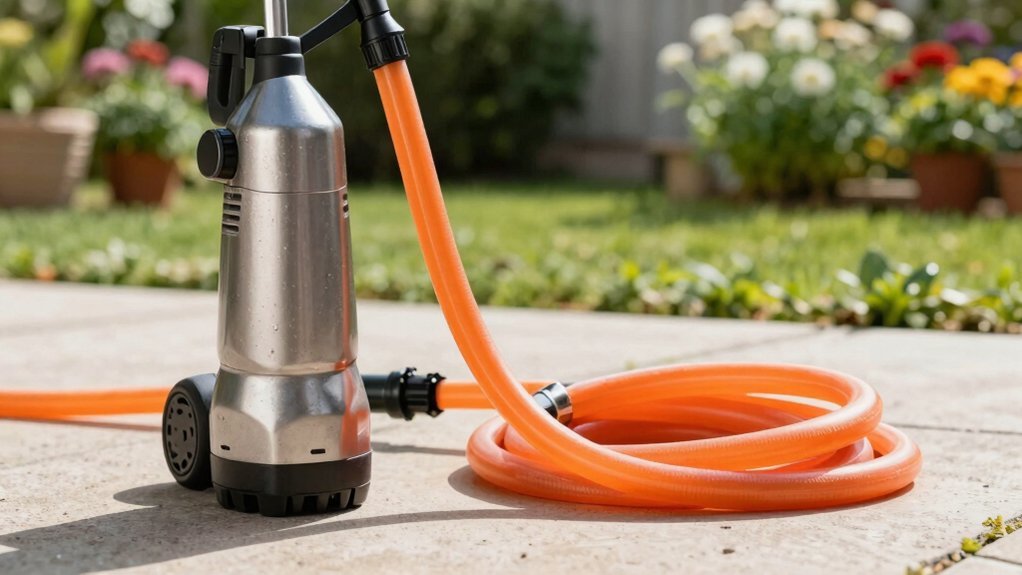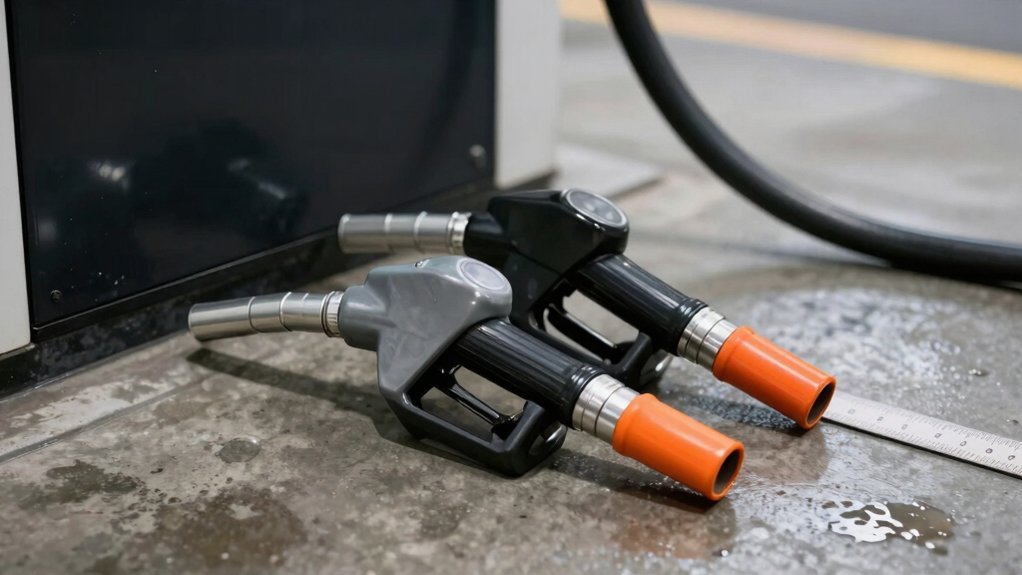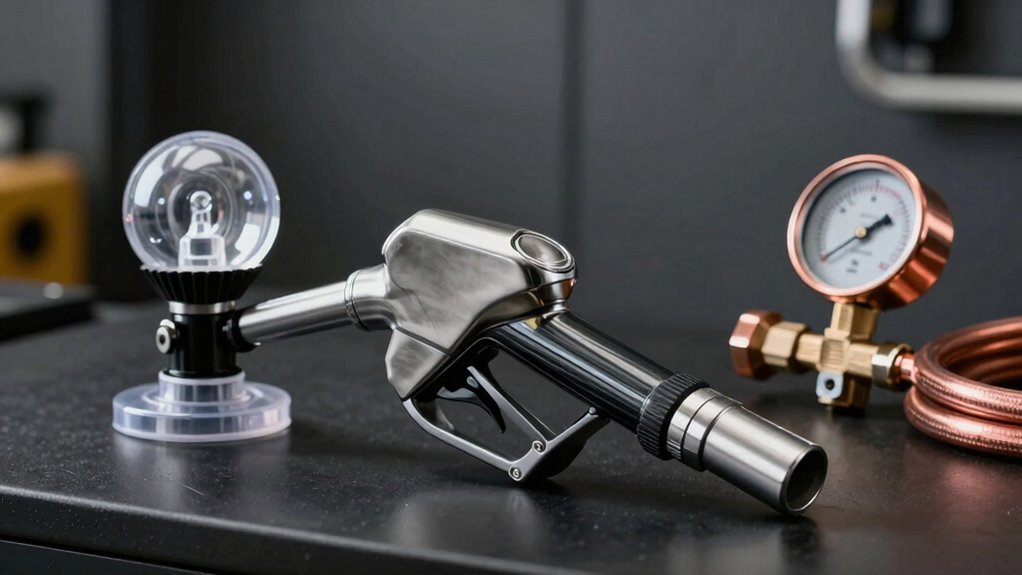
A 50‑ft garden hose is usually the sweet spot for a residential pressure washer. It gives you enough reach for most yards while keeping pressure loss under about 10 % compared to a 25‑ft line. If you need a little more reach, you can go up to 75 ft, but you’ll want a larger‑diameter hose (5/8‑in or 3/4‑in) to avoid a noticeable drop in flow. Stick with a single, continuous hose to prevent leaks, and you’ll see better performance. Keep reading to ascertain how hose diameter and quick‑disconnects further affect your results.
How Long Should a Garden Hose Be for a Residential Pressure Washer?
Wondering how long your garden hose should be for a residential pressure washer? You’ll want a 100‑ft supply hose as the baseline; it reaches most yards without forcing you to move the washer constantly. Pair it with a 100‑ft pressure hose for a total 200‑ft reach, which covers typical homes and leaves a margin for extra bends. If you lack a hose reel, two 50‑ft garden hoses are easier to wind and store. Keep a spare 50‑ft section in your storage location for quick replacements. For washers above 15 L/min, upgrade to a 3/4‑inch (18‑19 mm) hose to meet capacity considerations and avoid flow loss. This setup balances reach, maneuverability, and performance. 18mm hoses provide reduced flow loss compared to smaller diameters. Also, ensure the hose’s pressure rating exceeds the washer’s maximum output to prevent bursts. A larger hose diameter can increase gallons per minute flow, improving cleaning efficiency. Using a garden hose with a pressure washer may require a high‑pressure compatible connector to prevent leaks.

【M22 to 3/8'' Quick Connector Adapter Kit】The package includes a power washer hose and 5 adapters: 2 × M22-14mm female to 3/8" plug, 2 × M22-14mm male to 3/8" socket, and 1 x M22-14mm male to male. It's fits most power washers and guns.

Incredibly Lightweight, Ultra Flexible, 360° Anti-Kink Design: Stop wrestling with heavy hoses! At least 50% lighter than traditional hoses, this non-expandable hose eliminates arm fatigue during long watering sessions. Features 360° anti-kink design on both ends—simply fully pressurize the hose and walk forward while holding the handle. Kinks release instantly as you go. Includes a portable storage strap for tangle-free, space-saving organization
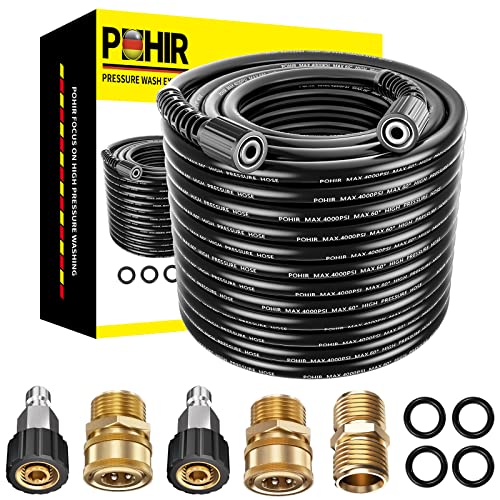
Pressure Washer Hose Kit Includes – 1 x M22 pressure washer hose 100ft with female 14mm thread, 2 x M22-14mm female to 3/8" plug, 2 x 3/8" quick disconnect to 14mm male, 1 x M22 14mm male to male, 4 x washers. Easily hook up to power washers and guns. It fits most brands of pressure washers.
How Does Hose Length Affect Pressure and Flow?
A 100‑ft garden hose works fine for most residential washers, but the longer it gets, the more pressure and flow you’ll lose. As length rises, frictional loss climbs because water velocity creates drag inside the hose. Smaller diameters magnify that drag, so a .29‑inch ID hose may deliver only 3 GPM at 100 ft, while a .500‑inch ID can push 13 GPM under the same pressure. The pressure drop is roughly proportional to length, yet under 300 ft the loss often feels negligible. When you choose a hose, weigh the hose diameter tradeoffs: larger IDs keep flow high but add bulk, while tighter IDs save space but cut pressure. Aim for pressure retention optimization by matching hose length to the minimum diameter that still meets your GPM needs. This balance preserves washer performance without over‑engineering the line. Using a larger diameter hose can reduce friction loss and improve overall efficiency. Maintaining water pressure within the optimal 40‑80 psi range helps ensure consistent cleaning power. Understanding Bernoulli’s principle explains why faster flow through a narrower section reduces pressure, influencing hose design choices. The friction loss per foot increases dramatically as hose material becomes smoother, allowing more efficient water delivery.
Choosing 3/8‑Inch vs 5/8‑Inch vs 3/4‑Inch Hoses
Which hose diameter you pick will dictate how much water your pressure washer actually receives, so matching the hose to your machine’s flow demand is essential. A 3/8‑inch hose handles about 40 % more water than a 1/4‑inch at the same pressure and supplies 1.58‑1.62 GPM, making it a good fit for units just over 4 GPM. However, hose diameter limitations become noticeable on longer runs; friction effects start to cut flow. A 5/8‑inch hose cuts friction loss further, delivering 44 GPM at 25 ft and 11 GPM at 100 ft, balancing volume and reel manageability. If you need the highest output, a 3/4‑inch hose offers 72 GPM at 25 ft and 18 GPM at 100 ft, minimizing pressure loss from the spigot, but it’s heavier and bulkier. Choose the size that meets your washer’s GPM rating without adding unnecessary weight. Steel braided hoses provide the most resistance to kinks and ruptures. Using a longer hose can significantly reduce pressure, so consider pressure loss when planning your setup. For residential lawns, a 1/4‑inch hose is often sufficient for light watering tasks. Properly securing the hose to the faucet can prevent accidental disconnections and water waste. secure connection

[TOUGH STEEL-WIRE BRAIDED] This abrasion-resistant rubber cover with tensile steel-wire braided for pressures up to 4000 PSI(12000 PSI burst pressure), supporting repeated home cleaning on concrete and other rough outdoor surfaces.
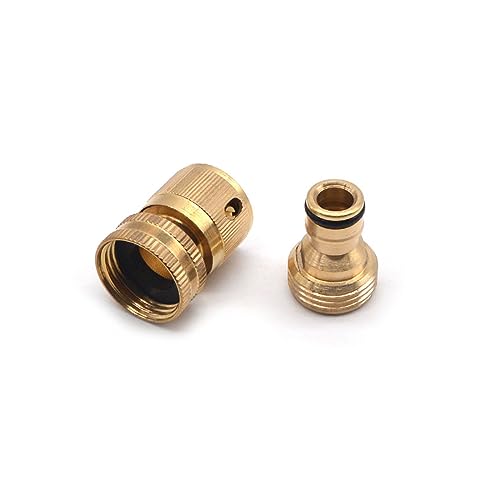
You will get a brass female connector+a brass male nipple+4 washers. You can use it perfectly with any standard garden hose, faucet and watering equipment.

Outdoor hose is made of double-reinforced, commercial grade rubber and vinyl with a rugged, abrasion-resistant red cover that won’t mar surfaces
When Should You Use a Dedicated Pressure‑Washer Hose Instead of a Garden Hose?
When you need to tackle stubborn grime, deep‑set stains, or large‑area cleaning, a dedicated pressure‑washer hose is the right choice. Use it whenever you require flow optimization and pressure maximization that a garden hose can’t deliver. A garden hose only provides 6‑12 GPM at low PSI, spreading soap instead of penetrating stains, and it wastes water. A purpose‑built hose concentrates water into a narrow, high‑pressure stream, giving you 50 % more power and precise lance control. It handles the PSI of a pressure washer without bursting, preventing mold‑promoting runoff. Choose a dedicated hose for decks, driveways, engine bays, or any heavy‑dirt job; reserve garden hoses for fragile surfaces or light rinses. This guarantees efficient cleaning, water savings, and consistent results. Selecting the proper nozzle size ensures optimal spray coverage and protects the pump from overload. Understanding typical garden hose nozzle pressure ranges of 30 to 80 psi helps you gauge the performance gap. High‑pressure hose materials further enhance durability and resistance to kinking.

The most flexible hose in the industry! MADE IN THE USA
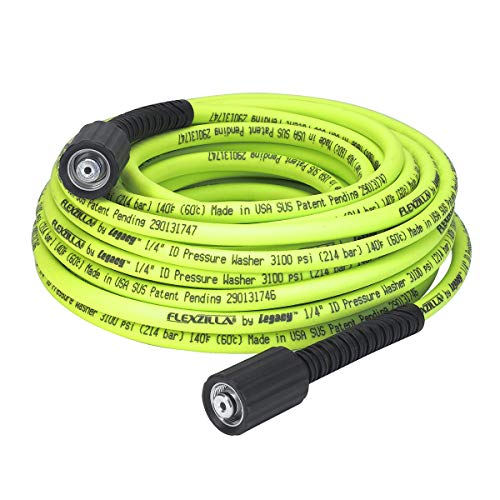
Stays flexible and responsive in any condition - from brutal subzero cold to scorching 140 degrees F heat

The maximum heat resistance temperature of this high-pressure hose is 140 ℉/60 ℃
Pressure Washer Hose Length: Balancing Reach and Maneuverability
Choosing the right hose length means weighing how far you need to reach against how easily you can maneuver the washer. A 25‑foot hose gives you tight control and minimal friction loss, so flow optimization stays high—44 gpm with a 5/8‑inch line. If you need to span a driveway or house back, a 50‑foot hose adds reach without noticeable PSI or GPM drop, and it’s still easy to hand‑wind. For larger jobs, a 100‑foot hose works, but expect the 5/8‑inch version to fall to 11 gpm; switching to 3/4‑inch restores flow to 18 gpm. Prioritize a single continuous hose to protect hose durability and avoid fittings that can leak or kink. Match length to your property’s size, and you’ll keep pressure steady while staying agile. The optimal hose diameter depends on the desired water pressure and flow rate, and a longer hose will increase friction loss, reducing pressure at the nozzle. Understanding friction loss helps you choose a hose that maintains performance over distance. Selecting the proper hose diameter ensures compatibility with standard fittings and maximizes flow efficiency. Different nozzle shapes can also affect flow speed, so consider the nozzle design when optimizing performance.
How Do You Calculate the Maximum Effective Length for Your Washer?
A quick way to gauge the maximum effective length is to start with the distance between your washer and the farthest cleaning point, then add a safety margin for positioning and spares. First, measure the site with Google Maps, noting any obstacles that may force you to relocate the unit. Next, factor in hose diameter consideration: a 3/8‑inch hose loses less pressure than 1/4‑inch, so you can stretch a bit farther without sacrificing performance. Then apply setup positioning importance—place the washer where it minimizes total run, often cutting 20‑30 feet off the raw distance. Finally, add 50 feet of spare hose to cover unexpected extensions or failures. This method keeps pressure loss negligible while staying within the industry‑recommended 200‑foot maximum. Using a garden hose for an air compressor can cause pressure loss and safety hazards. When pairing an expandable hose with a power washer, ensure the hose is rated for the washer’s pressure to avoid burst risk. Adding a booster pump can help maintain pressure when exceeding the typical three‑to‑four hose limit.
Common Mistakes With Long Pressure Washer Hoses and How to Avoid Them
If you stretch a pressure‑washer hose beyond its sweet spot, you’ll quickly run into strain, pressure loss, and handling headaches. First, avoid excessive pressure drop by keeping the hose under 5 m (≈16 ft) for most jobs; each extra 100 ft can shave off 50 PSI, plus another 22 PSI when you lift the nozzle. Second, choose the correct diameter—1/4‑inch for 1500‑2000 PSI electric washers—because a larger hose enlarges internal volume and saps PSI. Third, eliminate inadequate maneuverability by using a single, continuous hose instead of multiple quick‑disconnect sections; coiling stress and added weight (≈30 lb per 100 ft) wear the hose and make it hard to move. Finally, inspect connectors for leaks and guarantee proper nozzle orifice to maintain full pressure. Also, use standard connectors to avoid the flow‑limiting effects of Aqua Stop connectors. Check for kinks before each use to ensure unobstructed water flow. Properly securing the hose with plumber’s tape helps prevent leaks at the connection points.
Quick‑Disconnects vs Continuous Hose: Which Keeps Pressure Higher?
When you compare quick‑disconnects to a continuous hose, the key factor isn’t the connector itself but the overall system’s ability to stay sealed under pressure. Quick‑disconnects use O‑rings and metal ball bearings; if the seal is perfect, pressure loss is negligible, but repeated coupling can wear the O‑ring, affecting connector type longevity and high‑pressure flow dynamics. Continuous hoses use threaded fittings that tighten by hand, providing a robust seal that resists leaks even at 3,000 PSI, so they usually maintain higher pressure over long runs. For residential work up to 2,000 PSI, quick‑disconnects are convenient and hold pressure well. For professional, heavy‑duty cleaning, a continuous hose offers superior reliability and consistent high‑pressure flow dynamics. M22 fittings must match in size to ensure a proper connection.
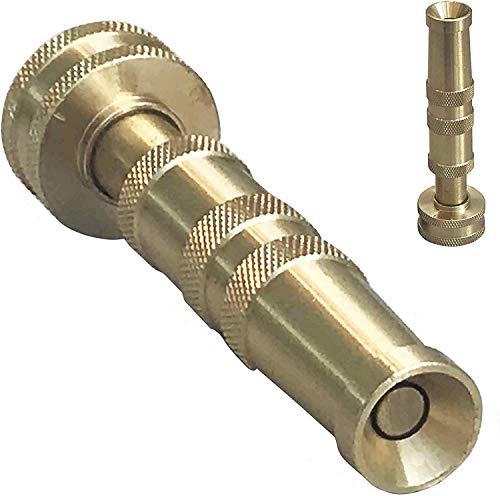
Water spray hose nozzle easy adjustment multiple spray patterns and flow volume are at your fingertips

Water hose nozzle comes with an adjustable head to easily change spray from powerful jet stream to light rinse

🌿 COMPLETE 2-PIECE SET FOR OUTDOOR TASKS: Includes one 10-pattern garden hose nozzle and one 2-mode jet nozzle for watering flowers, lawns, garden beds, rinsing cars, cleaning patios, washing outdoor furniture, showering pets, and daily yard care. Designed for clean water use only.
Storing Long Pressure Washer Hoses Without Kinking or Damage
Because a long washer hose is prone to kinking and damage, you’ll need a storage method that keeps it loose, supported, and protected. Choose proper hose reel selection that offers adjustable drag and reliable locking pins; this prevents hose damage while coiling and lets you lock the hose at the exact length you need. If you prefer manual loops, form wide, even loops no tighter than twelve times the hose thickness, and arrange them in a figure‑8 to avoid twists. Hang each loop on padded hooks or wall pegs, and use a swivel fitting at the gun inlet to eliminate torque. After each use, blow out water, wipe the exterior, and store the coiled hose horizontally on a shelf away from heat or sharp edges.
Length Recommendations for Patios, Driveways, and Decks
Choosing the right hose length for patios, driveways, and decks hinges on balancing reach with pressure loss. For patios under 1,000 sq ft, a 25‑ft 3/8‑in hose gives solid flow; step up to 50 ft for medium areas, but keep the diameter at 3/8‑in to limit friction. Driveways benefit from a 100‑ft hose—pair a 5/8‑in supply with a 100‑ft pressure hose for concrete, or use a 3/4‑in line for higher gpm. If the driveway exceeds 2,000 sq ft, break it into 50‑ft segments to ease handling. Decks up to 500 sq ft work well with a 50‑ft 3/8‑in hose; larger decks can use a 100‑ft length, preferably 5/8‑in at 25 ft for 44 gpm. Always consider variable terrain conditions and surface coverage factors when selecting length and diameter.

AWARD-WINNING: HGTV, USA Today and Best Reviews voted Best Overall Garden Hose

3/8" Hose Barb Fitting - The OD is 10mm, fit for hoses with 3/8 inch ID. The other end is standard 3/4" GHT FEMALE, easy to connect other outdoor watering and gardening systems.

2PCS * 3/8" Barb x 3/4"GHT Female + 2PCS * 3/8" Barb x 3/4"GHT Male