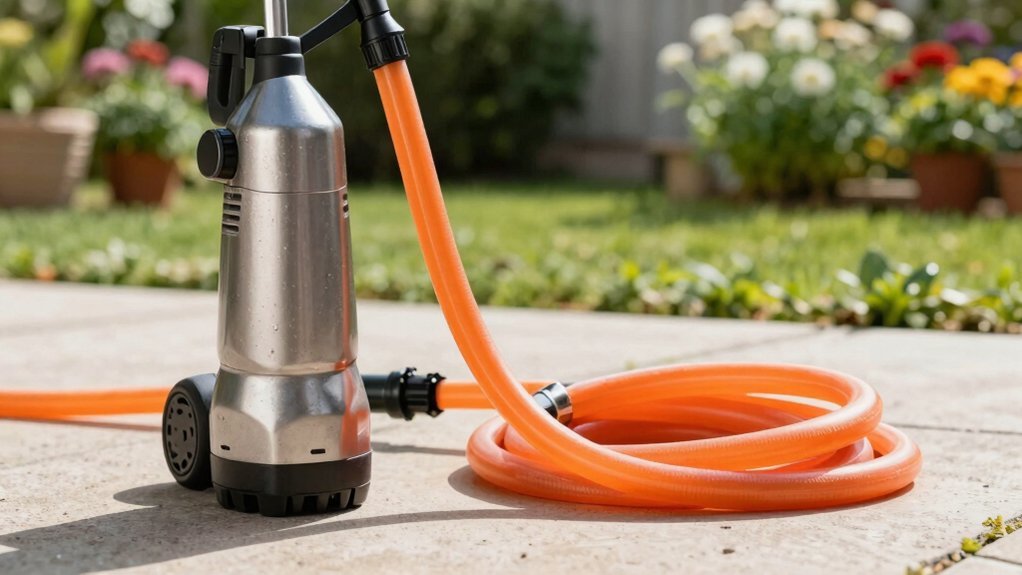
You can reliably run a garden hose up to about 150 ft with a standard ½‑inch line at 40–50 psi; each extra 25 ft cuts flow by roughly 10 % and adds noticeable pressure loss. Switching to 5/8‑inch or ¾‑inch hose keeps flow higher and reduces friction, while a high‑pressure pump can push even longer runs. Keep the hose short, minimize bends, and store it shaded to preserve strength. The next sections show how diameter, material, and water quality further extend reach.
What Is the Practical Maximum Length for a Garden Hose?
A practical maximum length for a garden hose sits around 150–200 feet for typical residential water pressure; beyond that range the flow drops noticeably and the hose becomes cumbersome. You should calculate the effective length by measuring from the faucet to the farthest plant, then compare that distance to the 25‑, 50‑, 75‑, and 100‑foot standards. For small patios, a 25‑foot coil keeps weight under 5.5 lb and minimizes friction loss, supporting water flow optimization. Medium yards benefit from a 50‑foot hose, weighing 10.7 lb, which balances reach and manageable pressure. Large properties may need 75‑ or 100‑foot runs, but the added mass (up to 21 lb) demands stricter hose maintenance schedules to prevent kinks and pressure drops. Staying within the 150‑200‑foot ceiling preserves adequate flow and simplifies storage. Choosing a heavier hose can further reduce pressure loss on longer runs. Selecting a 1/4 inch hose is ideal for lightweight, short‑run watering tasks. The flow rate is also affected by the hose’s diameter, with larger diameters allowing higher gallons per minute under the same pressure. Properly matching hose length with the water system’s pressure rating helps maintain consistent performance.

PREMIUM CONSTRUCTION: beitopamz garden hoses This 5/8 in x 150ft,utilize a new high-elasticity composite rubber NBR+PVC material combined with polyester fiber, featuring 3/4-inch brass fittings. pressure of 200 PSI and an operating temperature range of -40°F to 180°F, they offer superior durability compared to traditional rubber hoses, resisting cracking and leaks. This ensures corrosion resistance and extends the hose's service life.
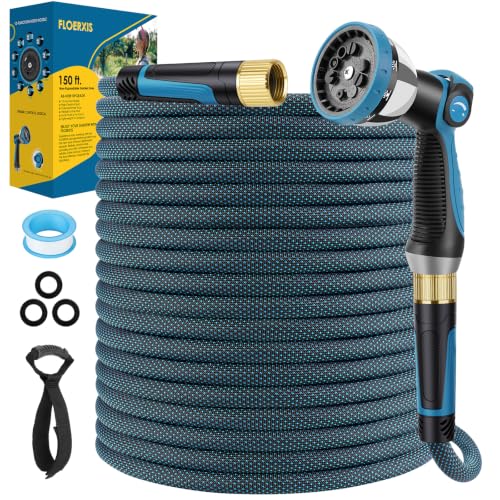
Non-Expanding Design: FLOERXIS features a high-density braided outer layer and a flexible inner tube, combined with a 360° swivel connector for a lightweight, flexible, and kink-free experience. Its non-expandable construction prevents stretching during use, minimizing internal wear and significantly extending the hose’s lifespan

【Professional Metal Garden Hose】SPRIKIR metal garden hose 150 ft is constructed with commercial-grade stainless steel and durable PVC inner hose, abrasion-resistant, durable and flexible. Fearless of rough surfaces or corners or bad weather, The steel material can be bent and move with ease, go around obstacles provide perfect water output.
How Do Hose Diameter and Water Pressure Determine Garden Hose Reach?
The reach of a garden hose hinges on the interplay between its inner diameter and the water pressure at the source. A larger hose diameter reduces friction, so a 5/8‑inch line delivers 8.5‑12 GPM at 40‑50 PSI over 100 ft, while a 1/2‑inch line drops to 7‑7.5 GPM under the same pressure. Water pressure effects are linear: each additional PSI raises flow and extends the effective spray distance, but pressure loss compounds with length. At 40 PSI, a 1/2‑inch hose loses noticeable pressure after 75 ft; switching to 3/4‑inch recovers up to 20 GPM and pushes water farther. For typical homes (40‑60 PSI), a 5/8‑inch hose balances reach and handling, whereas 3/4‑inch is reserved for long runs or high‑demand sprinklers. Measure PSI first, then select diameter to offset friction loss and maximize reach. Most residential hoses operate effectively between 40 and 80 psi and standard household water pressure usually falls around 50‑60 psi. Longer hoses increase friction loss, which can be mitigated by using smoother‑inner‑wall materials. Improper handling of sprinkler heads can cause material fatigue and lead to costly repairs.

Ultra-Lightweight & Durable Hybrid Garden Hose: Crafted with advanced PVC and rubber-polymer hybrid technology, Our 25 feet heavy duty garden hose is lighter than traditional heavy-duty water hoses yet incredibly durable, to meet your daily garden requirements.The middle woven layer ensures non-fading, abrasion-resistan, perfect for daily gardening, commercial tasks, and outdoor use.
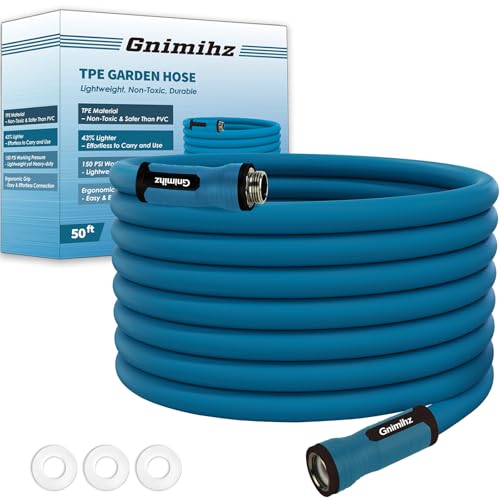
[ Stand Out from the Crowd ] Unlike ordinary hoses made of PVC or hybrid polymers, this Gnimihz 5/8-inch water hose is crafted with premium TPE material—and the difference is night and day. Lightweight like fabric/expandable hoses, with high water flow & durability of a traditional heavy duty 5/8-inch rubber hose.
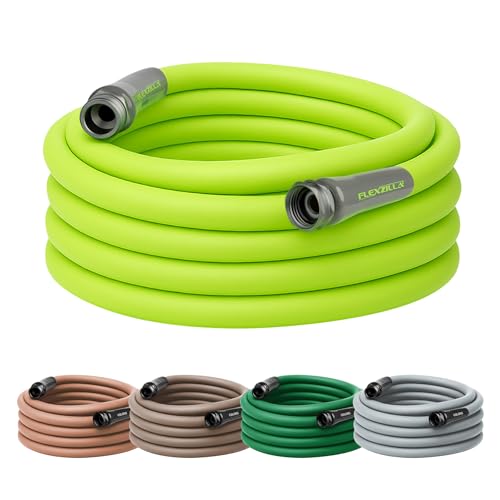
AWARD-WINNING: HGTV, USA Today and Best Reviews voted Best Overall Garden Hose
How Does Hose Material Influence Garden Hose Longevity and Flow?
Material choice directly shapes both how long a garden hose lasts and how efficiently water flows through it, because each composition carries distinct tensile strength, UV resistance, and internal friction characteristics. Rubber hoses, with high tear strength and chemical resistance, maintain a smooth inner surface that minimizes friction loss; their rigidity reduces kinks, extending lifespan to 5‑10 years when UV‑stable manufacturing techniques are used. Vinyl hoses are lighter but suffer higher internal friction and UV‑induced brittleness, cutting durability to 5 years under heavy use. Hybrids blend rubber’s abrasion resistance with vinyl’s weight reduction, achieving balanced flow and 5‑10 year service if layered material composition is optimized. Multi‑layered polymer hoses employ advanced manufacturing techniques to create low‑friction, abrasion‑resistant walls, delivering the longest lifespan and most consistent flow across seasons. Lead‑free brass fittings further prevent corrosion and maintain thread integrity, enhancing overall hose longevity. Selecting a hose that is lead‑free ensures safe water quality for drinking and irrigation. Choosing a hose with a higher pressure rating can prevent bursts when used with powerful pressure washers. Proper storage in a cool, shaded area reduces UV degradation and helps maintain flexibility over time.
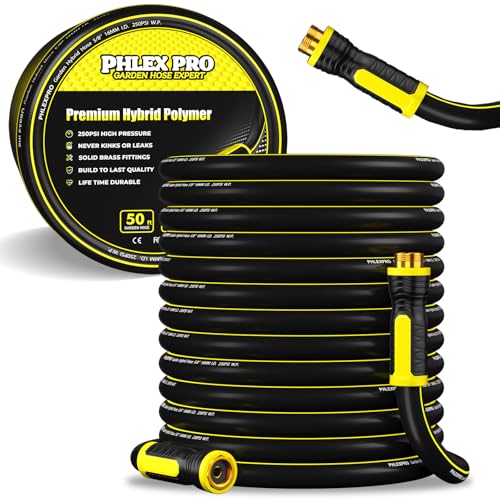
🏡【𝐇𝐚𝐫𝐝-𝐂𝐨𝐫𝐞 𝐑𝐮𝐛𝐛𝐞𝐫 𝗚𝐚𝐫𝐝𝐞𝐧 𝗛𝐨𝐬𝐞】: Upgraded premium 3-layers deisgn, OUTLAYER made with hard-core rubber, MID-LAYER made by mesh structure reinforce knitted ensure no tearing&high pressure, healthy recyclable plastic INNERLAYER makes sure water flow clean&smooth. With solid Heavy duty full brass fittings, PHLEX PRO garden hose is life-time durable, Tear-Resistant, UV-Resistant, Weather-Resistant.

DOUBLE UV PROTECTION FOR LONGER-LASTING PERFORMANCE: Our Premium Pocket Hose Ballistic features 2X the UV protection to help shield the hose from sun exposure and keep it performing and looking like new, season after season

AWARD-WINNING: HGTV, USA Today and Best Reviews voted Best Overall Garden Hose
How Can Water Quality Management Prevent Early Garden Hose Failure?
Ever wondered why a hose that’s perfectly installed still bursts after a few months? You can stop that by integrating water quality monitoring into your hose material evaluation. Data show that pH imbalances accelerate polymer degradation, while chemical incompatibility—especially petroleum residues—causes blistering and sudden rupture. Installing a filtration system removes suspended solids and salts that otherwise embed in the hose wall, reducing pressure spikes and wear. Automated pH correction combined with reverse osmosis keeps the water within the ideal range, cutting corrosion rates by up to 40 % in field tests. Regularly check for sediment in supply lines and use chemically resistant liners (PTFE, EPDM, UHMW) where needed. By treating water proactively, you extend hose lifespan beyond three years and avoid costly early failures. Efficient irrigation systems can further minimize water waste while maintaining plant health. A typical garden hose uses 5‑10 gallons per minute, so selecting a low‑flow nozzle can significantly cut consumption. Understanding municipal water pressure helps you match hose specifications to supply conditions.
How Do UV Exposure, Temperature, and Storage Affect Garden Hose Performance?
One hundred percent of garden hoses exposed to direct sunlight for more than six weeks show measurable loss of tensile strength, and that degradation accelerates dramatically when temperatures exceed 30 °C. UV photons break molecular chains in rubber, making the wall brittle and prone to cracks; PVC and vinyl warp after repeated heating cycles. When water inside the hose reaches high temperatures, internal pressure spikes, stressing fittings and accelerating material fatigue. To counteract these effects, you should practice proper hose maintenance: store the hose in a shaded, cool, dry space, coil it in a figure‑eight to avoid kinks, and drain it after each use. Routine inspections catch early brittleness, discoloration, or micro‑tears, allowing timely replacement before catastrophic failure. The loss of pressure over distance can be significant, especially for high‑rating washers, so keeping hose length within recommended limits helps maintain performance. Pressure loss increases with longer hoses, reducing cleaning efficiency and potentially damaging the pump if the system is undersized. Water temperatures above 140 °F can cause thermal expansion that further stresses hose joints and fittings. Understanding seasonal water temperature helps you anticipate how cold or hot the water will feel when it exits the hose.
How Much Flow Rate Is Lost Over Different Garden Hose Lengths?
Sunlight and heat weaken a hose’s wall, but the biggest performance hit comes from length‑induced friction. When you extend a garden hose, water flow restrictions rise because friction loss scales with distance, so pressure drop calculations become essential. A 50‑foot ½‑inch hose at 50 PSI delivers roughly 14 GPM, but the same hose at 100 feet drops to about 7 GPM—a 50% loss. A ¾‑inch hose fares better: 40 GPM at 50 feet versus 20 GPM at 100 feet, a 50% reduction but double the flow of the smaller size. Under 50 feet, loss is minimal; between 50‑100 feet, friction accelerates, especially in narrow diameters. Beyond 100 feet, the drop becomes dramatic, with a 200‑foot ½‑inch hose barely reaching 3.5 GPM at 50 PSI. Choosing larger diameters mitigates these water flow restrictions and keeps pressure drop calculations within acceptable limits. Properly matching garden hose thread types ensures a leak‑free connection throughout the system. Additionally, installing a pressure‑boosting device can significantly improve flow when long hose runs are unavoidable. The flow‑rate reduction for a 34‑npt hose is comparable to that of a ½‑inch hose of the same length.
What Strategies Extend Garden Hose Reach Without Sacrificing Pressure?
When you trim the hose length to the minimum needed for the task, you instantly preserve pressure because friction loss scales linearly with distance; a 30‑foot run retains roughly 90 % of the source pressure versus a 90‑foot run that drops to about 60 %. To extend reach without sacrificing pressure, first minimize hose bends; each 90-degree turn adds ~5 % loss, so use straight runs or gentle curves. Second, optimize nozzle selection—high‑pressure or adjustable nozzles concentrate flow, offsetting minor pressure drops on longer runs. Third, relocate water sources with faucet‑integrated holders or short‑run extenders, placing them near work zones to cut effective length. Finally, employ spring‑protected bibs and over‑under coiling to prevent kinks, which otherwise increase turbulence and reduce pressure. These data‑driven steps keep flow efficiency high while expanding coverage. Installing a spring‑protected bib also reduces tension on the hose, further preserving pressure. Properly seal connections with plumber’s tape helps prevent leaks and maintain consistent water flow. Using a high‑flow nozzle can compensate for longer distances by maintaining velocity.
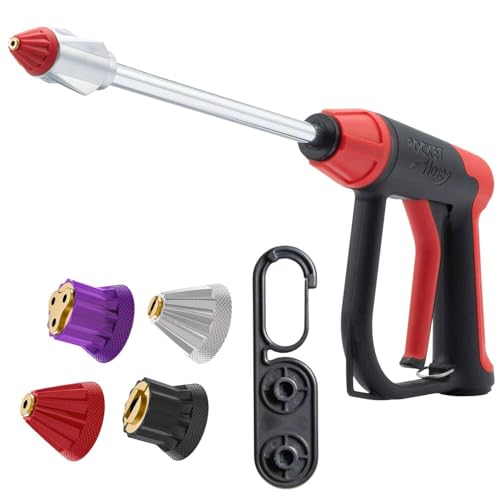
4 PRECISION TIPS INCLUDED: Comes with Jet Stream (Red), Triple Blast (Purple), Flat Spray (Black), and Wide Stream (White) for targeted cleaning, light sweeping, and gentle watering
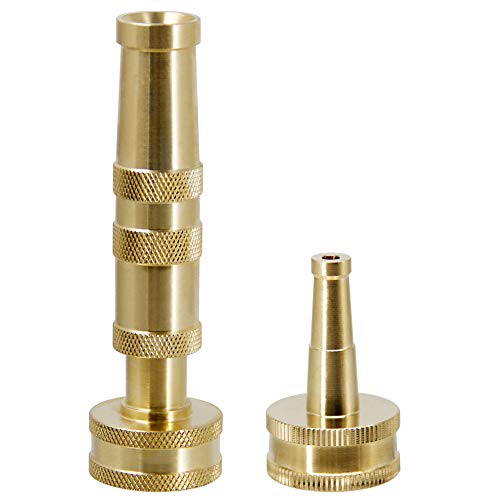
Heavy-Duty Brass Construction: Crafted from 100% solid brass, this heavy-duty garden hose nozzle outperforms plastic models with unmatched durability and corrosion resistance. Built to withstand high-pressure water flow, it ensures years of reliable service without cracking or warping.
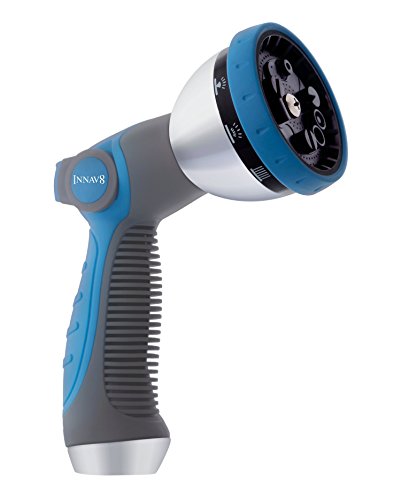
THUMB CONTROL DESIGN: This nozzle was designed to operate effortlessly simply by pushing the switch up with your thumb to turn it on and control the water flow. Stop overtaxing those fingers by squeezing trigger handles, this nozzle will have zero strain on your fingers and will prevent Arthritis pain.
Which Garden Hose Should I Choose for Maximum Reach and Durability?
Choosing the right garden hose for maximum reach and durability hinges on three data‑driven criteria: material construction, weight‑to‑strength ratio, and available length options. Multi‑layered polymer hoses score highest on abrasion resistance and pressure retention, especially when paired with rust‑resistant brass fittings. For maximum reach capability, select a hose with a ¾‑in. diameter; this balances flow rate and friction loss over 200‑foot‑long runs. Heavy‑duty models like Dramm ColorStorm Premium (0.20 lb/ft) preserve structural integrity at extended lengths, while lightweight polymer‑based hoses (≈0.10 lb/ft) reduce handling fatigue and kink risk. Match hose length to site dimensions—25 ft for compact yards, 200‑330 ft for large properties—to avoid excess slack and pressure drop. Optimize durability by choosing multi‑layer construction and aluminum reels for storage.

High-Pressure Performance: Guitrees Heavy Duty Rubber Garden Hose handles working pressures up to 200psi and bursts above 1000psi, ensuring a reliable water source for your gardening, agriculture, and construction needs.
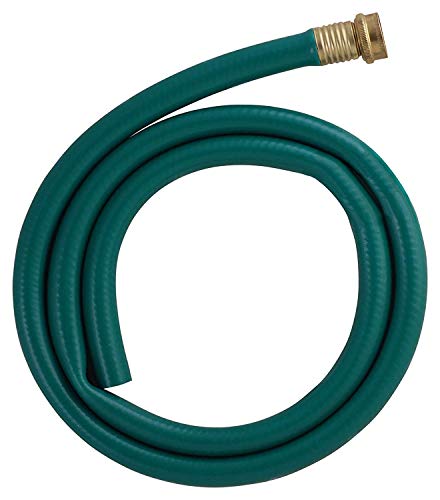
FUNCTIONALITY: This 5ft Drain Hose will provide you convenience as this can help you with any small maintenance job around your house, garden, garage or to reach hanging house plants. It can also use as dehumidifier drain hose.
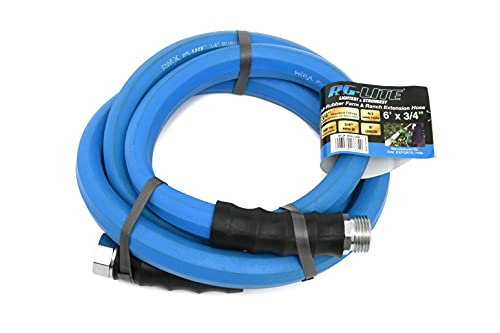
LIGHTEST, STRONGEST: 30% lighter and still rubber, AG-Lite is a professional grade next-generation rubber hose with a 10-Year replacement warranty. The lightest and strongest rubber garden hose on the market.