Your garden hose will typically last 5‑12 years, depending on material, UV exposure, pressure, length, diameter, and storage habits. Rubber hoses survive 5‑10 years with proper care, while vinyl cracks after 2‑4 years and multi‑layered polymers can reach 12 years. Shorter, 1/2‑inch hoses lose pressure faster than 5/8‑ or 3/4‑inch models, and longer runs increase internal stress. Extreme heat, freezing, and frequent kinking accelerate wear. Follow simple maintenance tips to extend life, and you’ll uncover the best hose for your garden and budget.
What Determines a Garden Hose’s Lifespan?
Because a garden hose endures constant exposure to the elements, its lifespan hinges on several key factors. You’ll find that hose material composition and seasonal environmental conditions dominate wear patterns. UV exposure accelerates brittleness; color fading signals degradation, and protective coatings mitigate this effect. Water pressure and usage intensity stress the wall—larger diameters tolerate higher pressures, while frequent, aggressive use accelerates leaks. Storage practices matter: coil in a figure‑eight, drain water, and keep the hose out of direct sunlight to prevent kinks, cracks, and freezing damage. Extreme heat, ozone, and corrosive chemicals further harden rubber and plastic. Regular inspection, cleaning, and proper placement in a sheltered area preserve structural integrity and extend service life. Water can become hot enough to cause scalding when ambient temperatures, direct sunlight, and pressure‑induced heating raise its temperature to 140 °F in extreme conditions. Understanding flow rate helps you match hose size to water pressure for optimal performance. The diameter of a hose directly influences its flow capacity, with larger diameters allowing greater water volume to pass through at a given pressure.
How Long Do the Most Common Garden Hose Materials Really Last?
Your garden‑hose lifespan hinges on the material it’s made from, so understanding each type’s durability helps you set realistic expectations. Rubber hoses, with heavy‑duty construction and high tear strength, typically last 5‑10 years when you apply proper maintenance techniques such as periodic pressure flushing and UV‑shielded storage. Vinyl hoses, though lightweight and cheap, succumb to kinking and cracking; expect replacement far sooner, often within 2‑4 years, despite any design considerations like UV‑resistant coatings. Multi‑layered polymer hoses combine flexibility with engineered fatigue resistance, delivering the longest service—up to 12 years—when you follow maintenance techniques that prevent internal stress. Expandable hoses can reach 8‑10 years in low‑use settings, but frequent expansion, pressure spikes, and sun exposure can truncate life to one or two seasons. Overtightened connections can cause premature failure. overtightened threads. Proper storage in a cool, dark place reduces material degradation caused by UV exposure. Selecting a hose with a high pressure rating further enhances its durability under demanding usage conditions.

High-Pressure Performance: Guitrees Heavy Duty Rubber Garden Hose handles working pressures up to 200psi and bursts above 1000psi, ensuring a reliable water source for your gardening, agriculture, and construction needs.

【Universal Fit for Standard US Hoses】: This high pressure water hose nozzle is equipped with a 3/4 Inch GHT Thread Garden Hose Quick Connector, connect fittings with rubber washers for a leak-free seal. Designed to match standard American garden hoses perfectly so that you can connect and disconnect in seconds — no tools, no hassle. The solid brass build and watertight rubber seal guarantee zero leaks.
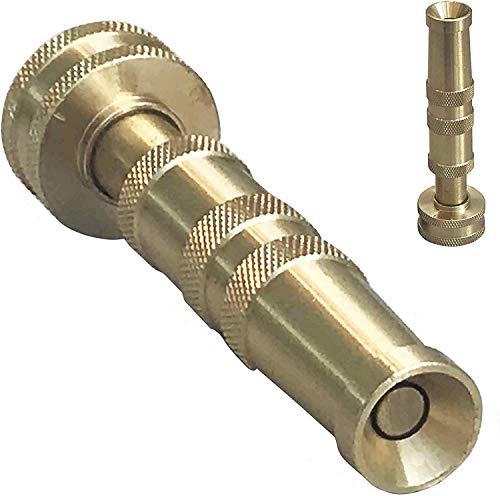
Water spray hose nozzle easy adjustment multiple spray patterns and flow volume are at your fingertips
Which Garden Hose Length and Diameter Choices Affect Lifespan?
What length and diameter you choose directly shapes how long a garden hose will last. A 25‑foot hose minimizes dragging, friction wear, and pressure loss, so its flexibility considerations stay simple and stiffness tradeoffs are low. When you step up to 50 feet, you balance reach with manageable weight; the hose retains moderate stiffness, reducing kinks while still flexing for storage. Lengths of 75–100 feet increase handling difficulty, pressure loss, and internal stress, demanding a tougher construction and more pronounced stiffness tradeoffs. Diameter matters: a 1/2‑inch hose stays lightweight and resists kinking for light tasks, but longer runs need the 5/8‑inch or 3/4‑inch sizes to offset pressure drop. Wider diameters raise flow capacity but also internal stress, so you must match length and diameter to preserve durability. Choosing the correct garden hose thread ensures compatible connectors and leak‑free operation. For heavy‑duty irrigation, a 5/8‑inch hose provides the optimal balance of flow and durability. Properly sizing a hose for its intended flow rate helps prevent premature wear and maintains consistent pressure.

Ultra-Lightweight & Durable Hybrid Garden Hose: Crafted with advanced PVC and rubber-polymer hybrid technology, Our 25 feet heavy duty garden hose is lighter than traditional heavy-duty water hoses yet incredibly durable, to meet your daily garden requirements.The middle woven layer ensures non-fading, abrasion-resistan, perfect for daily gardening, commercial tasks, and outdoor use.
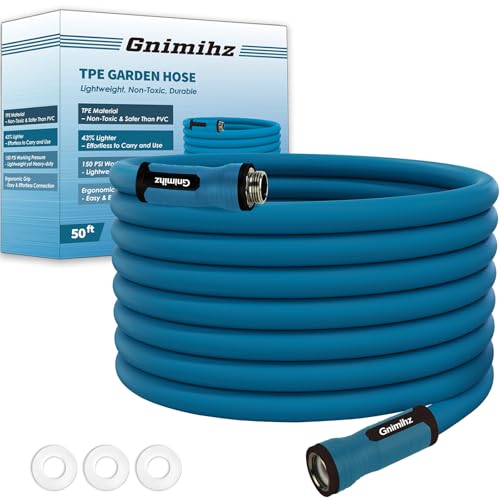
[ Stand Out from the Crowd ] Unlike ordinary hoses made of PVC or hybrid polymers, this Gnimihz 5/8-inch water hose is crafted with premium TPE material—and the difference is night and day. Lightweight like fabric/expandable hoses, with high water flow & durability of a traditional heavy duty 5/8-inch rubber hose.
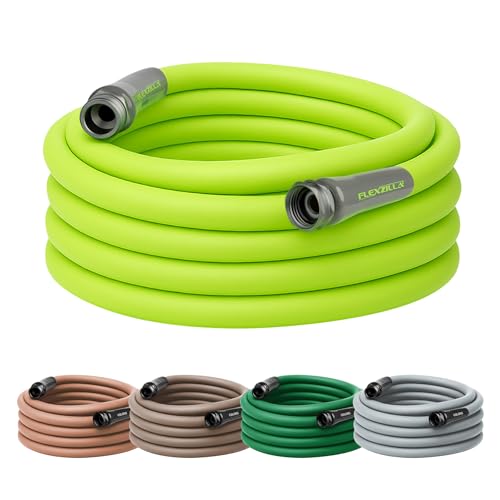
AWARD-WINNING: HGTV, USA Today and Best Reviews voted Best Overall Garden Hose
How Do Climate and Daily Usage Shorten Garden Hose Lifespan?
Choosing the right length and diameter sets the baseline for durability, but the climate you live in and how you handle the hose daily dictate whether that baseline holds. UV exposure breaks down polymer walls, causing cracks and fading; concrete‑based outdoor storage duration amplifies heat buildup, accelerating degradation. Frequent temperature cycling—hot days followed by cool nights—creates material brittleness, especially when water inside the hose expands under pressure. Winter freezes water inside undrained hoses, forming ice that cracks the wall; moving the hose indoors for prolonged cold periods prevents this. Daily practices matter: watering at peak heat maximizes internal temperature, pressure surges from rapid valve action compound stress, and improper coiling introduces kinks that weaken structure. Together, climate forces and usage habits sharply shorten service life. Using a pressure regulator can also mitigate stress from sudden water surges. Selecting a hose with a high pressure rating ensures it can safely handle the demands of pressure‑washer use. Understanding Bernoulli’s principle helps explain how nozzle design influences flow speed and direction.
How Can You Tell If Your Garden Hose Is Failing?
When you notice cracks, leaks, or a sudden drop in spray strength, those signs usually point to a failing hose. Examine the exterior for a cracked outer layer; any visible fissure or cut compromises pressure integrity and signals imminent replacement. Inspect the interior by feeling for a compressed inner lining—bulges, blisters, or stiff sections indicate delamination or freeze‑induced cracking. Test pressure at the nozzle; a consistent reduction, dribble, or sputter reveals leaks, kinks, or blockages. Check fittings for corrosion, loose connections, or worn washers, as these often cause seepage even when the hose body appears sound. Listen for abnormal vibrations, which betray internal rupture. Promptly replace a hose exhibiting these symptoms to avoid water waste and potential damage. Replacing O‑rings can also resolve leaks caused by worn seals in the nozzle. Many garden hoses are made from rubber or vinyl, which are recyclable materials in most municipal programs. Choosing a hose that is labeled lead‑free helps ensure safe water quality.

GARDEN HOSE REPAIR CONNECTOR SET: Package include 2 female hose repair connector, 2 male hose repair connector, 4 zinc alloy clamps with stainless steel screws and extra 4 garden hose washers

End Female Hose Connector,Male Hose Connector/Replacement/Mender For 5/8 inch or 3/4 inch hoses

【Package Including】Fit for 3/4" or 5/8'' hose fittings, contains 5 female and 5 male hose repair connector with 10 clamp, and extra garden hose rubber gasket. Note: please choose correct hose size before order.
What Simple Maintenance Steps Will Extend Garden Hose Lifespan?
Regularly draining, properly storing, protecting from the elements, cleaning, and preventing kinks are the essential maintenance steps that will greatly extend a garden hose’s lifespan. First, open the nozzle after each use and let all water exit; this removes pressure that can create pinholes and prevents freeze‑induced rupture. Next, coil the hose in 12‑18 inch loops and place it on a hose reel or hook, ensuring the reel is level and the hose stays off the ground; this is core hose reel maintenance. Store the coiled hose away from direct sunlight, extreme temperatures, and mechanical hazards. Flush the interior with clean water, then rinse with a mild vinegar solution to eradicate algae and mold. Finally, perform periodic fittings replacement twice a year to keep washers intact and avoid corrosion‑induced leaks. Consider the space‑saving benefit of expandable hoses when deciding whether to invest in them. In addition, applying insulated hose covers to sections left outdoors can prevent cracking caused by freezing temperatures. Using a spring‑loaded reel can further reduce effort when winding the hose.
How to Pick the Right Garden Hose for Your Garden Size and Budget?
Which hose fits your garden’s dimensions and your wallet? Measure your plot first: under ¼ acre calls for a 25‑50 ft light‑duty line, ¼‑½ acre needs a 50‑75 ft lightweight hose, and over ½ acre requires a 100 ft heavy‑duty option. Choose a 5/8‑in. diameter to guarantee adequate hose flow rate across all sizes. Match budget to material: under $30, opt for Expert Gardener Light Duty; $30‑$50, select Teknor Apex Zero‑G for kink resistance and superior hose valve quality; over $50, invest in Flexzilla or Eley for lead‑free, high‑flow performance. Prioritize weight—lighter hoses reduce drag, while a heavy feel signals durable construction worth the cost. Avoid black rubber in sunny zones; prefer woven or hybrid fabrics for longevity. The Apex hose requires the most force to drag at 11.2 lbs, highlighting its heavier build. Proper hose storage can prevent kinks and extend lifespan, especially when the hose is coiled with a gentle curve. Ensure that connections are sealed with plumber’s tape to avoid leaks. Understanding garden hose thread standards helps you select compatible fittings for any hose size.

50% More Lightweight - Assures effortless handling

AWARD-WINNING: HGTV, USA Today and Best Reviews voted Best Overall Garden Hose
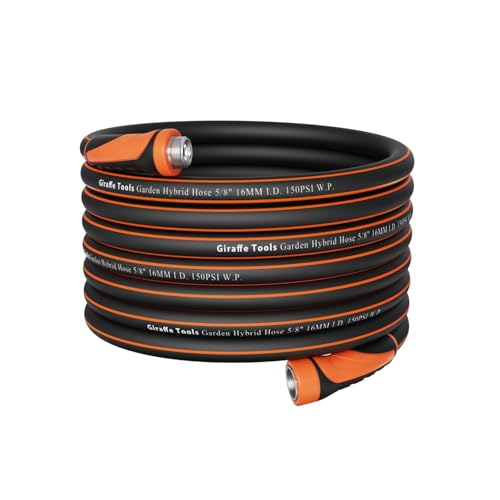
Ultra-Lightweight & All-Weather Flexibility: Experience unmatched portability with our ultra-lightweight hose, designed for effortless handling. Its all-weather flexibility ensures reliable performance in any climate—from freezing winters to scorching summers—making it the perfect choice year-round.
What Should a Quick Checklist for Buying a Long‑Lasting Garden Hose Include?
A solid quick‑check list for a long‑lasting garden hose starts with length: guarantee at least 100 ft, add 20 % to your measured run, and include an extra 6 ft for vertical changes. Verify the hose material quality—prefer phthalate‑free polymers, reinforced polyester, or rubber with three‑ply walls and woven reinforcement. Choose brass, lead‑free fittings and confirm crimped connections to avoid leaks. Ascertain the diameter meets at least ⅝ inch for pressure retention. Review storage considerations: select a heavy‑duty reel sized for the hose’s diameter and length, drain water completely, and keep the reel away from extreme temperatures. Finally, check that couplings are compatible with your sprayer and spigot.

WORLD’S #1 EXPANDING HOSE — BACKED BY 100+ PATENTS: Pocket Hose Ballistic expands up to 3X into a full-size hose, then shrinks back for compact, practically bone-dry storage. Lightweight, easy to handle, and built for everyday watering

4-Layer Heavy-Duty Hose: Made from hybrid rubber with a reinforced 4-layer structure, this 100 ft long and 5/8 in dia. garden hose is ideal for harsh outdoor conditions. It handles up to 600 PSI burst pressure and 150 PSI working pressure without cracking under high pressure. The UV-resistant outer layer slows aging, extending the hose's lifespan
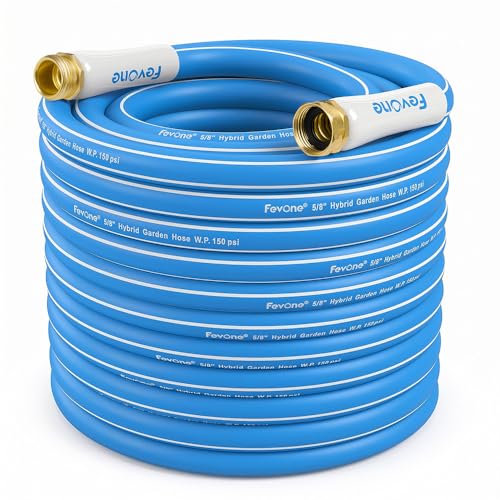
TRUE 5/8" FULL-FLOW BRASS FITTINGS: Built with solid brass 3/4" GHT connectors, this hose maintains a true 5/8" inner diameter through both the hose body and fittings, helping reduce flow restriction from end to end