Yes, you need a garden hose to feed water into a pressure washer, and its size and length directly affect performance. A 5/8‑inch hose works for most 4‑5 gpm units, while a 3/4‑inch hose is better for higher‑flow models. Keep the run under 50 ft to limit friction loss, and avoid tight bends or kink‑prone hoses. Choose a kink‑free, pressure‑rated hose with matching GHT fittings. If you keep reading, you’ll uncover how to pick the right hose and troubleshoot common issues.
Do You Need a Garden Hose for Your Pressure Washer?
Do you really need a garden hose for your pressure washer? If your unit pulls 4‑5 gpm, a standard garden hose will work, but you must monitor hose compatibility issues. Choose at least a 5/8‑inch hose for 4 gpm machines; a 3/4‑inch hose is better because it reduces friction loss and maintains pressure high. Keep the hose short—25 ft of 5/8‑inch delivers about 44 gpm, while longer runs drop flow. When you connect the hose, tighten both ends to prevent leaks, then turn on the water. To maximize hose efficiency, avoid excessive bends, use smooth‑inner‑wall hoses, and consider a larger diameter if you need longer reach. This setup guarantees reliable pressure without extra adapters. The pencil‑jet nozzle can produce high pressure that may push the connector off the hose.

Package Include: You will get 8pcs stainless steel filter gasket seal rubber washers, fittings for 3/4 inch garden hose connector and 5/8 inch washing machine. Product OD: 0.94 inch/ 24 mm, ID: 0.55 inch/ 14 mm. Please check the size before ordering.

Ultra-Lightweight & Durable Hybrid Garden Hose: Crafted with advanced PVC and rubber-polymer hybrid technology, Our 25 feet heavy duty garden hose is lighter than traditional heavy-duty water hoses yet incredibly durable, to meet your daily garden requirements.The middle woven layer ensures non-fading, abrasion-resistan, perfect for daily gardening, commercial tasks, and outdoor use.

Durable 4-Ply Construction: Engineered with 4 layers for strength, this hose withstands up to 800 PSI, ensuring reliable performance and long-term durability in demanding outdoor conditions
How a Garden Hose Affects Pressure‑Washer Flow and Pressure
Why does your garden hose matter when you fire up a pressure washer? Because its diameter and length dictate how well you meet water supply demands and how much frictional loss effects you incur. A 0.29‑inch hose at 3200 psi over 100 ft only gives about 3 GPM, while a 0.38‑inch hose raises that to 5 GPM and a 0.50‑inch hose can push 13 GPM. Longer runs amplify friction, dropping flow dramatically—5/8‑inch hose falls from 44 GPM at 25 ft to 11 GPM at 100 ft. The same applies to 3/4‑inch hose, which drops from 72 GPM to 18 GPM. Faster water velocity in tighter hoses boosts frictional loss effects, cutting pressure and flow. Choose a larger‑diameter, shorter hose to keep pressure washer performance ideal. The factory hose can maintain 1800 PSI even at 100 feet, demonstrating that diameter and length are critical factors. Understanding flow rate helps you match hose size to your washer’s specifications. Proper water supply selection ensures the washer operates within its design limits. The Bernoulli principle explains how pressure and velocity interact within the hose.

7 ADJUSTABLE WATERING PATTERNS: Each carefully selected pattern has an unique purpose,and each spray pattern will meet all of your watering needs. To change patterns simply twist the nozzle.Turn the spray nozzle dial to choose appropriate pattern easily with a faucet on the handle.

With large diameter nozzle design, our water sprayer heads have larger water output and strongers which has powerful effect.

Complete Set & Versatile Accessories: Our jet nozzle power washer set includes 1 high-pressure jet washer wand, 2 quick connectors, 2 nozzles, 1 flexible cleaning tube, several waterproof accessories, and a user manual. The jet pressure depends on your household water pressure—for higher pressure, pair the rod with a water pump or car washer for optimal performance.
Evaluating Garden Hose Size and Length for Your Pressure Washer
Choosing the right hose size and length is key to keeping your pressure washer’s performance on point. Start by matching hose diameter to your machine’s GPM rating: a 1/4‑inch hose works for up to 3,200 psi consumer units, while 5/16‑inch or 3/8‑inch hoses handle prosumer and professional models that demand higher flow capacity considerations. Keep the hose as short as possible—25‑50 ft for typical household jobs—to minimize friction loss and preserve supply line performance. If you need to reach distant areas, use two shorter sections instead of one long run, especially beyond 100 ft where pressure drops become noticeable. For high‑GPM commercial work, opt for 5/8‑inch or 3/4‑inch supply hoses and guarantee your internal reel matches the diameter to avoid throttling flow. Longer hoses increase friction loss and can noticeably reduce water pressure. Maintaining a pressure between 40 and 80 psi ensures optimal flow and prevents hose damage. Understanding pressure loss curves helps you predict performance changes over longer distances.
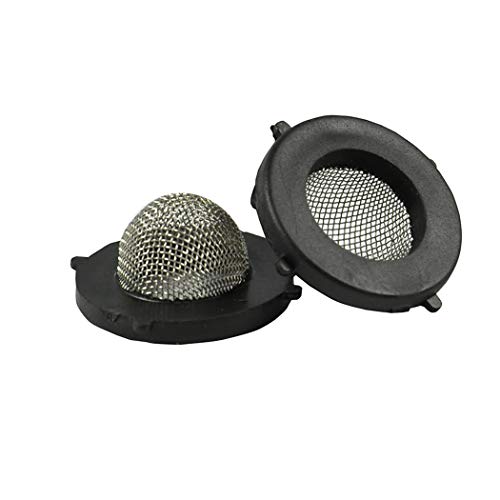
Black rubber construction for durability
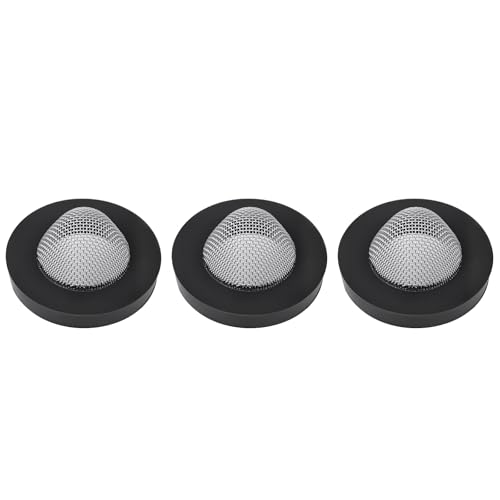
Durable Material: This inlet screen filter with gasket is built from premium stainless steel mesh and a high-quality rubber washer. The rubber washers with stainless steel screen prevent cracking and ensure a tight seal for long-lasting durability in pressure washer systems.

These garden hose filter washers are made of stainless steel mesh and high quality rubber, durable to use.
Choosing the Right Garden Hose (5/8‑Inch, 3/4‑Inch, Kink‑Free)
A 5/8‑inch hose gives you 12.3 GPM at 43 PSI with only a 0.1 PSI pressure drop per foot, making it a solid, cost‑effective choice for most residential pressure washers; however, if you’re feeding a large buffer tank or a high‑GPM commercial unit, the 3/4‑inch option removes that last bottleneck, delivering unrestricted flow and eliminating any noticeable volume loss. Choose a hose with polyurethane or hybrid‑polymer construction for kink‑free performance; the NTS chain‑mesh reinforcement and reinforced mid‑layer keep it flat even when pressurized. Verify proper connections by matching the 3/4‑inch GHT fittings and using anodized aluminum ends with O‑rings. These features preserve regular water pressure, prevent leaks, and guarantee durability across temperature extremes. Selecting the correct hose length is also crucial, as longer hoses can increase friction loss and reduce overall pressure. Pressure rating should always meet or exceed the washer’s maximum output to avoid bursts. When you first assemble the hose, make sure to inspect for leaks before use. The hose’s diameter directly influences the flow rate achievable for a given pressure.

Heavy-Duty & Lightweight Water Hose: This garden hose features a 3/4-inch diameter and a lightweight, flexible construction of reinforced PVC and rubber. It is built with corrosion-resistant brass/aluminum fittings for durable, heavy-duty performance in demanding tasks, offering greater abrasion resistance and a longer service life than conventional hoses.

Outdoor hose is made of double-reinforced, commercial grade rubber and vinyl with a rugged, abrasion-resistant red cover that won’t mar surfaces

Upgraded Durable Garden Hose: This garden hose features a 96-layer high-density woven outer fabric and a 4-layer thickened flexible nano inner core. The high-strength, high-toughness woven sleeve effectively protects the inner tube from drag and friction damage, extending the hose’s service life. It is tear-resistant and wear-resistant, making it far more durable than standard hoses. The ultra-high-density structural material provides enhanced protection, withstands higher water pressure, and resists temperatures ranging from 32–140°F, suitable for long-term use in various harsh environments.
When a Garden Hose Isn’t Enough: Better Pressure‑Washer Alternatives
Ever found yourself wrestling with a garden hose that just can’t keep up? When a hose falls short, consider a foam cannon, a cordless battery washer, or an electric pressure washer. A foam cannon creates dense, shaving‑cream‑like foam, letting you use soap efficiently and scrub grime that a hose‑fer can’t reach. Cordless battery washers run off a 20 V pack, pull water from a bucket, and switch between 0°, 25°, 45°, soap, and watering—perfect for remote jobs without a water source. Electric pressure washers deliver high‑psi streams, cut cleaning time, and pair with specialized cleaners for superior results while promoting efficient water usage. If you need durability, upgrade to an industrial‑rated hose that tolerates higher PSI than standard garden hoses. Low‑GPM output means it uses less water, making it ideal for areas without a water source. For those who only have a garden hose, a low‑pressure foam gun can still generate usable foam when paired with the right soap solution. Understanding pressure different is essential to avoid damaging equipment. Using an expandable garden hose with a power washer can be safe if the hose’s maximum PSI rating exceeds the washer’s output.

For Pressure Washers Only (1000-3000 PSI): Built for pressure washer systems within the 1000-3000 PSI range, this foam cannon features a 1/4" quick-connect plug for fast attachment to most wands. Please check your pressure washer connector before buying as some connectors are not suitable. The degree of dilution of the cleaner will affect the foaming performance. We recommend using cleaning solutions without wax components to prevent clogging the cartridge. NOTE: CANNOT be used with any Garden Hose.

Adjustable Snow Foam Lance with 1/4" quick connection fitting. 𝐍𝐨𝐭 𝐅𝐢𝐭 𝐆𝐚𝐫𝐝𝐞𝐧 𝐇𝐨𝐬𝐞, 𝐖𝐚𝐭𝐞𝐫 𝐇𝐨𝐬𝐞 𝐨𝐫 𝐘𝐨𝐮𝐫 𝐅𝐚𝐮𝐜𝐞𝐭 𝐃𝐢𝐫𝐞𝐜𝐭𝐥𝐲! Container Capacity: 1 Liter / 0.22 Gallon. Working Pressure: 1000 PSI to 3000 PSI

NOTE: 𝐍𝐨𝐭 𝐅𝐢𝐭 𝐆𝐚𝐫𝐝𝐞𝐧 𝐇𝐨𝐬𝐞, 𝐖𝐚𝐭𝐞𝐫 𝐇𝐨𝐬𝐞 𝐨𝐫 𝐘𝐨𝐮𝐫 𝐅𝐚𝐮𝐜𝐞𝐭 𝐃𝐢𝐫𝐞𝐜𝐭𝐥𝐲! The pressure washer gun has M22 fittings, compatible with both M22 14mm and M22 15mm fitting. M22-14mm fitting is compatible with Generac, Simpson, Briggs Stratton, craftsman, karcher, Ryobi pressure washers. M22-15mm fitting is compatible with Sun Joe, Campbell, MI-T-M, AR Blue, Stanley, Cleanforce, Simoniz, Excell power washers
Setup, Maintenance, and Troubleshooting Tips for Your Garden‑Hose Pressure Washer
Wondering how to get your garden‑hose pressure washer up and running without leaks or twists? First, attach the hose bibb to a 3/4″ female QD coupler, then a matching male plug, and connect your inlet hose. If your unit lacks an adapter, snap a brass inlet adapter on the washer. Follow the sequence: bibb > female coupler > male plug > inlet hose > female coupler > male plug > washer inlet. Use quick‑disconnects to keep connections tight and eliminate water pressure issues.
For maintenance, pick a kink‑free hose like Flexzilla, store it on a reel, and regularly inspect for wear. If you encounter hose connection failures, verify each QD coupler and plug is secure, replace damaged fittings, and guarantee the hose’s flow rating matches your job. These steps keep your system reliable and efficient. Adding a quick‑connect kit simplifies future hose swaps and reduces downtime. Extending the hose length may require a pressure‑rated hose to maintain consistent flow.
standard hose thread is the most common size for garden hose fittings in the United States.
A larger hose diameter such as 5/8 inch can significantly increase flow rate for heavy‑duty irrigation tasks.