You’ll find that classic sprinkler heads use a heat‑sensitive element—either a glass bulb filled with expanding liquid or a fusible‑metal link—that ruptures or melts when the surrounding air hits roughly 135–165 °F (56–74 °C). The sealed plug then gives way, letting the pressurized water in the pipe burst through the nozzle and spray the fire. The metal frame holds the deflector, plug, and stem together, while the bulb or link provides the calibrated trigger. This simple yet reliable system works in both wet‑pipe and dry‑pipe installations, and if you keep going you’ll uncover more details.
What Is the Basic Heat‑Trigger Principle Behind Old Sprinkler Heads?
When fire heats the air around a sprinkler, the heat‑sensitive element inside each head reacts, causing the valve to open and water to flow. You’ll notice that old sprinkler technology relies on a single, isolated trigger per head. Early sprinkler designs embed either a glass bulb filled with a glycerin‑based liquid or a fusible metal link. As temperature climbs, the liquid expands, shattering the bulb, or the alloy melts, dropping the pipe cap. Both mechanisms break a sealed barrier at a calibrated threshold—typically 135 °F to 165 °F for ordinary ratings—allowing pressurized water to escape through the deflector. Because each head operates independently, only the units nearest the fire discharge, preventing unnecessary activation elsewhere. Modern standards often set the activation temperature around 155 °F (68 °C) for standard heads, while high‑temperature variants may trigger at 200 °F or higher. The system is designed so that thermal activation occurs only when sufficient heat is present, not from accidental contact. Research shows that sprinkler systems can reduce fire‑related property loss by up to 70 % and cut injury risk by more than 50 % life‑safety impact.
How Did the 1874 Fusible‑Link System for Old Sprinkler Heads Work and at What Temperature Range?
Unlike the glass‑bulb designs, the 1874 Parmelee system relied on a fusible metal link that melted at a calibrated temperature, releasing the pipe cap and allowing water to flow. You’ll notice two steel plates joined by a heat‑sensitive solder alloy; the solder’s composition evolved from tin‑lead mixes to higher‑melting‑point alloys as material composition evolution progressed. When ambient heat raises the link to its activation range—typically 135 °F–175 °F (57 °C–79 °C) for ordinary hazards, with intermediate (200 °F–300 °F) and high‑temperature (≥325 °F) variants—you observe the solder melt, the plates separate, and the cap drop. This mechanical release avoids electrical reliance and respects environmental durability considerations, ensuring stability until a genuine fire event forces activation. Proper installation requires compatible pipe sizing to match the system’s flow characteristics. The dry‑pipe design later emerged as a key innovation for freezing‑prone environments. Modern irrigation systems often incorporate in‑line pressure regulators to maintain consistent flow and protect against pressure spikes.
Why Did Grinnell’s Glass‑Bulb Design Improve Reliability of Old Sprinkler Heads Over Metal Links?
Because glass‑bulb sprinklers respond to heat faster than metal‑link heads, they cut activation time and eliminate the partial‑melting failures that plagued early fusible links. You’ll notice that the glass‑bulb design offers material consistency: the sealed glass and soldered element expand uniformly, preventing the uneven melting that metal links suffered. The bulb’s flexibility allows it to absorb brief temperature spikes without cracking, then revert to its original shape when heat subsides, unlike a metal link that can deform permanently. Grinnell’s 1920 bulb also integrates a more sensitive soldered element, which registers temperature changes earlier, further reducing reaction lag. Together, these traits give the glass‑bulb head superior durability and predictable performance, enhancing overall system reliability. Proper maintenance can extend the lifespan of sprinkler heads by up to 12 years in low‑pressure residential systems. Selecting the correct sprinkler type also depends on ceiling height and room geometry, as upright heads are better for high or sloped ceilings while pendent heads suit low‑ceiling spaces. Regular testing follows the recommended inspection schedule to verify that each head remains within its operational temperature range.
Components of a Classic (Old) Sprinkler Head and Their Interaction
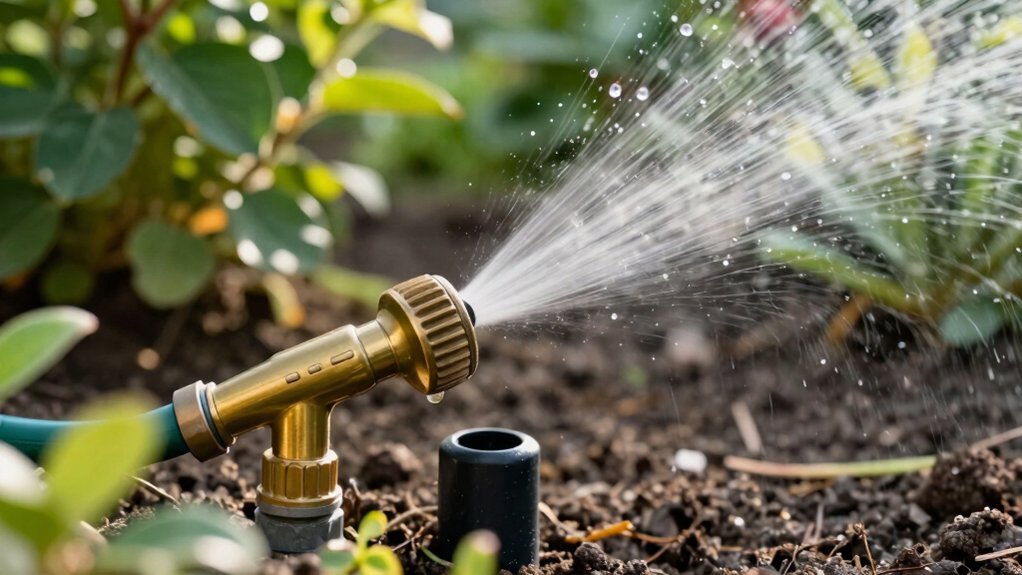
Although the metal frame anchors the sprinkler, it also coordinates the other components so the system works as a single unit. You’ll see the frame linking the supply pipe to the deflector, plug, heat‑sensitive activator, and nozzle‑and‑stem assembly. Early material choices—typically brass or steel—determine corrosion resistance and affect long‑term performance indicators such as leak‑free sealing and consistent spray patterns. The plug stays sealed until the activator, triggered at 56 °C, melts or bends, releasing water into the deflector. The deflector shapes the flow, directing it outward while the nozzle‑and‑stem assembly adjusts distance and pattern. Each part’s geometry and material interact systematically, ensuring stable pressure, rapid response, and reliable coverage throughout the sprinkler’s service life. The backflow preventer safeguards the water supply by preventing reverse flow when the system is off. Proper backflow protection is required by many local codes to keep potable water safe. Installing a backflow valve on the hose connection can further reduce contamination risk.
What’s the Difference Between Wet‑Pipe and Dry‑Pipe Sprinkler Systems for Old Heads?
Wet‑pipe and dry‑pipe sprinkler systems differ fundamentally in how they store and release water to activate old heads. In a wet‑pipe setup, pipes stay full of pressurized water, so when a head’s fusible cap melts, water discharges instantly. This gives you the advantage of rapid response, essential for time‑critical fires, and the system’s simple design lowers installation costs and maintenance. The disadvantage is that it can’t be used where pipes might freeze, limiting its suitability to heated indoor spaces.
A dry‑pipe system holds air or nitrogen under pressure, keeping water at a separate valve. When a head activates, the air escapes, pressure drops, and the valve opens, allowing water to flow after a brief delay. The advantage is protection against freezing, making it ideal for unheated or cold‑prone areas. Disadvantages include higher installation expense, added components, and the need for regular air‑supply monitoring, which increase maintenance complexity. Automatic fire detection integrates with these systems to further enhance safety.
Wet‑pipe systems are typically the most widely installed because they offer quick activation and lower cost compared to alternatives. They are commonly used in wet‑pipe configurations where water is permanently present in the piping.
What Maintenance Habits Keep 19th‑Century Sprinkler Heads Functional for Decades?
While wet‑pipe and dry‑pipe systems dictate how water reaches a sprinkler, the longevity of a 19th‑century head hinges on disciplined upkeep. You should schedule regular corrosion inspections at least every ten years, increasing frequency to five years once the head exceeds seventy‑five years. During each inspection, verify caps are intact, check for rust, and confirm clearance beneath the head remains eighteen inches. Apply proper cleaning protocols promptly: remove debris, flush lines, and clear screens annually or biannually. When you notice blockages, flush the head in the field before disassembly. Rebuild aging heads with new washers, springs, and a rust‑inhibiting coat, and test a sample of sprinklers after fifty years, then every ten years thereafter. This systematic regimen preserves function for decades. Inspect sprinklers periodically to ensure they are free of paint and obstructions. Use a sprinkler head lubricant to reduce friction and prevent wear. Dust removal should be performed using a soft brush to avoid damaging the delicate components. Properly securing the head with a locking clip can prevent accidental dislodgement during high‑pressure events.
Common Failures of Old Sprinkler Heads Caused by Poor Pressure or Oversized Zones
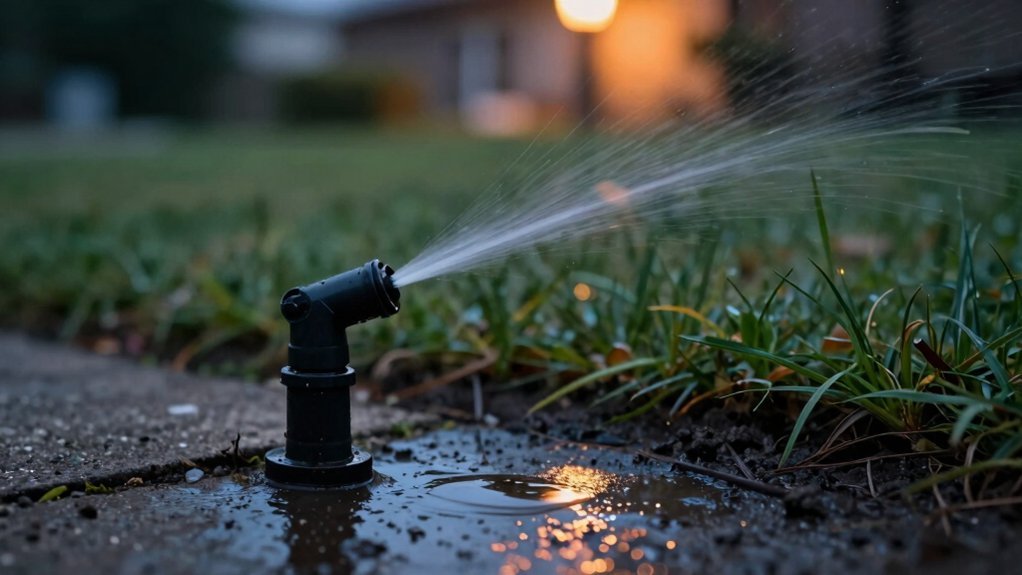
Most old sprinkler heads fail when the system’s pressure is too low or when zones contain more heads than the water supply can adequately serve. You’ll notice pop‑up heads that barely rise, misting nozzles that spray a thin veil, and uneven coverage across declining zones. Low pressure often stems from leaks, faulty valve seals, or inadequate pressure regulation; oversized zones spread that limited flow too thin, preventing proper activation. Inspect each zone for debris‑clogged nozzles, worn wiper seals, and cracked pipes, then test pressure with a manual pull. If misting persists after cleaning, the root cause is pressure loss, not debris. Correcting pressure regulation and resizing zones restores full head travel and uniform spray. Modern sprinkler designs achieve higher efficiency by employing adjustable flow rates and precise coverage patterns, which can be especially beneficial when paired with flow‑rate optimization techniques. To accurately size a zone, calculate its total water demand by summing the gallons per minute requirements of all heads based on their individual flow rates and coverage areas. Understanding the sprinkler valve mechanism helps diagnose why a head may not open fully under low pressure.
Troubleshooting a Non‑Activating Old Sprinkler Head Without Full Replacement
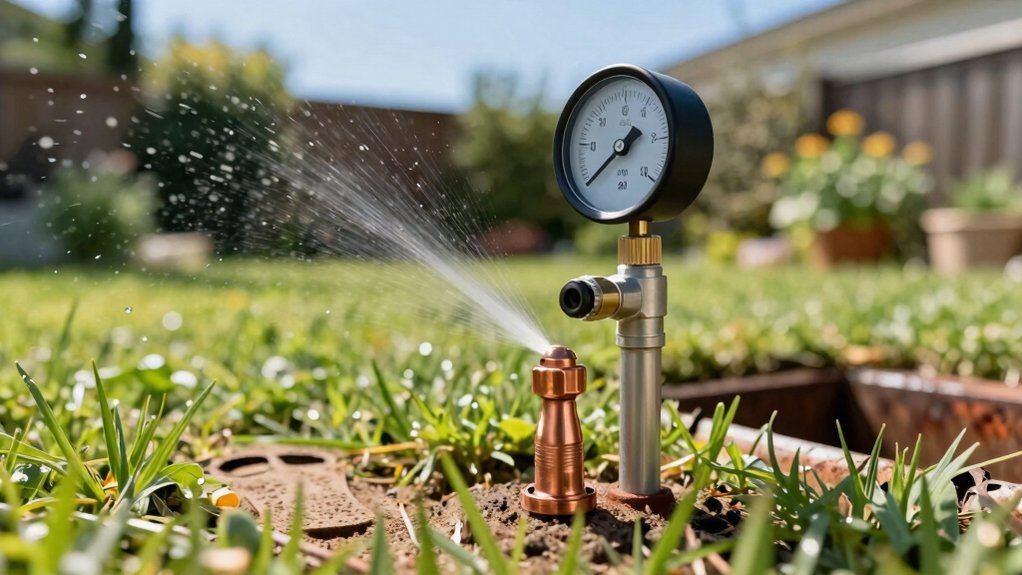
If a sprinkler head refuses to pop up, start by confirming that the problem is isolated to that unit rather than a system‑wide issue. First, visually inspect the housing for cracks, bends, or corrosion, then check the nozzle for clogs. Next, perform partial disassembly troubleshooting: remove the filter screen, flush the nozzle, and soak the pop‑up stem in a vinegar solution. After drying, re‑lubricate the stem with silicone spray and verify that the O‑ring seals are intact. Manually activate the zone and measure pressure; it should read 30‑50 PSI. If the head still won’t rise, compare its spray pattern to adjacent heads. When these steps fail, schedule a professional maintenance consultation before considering full replacement.