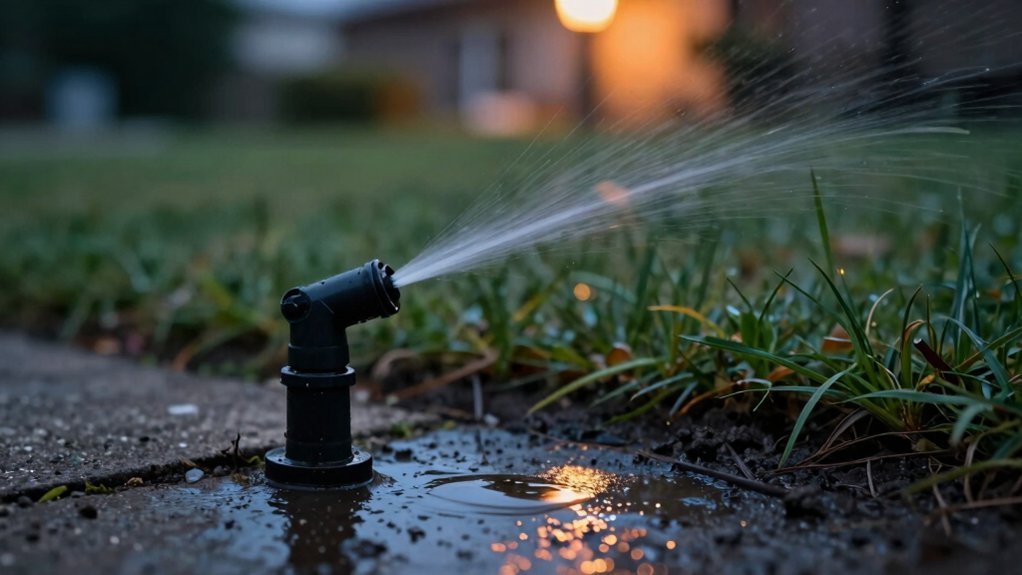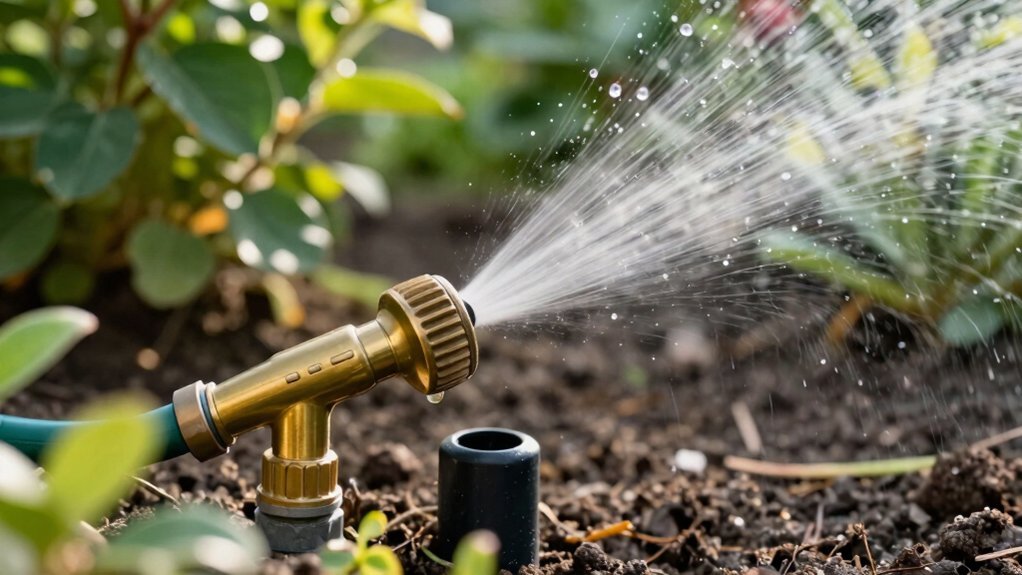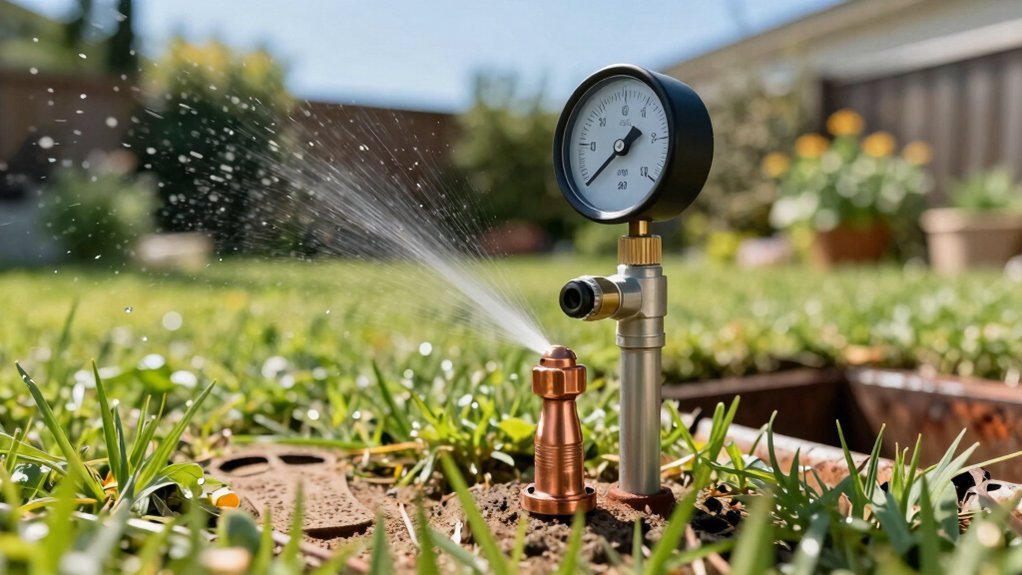
You’ll find that Hunter rotary heads combine a turbine‑driven gear train with a multi‑stream nozzle, delivering low‑velocity, wind‑resistant spray that covers large areas while cutting water use by up to 30 %. Their non‑strippable drive, sealed rubber cover, and automatic‑arc return give you decade‑long durability and easy arc adjustment from 90° to 360°. With interchangeable nozzles for every lawn type and a straightforward DIY install, they offer solid value—continue to explore how they compare to other brands and integrate with smart controllers.
What Are Hunter Rotary Heads and How Do They Work?
Because they combine a tiny turbine‑driven gear train with a multi‑stream nozzle, Hunter rotary heads turn a modest water flow into a precise, low‑velocity spray that covers large areas efficiently. You’ll notice the turbine spins a small gear train, which drives a rotor that emits multiple streams in a controlled arc. The design lets you guide rotation patterns from 90° to 360°, tailoring coverage to any landscape shape. When you discuss mounting techniques, you’ll see a simple base that bolts to standard irrigation pipe, then a lock‑nut secures the head. Adjust the left stop with the flat‑section marker, turn the right‑stop silver ring for arc width, and fine‑tune with a flat‑head screwdriver while water runs. This functional, aesthetic system delivers consistent, wind‑resistant watering while conserving up to 30 % more water. The right‑stop can only be set while water is flowing, ensuring accurate arc adjustment. Hunter valves are praised for their robust construction and resistance to corrosion, contributing to long‑term reliability. Many homeowners find that purchasing through reputable retailers like Home Depot often provides access to seasonal discounts and expert advice.
Durability Secrets of the Hunter Rotary Head (PGJ & PGP Ultra)
When you install a Hunter rotary head, its durability stems from three engineered safeguards: a non‑strippable drive that prevents gear damage if the turret is turned the wrong way, an automatic‑arc return that snaps the head back to its preset angle after any manual twist, and a sealed rubber cover that shields internal sockets from dirt and debris. The non‑strippable drive, honed over three decades of research, lets the turret fall back into line, protecting gear in vandal‑prone zones. Automatic‑arc return, patented for 50°‑360° arcs, resets the pattern instantly, ensuring consistent spray. A rubber‑sealed housing and robust plastic riser keep debris out, preserving material composition. Together these features sustain nozzle performance and guarantee ten‑plus years of reliable service. The new 6‑in hex T key adjustment tool provides better torque on tight hex screws, making maintenance quicker and easier. Regular inspections are essential because water quality can accelerate wear on internal components. These heads also deliver water‑efficiency comparable to top-tier brands, making them a solid choice for both residential and commercial irrigation. Proper installation can further extend service life by mitigating the impact of hard water on internal mechanisms.
Water‑Saving Technologies Built Into Hunter Rotary Heads
Hunter’s rotary heads cut water waste by channeling a steady, low‑rate stream through MultiStreamTechnology, which splits the flow into several overlapping trajectories that blanket the area evenly and resist wind‑driven mist. You’ll notice efficient water coverage as each trajectory merges into a uniform pattern, eliminating dry spots and flooding while delivering a slow 0.4‑inch‑per‑hour application that maximizes soil absorption. The design achieves up to 30 % water savings, lets you add more heads per zone, and reduces runoff. Practical retrofit capabilities let you swap existing spray bodies for these heads without rewiring, cutting installation costs and valve count. With a single moving part and a double‑pop nozzle for debris protection, the system stays reliable, precise, and low‑maintenance. Lower precipitation rate further enhances soil absorption. Proper spray arc adjustment ensures even distribution across irregular lawn shapes. Understanding timer programming can help you synchronize watering cycles with these efficient heads. Properly grouping plant type zones allows the controller to apply water only where it is needed, further improving efficiency.
Which Hunter Nozzle Options Fit Different Lawn Types?
The water‑saving benefits of MultiStreamTechnology set the stage for matching nozzle types to specific lawn characteristics. For high‑density residential areas, fixed‑arc nozzles (45°‑105°, 90°‑210°, 210°‑270°, 360°) deliver uniform 8’‑15′ radii at 0.74‑0.83 in/hr, satisfying residential density considerations and simplifying sprinkler head positioning requirements. When your yard features irregular borders or mixed planting zones, adjustable‑arc nozzles (0°‑360°) let you fine‑tune radius 8’‑17′ and flow rates up to 1.69 in/hr, adapting to varied shapes while respecting positioning constraints. Rotary and MP‑rotator models excel on sloped or porous soils; their multi‑stream rotation and low precipitation (0.39‑0.45 in/hr) reduce runoff and enhance absorption across 8’‑35′ arcs. Specialty strip and bubbler nozzles target narrow pathways or individual plants, offering 5’‑9′ strips or 2’‑6′ radii at higher rates for precise, aesthetic coverage. Rain Bird’s durability testing shows a lifespan up to 10 years, providing long‑term value for both residential and commercial installations. Selecting the right nozzle can also improve water soil type considerations. Properly sizing sprinklers for uniform coverage** maximizes efficiency and minimizes waste.
Step‑by‑Step DIY Installation of a Hunter Rotary Head
If you’ve cleared the area and lifted the riser with the Hunter wrench, you’re ready to swap the old nozzle for a new rotary head. Insert the plastic key into the lifting socket, turn 90°, and pull the riser up to expose the nozzle port. Use an Allen key to loosen the radius‑adjustment screw, pry out the old nozzle, and verify the angled socket is clear. Slip the new nozzle in at a 25° angle, aligning the MP Rotator left‑edge indicator, then hold the pop‑up shaft steady with the insertion collar. Tighten the retainer screw just enough to secure the nozzle without restricting radius. Rotate the turret to set the arc, turn the wrench clockwise for each 90° increment, and confirm full rotation. Apply proper underground installation techniques, then lower the head to finished grade, check head‑to‑head coverage, and troubleshoot common issues such as mis‑alignment or loose screws before final testing. Insert the rotor adjustment tool to raise the screw for easier nozzle insertion. Ensure the spray pattern creates uniform coverage across the lawn to maximize irrigation efficiency. Use a trenchless method to replace a sprinkler head without digging, minimizing lawn disruption.
Essential Tools and Tips for Installing Hunter Rotary Heads
After lifting the riser and exposing the nozzle port, grab the Hunter adjustment wrench—its integrated 3/32 Allen key, finger loops, and arc‑adjustment key let you handle radius and arc settings without swapping tools. Use a sprinkler wrench to loosen the old head, then a pull‑up tool to lift the pop‑up. Dig with a small shovel, mark spray direction with a permanent marker, and apply the arc‑adjustment key to set the pattern angle. Turn the 3/32 Allen key clockwise for radius changes, checking coverage with water running. Insert the PGP rotor nozzle collar, align the nozzle, and tighten securely. Store all tools in a dedicated rack for proper tool storage, and follow the nozzle replacement tips to keep the system calibrated and tidy. Check the water pressure before final adjustments. Understanding pressure regulation helps ensure the valve operates within optimal limits. Clogged nozzles can significantly reduce spray efficiency and should be inspected regularly. When swapping to Rain Bird heads, verify that the thread size matches your existing riser to avoid leaks.
How Hunter’s Price Stacks Up Against Competing Brands
Typically, Hunter’s pricing sits in the mid‑to‑high tier, with the PGP Ultra Rotor pack at $46.75 (about $15.58 per head) and the PGJ Gear‑Drive at $11.97 each—prices that align closely with Rain Bird’s comparable premium models. You’ll notice that both brands occupy the same premium niche, offering adjustable arcs, precision watering, and robust construction. When you compare warranty coverage, Hunter often matches Rain Bird’s multi‑year guarantees, reinforcing confidence in durability. The real‑world cost of ownership balances the upfront premium against reduced water waste, longer service intervals, and bulk‑shipping discounts that lower total acquisition costs. Budget alternatives like K‑Rain undercut price but lack advanced features and comparable warranty depth, making Hunter a technically sound, cost‑effective choice for demanding installations. Understanding sprinkler valve pricing helps you evaluate total lifecycle costs beyond the initial purchase. Component cost breakdown shows how heads, valves, controllers, and labor each contribute to the overall price. Coverage area can be a decisive factor when choosing between brands for larger lawns.
User‑Reported Longevity and Performance of Hunter Rotary Heads
User reports consistently show that Hunter rotary heads hold up for a decade or more when you keep up with routine maintenance, and they maintain steady spray patterns and pressure regulation throughout that span. Their rotary head performance hinges on a protected gear drive and a base filter that screens particles, so you avoid premature seal wear from sandy soil or extreme heat. You’ll notice matched precipitation rates across heads, preventing uneven watering, and the check valve in PGP Ultra curtails low‑head drainage on slopes. Routine rotary head maintenance—replacing broken heads, rebuilding backflow internals every 8‑12 years, and cleaning the filter—keeps rotation speed consistent and seals intact. When you follow these steps, the system delivers reliable coverage for 10‑15 years, matching the high‑quality expectations outlined in the user community. Underground wiring ensures power delivery remains stable throughout the system’s lifespan. Regularly inspecting for mineral buildup can prevent clogging and maintain optimal spray performance.
Pairing Hunter Heads With Smart Controllers for Precise Scheduling
Keeping your Hunter rotary heads in top shape is only half the battle; pairing them with a compatible smart controller unleashes precise, weather‑driven scheduling that maximizes performance and water savings. Smart controller integration lets the Solar Sync Sensor translate ET data into daily run‑time adjustments, while the Roam XL remote accesses any controller via SmartPort for on‑the‑fly tweaks. Landscape watering algorithms calculate evapotranspiration, apply seasonal percentages, and honor Rain‑Clik and Freeze‑Clik alerts, so you never over‑water. With 128 programmable addresses, 1‑to‑90‑minute windows, and up to 240 stations, you can sculpt micro‑zones that mirror plant needs. The 2‑mile line‑of‑sight range eliminates physical visits, and the 27 MHz band guarantees reliable control, delivering consistent, efficient irrigation across your entire property. Modular controllers allow you to expand zone capacity as your landscape grows.
When to Upgrade Your Sprinklers to a Hunter Rotary Head?
When should you replace your existing heads with a Hunter rotary head? If you notice random sprays, dry spots, or leaks, it’s time to upgrade. The MP Rotators deliver multiple low‑pressure streams that mimic rain, cutting evaporation and wind loss. Their 360° clockwise rotation guarantees even absorption, while built‑in check valves guard slopes up to ten feet. Customization options hunter rotary let you match arc, radius, and GPM exactly to your lawn’s geometry, eliminating over‑watering. Monitoring performance hunter rotary heads via smart controllers reveals pressure dips or misting, prompting recalibration. Swap heads by matching thread and radius—no advanced skill needed. The result is a durable, efficient system that balances aesthetics with precise, functional coverage. The MP rotator’s matched precipitation rate ensures uniform watering across varying distances and arc angles.