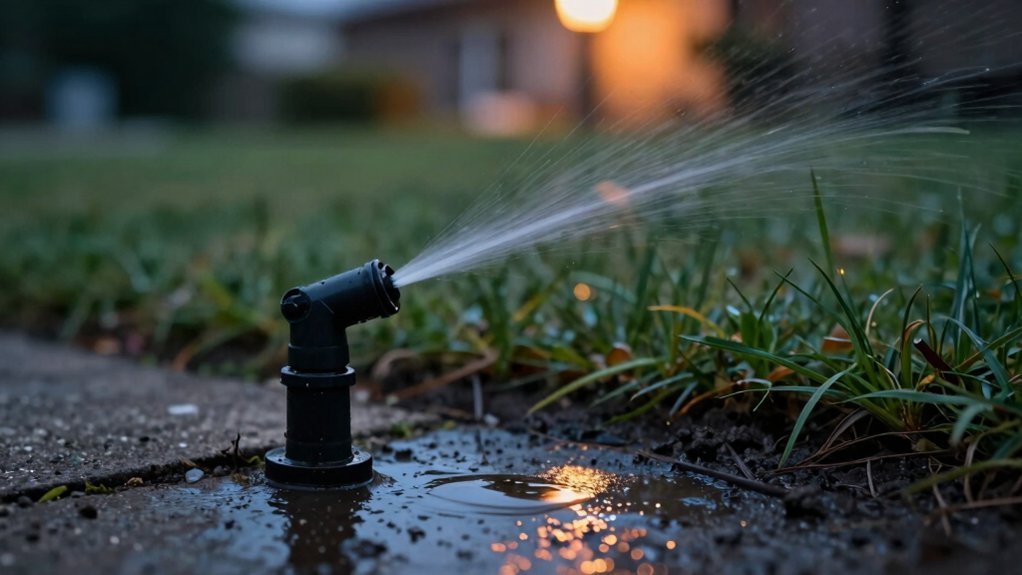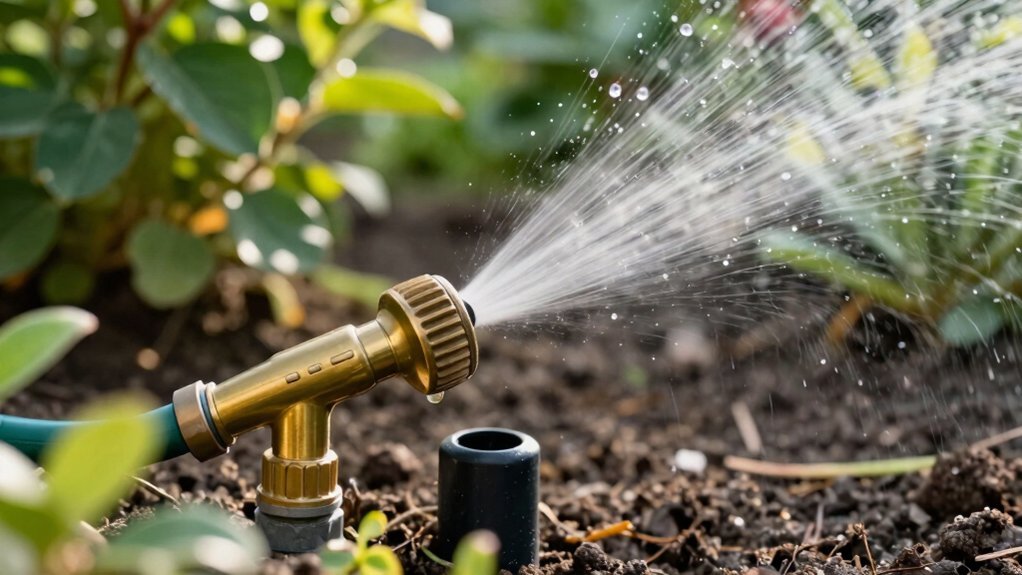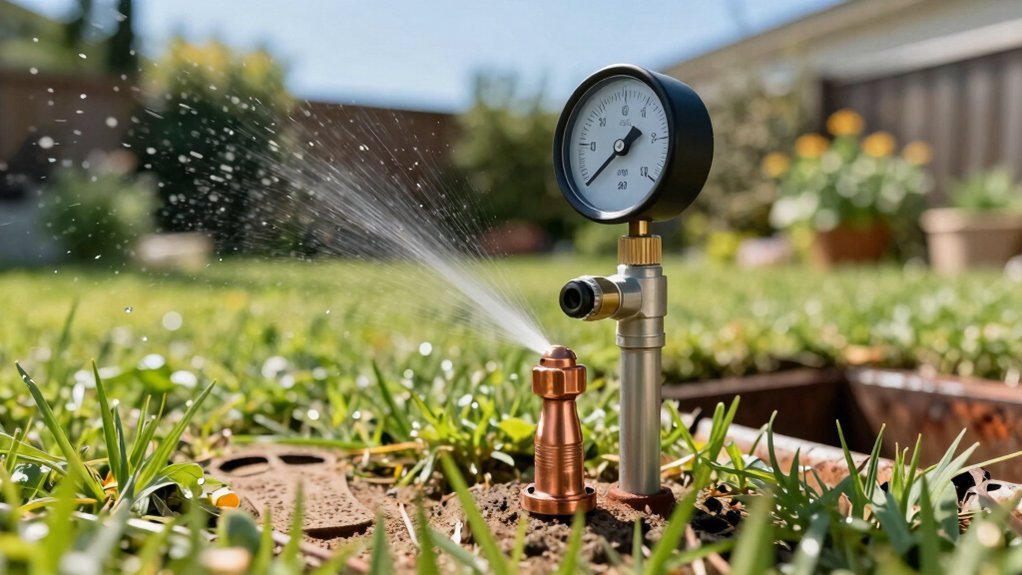
You’ll need between three and eight sprinkler heads, sized 4‑inch or 6‑inch, based on your pump’s flow rate—typically 5‑10 GPM per head—and the absorption field’s area and soil permeability. Match head count to field size (add one head per 200 sq ft) and guarantee uniform distribution to avoid oversaturation. Check local codes for minimum and maximum heads, spacing, and required backflow protection. Proper sizing and placement keep pressure stable and pathogen levels low, and the next sections will show you how to fine‑tune the design.
Why Do Aerobic Septic Systems Require Sprinkler Heads?
Aerobic septic systems need sprinkler heads because they turn treated effluent into a safe, disinfected spray that can be applied to lawns and absorption fields. You’ll notice that oxygen‑rich bacterial activity yields effluent with low pathogen counts, meeting the disinfection thresholds required for surface application. This high‑quality output lets you distribute water uniformly, preventing localized oversaturation and promoting percolation rates that align with soil permeability. Energy consumption factors matter: the aeration chamber and submersible pump draw power, but the parallel delivery of many heads reduces pump run‑time compared with single‑point discharge. Regulatory enforcement compliance dictates head spacing, purple‑capped identification, and exclusive use with aerobic units, ensuring that each installation satisfies local code and environmental protection standards. Proper air compressor operation is essential to maintain oxygen levels in the second tank. Maintaining a proper distance between the irrigation zone and the leach field helps prevent soil saturation and protects septic system integrity. Selecting a pump with adequate flow capacity ensures consistent pressure across all heads. The system’s overall performance can be optimized by calculating the required hydraulic head for the given layout.
How to Calculate Aerobic Septic System Sprinkler Head Count
Typically, you’ll start by matching the pump tank’s flow capacity to the desired head count, then adjust for field size, soil type, and effluent volume. First, calculate the pump’s GPM and divide by the target flow per head, usually 5–10 GPM, to set a baseline head count. Next, map the absorption field’s square footage; larger fields require additional heads to maintain even distribution, often adding one head per 200 sq ft. Then, evaluate soil permeability—poor soils demand extra heads to guarantee even distribution. Incorporate flow rate planning to safeguard total demand never exceeds pump capacity, and verify backflow prevention devices are sized for the combined head flow. Finally, test with a bucket test and fine‑tune the count to avoid pressure loss while meeting design criteria. The Sprinkler Zone Calculator Tool provides quick GPM calculations for each zone. Additionally, consider the coverage area of each sprinkler head to ensure uniform irrigation across the field.
Check Local Regulations for Minimum and Maximum Heads
When you check local regulations, you’ll find both minimum and maximum sprinkler‑head limits that hinge on pump capacity, field size, and state‑specific codes. In Texas, state specific sprinkler requirements mandate at least three pop‑up heads spaced 54 inches apart, while Louisiana requires three 4‑inch heads with a 40‑foot minimum spacing. Most jurisdictions impose a minimum of three heads for 500‑1500 GPD systems, and a maximum of eight heads, constrained by pump output and pressure differentials that must stay within 10 % variation. Local permit compliance often demands ASAE S 398.1 testing, a 0.5 HP pump delivering 12 GPM at 25 PSI, and a 1‑inch purple PVC supply line with a 100‑micron filter. Verify these limits before finalizing your design. Check the state statutes to ensure your system meets all legal requirements. Proper backflow prevention is essential to protect the potable water supply from contamination. The backflow preventer is typically installed near the water main to stop reverse flow.
Match Head Size to Soil Type and Absorption Field
Choosing the right sprinkler‑head size starts with a clear picture of your soil’s percolation rate and the dimensions of the absorption field. Analyze soil composition impacts: clay slows percolation, raising the head count to avoid oversaturation, while sand accelerates absorption, allowing fewer heads. Calculate absorption field capacity by multiplying field length, width, and percolation factor; larger capacity demands tighter spacing and potentially higher‑flow heads. Match head radius to coverage distance—4‑inch heads cover 20‑30 ft, 6‑inch heads exceed 30 ft—ensuring each head services an equal portion of the field. Verify that pump output can sustain the combined flow, keeping pressure within 20‑70 psi. Uniformly distribute heads to prevent localized loading and maintain ideal effluent dispersal. Modern systems often incorporate moisture sensors to further reduce water waste. Automated watering saves time while delivering consistent moisture across the entire septic absorption area.
Choose Between 4-Inch and 6-Inch Heads for Your Layout
Your soil’s percolation rate and field dimensions already dictate head spacing, so the next decision is whether a 4‑inch or 6‑inch pop‑up best fits the layout. Compare head height capabilities: a 4‑inch head sits lower, needs shallower trenches, and works well where grass stays short, but it can clog in taller turf, reducing uniformity. A 6‑inch head clears dense grass, improves coverage radius, and conserves water, yet it requires deeper excavation up to 200 mm and may increase labor costs. For system layout optimization, map high‑grass zones and assign 6‑inch heads there, while using 4‑inch heads in low‑grass sections. Mixing both sizes can balance trench depth and spray uniformity, preserving overall efficiency. Short turf heights of 3‑3.5 inches can prevent 4‑inch pop‑up sprinklers from fully emerging, making the higher pop‑up a more reliable choice. The temperature of water in a hose can drop up to 10 °F below ambient air during winter months. Proper winterization, such as draining hoses before the first freeze, helps avoid damage to the irrigation system.
Pick the Right Aerobic Sprinkler Brand for Septic Systems
Three leading brands dominate aerobic septic sprinkler choices: K‑Rain (ProPlus and K2 Smartset), RainBird Maxi‑Paw, and Irritrol Impact. You should compare head durability, effluent compatibility, and spray mechanics before committing. K‑Rain’s ProPlus and K2 Smartset use gear‑drive rotary heads that sustain high‑pressure flow and resist corrosion, making them ideal for medium‑to‑large zones. Their 5‑inch pop‑up design aligns with Pro Flo and Aeris treatment outputs, ensuring effluent compatibility. RainBird Maxi‑Paw offers a purple‑top indicator for non‑potable water and a reliable pop‑up rotor; its durability is slightly lower than K‑Rain but sufficient for residential loads. Irritrol Impact combines a rugged impact rotor with a purple top, delivering consistent dispersal and strong head durability for high‑flow septic systems. Selecting the brand that matches your pump’s pressure curve and effluent standards maximizes lifespan and regulatory compliance. Hunter’s durability also contributes to long‑term cost savings. Consider water‑use efficiency when evaluating overall system performance.
Install Sprinkler Heads for Even Distribution Without Overlap
Installing sprinkler heads for an aerobic septic system requires precise placement to achieve uniform coverage without overlap, ensuring each head’s spray radius matches the calculated field dimensions. You begin by mapping the absorption field and dividing its area by the spray radius of the chosen 4‑inch or 6‑inch heads, yielding the number of zones needed. Then you plot a proper sprinkler layout that spaces heads at intervals equal to twice the spray radius, avoiding any intersecting arcs. Verify that each zone’s total square footage complies with local regulations and that the pump’s output can sustain the combined flow. Finally, confirm ideal head placement by checking that no head exceeds the field’s edge and that the pattern remains consistent across the entire septic area. Proper spacing also helps maintain uniform water distribution across varying soil types. Additionally, consider the sprinkler flow rate when selecting head types to ensure the system meets the required irrigation demand. Understanding soil moisture zones can further optimize placement and reduce water waste.
Maintain Heads and Aeration Units for Reliable Performance
Keeping the aeration system’s power uninterrupted and regularly clearing any blockages in the sprinkler heads are essential steps to preserve consistent pressure and microbial activity. You should replace broken heads with identical models, never shift their locations, and inspect them each month for clogs or damage that could weaken pressure. Guarantee the pump tank receives steady electricity; any interruption jeopardizes the balance microbe population and reduces treatment efficiency. Verify pump output aligns with the 2‑8 head range for your tank size, and adjust for higher wastewater volumes if needed. Check soil type effects on absorption field capacity, and document every service to satisfy local codes. By monitoring aeration performance and maintaining even effluent distribution, you sustain reliable system operation. Concrete platform protects the pump and air pump from ground moisture and impact. Regularly inspect the wiring for moisture damage to prevent corrosion and electrical hazards. Additionally, watch for uneven watering as it can indicate a valve that needs cleaning or replacement. Proper weather shielding prevents debris and impact damage to sprinkler valves.
Troubleshoot Common Head-Count Problems and When to Add More Heads
Four common head‑count issues typically surface in aerobic septic systems: excess wastewater overloads the treatment capacity, simultaneous showers push flow beyond hourly limits, insufficient heads leave portions of the spray field dry, and an oversized pump tank creates a mismatch between output and head count. You should first verify proper placement of each head, ensuring 180‑degree patterns and ground‑level alignment to avoid buried nozzles. Routine inspections reveal uneven spray coverage, which signals a need for additional heads when daily loads exceed 500‑1,500 gal. If alarms trigger from volume spikes or the pump tank’s output rating caps head count, calculate the required heads using the system’s treatment rating (e.g., 750 gal / day). Add heads only after consulting a professional to match pump efficiency and maintain compliance. Proper adjustment of the sprinkler head pattern is essential for achieving the correct spray coverage. Use a screwdriver to fine‑tune the spray pattern for uniform distribution.