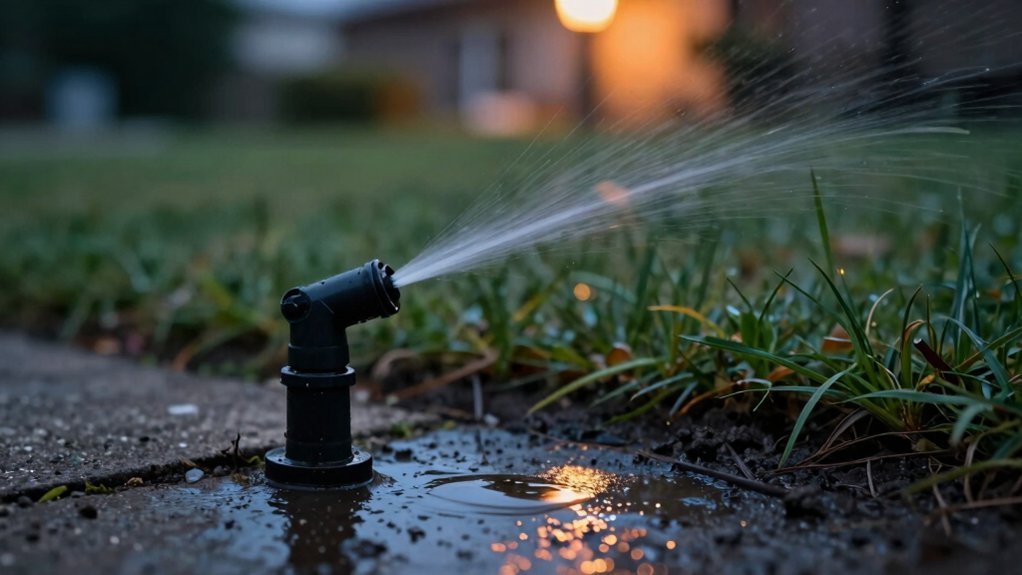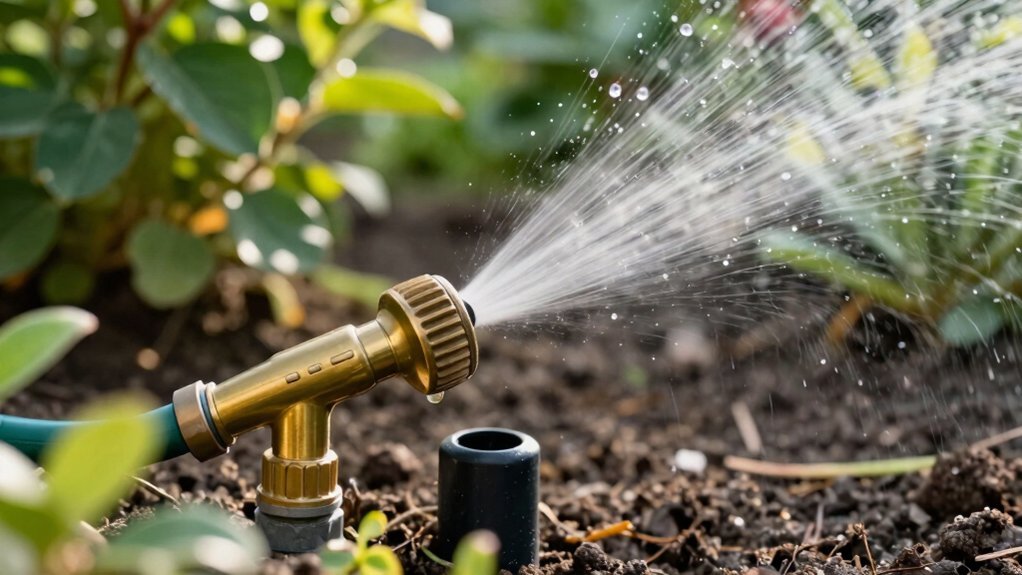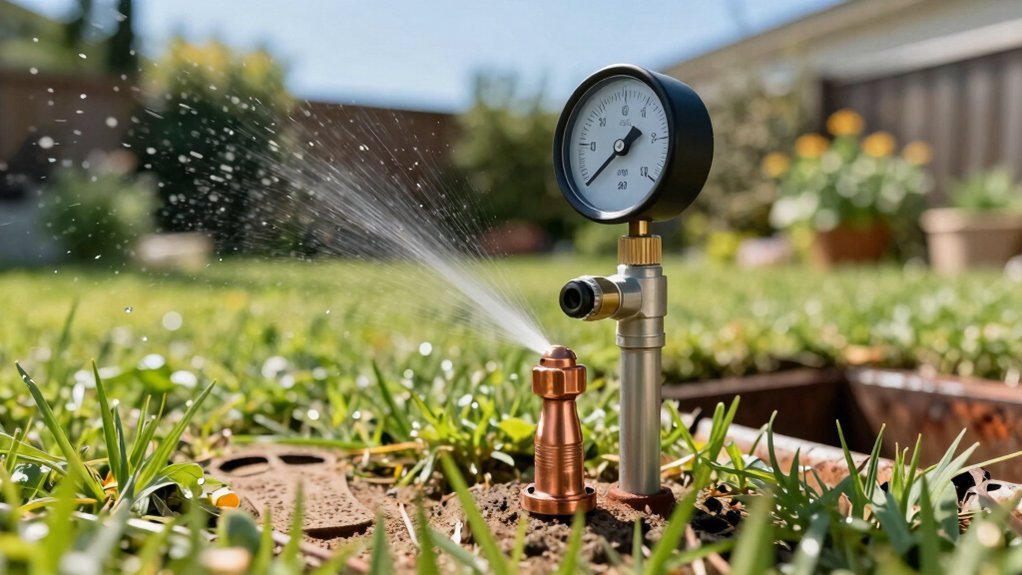
You can run drip and sprinkler heads in the same zone, but you must balance pressure, match application rates, and isolate each system with proper valves and regulators. Install a cleanable filter and a pressure regulator at the retrofit point, cap any unused heads, and keep tubing runs under 200 ft to limit friction loss. Separate zoning lets you fine‑tune flow for each emitter type, preventing clogging and uneven distribution. Proper setup also reduces installation costs and improves coverage, and the next section shows how to calculate the exact rates you’ll need.
Should You Mix Drip & Sprinklers? Pros, Cons & Best Practices
Mixing drip and sprinklers in a single zone can streamline watering, but you need to balance flow rates and pressure to avoid over‑ or under‑watering. You’ll appreciate that a hybrid line delivers water to beds and containers simultaneously, letting you tailor water application rates for wilting hydrangeas or newly planted shrubs without wasting resources. Uniform sprinkler coverage merges with targeted drip emission, cutting installation time and material costs. However, differing inches‑per‑hour rates make pressure management critical; mismatched emitters can cause clogging or uneven distribution. System retrofitting solves many issues—install a cleanable filter and regulator at the retrofit point, cap unused heads with PVC plugs, and use appropriate adapters (¼‑inch or ½‑inch) to preserve pressure. Follow these practices for reliable, efficient hybrid irrigation. Separate zoning is essential to maintain proper application rates for each emitter type. Selecting the correct drip emitter size ensures the low‑flow design matches the sprinkler’s pressure range. Understanding water distribution methods helps you design a system that maximizes coverage while minimizing waste. Properly sized pressure regulator can balance the flow between high‑volume sprinklers and low‑flow drip lines.
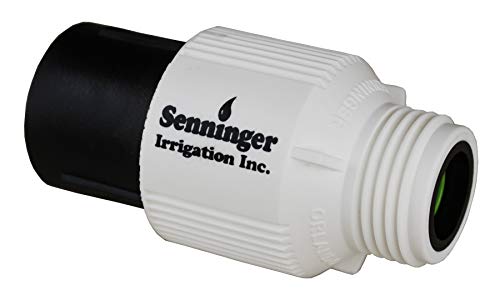
Ideal for installations requiring lower flows such as solid set, drip line, soaker hose and other low pressure agriculture, residential and commercial irrigation. This PRLG (Pressure Regulator Landscape Grade) maintains a constant outlet pressure of 25 PSI (1.72 bar) with a flow range between 0.5 - 7 GPM (114 - 1590 L/hr).

Easily converts a 1/2" riser or existing shrub spray to low volume Drip watering system

25 PSI preset pressure regulators (hose thread) are used to reduce and regulate the incoming pressure of a household’s water entering a drip irrigation or micro sprinkler system to the appropriate operating pressure of 25 PSI,Pressure Compensation Range: 30-100 PSI.
Rate‑Matching Calculations for Mix Drip & Sprinklers
How do you guarantee that the combined output of drip emitters and sprinkler heads delivers the same inches‑per‑hour across a hybrid zone? First, compute the sprinkler rate using the precipitation formula: (Total GPM × 96.3) ÷ (area length × area width). For a 30 ft × 30 ft plot at 9 GPM, you get 0.963 in/hr. Next, calculate the drip rate: convert emitter GPH to GPM, divide by spacing (inches) and row spacing, then multiply by the number of lines. If the drip delivers 0.4 in/hr, adjust the sprinkler run time inversely—run sprinklers longer or reduce their flow until both systems hit the target depth. Sum the GPMs, verify with a meter, and apply precipitation formula adjustments to maintain application depth uniformity across the zone. Matched precipitation rates are essential for achieving uniform water distribution. Additionally, selecting a nozzle that operates within the optimal psi range ensures the system can meet the required flow without excessive pressure loss. Proper nozzle sizing helps balance flow and pressure across the hybrid configuration. Understanding crop water demand is crucial when setting these rates.
Pitfalls That Cause Over‑Watering & Runoff
Often the biggest source of over‑watering and runoff in a hybrid drip‑sprinkler zone is poor pressure control; when pressure drifts above or below the design values for emitters and heads, flow rates become inconsistent, causing some areas to receive excess water while others stay dry. You must address pressure regulation challenges by installing reliable regulators that balance 50 psi for impact sprinklers and 45 psi for gear‑drive rotors. Emitter depth optimization prevents surface evaporation and deep burial that fuels runoff. Keep emitter spacing uniform and avoid clustering that creates puddles. Match sprinkler head types to guarantee consistent precipitation rates, and limit tubing runs to under 200 ft to reduce friction loss. Regularly inspect heads for alignment and wear, and adjust schedules seasonally to reflect weather and soil moisture. This disciplined approach eliminates over‑application and minimizes runoff. Understanding built‑in pressure regulators helps ensure the valve selection matches the system’s pressure requirements. Proper backflow protection, such as an anti‑siphon valve, prevents contaminated water from re‑entering the potable supply. Choosing the appropriate valve type can extend system lifespan valve lifespan.
Hybrid‑Zone Conversion Checklist for Mix Drip & Sprinklers
Efficiency hinges on treating drip and sprinkler components as distinct subsystems within a single zone, so you’ll need to isolate them with separate valves, pressure regulators, and backflow preventers before any physical conversion. First, verify micro‑climate considerations: map sun exposure, wind, and soil type for each plant group, then assign dedicated pressure‑reduced lines. Next, install a backflow device and pressure reducer at the manifold box for the drip side, capping any unused sprinkler risers with threaded end caps. Choose fitting types—threaded nipples for single‑plant adapters or 4‑12‑outlet manifolds for multiple plants—matching riser size (½″ or ¾″). Finally, program the controller for longer drip runtimes, adjust emitter spacing to 18″, and note maintenance differences: drip lines need periodic flushing, while sprinklers require head cleaning and pressure checks. Modern sprinklers often incorporate soil moisture sensors to further reduce waste. Drip systems require stronger filtration than sprinklers. Proper zone segmentation reduces water waste and promotes healthier plant growth. Adding a rain‑activated sensor can automatically shut off both systems during unexpected precipitation.

Kit converts a pop-up sprinkler spray head into a water-saving Drip emitter system

ADDITIONAL VALVE: Extra valve for the Orbit Automatic Hose Faucet Yard Watering Kit (58911 – sold separately)
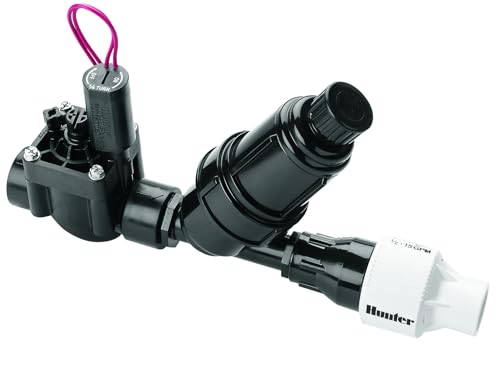
ALL IN ONE DRIP CONTROL KIT: Comes fully assembled with 1 inch PGV valve 150 mesh stainless steel filter and 40 PSI pressure regulator designed to simplify installation and reduce setup time.
When a Separate Valve Is the Smarter Long‑Term Choice
A separate valve is the smarter long‑term choice because it isolates pressure regulation, flow rates, and maintenance routines for drip and sprinkler components. You’ll keep drip pressure at 25 PSI with a regulator while letting sprinklers run at 40‑60 PSI, avoiding over‑pressurization that ruins emitters. Independent valves let you size run times—2‑4 hours for drip, 15‑30 minutes for sprinklers—maintaining ideal GPH/GPM ratios and cutting evaporation by up to 50 %. Zoning options diversity expands as manifolds support 2‑6 zones per supply line, and component installation logistics simplify: each zone gets its own filter mesh, flushing schedule, and solenoid. Long‑term, you reduce repair costs by 35 % and achieve ROI in 18 months, while scaling to 500‑1000 feet of tubing without pressure loss. Using a hose thread swivel adapter ensures easy replacement of drip tubing without glued fittings. The main line distributes water from the source to all downstream components, providing the backbone for both drip and sprinkler systems. Understanding how the solenoid operates helps you diagnose why a valve may not open when commanded. The transparent cover lets you inspect the internal diaphragm for wear.

For removing debris from and minimizing clogging in drip and sprinkler systems

Replacement sprinkler valve/controller diaphragm kit

Everything You Need in One Box: This drip irrigation kit comes with a 100-foot 1/4-inch tubing, 20 adjustable brass nozzles, one two-way connector, one one-way connector, 20 T-connectors, 4 end caps, a tubing cutter, and 40 ground stakes with zip ties. It's a complete, compact set that lets you build a custom watering system without hunting for extra parts.