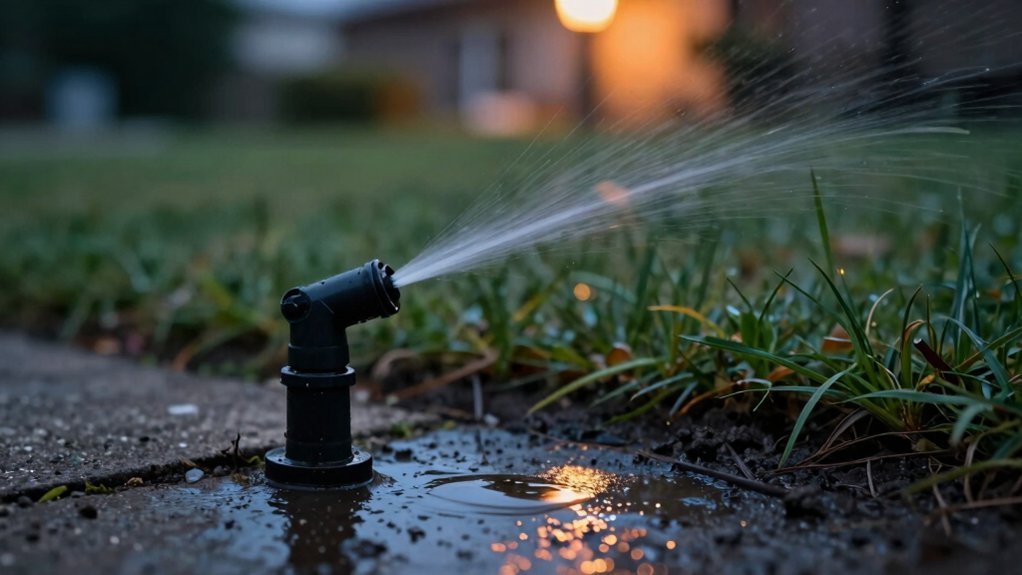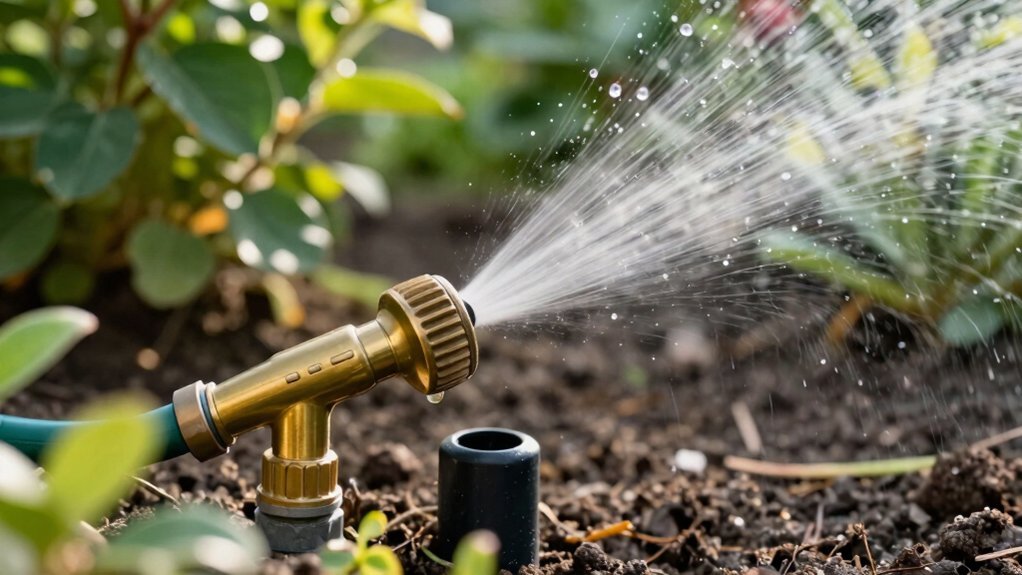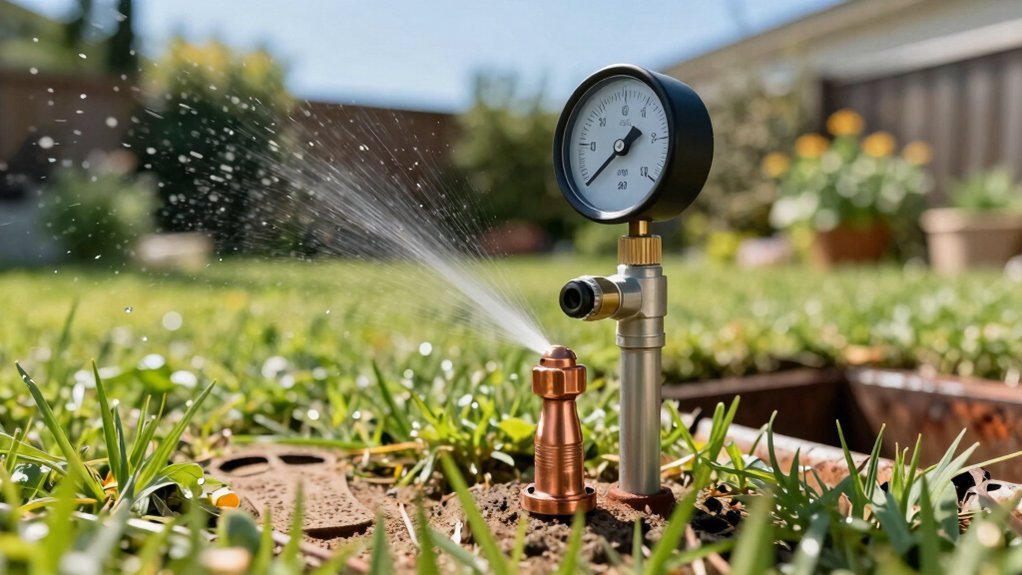
Yes, sprinkler systems can damage your foundation when they over‑water the soil, especially clay. Excess water makes the clay swell, pushing up on the slab and causing heave or wall movement. Uneven coverage creates moisture imbalances, leading to differential pressure that settles one side while the other lifts. Leaky heads or improper irrigation rates also erode soil, forming voids that undermine footing support. Proper head placement, low‑precipitation heads, and smart scheduling prevent these issues, and the next sections explain how.
How Sprinkler Water Directly Impacts Clay Foundations (Sprinkler Foundation Damage)
Clay foundations react dramatically when sprinkler water saturates the soil above them. You’ll notice that the clay absorbs the excess, swells, and exerts upward pressure on the slab, causing heave or inward wall movement. Because clay absorbs water slowly, standard sprinklers often over‑water the surface while leaving deeper layers dry, disrupting soil water content stabilization. To prevent overwatering impact, switch to low‑precipitation rotary heads that match the soil’s slow absorption rate and schedule infrequent, deep irrigations. Monitor moisture levels regularly; when the water table approaches saturation, pause the system to avoid pooling at the foundation base. Maintaining uniform moisture eliminates differential pressure, protecting the structure from shrink‑swell cycles and associated cracking. Proper line depth also helps maintain consistent pressure and prevents frost damage 6 to 12 inches. Root intrusion can also compromise pipe integrity, leading to leaks that exacerbate foundation moisture problems.

COMPATIBLE WITH HUNTER AND OTHER SPRAY BODY MODELS: Designed for use with Hunter spray bodies and other standard female-threaded sprinkler heads. Easy to install with a secure, leak-free connection and no special tools required.

Approved for sale/meets pressure regulation legislation requirements in: CA, CO, HI, VT, MA, ME, NY, OR, RI, WA, and Washington DC

360° FULL CIRCLE WATERING WITH ADJUSTABLE 13'–21' RADIUS: Achieve even, complete lawn and garden coverage with multi-stream technology and customizable radius control. Perfect for eliminating dry spots and maintaining a lush, healthy landscape.
Why One Side of Your House Sinks When Sprinklers Are Uneven (Sprinkler Foundation Damage)
When your sprinklers dump more water on one side of the house, the soil there becomes saturated while the opposite side stays dry, creating a moisture imbalance that translates into uneven pressure on the foundation. This differential moisture dispersion forces the saturated side to undergo saturated soil compaction, expanding and pushing upward against the slab. Meanwhile, the dry side contracts, losing support and allowing the foundation to settle. Repeated expansion‑contraction cycles generate asymmetric hydrostatic forces, concentrating stress on the over‑watered side and causing cracks to propagate along weak points. Over time, the cumulative load discrepancy produces measurable sinking on the dry side, while the wet side remains elevated, resulting in a visibly tilted foundation. Improper drainage can exacerbate these effects by allowing water to accumulate around the foundation, increasing the risk of soil erosion and subsurface cavity formation. Properly designed sprinkler systems can mitigate water waste by using smart controllers that adjust watering schedules based on soil moisture levels. Implementing optimal spacing ensures each sprinkler covers its intended area without excess overlap.
How to Spot Over‑Watered Soil Around Your Home (Sprinkler Foundation Damage)
Uneven irrigation creates a moisture gradient that shows up first in the soil itself, so checking the ground around your foundation is the quickest way to catch over‑watering before structural damage spreads. First, probe the top six inches; if the soil stays soggy, wet soil causes reduced aeration and compaction. Perform a clump test—excess moisture will hold the soil together rather than crumble. Look for surface mold, green algae, or fungus gnats, all indicators of chronic saturation. Examine plant bases: mushy stems, soft root zones, and yellowing leaves with brown halos reveal overwatered plants signs. Note any sour, musty odor, which signals anaerobic decay. Document these observations to target sprinkler adjustments before foundation stress escalates. Also, inspect the sprinkler heads for cracked seals that can cause leaks and contribute to excess moisture. Adding a waterproof cover to each valve can further protect against weather‑related damage. Properly sealing valve enclosures with water‑tight fittings helps prevent moisture intrusion that could compromise valve function.
How Leaky Sprinklers Mimic Plumbing Leaks and Damage Foundations (Sprinkler Foundation Damage)
A leaky sprinkler line can look just like a hidden plumbing breach, saturating the soil around your foundation in isolated pockets that gradually erode stability. When a pipe ruptures, excess water increases local moisture, mimicking slab leaks and triggering the same hydrostatic pressure shifts. The added volume raises soil suction, causing clay to swell and then contract as it dries, which amplifies freeze‑thaw foundation damage. Elevated sprinkler pressure impacts accelerate the seepage rate, creating uneven saturation that undermines footing support. Over time, these moisture pockets generate micro‑voids, prompting foundation cracks and shifts that resemble plumbing‑induced failures. Monitoring spray distance, checking for gushing water, and using ground‑penetrating radar help you differentiate sprinkler leaks from true pipe breaches. Faulty valves can also cause water to continue flowing even after the system is turned off, leading to unexpected saturation and potential foundation stress. Properly diagnosing a leaking valve involves inspecting worn seals and replacing O‑rings to stop continuous water flow. Understanding solenoid operation can help prevent such issues by ensuring the valve opens and closes at the correct times.
How Soil Erosion From Over‑Watered Sprinklers Creates Voids Under Foundations (Sprinkler Foundation Damage)
Leaky sprinkler lines may masquerade as plumbing breaches, but the real threat emerges when over‑watering erodes the soil beneath your foundation. When water migrates from over‑irrigated zones, moisture migration patterns shift from uniform infiltration to rapid, focused channels that scour the upper horizon. Each irrigation pulse destabilizes particle aggregates, especially in low‑organic, arid‑zone soils, causing runoff to strip topsoil and carve subsurface voids. These voids reduce bearing capacity because compacted, saturated layers lose pore space and load‑distribution ability. If you maintain engineered soil ratios that favor proper drainage, the erosion rate can stay within tolerable limits; otherwise, cumulative loss—often 4–5 × the sustainable threshold—creates preferential pathways that undermine support, leading to differential settlement beneath your foundation. Properly sizing sprinkler heads based on GPM calculations helps prevent excessive runoff. Understanding soil infiltration rates is essential for designing irrigation schedules that protect foundation stability. Accurate sprinkler runtime calculations ensure the system delivers the intended water depth without creating excess runoff.
How to Position Sprinkler Heads to Protect Foundations (Sprinkler Foundation Damage)
Properly positioning sprinkler heads is essential to protect your foundation from moisture‑induced erosion. You should set each head so its spray pattern lands at least 5–10 feet from the house, extending to 1 foot in termite‑prone or expansive‑soil zones and maintaining a 6‑inch buffer where contractors recommend it. Choose half‑circle heads for edges, quarter‑circle for corners, and full‑circle for interior zones; rotor or impact units cover up to 48 feet, while 570 fan spray heads suit tighter spaces. Apply head‑to‑head spacing equal to the nozzle radius, overlapping circles by 1 foot to eliminate dry spots. Use a straight‑line grid parallel to critical walls, anchoring strings at 10‑foot increments, and add kicker heads where irregular geometry creates gaps. This plant selection and precise moisture management prevent water from striking stucco, walls, or sidewalks, reducing pooling and soil erosion around the foundation. Trial‑and‑error testing can reveal the most efficient head placement for irregularly shaped lawns. Properly calculate flow rate to ensure each zone receives adequate water without oversaturating the soil. Understanding nozzle inches per hour helps you size the nozzle correctly for the desired coverage.

🌟【𝐎𝐮𝐫𝐬 𝐒𝐩𝐫𝐢𝐧𝐤𝐥𝐞𝐫 𝐇𝐞𝐚𝐝 𝐆𝐮𝐚𝐫𝐝】Designed for modern yards, this sprinkler head protector effectively shields sprinkler head from collisions with lawn mowers, frequent foot traffic and outdoor activities. It suppresses weed growth around the sprinkler, maintaining spray coverage and distance. The features a cuttable design, a base with 4 grooves and legs, in a natural grass-blending color, with a low-profile top for comprehensive irrigation system protection.

Sprinkler Covers for Outside: Measures 5.8 inches in diameter, 3.6 inches in height, with a 3.7 inch inner diameter and 2.6 inch base opening, made from sturdy green plastic material for long-lasting outdoor use.

Universal Fit for Most Sprinkler Heads:Designed as a reliable sprinkler head protector, this guard fits most standard pop-up, rotor, and stationary sprinkler heads. The universal design accommodates a wide range of brands for Hunter PGP, Rain Bird, Orbit, and Toro — ensuring broad compatibility across your entire irrigation system.
How to Use Drip‑Tubing for Deep Moisture Control (Sprinkler Foundation Damage)
When you install drip‑tubing for deep moisture control, you direct water straight to the root zone while minimizing surface runoff that can erode foundation soils. Begin with tubing layout optimization: map a ½‑inch mainline along the perimeter, then branch ¼‑inch emitter tubing placement at 6‑36‑inch intervals to match plant spacing. Punch uniform holes, secure each branch with J‑wire stakes, and stagger rows to avoid overlapping wet zones near the foundation. Use soaker tubing only in dense beds, spacing 6‑12 inches apart to maintain a gentle seepage front. Verify emitter tubing placement is level, check pressure to prevent over‑saturation, and inspect joints for leaks. This precise delivery sustains deep root growth, reduces evaporation, and protects the foundation from moisture‑induced movement. Black tubing is the most common choice for drip irrigation systems. Proper pressure differential ensures consistent flow across all emitters. Selecting the correct drip emitter size helps maintain uniform distribution across varying plant needs.

1/4 INCH IRRIGATION TUBING: Create a feeder line that supplies water to a low-flow, drip-watering device, or use as a main line in a small drip irrigation system; for trees, shrubs, flower beds, groundcover, vegetable gardens, and planters
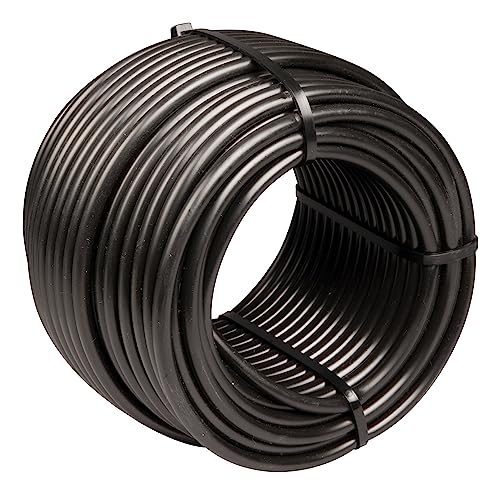
Rugged, flexible tubing that's easy to unroll and stake in garden, flower bed, ground cover or other landscaped areas

1/4 INCH IRRIGATION TUBING: Create a feeder line that supplies water to a low-flow, drip-watering device, or use as a main line in a small drip irrigation system; for trees, shrubs, flower beds, groundcover, vegetable gardens, plants in pots, planter boxes, and hanging baskets
Three Common Soaker‑Hose Mistakes That Damage Clay Foundations (and How to Fix Them)
If you place a soaker hose directly against a clay foundation, the water pools and exerts pressure on the wall, causing the expansive soil to swell unevenly and create inward heaving or cracks. First, avoid this by positioning the hose at least three feet away and using a drip‑line with 18‑24‑inch spacing; this distributes moisture evenly and reduces localized pressure. Second, establish a consistent watering schedule—daily, light soaks maintain a stable plasticity index and prevent the shrink‑swell cycles that faulty drainage systems amplify. Third, amend the soil with sand or organic matter to improve permeability; inadequate soil amendments otherwise trap water near the foundation, increasing lateral forces. Finally, add mulch and verify that the drainage network directs excess water away from the wall. Clay soil expands and contracts significantly with moisture changes, so maintaining even moisture helps prevent differential movement. Understanding your local climate can further guide how much water your garden truly needs. Proper sprinkler spacing ensures uniform coverage and reduces water waste.
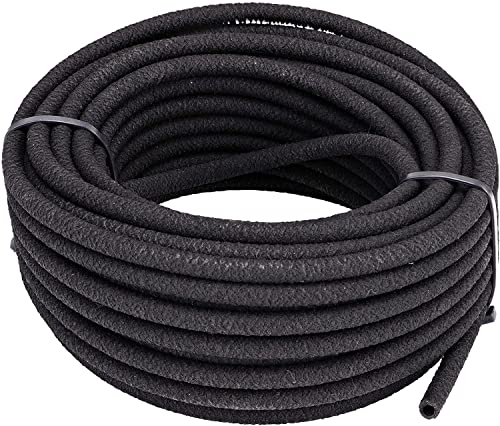
Slowly waters the soil around your plants for complete root zone hydration; Ideal for short runs on flat surfaces, such as vegetable gardens, borders, and around small plants

Tubing & Inline Emitters In One. This 100 Ft Roll of 1/4 inch drip irrigation tubing has 0.5 GPH emitters built-in at 6-inch intervals for ultimate simplicity and ease of use. With this drip line tubing, there is no need to buy and install multiple individual irrigation drippers—they are already built-in. Create a flexible irrigation system setup that is easily extendable for expanding gardens.

Superior Watering Efficiency: Built-in 0.9 gallon-per-hour emitters spaced every 18 inches provide precise, consistent watering while saving up to 80% more water
Inspection Checklist: Sprinkler System & Foundation Safety
Even though your sprinkler system may look fine, hidden leaks, misaligned heads, and over‑watering can silently jeopardize foundation integrity. Begin each foundation maintenance check by measuring spray distance; keep heads at least two feet from the exterior. Verify that no spray hits windows, doors, or foundations wells, and adjust run‑time to avoid soil saturation beyond absorption capacity. During routine sprinkler inspections, walk the perimeter for wet spots, pooling, or gushing water that signals underground leaks. Examine valve boxes and pipe connections for blow‑outs or separation, and listen for pressure loss. Record any misaligned heads that cause uneven coverage, then rebalance zones to prevent differential soil swelling. Finally, confirm drainage pathways direct runoff away from the foundation, eliminating persistent moisture that could erode support soil.