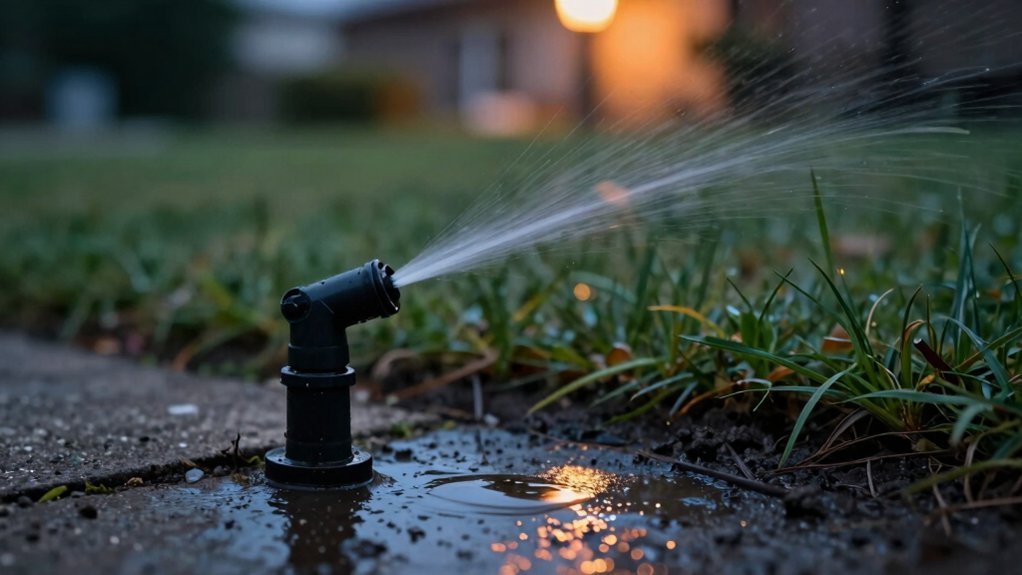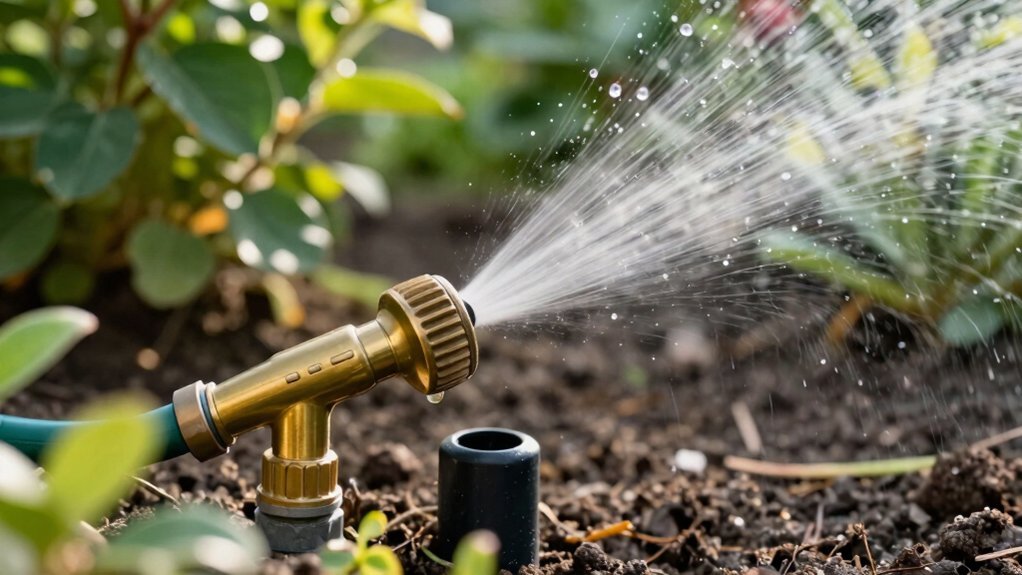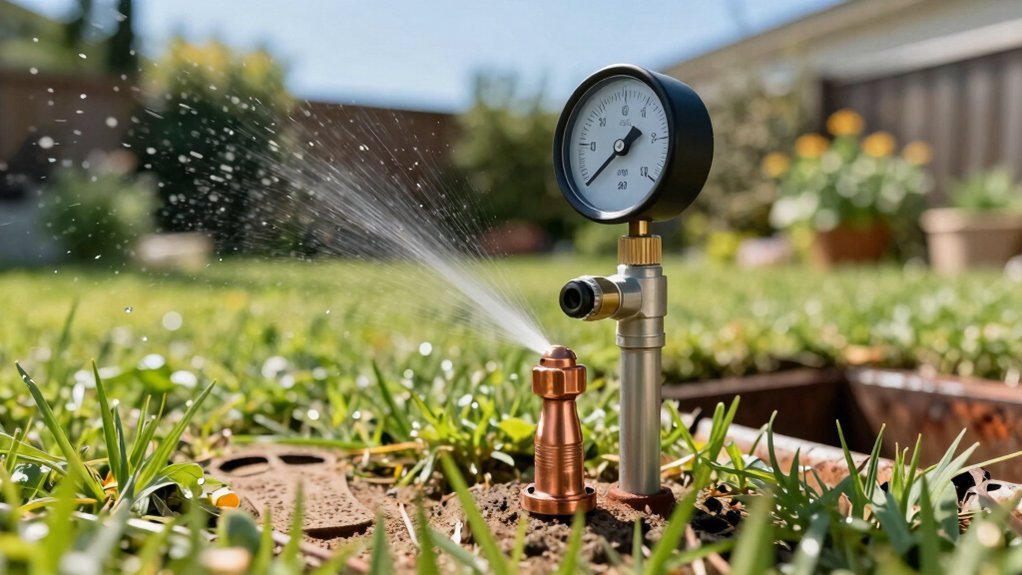
Set your pop‑up heads 1–4 inches above the lawn, aiming for a quarter‑inch tolerance so the spray hits the grass without misting. Keep the nozzle tip just above the sod; too high blocks the spray and wastes water, too low buries it, truncating throw and clogging faster. Adjust the stem by fully extending it, measuring from the fitting base to the tip, and verify the clamp matches the bar diameter. This precise height maximizes efficiency, protects soil moisture, and extends head life—more details await if you keep going.
Exact Sprinkler Height: Why It Matters
Because the sprinkler head sits just above the soil, you guarantee efficient water distribution while eliminating tripping hazards. You align each head within a quarter‑inch of ground level, letting the mower glide over without damage and keeping the spray pattern uniform. This precise height supports ideal sprinkler spacing, ensuring overlapping arcs that cover every blade without waste. When you sync watering with lawn care schedule considerations—early morning for cool evaporation, less frequent cycles in rain—you reduce runoff and conserve water. Proper positioning also prevents soil buildup that would otherwise choke the nozzle, avoiding dry spots and dead grass. By maintaining this exact height, you cut repair frequency, sustain turf health, and uphold a sustainable, low‑maintenance landscape. Shorter sprinklers are less tolerant of lawn growth and thatch, so choosing the right height helps avoid these issues. Selecting a high‑quality head can extend service life to up to 15‑20 years when installed and maintained correctly. Adjust the depth based on soil type to match water absorption rates. The water source must deliver consistent pressure to keep the system operating efficiently.

Wide Area Lawn Coverage: The Orbit Tripod Lawn Zinc Impact Sprinkler delivers powerful irrigation with a full 360-degree water distributor to help maintain healthy lawns

MEDIUM-AREA COVERAGE: Sprays up to 50 ft. in diameter, covering 1,960 sq. ft.

Wide Area Irrigation Performance: The Orbit Heavy Duty Brass Impact Sprinkler delivers dependable sprinkler performance, providing wide 360-degree coverage
Correct Pop‑up Stem Measurement
Keeping the sprinkler head at the exact soil‑level height guarantees uniform coverage, but the next step is measuring the pop‑up stem correctly. Loosen the body fittings and fully extend the stem, then use a ruler or caliper along the centerline from the fitting base to the nozzle tip. This measuring technique variations focus on functional pop‑up extension, not overall length, ensuring stem measurement accuracy. Account for any riser or nozzle height, and verify the manufacturer’s markings on the shank. Choose a stem length that meets mower clearance—typically 1‑2 inches above the cut. Test the pop‑up under pressure, and keep tolerance within ±0.25 in for a sustainable, precise installation. The stem’s handlebar clamp size must match the bar diameter to ensure secure attachment. Proper room dimension assessment helps avoid blind spots and ensures optimal water distribution. Regularly inspect the sprinkler head adjustment screw to maintain consistent spray patterns and prevent over‑watering. Using a metal detector can help locate underground sprinkler lines without digging.
Recommended Sprinkler Height Ranges for Lawn Types
One to four inches of pop‑up height works best for most grassy lawns, while taller plants call for six to twelve inches. For a well‑maintained lawn with low thatch, a 4‑inch head keeps the spray just above the sod, satisfying lawn moisture requirements without excess runoff. Cylinder‑mowed or seeded lawns benefit from 3‑inch or 0.5‑0.75‑inch settings, letting the nozzle clear new grass while preserving soil structure. Medium‑height lawns on slow‑draining soils or gentle slopes need 4‑6‑inch rotary heads, paired with sprinkler direction control to guide water into the root zone and minimize erosion. Tall‑plant lawns, ornamental borders, or xeric zones require 6‑12‑inch heads, ensuring the spray clears foliage and distributes moisture evenly across varied terrain. Overlapping spray patterns create uniform coverage and prevent dry spots. Properly matching head height to the spray radius of the nozzle maximizes water efficiency and reduces waste. Adjusting head height also helps maintain the correct flow rate for each zone, balancing pressure and distribution.
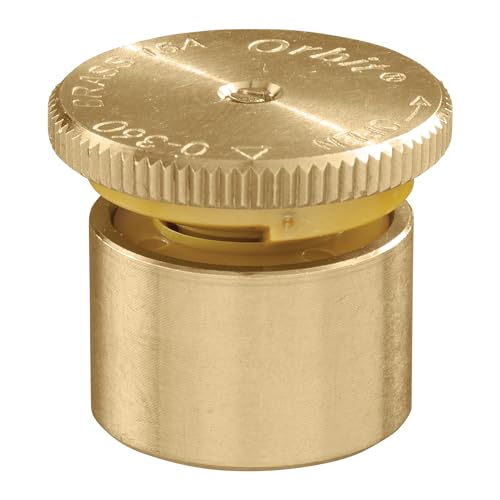
UNIVERSAL COMPATIBILITY: Designed to fit all major brands of pop-up spray heads, making it easy to replace existing nozzles and maintain your irrigation system. Delivers up to a 15-foot spray distance for efficient landscape watering (distance may vary based on PSI and other factors).

ADJUSTABLE ARC & SPRAY DISTANCE: Includes a preinstalled 3.0 GPM nozzle with an arc that adjusts from 40° to 360°, ideal for both full and part circle coverage. Delivers a spray distance of approximately 22 to 52 feet, with optional nozzles (sold separately) allowing further customization.

PRECISION ADJUSTABLE ARC, 0° TO 360°: Set exact spray angles for any landscape layout, from tight corners to full circle zones, with simple top adjustment
Fine‑Tuning Sprinkler Height: Riser & Swing‑Joint Adjustments
When you fine‑tune sprinkler height, start by evaluating the required lift and then select the appropriate riser or swing‑joint configuration; the most common flexible PVC riser—single‑length pipe with dual 90‑degree elbows—lets you adjust elevation without re‑digging, while rigid swing risers suit larger, industrial sites despite their higher freeze‑risk. You’ll appreciate the advantages of flexible versus rigid risers: PVC bends easily, reduces labor, and resists corrosion when coated, whereas steel or brass rigid risers offer superior strength for high‑pressure lines but demand rust‑inhibiting finishes. Measure from concrete to determine baseline height, then couple half‑inch or three‑quarter‑inch sections as needed. Hand‑tighten connections, verify vertical alignment, and use a screwdriver slot for manual lifts. Choose corrosion‑resistant materials to extend service life and support sustainable irrigation. Hand‑tighten the new coupler without tools. Burying sprinkler lines at a depth of 6 to 12 inches helps maintain consistent water pressure and protects against frost damage. Proper vertical mounting is possible for many valve types, especially those designed with upward flow capabilities. Proper valve placement within the recommended 12–18 inches above ground ensures even water distribution and compliance with local irrigation codes.

Material: The sprinkler head pipe riser is made of robust, UV-resistant PVC, this sprinkler riser withstands extreme temperatures, resists cracking and deformation, and ensures a tight, secure fit for long-term reliable performance.

Riser pipes in rigid PVC allow you to connect from a sprinkler line

[RAISE SPRINKLER HEADS ABOVE GRASS & PLANTS] These sprinkler extension risers help lift sprinkler heads above grass, mulch, soil, shrubs, and tall plants to improve spray coverage and reduce blocked water flow in lawns, flower beds, garden beds, and landscape irrigation areas
Common Sprinkler Height Mistakes (Too High vs. Too Low)
Precision matters when setting sprinkler head height, because a few inches too high or too low can cripple coverage and waste water. If you mount heads too high, tall grass or thatch blocks the spray, causing misting, evaporation, and uneven moisture retention. Overspray may hit sidewalks or buildings, and wind‑driven droplets increase fungal risk. Conversely, low placement buries the nozzle, truncating throw distance and clogging the nozzle faster, which leads to dry spots and reduced radius. Sunken heads also misalign patterns, hitting unintended areas and wasting water. To avoid these pitfalls, match head clearance to lawn height, respect manufacturer throw distances, and choose a nozzle that complements the selected elevation. Proper height preserves soil moisture and maximizes system efficiency. Measuring depth of a sunken head ensures it is raised the correct number of inches. A non‑invasive method can be used to replace a sprinkler head without digging. Turning off the water before adjustment prevents accidental flooding.

ULTIMATE FLEXIBILITY FOR ANY GARDEN SHAPE – Place sprinklers exactly where you need them- Perfect for lawns, flower beds, raised gardens, and more.

Effortless Setup: Quickly raise your sprinkler heads with the KAP-IT riser. Simply attach it to the top—no digging, tools, or underground fittings needed—saving time and eliminating the hassle of traditional adjustments.

What You’ll Receive: You will get 10 high-quality 12-van adjustable arc nozzles. This generous pack provides plenty of replacements for your lawn or garden needs
Choosing Sprinkler Heads That Fit Your Height & PSI
Since your lawn’s height and system pressure dictate performance, picking the right sprinkler head means matching its exposed clearance to the grass and its PSI rating to the water supply. Choose pop‑up spray heads (2‑4”) for small‑to‑medium lawns where 20‑30 PSI delivers 15‑ft coverage; keep the exposed height under ¼‑inch to meet soil moisture requirements without waste. For medium‑large lawns, opt for rotary heads (4‑6”) that thrive above 30 PSI, spacing them less than the PSI value (e.g., 35 ft spacing needs ≥36 PSI) for overlapping arcs that honor water conservation strategies. Adjust riser length so heads sit ½‑¾ inch above sod, using taller bodies for grass growth clearance. This calibrated selection maximizes efficiency, minimizes runoff, and sustains healthy moisture levels. Proper soil type assessment helps fine‑tune head placement for optimal water distribution. Selecting the appropriate sprinkler system based on garden size ensures uniform coverage and reduces water waste. Effective zone design balances plant water, sun exposure, and soil conditions to further improve irrigation efficiency.

HEAVY DUTY, LONG LASTING SPRINKLER BODY: Built with an extra-thick body and cap for maximum durability, this pop-up sprinkler resists cracking and leaks, delivering dependable performance season after season for your lawn or garden.

Approved for sale/meets pressure regulation legislation requirements in: CA, CO, HI, VT, MA, ME, NY, OR, RI, WA, and Washington DC

For watering areas with up to 15 feet of spacing between sprinkler heads; Professional-grade pop-up spray body in 2, 3, and 4-inch riser stem heights
Sprinkler Height Maintenance Checklist
A well‑kept sprinkler system starts with a quick visual check: make sure each head pops up above the turf, is level, and isn’t tilted or sunken. Then verify alignment to right angles, using a bubble level, and confirm that heads clear the canopy without obstructing sidewalks. Inspect for soil compaction issues that may bury heads, and raise them with fittings if needed. Trim overgrown grass, weeds, and debris, and clear internal screens of sand or rocks to preserve drainage system integrity. Perform monthly coverage tests, adjust pressure to manufacturer specs, and replace worn nozzles. In spring and fall, deep‑clean filters, re‑level heads, and document any height changes caused by settling soil or grass growth to maintain efficient, sustainable irrigation. Consider the climate zone when planning sprinkler placement to ensure optimal water distribution. Understanding the sprinkler head material helps prevent accidental breakage during maintenance. Regularly check for kinks and blockages in the hose line to avoid pressure loss.