You can expect a 5,500‑gallon pool to take about five days using a standard garden hose, assuming a 5‑GPM flow and an 18‑20‑foot siphon height. Real‑world friction, hose length, and occasional kinks usually stretch the theoretical 18‑hour estimate to several days. A wider, shorter hose can boost flow to roughly 12 GPM, shaving off a day. Keep the hose straight, purge air, and maintain the intake below the water surface for a stable siphon. Continue for and you’ll uncover tips to speed the process further.
How Long Does a Garden Hose Drain a 5,500‑Gallon Pool?
A garden hose will drain a 5,500‑gallon pool in roughly five days when you rely on a simple siphon. You start by measuring the hose’s flow rate—fill a 5‑gallon bucket, then apply 300 ÷ seconds to get GPM. A typical 5‑GPM hose yields about 1100 minutes (18.3 hours) in theory, but friction and dropping water level extend the process to five days. Adjusting drain flow is essential; a wider, shorter hose can push 12 GPM, shaving a day off the schedule. Maintain continuous siphon by priming the line, keeping the outlet lower than the pool, and monitoring for air entry. As the pool empties, the siphon slows, so expect the final two inches to linger, requiring a shop vac or pump finish. The lower end of the hose must remain below the pool water level to sustain the siphon. Understanding the impact of hose diameter on flow rate can help you select a more efficient hose. Proper water pressure ensures the siphon initiates quickly and maintains a steady flow. Choosing a hose with a standard garden hose diameter that matches your irrigation needs can improve overall efficiency.
How Much Height Do You Need for a Successful Siphon?
When you finish measuring flow rate for a 5,500‑gallon pool, the next factor that determines how quickly the water will leave is the vertical lift you can maintain. In practice, aim for a siphon height of 18‑20 feet; this stays within the practical maximum lift at sea level and leaves margin for friction losses. If your site is above sea level, subtract roughly 1 foot of lift for every 1,000 feet of elevation to respect siphon height limitations. Choose a pipe diameter that matches siphon size recommendations—typically 2‑4 inches for a garden hose—to keep friction low. Keep the intake at least 2 feet below the water surface and add a baffle to prevent vortices, ensuring a stable, air‑free column. The flow rate can be estimated using the formula Q = A × v, where A is the cross‑sectional area of the hose and v is the water velocity, which is influenced by hose diameter and water pressure. Longer hoses increase friction loss, so selecting a hose length appropriate for the pressure rating helps maintain optimal performance.
Step‑by‑Step: Fill and Position the Hose for Maximum Flow
Start by straightening the hose completely, removing every kink and twist that could restrict flow, then inspect it for any blockages before submerging the intake end fully in the pool. Fill the hose slowly to purge air, keeping the intake below water level until the tube is fully primed. Next, address hose length considerations: choose the shortest length that reaches the drainage point, ideally under 100 feet, to minimize friction loss and maintain pressure. Position the outlet at the lowest point below the pool surface, securing it to prevent bends. Elevate the faucet end just enough to start the siphon, then lower it to sustain flow. Guarantee proper outlet positioning by attaching a high‑pressure nozzle, keeping the line straight, and avoiding any additional kinks. The flow rate is governed by Bernoulli’s principle which relates pressure and velocity in the moving water. Longer hoses increase friction loss which can noticeably reduce the water pressure available for draining. Understanding psi and gpm helps you gauge how much water the hose can actually move.
Garden‑Hose Flow‑Rate Calculator: Gallons‑Per‑Minute → Total Time
If you know the hose’s gallons‑per‑minute (GPM) rating and the pool’s total volume, you can calculate drainage time in minutes by dividing volume by flow rate; adjust for hose angle adjustment and flow reduction mitigation to keep the estimate accurate. Measure the actual GPM with a bucket‑and‑stopwatch test, then apply the formula Time = Volume ÷ GPM. Remember that longer runs increase friction loss, so a 100‑ft hose may deliver only 75 % of its rated flow. Counteract this by reducing kinks, using a straight run, and raising the hose slightly to lessen suction losses. If the measured flow drops to 12 GPM for a 15,000‑gallon pool, the drainage time becomes 1,250 minutes (≈20.8 hours). Use this calculator for quick planning and to compare hose configurations. Pressure rating is a critical factor when pairing a garden hose with a pressure washer, as using a hose rated for lower pressure can cause bursts or leaks. A typical garden hose uses 5‑10 gpm during normal watering, which highlights how flow rates can vary widely. Running a garden hose for an hour typically consumes water‑cost based on local utility rates.
Why Above‑Ground Pools Drain Faster Than In‑Ground Pools
Typically, above‑ground pools drain faster because they hold far less water than in‑ground pools. Their smaller diameter and shallower depth cut total volume, so gravity and any pump move water out at a higher rate per gallon. You also benefit from surface skimmers that feed directly to the drain, avoiding the deep‑bottom suction required in in‑ground installations. However, Drainage oversight considerations demand you monitor wall sag as water leaves; the liner relies on water pressure for shape, so you’ll stop before full collapse. Choosing the Ideal pump selection means matching flow to the reduced volume—often a small, high‑head pump suffices. This combination of lower volume, shallower depth, and appropriate pump choice yields markedly shorter drainage cycles. Adding a main drain can further improve circulation and reduce the need for frequent vacuuming. The garden hose can also serve as a temporary suction source, creating gravity‑assisted flow when connected to the skimmer line. Properly securing the hose with a quick‑connect fitting helps prevent leaks and maintains consistent water pressure.
Quick‑Win Tricks to Speed Up a Garden‑Hose Drain
When you prime the hose by filling it from a faucet and submerge one end fully, the siphon kicks in instantly, letting you tap the pool’s full volume without extra effort. Choose the widest garden hose you have and keep it straight; any kink cuts the multiple hose flow rate. Position the outlet end as low as possible below water level and run the faucet at full force until the siphon stabilizes. Prime a second hose the same way, then connect both outlets to a single drainage point for parallel drainage. Keep the water temperature control in mind—cooler ambient temps (<85 °F) maintain a steadier flow and prevent vapor lock. Monitor the hoses, readjust any sagging sections, and you’ll halve the drainage time. Longer hose runs benefit from larger diameter hoses to reduce friction loss. Use a quick‑connect fitting to make swapping hoses faster and more secure. Proper pressure management ensures each hose maintains adequate flow without overloading the faucet.
Common Siphon Blockages and Immediate Fixes
A fast‑flow hose can still stall if anything interrupts the siphon, and the most common culprits are debris buildup, trapped air, and skimmer‑line clogs. First, clear leaves, dirt, and mulch from deck drains and bottom pool drains; a quick vacuum or brush removes the obstruction. Next, eliminate air pockets by fully submerging the hose and running water until no bubbles escape. If the skimmer line clogs, detach the hose, flush the line with a high‑pressure stream, and reinstall a leaf canister to prevent recurrence. Perform regular filter maintenance to catch debris before it reaches the siphon, and use a mild chemical dosing solution only when organic residue persists, ensuring it’s compatible with your plumbing. These steps restore flow within minutes. Also, turn off the pump before attempting to clear a skimmer line to avoid damage. Check for corrosion on sprinkler wires that may affect nearby plumbing. Before digging, always call 811 to locate underground utilities and prevent accidental damage.
When a Submersible Pump Beats the Garden Hose
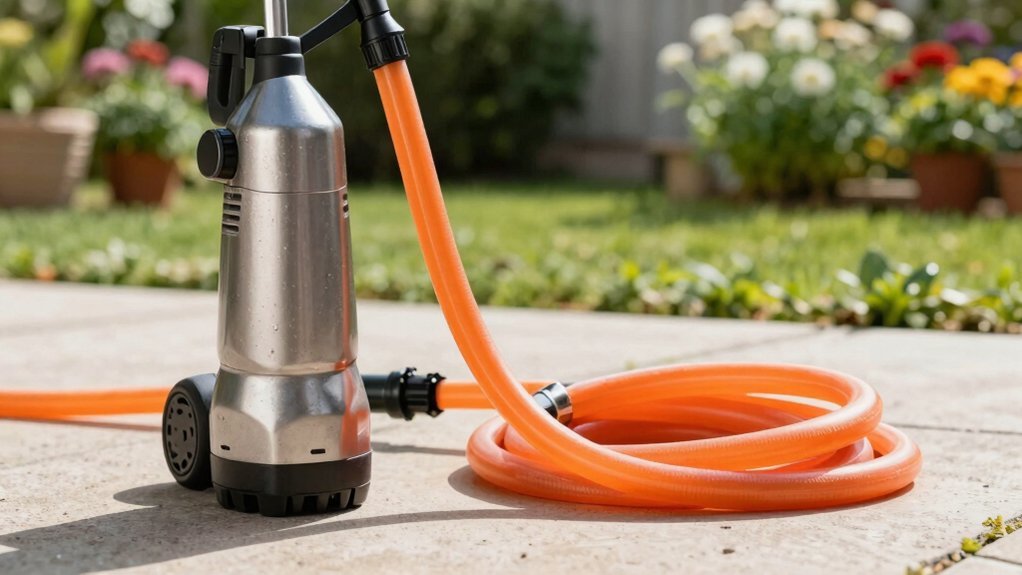
A submersible pump can empty a pool in a fraction of the time a garden hose needs, because it pushes water out with pressure rather than relying on gravity‑driven suction. You’ll see submersible pump advantages instantly: higher flow rates, quieter operation, and compact placement at the deepest point. A TDP750‑type unit moves thousands of gallons per hour, draining a full in‑ground pool in hours instead of days. When choosing the right submersible model, match horsepower to pool volume and lift distance; utility‑class pumps excel for large volumes, while smaller units handle cover water. Secure an outdoor‑rated power source, position the pump on a level base in at least two inches of water, and attach a discharge hose. Float switches reduce supervision, and inlet screens keep debris from clogging. This setup maximizes efficiency and minimizes manual effort. Proper pump selection also depends on head loss calculations to ensure the system can maintain the required pressure. Understanding pressure regulation is essential for preventing damage to the pump and maintaining consistent flow.
Weather Tips That Help or Hinder Your Drain
Submersible pumps give you speed, but weather still dictates when you can safely drain. Heavy rain or hurricanes raise the water table, so you should avoid draining during or within 48 hours of a storm; otherwise the empty pool may float or pop out. In winter, freezing temperatures expand water in pipes and pumps, so lower the level before cold snaps and use a solar blanket to cut evaporation. Variable‑speed pumps reduce environmental impact during cold‑weather prep, and they keep emergency backup systems from over‑working. When you do drain, keep flow under 30 gpm to prevent erosion, and route water to vegetated areas or a sanitary sewer per local rules. Balance chemistry, add algaecide, and vent enclosures to minimize wind‑driven debris damage.
Safety Checklist While the Hose Is Working
When you hook the garden hose to a submersible pump, start by confirming that the pump’s power cord reaches the pool bottom without tension and that the hose is securely fastened to the cleanout pipe. Verify drain safety precautions by inspecting each drain cover for cracks, loose screws, and proper ASME/ANSI or VGB compliance; tighten or replace any deficient parts before water flows. Apply hazard mitigation strategies: keep hair tied, wear non‑slip shoes, and clear the work area of tools that could fall into the water. Monitor the flow rate, ensuring it stays below 30 gpm to prevent erosion and backup in household drains. Check pressure gauges regularly, and shut off the pump immediately if water level drops too low to avoid air‑lock damage.