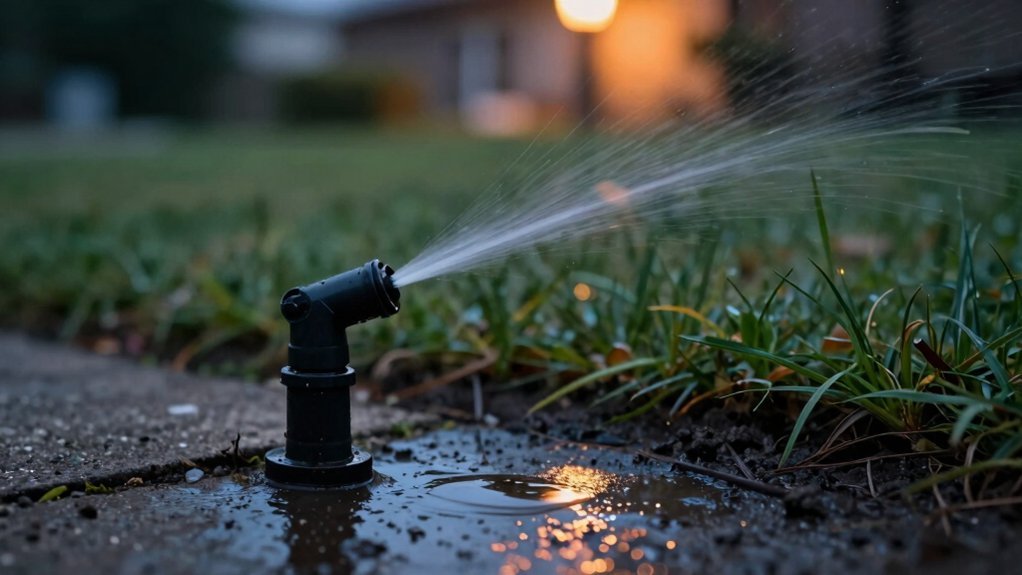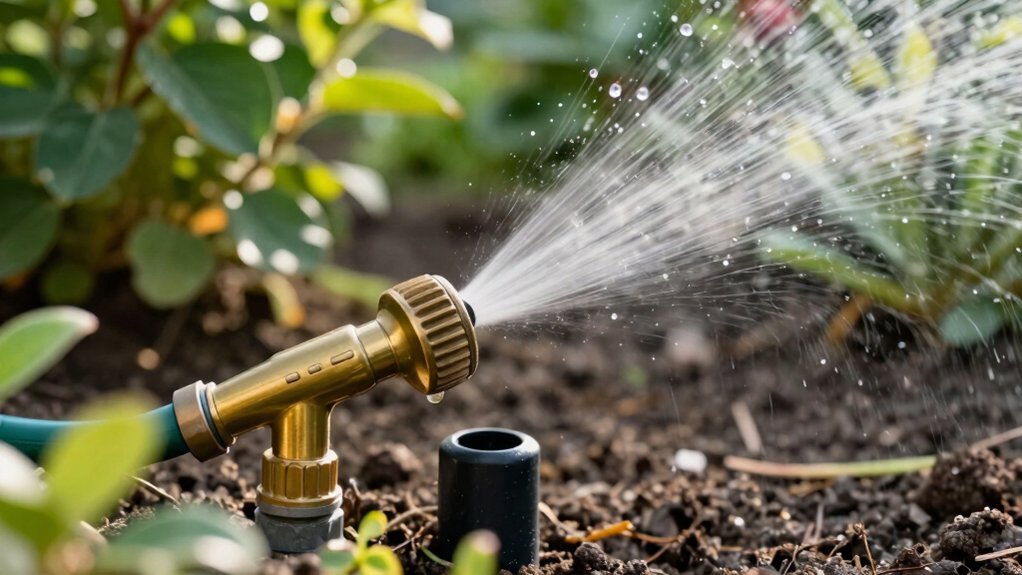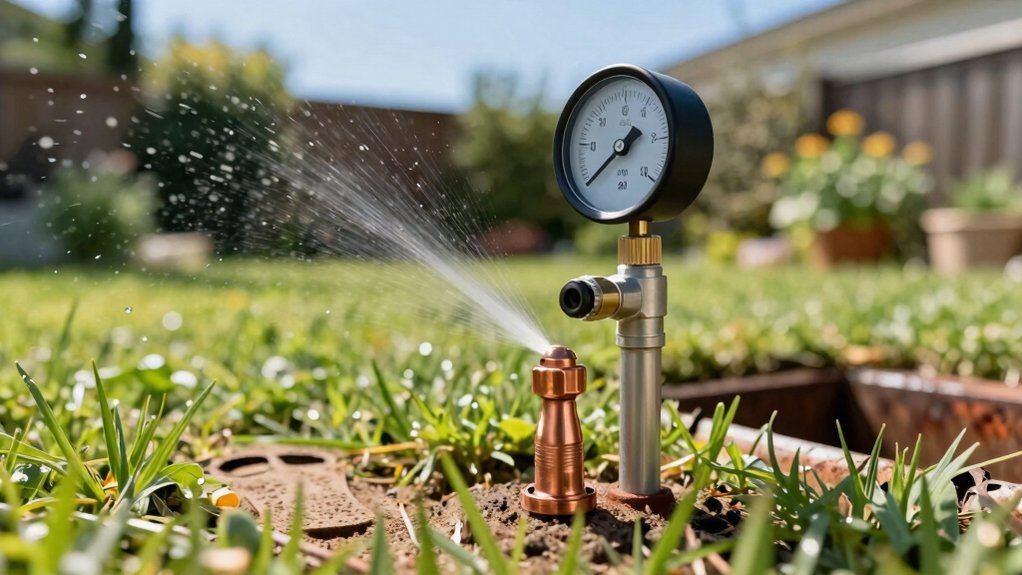
You’ll find that a sprinkler hose delivers water straight to the root zone, cutting evaporation and runoff. Because the perforated pipe releases water directly into the soil, you get uniform moisture without the spray‑head mess. Proper pressure regulation and regular flushing keep emitters clear, so the system stays efficient. With flat‑design hoses you can slash water use up to 70 % compared to traditional sprinklers. Keep reading to uncover the best installation tips and sizing options.
What Is a Sprinkler Hose and How Does It Differ From Traditional Sprinklers?
A sprinkler hose is a flexible pipe studded with tiny perforations along its entire length, letting water seep directly into the soil instead of spraying into the air. You’ll notice it’s usually black, with a texture that feels different from a standard garden hose, and you install it semi‑permanently in flower beds or vegetable rows. Because water is absorbed at ground level, you gain water conservation benefits: less evaporation, no runoff, and deeper root development. The hose delivers versatile watering patterns, allowing you to cover straight rows or irregular beds without moving a spray head. Unlike a traditional sprinkler that shoots water into the air, this system keeps moisture where plants need it, minimizing waste and maintenance. Proper pressure regulation ensures the drip emitters function optimally and prevents clogging. When using an expandable hose, be careful to avoid kink formation by gently laying it out and using hose guides. Maintaining a pressure of 50–60 psi helps the system operate within its optimal range.
How a Flat‑Design Hose Cuts Your Water Use by Up to 70%?
Since the sprinkler hose already delivers water straight to the root zone, the flat‑design version pushes efficiency even farther. Its ribbon‑like shape and tiny perforations let you target the soil directly, cutting evaporation and runoff. You’ll see a water savings potential of up to 70 % because the hose operates at low pressure, releasing a gentle, steady flow that mimics drip irrigation. The six holes per foot create uniform moisture distribution, preventing both over‑ and under‑watering. You can flip the hose to spray or soak, and the three‑tube models cover wide areas without kinks. By rolling it flat for storage, you preserve its lifespan and keep your garden healthier with less water and less hassle. The durable, UV‑resistant construction ensures long‑term performance even under harsh sun exposure. Proper calibration and regular maintenance are essential to achieve the full benefits of a modern sprinkler system, as highlighted in the sprinkler efficiency research. Modern systems often incorporate soil moisture sensors to further reduce waste. Automated watering also optimizes plant health by maintaining consistent soil moisture levels.
Top 5 Installation Errors That Lower Sprinkler‑Hose Performance
If you ignore the basics when setting up a sprinkler‑hose system, performance drops fast. First, improper head spacing creates dry stripes and wasted water; follow manufacturer throwing distance and keep heads head‑to‑head. Second, mixing head types in a zone ruins consistent precipitation rates—use the same IPH across all heads. Third, wrong head height either misses tall grass or over‑waters near the base; match head size to foliage height. Fourth, neglecting pressure regulation pushes water beyond 70 psi, causing misting and blowouts; install a regulator and test flow before you run the line. Fifth, poor wiring or pipe connections let moisture in, lower pressure, and cause intermittent zones; seal splices, use flex pipe, and size tubing correctly. Fix these errors and your system will run efficiently. Proper sprinkler spacing ensures uniform coverage and minimizes water waste. Accurate spray radius calculations help you set the optimal distance between heads for consistent irrigation. Balancing flow rate across the zone prevents low‑pressure spots and maximizes water use efficiency.
Step‑by‑Step Guide to Prevent Clogging and Extend Hose Life
Usually, you’ll keep a sprinkler‑hose system running smoothly by tackling clogs before they start. Begin with effective filter cleaning: install in‑line units, choose screen or disc filters sized for your water quality, and replace them after each season. Follow clogging prevention strategies by flushing lines at season start, end, and after every five uses—run full‑volume water until it runs clear. Add a sand separator or settling basin if your source carries silt or sand. Apply a 0.001 % chlorine solution daily for twenty minutes, then rinse with acidic water when chemical precipitates appear. Inspect emitters regularly, swap out clogged ones, and winterize by draining and insulating. This routine maximizes hose life and maintains consistent flow. Check water spray patterns to spot early signs of blockage. Using a pressure regulator can further protect hoses from high‑pressure bursts. Choose a hose that matches the pressure rating of your pressure washer to prevent failures.
Best Garden Shapes and Sizes for Sprinkler‑Hose Use
Keeping your hoses clog‑free sets the stage for picking the right garden shape and hose size. For tight, raised beds, a 1/4″ soaker hose snaked in a rectangular layout gives you flexibility and minimal waste; keep runs under 15 ft to preserve water pressure considerations. Medium beds benefit from 1/2″ hoses laid in straight, linear rows—50‑100 ft segments cover 500‑2,000 sq ft evenly, and the 25 psi rating maintains consistent flow. Large plots call for 5/8″ hoses in longer runs up to 250 ft, but limit total length to 500 ft from the source to avoid pressure drop. If your garden has odd angles, connect multiple 25‑50 ft sections with barbed fittings; the 1/2″ diameter offers the ideal hose layouts without excess weight, keeping water pressure considerations in check. Longer hose runs can cause significant pressure loss, so consider using a pressure regulator to maintain flow. Selecting the appropriate hose length ensures you achieve the desired reach without excessive friction loss. Understanding friction loss helps you design efficient irrigation systems.
Choosing Between Sprinkler Hoses, Drip, and Soaker Systems
Choosing between sprinkler hoses, drip lines, and soaker hoses hinges on three key factors: water efficiency, precision delivery, and site versatility. If you prioritize water efficiency, the Advantages of drip systems are clear—drip uses only a quarter to half the water of sprinklers, cutting runoff and evaporation by up to 80 %. Drip also lets you set varying watering cycles for each zone, delivering water directly to root zones while soaker hoses seep uniformly and waste more. For precision, drip emitters target individual plants or containers, whereas soakers lack emitters and can encourage weed growth. Versatility favors drip on raised beds, slopes, and large areas, while soakers suit level ground and a few beds. Consider durability, maintenance, and cost before deciding. Properly sized no water the evenly distribution sprinkler heads across the lawn. Effective zone design also benefits from soil moisture sensors to fine‑tune irrigation schedules. A step‑by‑step guide can help you set optimal pressure levels for each system.
When to Pick a Sprinkler Hose Over Other Irrigation Options?
A handful of situations make a sprinkler hose the smartest choice over drip or soaker systems. You’ll favor it on flat lawns or large, uniform beds where you need quick, broad coverage without the hassle of buried lines. Its adjustable flow and patterns tackle water distribution challenges on level ground, while the low cost and simple setup let you reposition the hose each season before plants establish. Avoid it for effective sloping applications—gravity creates uneven runoff, and pressure‑compensating emitters in drip or soaker kits handle slopes far better. When budget, speed, and ease of installation outweigh the need for precise, slope‑adapted watering, a sprinkler hose shines as the pragmatic, efficient solution. Consider the soil moisture retention when deciding which irrigation method best suits your garden.