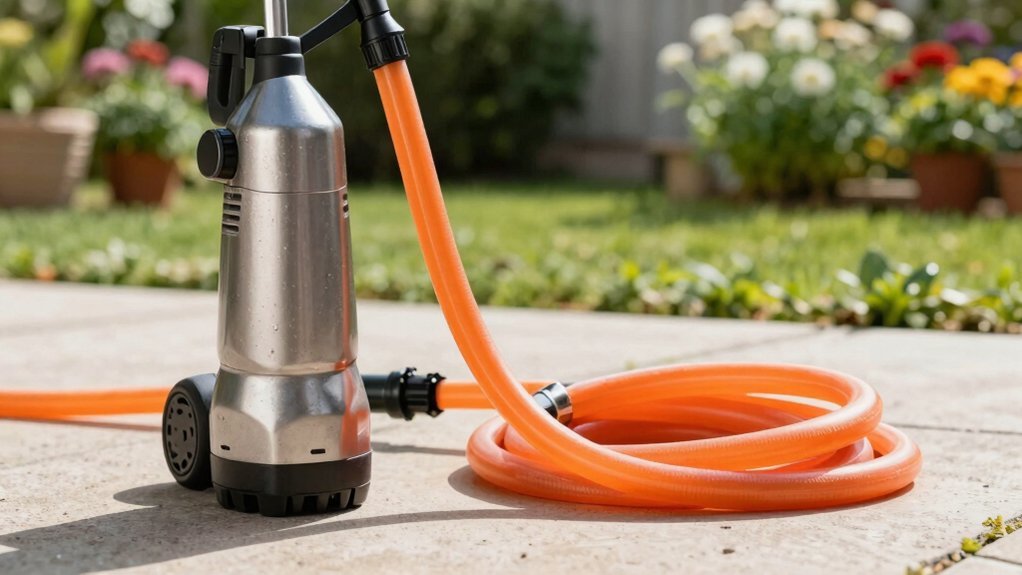
You can try flooding a mole’s tunnel with a garden hose, but it’s rarely effective. Moles detect CO₂, not O₂, and their rapid escape reflexes let them avoid submersion; a moderate‑pressure stream for 10‑15 minutes usually just displaces the animal. Soil permeability and tunnel design often drain the water before it can drown the mole, and excessive flow risks collapsing tunnels and damaging property. If you keep going, you’ll uncover why trapping generally outperforms flooding.
Quick‑Start Guide: Flood a Mole’s Tunnel With a Garden Hose
How do you quickly flood a mole’s tunnel with a garden hose? First, locate fresh mole hills and identify active tunnel openings. Use a small tool to pry the hill aside, exposing the entrance. Insert a standard garden hose, set to moderate pressure, and run water for 10–15 minutes per site, avoiding full blast to limit lawn saturation. Monitor the area continuously; if a mole emerges, capture it manually. Repeat at multiple points to increase coverage, then flatten resulting holes and level displaced soil. This method minimizes the ecological impact of flooding by restricting water volume and duration, addressing humane treatment concerns through controlled exposure rather than indiscriminate drowning. Follow with preventive measures, such as underground fencing, to reduce future infestations. New mole tunnels observed can indicate a need to target multiple entry points. Before you start, remember to call 811 to verify that no underground utilities are present in the work area. Using a metal detector can help confirm the exact location of underground pipes before you begin.

PLEASE READ: This is a soaker/weeper hose which means it will leak water along the entire length of the hose for drip irrigation. This is NOT a regular hose to use with sprinklers or to carry water.

Our Hassle-Free Guarantee:We offer a 90-day refund or 1-year replacement for verified quality issues. Simply contact WATOO-US Support with clear photos showing the defect and order/product details. Approved claims are processed within 24 hours.
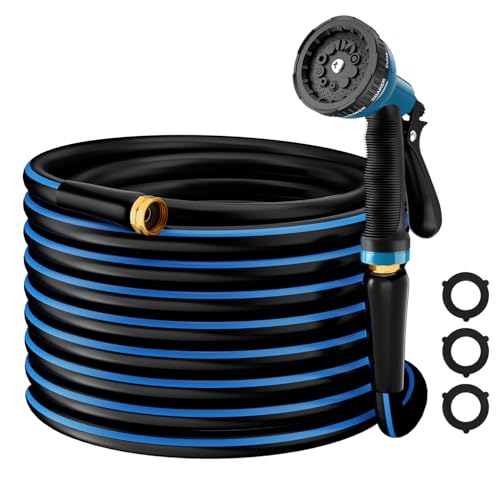
【Effortless Handling】Enjoy an enhanced watering experience with Besiter's PVC garden hose. The vibrant color adds flair to your outdoor space while signifying a lightweight design for easy handling. Despite its feather-light feel, this hose is engineered for lasting durability as a reliable companion for your watering needs.
The Science Behind Drowning Moles With a Garden Hose
When you flood a mole tunnel with a garden hose, the water pressure and duration must be calibrated to the animal’s rapid escape mechanics and the soil’s hydraulic properties. You must consider soil composition; moist, sandy loam yields higher permeability than dry clay, allowing water to advance quickly without creating a stabilizing mud plug. Tunnel design is critical—primary passages are shallow (3‑12 in.) and often intersect secondary escape routes that moles block within 2‑3 seconds. To overwhelm these defenses, you need a sustained flow that exceeds the tunneling rate, typically 10‑15 minutes at a pressure sufficient to fill the void faster than the mole can retreat. Empirical data show that even with ideal pressure, moles can swim half a mile and survive up to an hour, so flooding alone rarely achieves lethal saturation. Mole hills often indicate an active tunneling network beneath the surface. Understanding the typical garden hose nozzle pressure range of 30‑80 psi helps you select a nozzle that can deliver enough flow to quickly fill tunnels. Proper garden hose performance can be achieved by ensuring household water pressure stays within the optimal 40‑80 psi window. The effectiveness of a hose‑connected system depends on flow rate and hose diameter, which limit the maximum achievable pressure.
How Mole Physiology Affects Drowning Success
Mole physiology sharply limits drowning success because these animals rely on carbon‑dioxide cues rather than direct oxygen sensing, making them prone to hypoxia once their air supply is cut off. You should note that their oxygen sensing strategies resemble generic mammals: they detect rising CO₂ as a proxy for low O₂, lacking a direct O₂ sensor like seals possess. Consequently, when submersion cuts off atmospheric air, the CO₂‑driven drive to breathe triggers laryngospasm, leading to rapid hypoxemia. Their submersion survival mechanisms include a modest bradyarrhythmic dive response and spleen contraction, which modestly extend breath‑holding time but do not prevent cerebral pO₂ collapse within 5–7 minutes. Freshwater hypotonicity and saltwater hypertonicity further aggravate electrolyte imbalance, accelerating loss of consciousness. Submersion time greater than 25 minutes dramatically reduces survival odds. The consistency of the frosting can be controlled with a round tip to achieve a smooth, even flow for classic swirls. It is also advisable to verify that the water source is potable water before any consumption. Regularly inspect the sprinkler system for chemical residues to ensure it remains safe for pets.
Safe Flooding Steps (If You Still Want To)
Because mole physiology makes them vulnerable to rapid hypoxia once air is cut off, flooding their burrows can be an effective control method when done correctly. First, locate fresh molehills and map the complete tunnel network. Block every entrance except one to keep water inside. Insert a garden hose or pour five‑gallon buckets into the open entrance, using moderate pressure to avoid soil collapse. Maintain flow for at least 15 minutes, ensuring tunnels fill without oversaturation that impedes drainage. Perform the operation in spring, targeting recent, confined activity. Position side‑lying buckets at ground level to capture emerging moles, and keep a continuous stream to guide them. Evaluate environmental impact and property damage considerations before proceeding, as excessive water can erode soil and affect nearby plantings. A common cause of leaks in irrigation systems is faulty valves that fail to close properly. Regular maintenance can prevent pressure spikes that exacerbate valve wear. Properly sized pressure regulators help maintain consistent flow and avoid clogged nozzles that reduce efficiency.
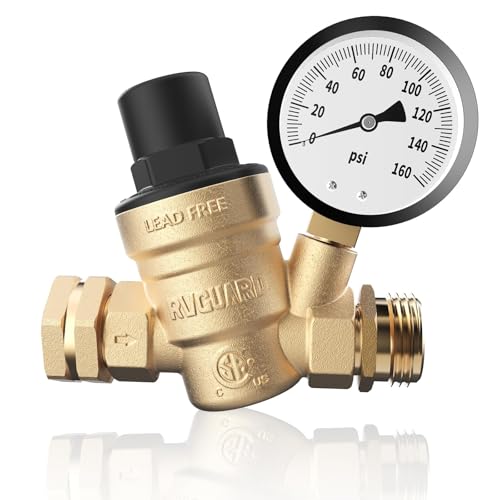
Function: Prevent water pipes from being damaged due to high pressure, suitable for campers, trailers, and RV plumbing systems.

Protects RV/Marine Plumbing: Keep your RV/marine plumbing safe with this brass Camco water pressure regulator. Safeguard against high-pressure city water to protect your hoses & plumbing from potential damage.

Maintains optimum 25 psi pressure and water flow to Drip lines and emitter devices
What Actually Happens When You Flood a Mole Tunnel – Successes & Failures
If you flood a mole tunnel, water will quickly displace the animal, forcing it to surface or retreat to deeper, drier chambers; the outcome hinges on tunnel depth, soil composition, and the duration of the flow. You’ll notice that adult moles usually escape through higher chambers because they can swim and dig toward dry ground, while juveniles in deeper burrows may drown if flow persists. Successful flushing requires enough volume to fill the tunnel without immediate overflow, allowing the mole to be guided into a bucket or trap. However, excess water creates soil saturation issues, killing beneficial earthworms and harming insects, and can collapse tunnel walls, damaging plant roots. Ineffective attempts leave the mole unharmed, restore activity after water recedes. Moles are surprisingly good swimmers and can navigate flooded tunnels to reach dry areas. Proper irrigation planning, as described in the Stardew Valley Sprinklers guide, can help prevent waterlogging when managing mole control. Efficient sprinkler placement can significantly reduce the risk of overwatering and unintended mole displacement. Understanding soil moisture dynamics is essential for balancing mole control with garden health.
Why Trapping Beats Flooding, According to Experts
When water floods a tunnel, the mole often swims to a higher chamber and resurfaces, leaving the problem unresolved; experts consequently recommend trapping as the superior control method. You’ll find that trapping physically removes the animal, eliminating future damage, whereas flooding merely delays it—moles escape within seconds and may re‑enter the system. Clinical data show that humane trapping methods offer quicker dispatch than poisons, reducing suffering and avoiding non‑target species. Targeted pest control focuses on straight runways and deep, reused tunnels, allowing you to place 3–5 traps per acre for maximum efficacy. Spring and fall activity peaks increase capture rates, and moist soil after rain reveals active passages, ensuring precise trap placement and permanent resolution. Selecting corrosion‑resistant equipment helps maintain trap durability in salty coastal conditions.

Key Features: GopherHawk Single Trap only, does not include the Wedge & Probe tool Gopher and mole trap A quick and humane kill Stainless steel straps Professional grade Designed, engineered and assembled in the USA No digging, no baiting, no poison Easy disposal of pest Above ground catch indicator No digging or touching the soil or the pest GopherHawk dimensions are 20” X 1 ½”

PROFESSIONAL MOLE CONTROL: Trusted by experts, this trap is designed for effective mole and gopher removal. Works as a reliable gopher box trap for lawns and gardens.

High Quality Materials:SZHLUX Live Animal Cage Trap use low carbon steel wire and medium frequency welding. In this way, the product surface is flat, the welding is firm, and it is not easy to solder off.Weather and rust resistant.
Final Verdict on Drowning Moles With a Garden Hose?
Some gardeners try to drown moles by blasting water through their tunnels, hoping the flood forces the animal to surface for capture. You’ll find that flooding can force a mole out of a hole, but it rarely leads to removal; the animal often retreats deeper or blocks the opening within seconds. Evidence shows moles swim well and tunnel faster than water fills their passages, so drowning is ineffective. The method creates muddy, lawn‑damaging tactics without eliminating the pest, and any emerged mole must be captured instantly or it escapes. Wildlife experts consistently recommend trapping over flooding, noting that persistent mole frustration stems from futile, messy tactics. In practice, the final verdict is that garden‑hose drowning is unreliable and should be replaced by proven trapping or professional services. Mole speed can outpace the water flow, making the flood ineffective. Proper sprinkler spacing can help maintain healthy lawns while minimizing water waste. The pressure differential in a hose determines how quickly water can fill a tunnel, but it is insufficient to overcome a mole’s rapid movement. The continuity principle explains why the same volume flow must pass through the nozzle, increasing velocity as the cross‑sectional area decreases.