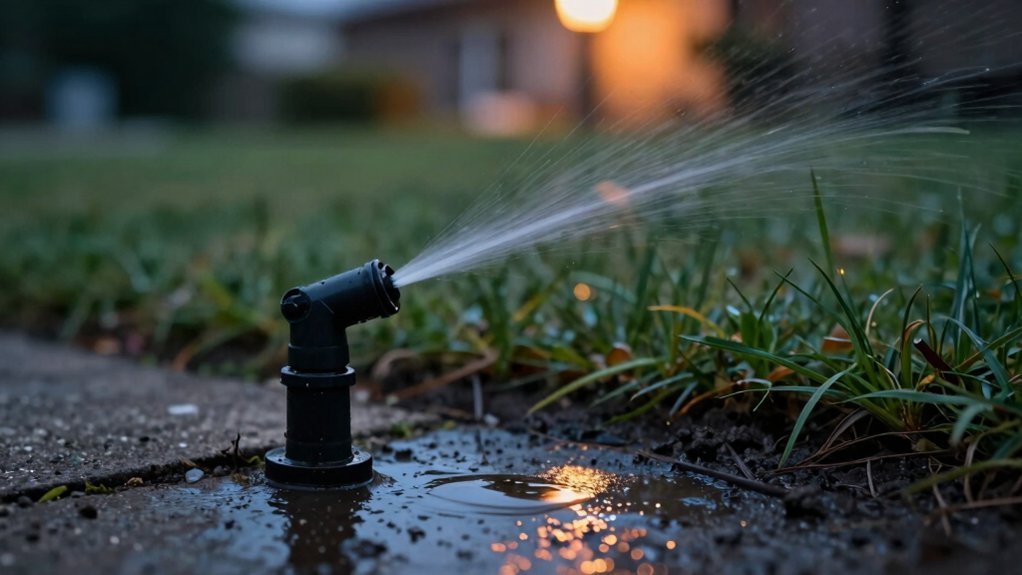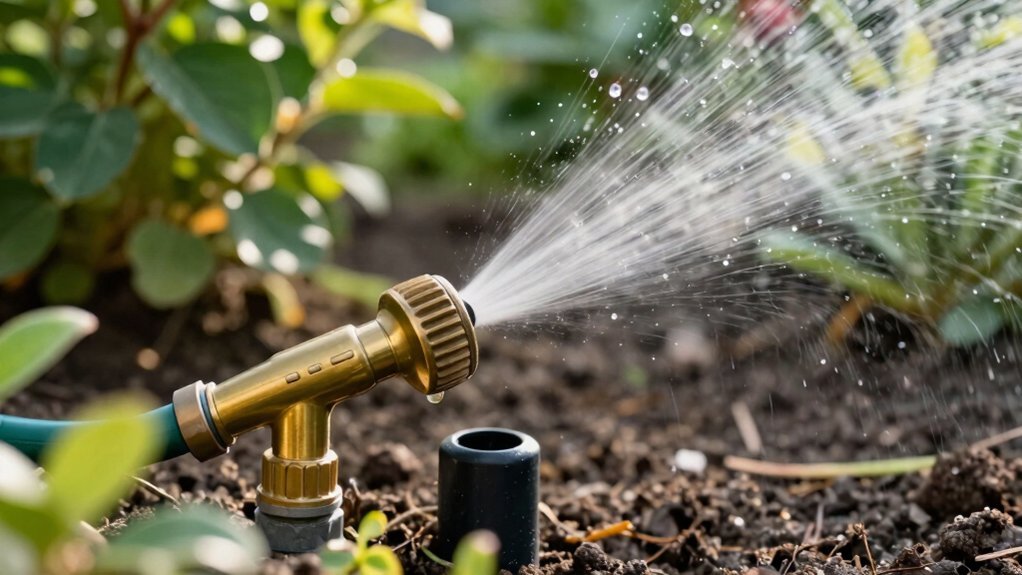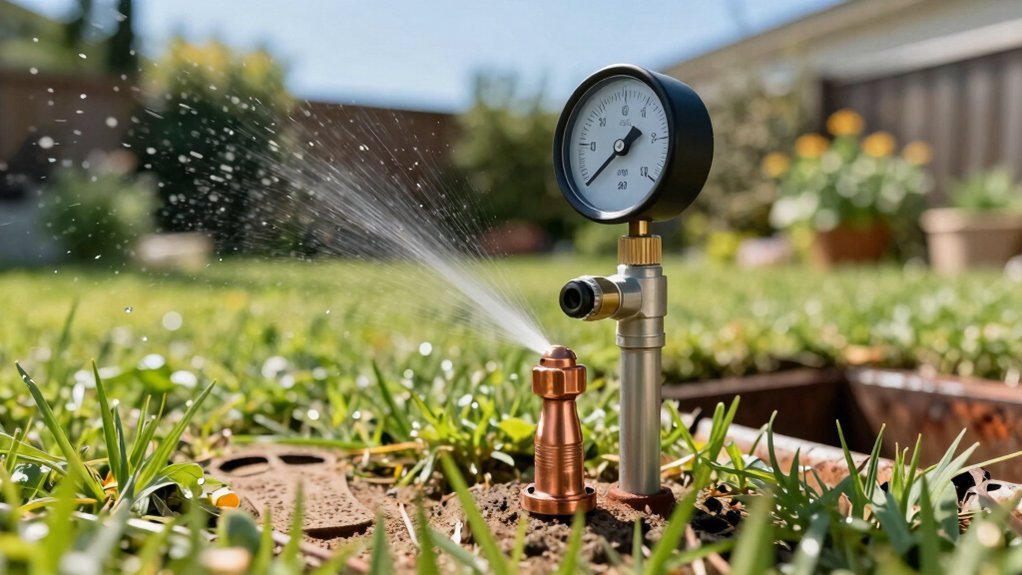
A rain barrel alone can’t give the 10 psi most sprinkler heads need, so you’ll either have to raise the barrel 20 ft or add a small pump to boost pressure. With a 4‑ft lift you only get about 1.6 psi, which is far too low, while a 55‑gallon barrel on flat ground provides roughly 2 psi. A submersible or solar‑powered pump can raise the pressure to the required level and let you run a garden zone efficiently. Keep a strainer, relief valve, and vented PVC in place, and you’ll avoid airlocks and backflow issues. If you follow the next steps, you’ll uncover how to size the pump, blend with municipal water, and keep the flow steady.
Understand Rain‑Barrel Pressure Limits
When you place a rain barrel above your garden, the water’s height creates the only pressure you’ll have, and each foot of elevation adds roughly 0.4 psi (or 0.435 psi per foot of water column). To meet garden watering systems’ 10 psi minimum, you need about 23 feet of head, far above typical rain barrel elevation requirements of 2–10 feet. Even a 4‑foot lift yields only 1.6 psi, insufficient for most sprinklers but enough for low‑flow drip. Rain barrel placement considerations consequently focus on securing the barrel on cinder blocks or a platform, minimizing water‑level loss, and matching the elevation to the irrigation method. Flat ground gives only 2 psi from a full 55‑gallon barrel, so slope or raised platforms become essential for any gravity‑fed system. A 1/3 HP sump pump can provide the necessary pressure without relying on height difference. Properly sealing the hose connection to prevent backflow helps maintain water quality. Backflow preventers are required by many local codes to protect the potable water supply from contamination.
Which Pump Will Actually Make Your Rain‑Barrel Sprinklers Work?
Any pump that can lift water from a rain barrel and maintain at least 10 psi will make a sprinkler system work, and the choice hinges on head, power source, and installation constraints. If you have reliable sunlight, a solar‑powered pump delivers consistent pressure without wiring, making it an energy efficient pump that also handles water pressure calibration automatically. For homes with 110 V outlets, the GP‑400 submersible offers ½ HP, fits directly into 100‑plus‑gallon barrels, and includes a debris‑blocking filter. On‑demand transfer pumps activate only when a timer calls for water, cutting electricity use while providing sufficient flow for oscillating heads. High‑pressure utility pumps give 50 psi for hose‑reel distribution, auto‑stopping at target pressure to avoid waste. Pair any pump with a strainer, relief valve, and PVC vented lines to keep flow steady and protect the system. Teflon tape should be wrapped around all threaded connections to ensure a tight seal. Adding a pressure tank can further stabilize water pressure and reduce pump cycling, extending the pump’s lifespan. The nozzle’s design follows Bernoulli’s principle to convert pressure into kinetic energy, boosting flow speed as it exits the pipe. Understanding the municipal water pressure range helps you select a pump that matches your local supply conditions.

[Automated Plant Sitter] No more worrying about plants withering after you go home for a long holiday! This solar powered self watering system automates daily care to keep your plants hydrated while you are away.

Rain Barrel Watering: Put collected rainwater to use in your garden. Designed for transferring clean water from rain barrels and storage tanks, this submersible pump helps supply water for plant watering and everyday drainage tasks.

Complete Set for Solar Powered Water Pump Solution. Connect to turn it on, no Wireing Required
Size Your Rain‑Barrel and Pump for Typical Sprinkler Demands
Size your rain‑barrel and pump starts with matching water volume to sprinkler demand: a 50‑gallon barrel can sustain a small zone (≈8 GPM) for about 30 minutes, while a 400‑gallon tank is needed for larger zones (≈18 GPM) to cover a 10‑day dry spell. Calculate daily use: a typical lawn needs 40 gal per 10 minutes, so a 50‑gallon barrel empties after two cycles. Elevate the barrel 2–10 ft to gain 0.86–4.3 psi, far below the 10 psi minimum for most sprinklers, highlighting gravity fed irrigation limitations. Choose a 1/3 HP submersible pump, place it inside the barrel, and size it for 8 GPM (small zone) or 18 GPM (large zone). Maintain the barrel—clean filters, inspect seals—to guarantee consistent flow and avoid pressure loss. Determine pump type based on the water source and required flow. Adding a pressure regulator ensures the system stays within safe operating limits and protects sprinkler heads from over‑pressurization. Understanding sprinkler head flow helps you accurately size both barrel and pump. Proper sprinkler coverage ensures uniform water distribution across diverse plant types.

115V/60HZ Water Pump: Powered by a 1/10 HP motor, this TecHome electric water pump can transfer water up to 330 gallons per hour (5.5 gallons per minute) and lift water up to 40 ft. The 3/4" GHT inlet and outlet connectors fit most standard garden hoses. Ideal for rain barrels, waterbeds, water tanks, and general water transfer. NOTE: This is a non-submersible pump. Please keep the motor dry.

【Oil-free Motor with Efficiency】Experience reliable performance with 1/3HP PSC motor, equipped with thermal overload protection to safeguard against overheating, clean and quiet running. Pump moves up to 2000 gallons water per hour at zero feet, 22.5 gallons per minute at a 10-foot discharge lift, it's the ultimate solution for swift water removal in various applications.

Cordless kit for garden watering: An included 18V 4Ah battery and charger provide the matching power setup for water transfer away from a mains outlet; the submersible pump body and separate battery control unit serve different placement roles
When to Blend Rain‑Barrel Water With Municipal Supply
If your rain‑barrel level falls below the threshold set by the float switch, the system automatically flips the three‑way valve to municipal water, ensuring uninterrupted irrigation. You should blend rainwater with municipal supply only after confirming rainwater quality testing shows acceptable pH, chlorine, and pathogen levels; this prevents plant stress and backflow hazards. Schedule blending during seasonal changeover planning, when forecasted precipitation drops below the irrigation demand curve and the float switch signals a deficit. Use data from past months to model water‑use trends, then program the valve actuator to introduce a calibrated municipal mix—typically 10‑20 % of total flow—to maintain pressure while conserving stored rainwater. Document each blend event, verify backflow preventer integrity, and adjust the blend ratio as sensor data updates. The three‑way valve isolates the rain tank system from municipal water, preventing unnecessary pump noise. Installing an anti‑siphon valve ensures that water cannot flow backward into the municipal supply, complying with most local plumbing codes. Properly maintaining the backflow preventer protects the potable water supply from contamination. A well‑designed double check valve can further safeguard against cross‑contamination when the system switches between sources.
Wire and Install a Code‑Compliant Rain‑Barrel Sprinkler System
You’ll start by confirming that the system can remain gravity‑fed, because a code‑compliant rain‑barrel sprinkler must avoid any powered pump or wiring. Map the site, note barrel placement on a level, firm foundation, and plot the overflow destination. Install a debris‑excluder on the downspout, then drill a 1‑¼‑inch spigot hole 1 inch above the barrel bottom, sealing it with silicone and a washer. Connect barrels with 2‑inch PVC adapters, then run a trench to the sprinkler line, adding an anti‑siphon valve for backflow protection. Choose tubing that matches local soil drainage characteristics to prevent pooling. Implement overflow management strategies such as a secondary diverting pipe or a rain‑garden basin to handle excess water safely. Test for leaks and flow before use. Proper backflow prevention safeguards potable water from contamination. Check valves can be installed on the main line to further prevent reverse flow and protect the system. The integration of a sprinkler head ensures uniform water distribution across the landscape.
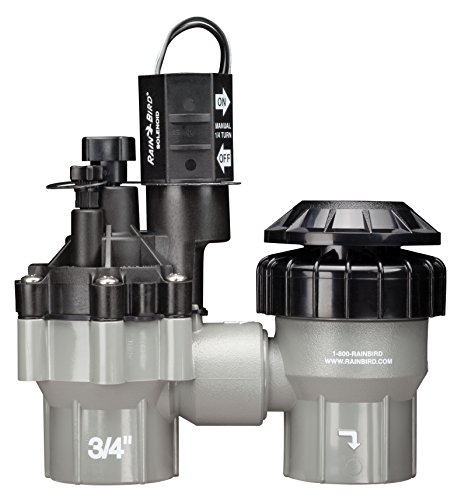
Professional grade 3/4" anti-siphon valve with flow control; compatible with any standard sprinkler timer

Professional grade 1" anti-siphon valve with flow control; compatible with any standard sprinkler timer

With the Hunter HCV, this will never be a problem again
Tips to Keep Flow Steady and Fix Common Problems
Because gravity is the only power source, keeping flow steady hinges on minimizing elevation loss and friction; raise the barrel just a millimeter above the irrigation zone, use a high‑flow spigot and wide‑bore tubing, and install tees with capped ends so water distributes evenly without sudden drops. Position the barrel at least 1 mm higher than the garden, then apply even distribution techniques: space drip lines 18‑24 in, run hoses 6‑12 in from plant bases, and secure with stakes. Perform regular drain valve maintenance—inspect seals, clean debris, and replace worn washers to sustain pressure. Use larger‑diameter tubes to prevent airlocks, add an inlet filter, and blow out the system by removing tee caps. Monitor emitter rates, adjust timers for low‑pressure gravity, and test soil moisture after each cycle. Water pressure is generated at a rate of 0.433 psi per foot of elevation change. For most residential setups, a pressure of 50 psi is typical and works well with gravity‑fed systems. Properly sealing connections prevents leakage and maintains consistent flow. The diameter of the hose directly influences the achievable gallons per minute, with wider hoses delivering higher flow rates under the same pressure.

[High Volume Flow]This pressure compensating drip irrigation spot watering dripper delivers a high-volume and stable flow, specially designed for large-scale irrigation of large trees, bushes, orchards and large landscape plants, providing sufficient water for large plants

1/4 INCH IRRIGATION TUBING: Create a feeder line that supplies water to a low-flow, drip-watering device, or use as a main line in a small drip irrigation system; for trees, shrubs, flower beds, groundcover, vegetable gardens, and planters
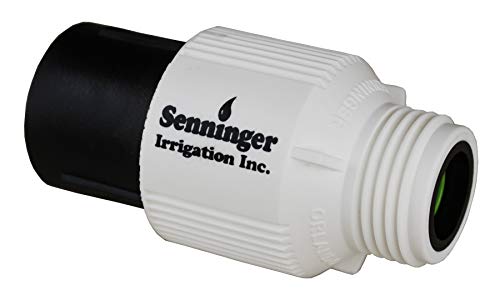
Ideal for installations requiring lower flows such as solid set, drip line, soaker hose and other low pressure agriculture, residential and commercial irrigation. This PRLG (Pressure Regulator Landscape Grade) maintains a constant outlet pressure of 25 PSI (1.72 bar) with a flow range between 0.5 - 7 GPM (114 - 1590 L/hr).