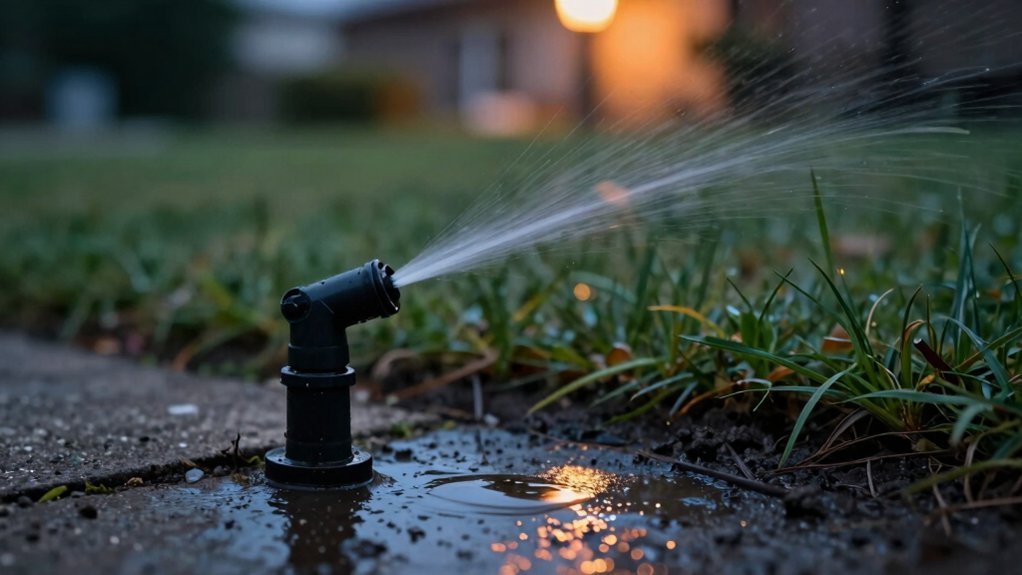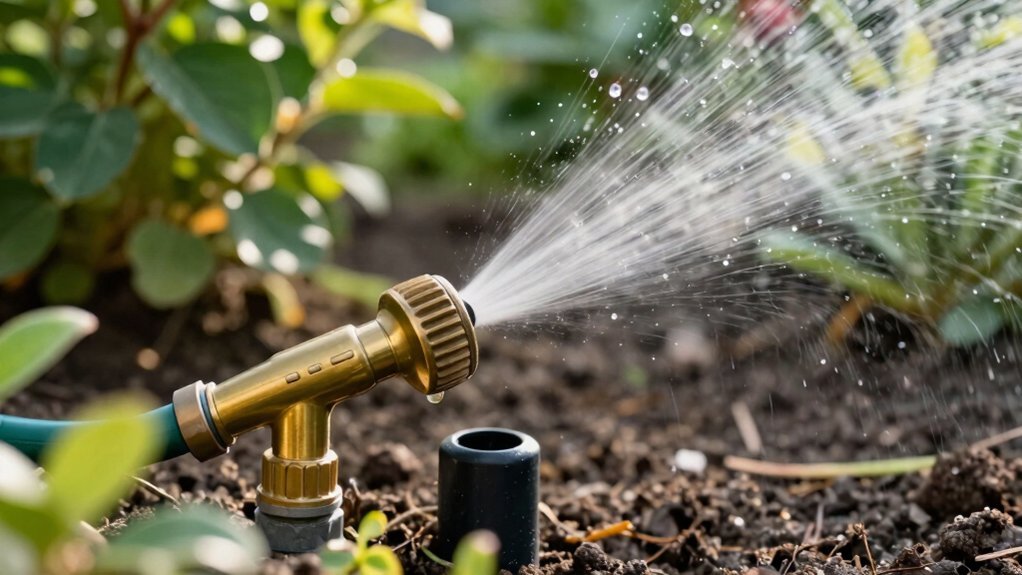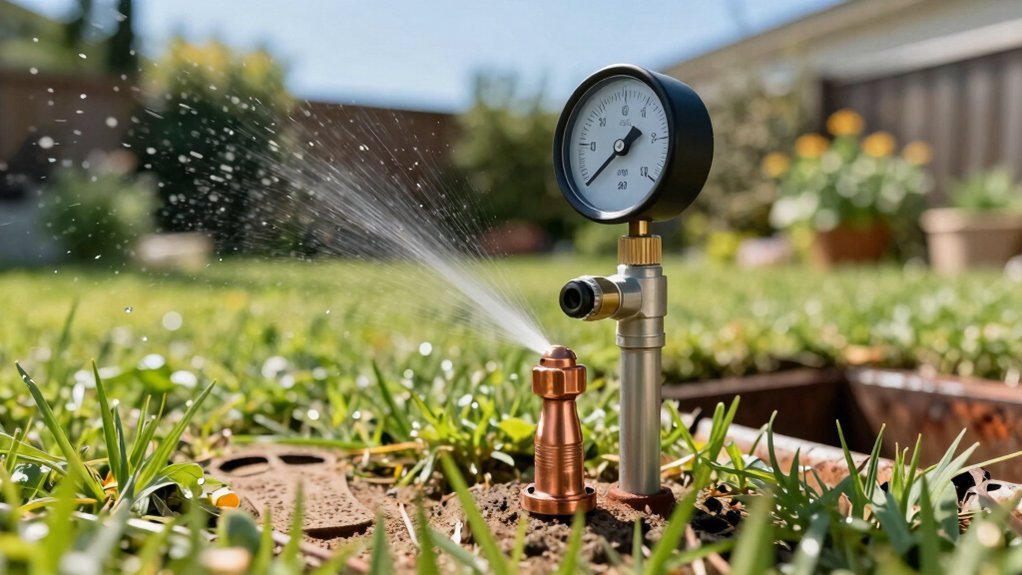
You’ll get uniform coverage by keeping spray heads 5‑15 ft apart and rotors 25‑55 ft apart, using the head‑to‑head overlap rule so each spray reaches its neighbor. Make sure each head stays at least four inches from walls and corners, and adjust spacing for slope, wind, or obstructions by tweaking deflector angles or nozzle types. Follow the manufacturer’s pressure and nozzle specs, and you’ll see ideal infiltration and minimal runoff. Continue and and you’ll uncover the detailed grid‑layout steps.
Apply the Head‑to‑Head Overlap Rule for Sprinkler Head Spacing
One of the quickest ways to guarantee uniform watering is to apply the head‑to‑head overlap rule: position each sprinkler so its spray reaches the adjacent head. You’ll calculate water flow for ideal head spacing by first noting the manufacturer’s radius and pressure, then measuring the distance between critical points—often the perpendicular lines from a quarter‑circle head. If the gap exceeds the spec, insert an extra head at the grid intersection. While you factor in budget for head spacing requirements, remember that each added head costs material and labor, yet prevents dry spots that would demand costly reseeding. Keep spacing between 25 and 55 feet for rotors, and adjust for square zones by checking all four corners. This disciplined layout yields consistent coverage and efficient water use. Properly designed layouts also reduce water waste by matching irrigation patterns to the terrain’s slope and soil type. Accurate zone sizing ensures each area receives the correct flow rate for optimal plant health. Selecting the correct sprinkler type for the specific crop water can further improve water distribution efficiency.

Multi-Angle Sprinkling Irrigation System:As a premium piece of lawn & garden watering equipment, this sprinkler compatible with drip irrigation features 3 interchangeable refraction angles (90°/180°/360°). It produces fine and uniform mist droplets,which not only protect plant roots but also save water, making it suitable for gardens, vegetable plots, greenhouses and other scenarios

ULTIMATE FLEXIBILITY FOR ANY GARDEN SHAPE – Place sprinklers exactly where you need them- Perfect for lawns, flower beds, raised gardens, and more.

For installation and maintenance of spray head sprinklers, nozzles, and risers
Pick Rotors vs. Spray Heads & Set Pressure for Head Spacing
After applying the head‑to‑head overlap rule, you’ll decide whether rotors or spray heads best suit your lawn and then set the pressure that enables each head reach its neighbor. Choose rotors when you need 25–55 ft coverage; verify each model’s radius and match it to your system’s PSI, keeping wind‑adjusted spacing at 90 % of the spray radius. Opt for spray heads in tighter zones, spacing them 5–15 ft apart and aligning nozzle type with pressure ratings. Make pump capacity adjustments to maintain consistent flow, especially if you shift from a high‑throw rotor to a low‑throw head. Pay close attention to nozzle selection considerations, as the right nozzle preserves throw distance and guarantees even distribution across the lawn. Consistent geometric grid is essential for preventing over‑ or under‑watering in irregularly shaped areas. Consider soil type when final pressure and spacing to avoid runoff and ensure water reaches plant roots efficiently. Understanding water pressure helps you fine‑tune the system for optimal performance.

Coverage & Adjustment: Adjustable from 0 to 360 degrees for any lawn shape; reduce radius up to 25% with included adjustment screw for precise watering

RESSURE REGULATED 30 PSI FOR MAXIMUM WATER EFFICIENCY: Built-in pressure regulator reduces incoming pressure up to 100 PSI down to 30 PSI, optimizing nozzle performance, cutting down misting and runoff, and saving water. Certified by EPA WaterSense for sustainable garden and lawn irrigation.
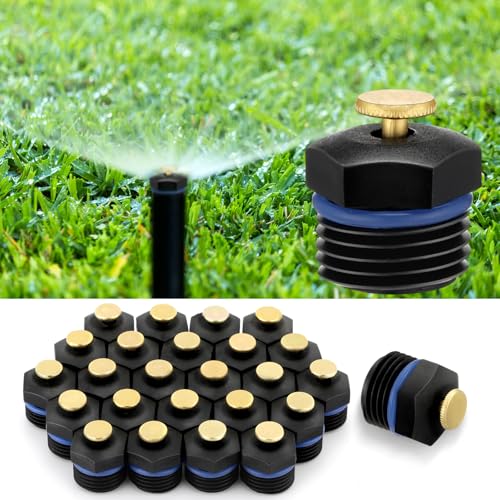
Comprehensive Pack: the package includes 30 pcs 1/2 sprinkler heads, enabling wide area coverage; The bulk pack ensures you have enough misting nozzles even for extensive irrigation schemes, delivering sustained, uniform, and effective coverage across your fields or gardens
Maintain Wall and Corner Clearances for Proper Head Spacing
When you install sprinkler heads, keep at least a four‑inch gap from any wall—whether the head is pendent, upright, or a sidewall type—to prevent cool air from delaying activation or blocking the spray pattern. Follow clearance requirements religiously: sidewall heads stay four inches from end walls, and pendent or upright heads maintain the same distance on all sides. In corners, place a head within the critical four‑point zone; for right‑angle corners use rectangular patterns, and for odd angles apply angled wall considerations, allowing up to 0.75 × maximum spacing (e.g., 11.5 ft for a 15‑ft interval). Remember that wall distance may not exceed half the maximum head‑to‑head spacing, ensuring uniform coverage and preventing gaps in protection. Proper spacing also helps meet NFPA 13 guidelines for reliable fire suppression. Research shows that correctly spaced heads can reduce fire damage by up to 70 % compared to inadequate coverage. Maximum ceiling height is governed by the same clearance principles to maintain effective spray distribution.
Adjust Head Spacing for Slope, Wind & Obstructions
If the roof slopes sharply, you must trim the sprinkler layout to counteract gravity, wind, and nearby obstructions; position heads at mid slope and adjust deflector angle for slope to keep coverage even. On a 2:1 pitch, the downhill spray extends 40 % farther than uphill, so reduce row spacing by 1 % for each 1 % slope above 10 %—a 16 % slope with a 50‑ft radius shrinks spacing by 6 % (≈3 ft). Use low‑angle nozzles at the top, installed vertically, and tilt base‑of‑slope heads away from the incline. Maintain at least 18 in. clearance from walls, equipment, and vertical obstructions, increasing to 3 ft for hazards like tires. Align deflectors parallel to the sloped plane and keep head‑to‑head overlap to counter wind drift. Properly account for ceiling height when calculating the optimal vertical reach of each sprinkler. For optimal coverage, select a nozzle type that matches the desired spray pattern and water pressure. Adjust the spacing based on soil water retention to prevent over‑watering on sandy soils and ensure deep infiltration on clay.

Matched flow rate set containing 12 specialty nozzles

3 Pack- Each Set Contains 8 Standard and 4 Low Angle (4) Nozzles

Create a Grid Layout for Head Spacing in Large Lawns
Because a large lawn demands both efficiency and uniform coverage, you’ll start by establishing a perimeter of heads at each corner and then extend a regular grid inward. Sketch a zone layout that mirrors the lawn’s rectangle, marking corner heads first. From each corner, draw perpendicular lines toward the center, spacing interior heads at 25‑52 ft intervals for large‑area sprinklers or 15‑25 ft for medium zones. Use coverage mapping to confirm head‑to‑head overlap in every direction; adjust intersections until the grid forms a tight, square or rectangular mesh. On curved edges, place half‑circle heads, reserving full‑circle units for the interior. This method balances head count, cost, and uniform water distribution across expansive turf. Incorporate soil type considerations when determining spacing to ensure optimal infiltration and reduce runoff. Modern sprinklers often include moisture sensors that prevent unnecessary watering, water‑saving technology that further enhances efficiency. Proper water pressure calibration helps maintain consistent spray patterns and prevents under‑ or over‑watering.

ADJUSTABLE ARC & SPRAY DISTANCE: Includes a preinstalled 3.0 GPM nozzle with an arc that adjusts from 40° to 360°, ideal for both full and part circle coverage. Delivers a spray distance of approximately 22 to 52 feet, with optional nozzles (sold separately) allowing further customization.

PRECISION ARC CONTROL FROM 0° TO 360°: Get pinpoint accuracy for any zone shape or edge. Whether you're watering a narrow walkway or full lawn circle, fine-tuned arc settings ensure no water is wasted.
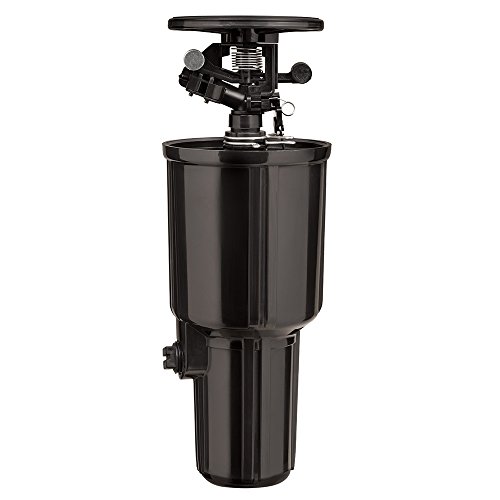
For watering areas with up to 35 feet of spacing between sprinkler heads; 3-inch pop-up riser height ensures that the nozzle clears medium grass
Reference Table: Nozzle, PSI & Ideal Head Spacing
The grid you sketched now needs a quick reference that ties each nozzle type to the pressure it requires and the spacing that will give you reliable head‑to‑head coverage. Below, a concise table links common spray nozzles, their PSI range, and the ideal head‑to‑head distance. For a 30‑psi nozzle, aim for 10‑12 ft; at 40 psi, 12‑15 ft; 50‑psi pushes spacing to 15‑20 ft. Adjust for pressure variations—if the farthest head drops more than 10 % pressure, reduce spacing accordingly. Use flow rate calculations to confirm that each head delivers the required gallons per minute, ensuring uniform application across the lawn. This reference lets you fine‑tune layout without guessing, keeping coverage even and water use efficient. Understanding sprinkler spray patterns helps you match nozzle design to desired coverage. Proper pipe sizing is essential to maintain the intended pressure and flow throughout the system. Zone capacity limits dictate the maximum number of heads per zone based on water pressure, flow rate, and pipe diameter.

For watering areas with up to 15 ft. of spacing between sprinkler heads
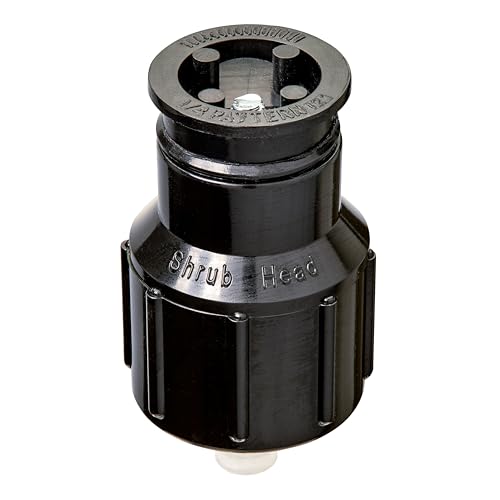
For watering trees, shrubs, perennials, or annuals of various heights

For replacing existing low-profile “flush” sprinkler heads in landscape areas; precision-machined brass or molded plastic ensure consistent spray quality