You should check dry‑action and deluge gauges weekly, wet‑pipe gauges monthly, and perform quarterly functional tests on alarms and supervisory devices. Conduct a full visual inspection of heads, hangers, and pipe annually, plus hydrostatic testing and pressure tests on main‑drain and fire‑pump systems. Every five years, inspect internal pipe conditions and valve integrity; at ten years, add ultrasonic pipe testing and thorough pump verification. Following this schedule keeps you NFPA‑25 compliant and guarantees reliable fire protection, and the next sections detail each step.
Determine Your Sprinkler Inspection Schedule for Gauges & Valves
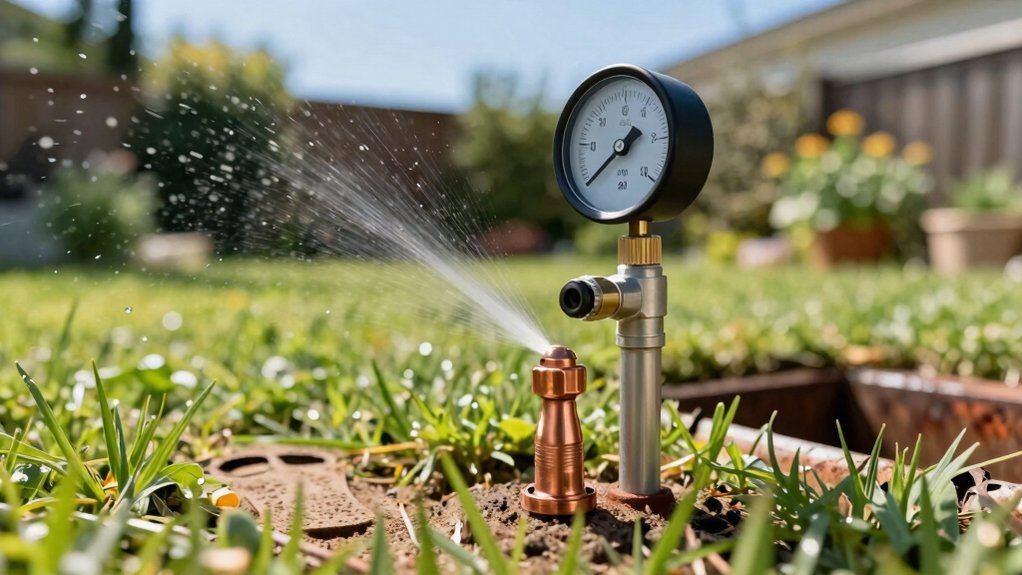
When you set up a sprinkler‑system inspection schedule, start by separating dry‑action deluge gauges from wet‑pipe gauges, because NFPA 25 demands weekly checks for the former and monthly checks for the latter. Inspect dry‑action gauges weekly, confirming normal air pressure, visual integrity, and that signage visibility meets code. Wet‑pipe gauges receive monthly visual checks to verify water pressure and condition. Control valves must be inspected weekly for open position, lock status, and leaks; if secured with locks, monthly inspections suffice. After any alteration, conduct an immediate post‑repair inspection. Calibrate or replace gauges every five years within 3 % full‑scale accuracy. Guarantee backflow prevention devices are inspected alongside gauges, maintaining clear signage and functional integrity. Hydrostatic testing is also required annually to validate system pressure capacity and detect hidden leaks. Automatic sprinkler systems provide rapid fire suppression, reducing property damage and enhancing occupant safety. Smoke detectors serve as an early warning system that alerts occupants and fire responders before sprinklers activate.
Apply NFPA‑25 Sprinkler Inspection Schedule Intervals
Having sorted gauges and valves by inspection frequency, you now apply NFPA‑25’s broader schedule intervals to the entire sprinkler system. Begin with annual visual checks of every head, hanger, and pipe, ensuring no obstructions, leaks, or damage. Replace gauges at five‑year marks, and conduct main‑drain, fire‑pump full‑flow, and backflow‑preventer pressure tests each year. Every five years, assess internal pipe condition at four critical points, run standpipe flow and hydrostatic tests, and inspect high‑temperature or harsh‑environment sprinklers. Conduct ten‑year testing on dry, fast‑response, standard‑response, ESFR, and CMSA sprinklers per NFPA‑25. For sprinklers older than 75 years, test or replace every five years, using a sample of at least 1 % or four heads. Integrate sprinkler deterioration monitoring and environmental impact assessment into each interval to maintain compliance and performance. Properly maintaining sprinkler systems can reduce fire‑related damage by up to 70 % and significantly improve life‑safety outcomes. Early detection and rapid water deployment smoke spread and create safer evacuation routes. Understanding heat‑sensitive glass bulbs helps explain why automatic activation occurs without human intervention.
Schedule Weekly‑Monthly‑Quarterly Sprinkler Inspection Checks
A structured inspection cadence—weekly, monthly, and quarterly—keeps gauges, control valves, and alarm devices in ideal condition while meeting NFPA‑25 requirements. Weekly, you verify pressure on dry, pre‑action, and deluge gauges and confirm control valves are open, sealed, and leak‑free. Monthly, you shift wet‑pipe gauge checks to a visual pressure review, inspect alarm valves for leaks, and guarantee all valves remain accessible, locked, and properly labeled. Quarterly, you conduct functional tests on water‑flow alarms, supervisory devices, and mechanical components, then confirm hydraulic nameplates are attached and visible. Throughout, you track equipment condition and assign clear maintenance responsibility, so each inspection tier supports reliable fire protection and compliance. Regular checks also help detect early‑stage leaks that could compromise property safety and increase repair costs. Maintaining a proper distance between detectors and sprinklers, such as at least 12 inches, prevents water spray interference and false alarms. Properly cleaning sprinkler heads removes mineral deposits that can impair flow and trigger false alarms.
Conduct Annual Sprinkler Inspection Tests & Replacements
Because fire protection hinges on reliable components, you must perform a thorough annual inspection that combines visual checks, valve and flow testing, and alarm verification, then replace any defective parts. During the visual pass, examine every sprinkler head, pipe, and fitting for corrosion, wear, or obstruction, and confirm that spare heads and tools are onsite. Verify fire department connections, pressure‑relief valves, and that hydraulic nameplates remain legible. When testing valves and flow, run main‑drain water flow, execute full‑trip tests on dry‑pipe or pre‑action valves, and conduct partial‑flow trips per NFPA 25. Inspect sprinkler linkages for secure anchorage and proper alignment. Document all results, certify compliance, and factor sprinkler system costs into budgeting for replacements and future maintenance. A sprinkler will only activate when sufficient heat raises the fusible link to its melt temperature. Standard sprinklers typically trigger at about 155 °F (68 °C), a temperature that reflects the activation threshold defined in fire protection codes. Properly tightening the pipe threads with a torque wrench helps prevent leaks and ensures system integrity.
Plan 5‑Year & 10‑Year+ Sprinkler Inspection Milestones
Every five years you’ll need to conduct a thorough NFPA 25 inspection that targets internal components prone to corrosion and wear, while the ten‑year‑plus milestone expands the scope to full system performance and long‑term degradation. At the 5‑year mark, perform visual inspections of each sprinkler head, valve, and backflow preventer, then open a main pipe and a branch line to flush and examine for pipe obstructions, scaling, or corrosion. Test valve movement, seal integrity, and pressure gauges; hydrostatic‑test the FDC at 150 psi for two hours. Document any foreign material and trace it to at least four points—valve, riser, cross main, branch line. At ten years, broaden the audit to include ultrasonic pipe testing, fire‑pump start‑up verification, and extensive performance checks across all wet‑pipe systems, ensuring compliance with NFPA 25 and mitigating cumulative degradation. The wet‑pipe system remains the most widely installed fire‑sprinkler technology due to its rapid activation and reliability. Sprinkler operation duration can vary widely depending on heat level and fire size, influencing how long the system stays active. Regular testing of sprinkler head lifespan helps ensure reliable fire protection.
Document Sprinkler Inspection Records for AHJ Readiness
When you prepare sprinkler inspection records for AHJ readiness, ensure every entry includes the inspection date, the technician’s name, test results, identified deficiencies, and verification that prior issues have been corrected; this satisfies NFPA 25 and jurisdictional requirements. Maintain thorough inspection records in a digital, tamper‑proof system that timestamps each entry and stores supporting photos, certificates, and compliance statements. Verify consistent record keeping practices across all sites by using a centralized repository that flags missed inspections, tracks remediation dates, and archives reports for the mandated 1‑3 year retention period. Include contractor material and test certificates after final checks, and be prepared to transmit files directly to the AHJ when local ordinances demand it. This disciplined approach guarantees audit readiness and protects the owner’s liability. Permit requirements vary by municipality, so consult your local building department to confirm whether a sprinkler system permit is needed before installation. The low‑voltage power supply that drives electric valves and controllers can be optimized for energy efficiency by integrating solar backup solutions. Homeowners insurance typically covers damage to sprinkler systems caused by sudden, accidental events such as fire or burst pipes, but it often excludes wear‑and‑tear or lack maintenance.coverage limits