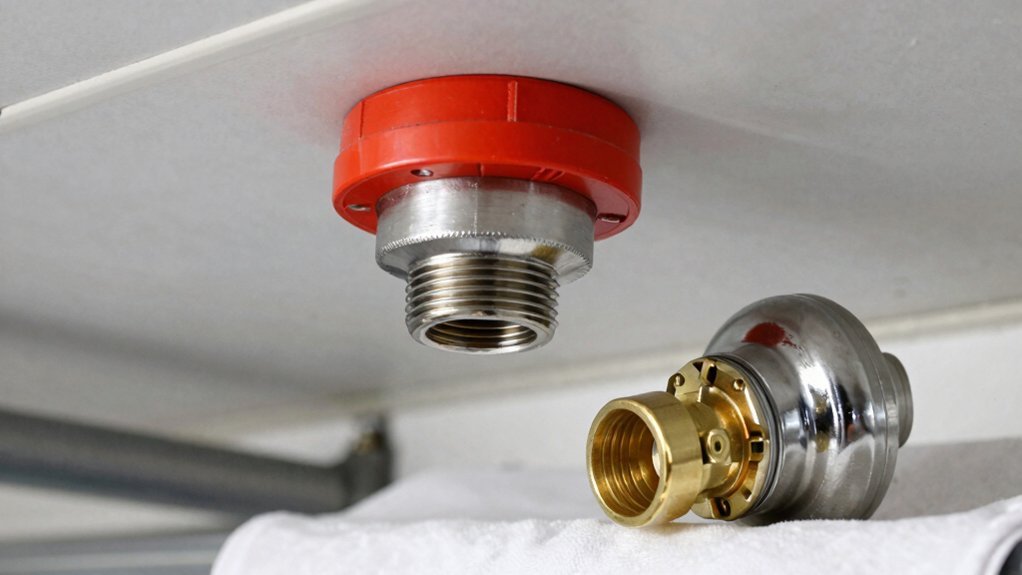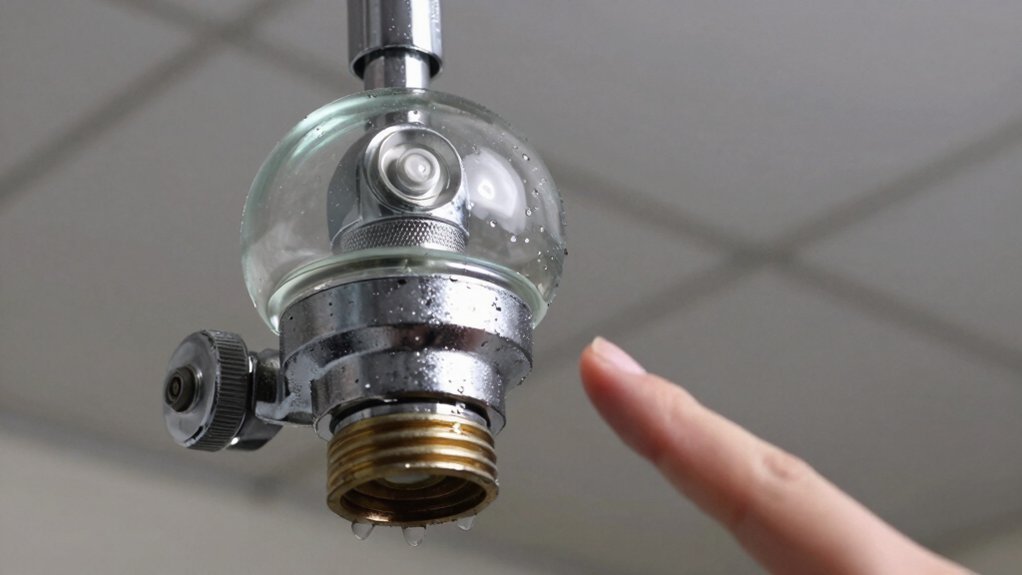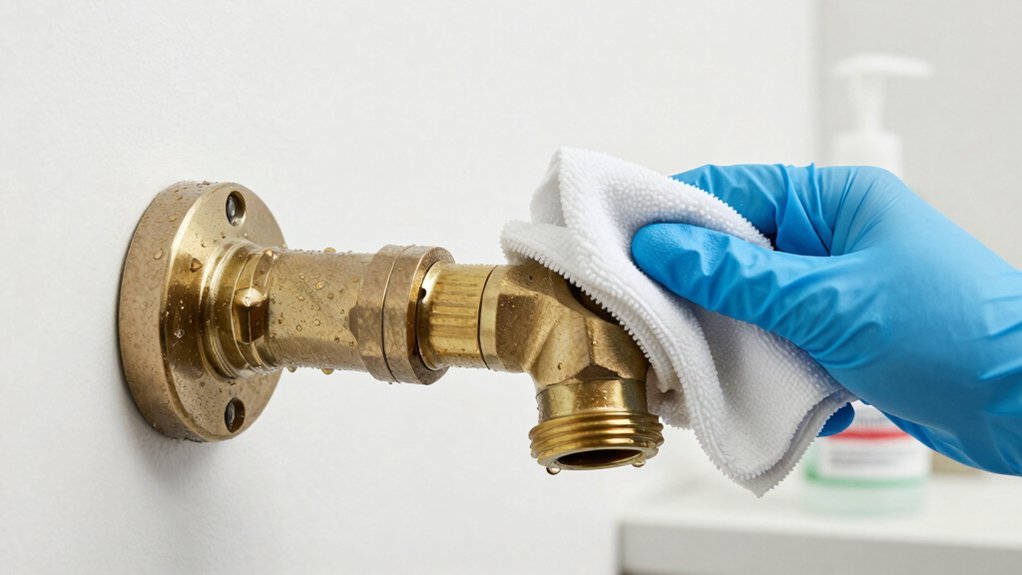
You’ll find that sprinklers don’t have smoke detectors; they’re heat‑activated devices that only release water when temperatures hit a set threshold, usually 135‑165 °F. They won’t warn you early, won’t detect smoke from cooking, candles, or vaping, and can be triggered by steam. Smoke detectors are still essential for early fire warning and code compliance, and they can work together with sprinklers for full protection. Keep reading to uncover how they integrate.
Do Heat‑Activated Sprinklers Detect Smoke?
Can a heat‑activated sprinkler actually sense smoke? No. You must understand that fire classification relies on temperature, not particles. The sprinkler head contains a glass bulb or fusible link that bends only when heat hits 135‑165 °F (57‑74 °C). Smoke hazard identification is handled by separate alarms, which use photo‑electric or ionization sensors to spot airborne particles. Because the sprinkler’s trigger is purely thermal, dense smoke from cooking, candles, or vaping won’t set it off. This design prevents false water discharge while ensuring that once a fire reaches the heat threshold, the sprinkler activates precisely where needed. Pair sprinklers with smoke detectors for thorough safety. A sprinkler will only fire when sufficient heat is applied to its thermal element. Maintaining a minimum distance of 12 inches between a smoke detector and a sprinkler head helps avoid water spray interference. Wet‑pipe systems are the most widely installed sprinkler type, offering quick activation and reliability in most climates.
How Do Heat‑Activated Sprinklers Work?
When a fire heats a sprinkler head to about 155 °F (74 °C), the glass‑bulb or fusible metal link inside the head reaches its activation temperature. The bulb’s glycerin expands, shattering the glass and releasing the plug; a metal link melts solder, pulling spring arms apart and dislodging its cap. Water then rushes through a deflector, spraying a uniform pattern that cools the fire. Only the nearest head activates, handling roughly 90 % of incidents. Wet‑pipe systems deliver water instantly; dry‑pipe systems first vent air, delaying flow up to 60 seconds. Pre‑action and deluge setups have distinct triggers. To prevent sprinkler failure modes—such as blocked heads or corroded links—follow sprinkler maintenance requirements: inspect bulbs, test pressure, and replace worn components annually. The original design by Henry S. Paraly in 1874 featured a hollow chamber with numerous holes and a valve disc that prevented water entry until activation. Research shows that sprinkler systems can reduce fire‑related property loss by up to 85 %. Proper system testing ensures reliable operation when a fire occurs. Most systems are calibrated to a 155 °F activation threshold, though high‑temperature variants may trigger at 200 °F (93 °C) or higher for specialized environments.
Why Are Smoke Detectors Still Needed With Sprinklers?
Even though sprinklers suppress a fire once the heat hits about 155 °F, they don’t warn you that a blaze is starting. You need smoke detectors for early smoke detection because they sense airborne particles before temperature climbs. Ionization units catch fast‑flaming fires, while photoelectric units spot smoldering fires; together they give you the quickest alert. That alert lets you evacuate and call help while sprinklers work on rapid fire containment. Sprinklers limit spread, but they don’t alert occupants, and a single head may not cover a whole room. Keeping both systems active cuts death rates dramatically and protects property. Install and maintain detectors even in sprinklered buildings for full safety. Heat‑sensitive glass bulbs in sprinklers activate automatically when temperatures reach a critical level. Statistical evidence shows that combined systems reduce casualty rates by up to 70 %. Steam can raise ambient temperature and pressure enough to trigger heat‑activated sprinkler heads even without direct flame contact.

10-YEAR BUILT-IN BATTERY: A sealed lithium battery powers the smoke alarm for up to 10 years, helping reduce battery replacements, low-battery chirps, and routine maintenance across bedrooms, hallways, rentals, and family homes

First Alert's Precision Detection advanced sensing technology complies with new industry standards to reduce cooking nuisance alarms and provides early warning in the event of a home fire emergency.

SMOKE DETECTION: Model 10SDR detects smoke with over 25% faster smoke detection*; sounds a loud 85-decibel alarm with red LED light for clear visual warnings; compact design suitable for homes
When Can Sprinklers Replace Smoke Alarms by Code?
Sprinklers alone don’t give you an early‑fire warning, but certain codes let you skip smoke alarms when the sprinkler system meets specific criteria. To qualify, the sprinkler must be a monitored, full‑coverage system that meets NFPA 72 Chapter 17.7.1.8(3) or IBC 907.4.3.1 for high‑temperature spaces. In business‑occupancy offices, IBC and NFPA 101 waive smoke detection if sprinklers are installed. You must verify jurisdiction specific requirements; local fire departments or the AHJ may demand a supervised flow switch, a complete fire alarm control panel, or additional key integration details such as hard‑wired or FCC‑compliant wireless signaling. Always consult the local fire authority to confirm that the sprinkler coverage and integration satisfy the code waiver before removing any smoke alarms. NEC wiring must also be observed when connecting the systems. Proper shaft protection design ensures that fire does not travel between floors via the elevator shaft. Pulling a fire alarm typically triggers the fire alarm system which then sends a signal to the sprinkler control valve, causing the sprinklers to discharge water in the affected area. This signal flow is essential for coordinated fire response. Fire extinguishers remain crucial for controlling small fires before the sprinklers activate.

Heavy-duty T-fitting designed for rooftop or elevated mounting

UL & CUL listed EX6430. 1/2 " NPT (National National Pipe Thread) American thread fire sprinkler heads

11" x 14" poster print featuring a Automatic Fire Sprinkler patent illustration on a Black Chalkboard style background. Designed by Patent Earth™, this wall art is made to order and customized with your choice of size and background!
What Placement Pitfalls Exist for Sprinklers Near Detectors?
If you place a smoke detector too close to a sprinkler head, you risk obstructing the spray pattern, short‑circuiting the detector, and violating code‑approved clearances. Keep detectors at least 24 inches away to avoid spray pattern interference. Within 18 inches, NFPA 13 flags a potential obstruction; the three‑times rule forces a distance three times the detector’s largest dimension. When you must install between 1 and 1.5 feet, mount the deflector no more than 2½ inches above the detector bottom. Remember that water damage to detectors can short out IDC/SLC circuits, compromising fire detection. Verify clearance with the AHJ, check Section 9.1.1(3) for satisfactory distribution, and use the code‑approved tables to confirm compliance. Understanding maximum ceiling height is essential for ensuring adequate sprinkler coverage and meeting fire protection standards. Proper fixture‑sprinkler clearance also helps maintain unobstructed water spray and reliable operation of both systems. CPVC pipe should be protected from UV exposure to prevent material degradation.

【Rain Sensor Hygroscopic Discs】: The Rain Sensor Hygroscopic Discs Are Made With Premium Quality Materials That Are Durable And Stable, Providing A Perfect And Affordable Substitute For All Rain Bird, Hunter, Mini-Clik, Rain-Clik, Solar Sync Rain Sensors.

FIX BROKEN SPRINKLER WIRES WITHOUT DIGGING – Repair damaged irrigation wiring using a single surviving field wire: no trenching, no pulling new cable, and no yard damage.

Economical yet reliable
What Water‑Damage Risks Arise If Sprinklers Activate Early?
Keeping detectors at the proper distance prevents spray obstruction, but it doesn’t stop the bigger problem—water damage when a sprinkler fires prematurely. When a false activation occurs, you’ll see 8‑24 gpm of water hitting ceilings, walls, and floors. That sudden flow creates water intrusion concerns: drywall swells, flooring warps, and electronics short out. Mechanical impacts—bumped heads or forklift collisions—can dump hundreds of gallons, overwhelming drains and pooling near foundations, which raises structural integrity risks. Corroded pipes or frozen fittings may burst under pressure, adding to the flood. Mold and mildew follow quickly, compromising indoor air and material strength. Act fast: shut off the water supply, mop up excess, and inspect for hidden leaks to prevent long‑term damage. water‑resistant conduit helps protect wiring from corrosion and short circuits. faulty valve can also cause sudden pressure spikes that trigger unintended activations. Proper system design includes adequate water pressure to avoid leaks and coverage loss.

【Easy Programming Program】Through the Sprinkler Timer to program, you can set the Start Time, Watering Duration is 1min-3h59min, Watering Frequency from 1h to 12h or 1 day to 7 days, so you can customize your watering time, and can be more accurate.
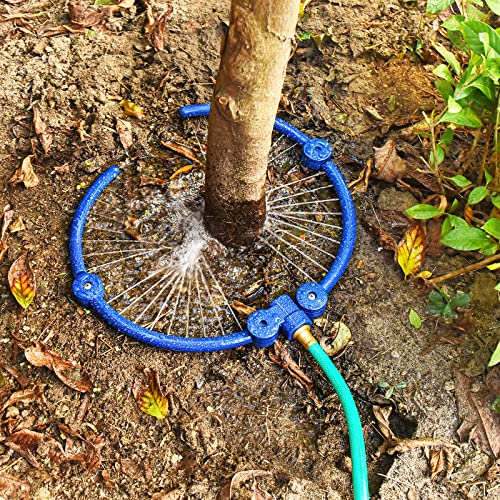
【Specially Designed for Trees and Shrubs】 The Watering Ring is a multi-purpose irrigation ring that attaches to a garden hose to efficiently water young trees shrubs vegetables or flower beds using drip or trickle irrigation.It directs water to the root perimeter of the plant to give them a good start during the first two growing seasons or through periods of drought.

ULTIMATE FLEXIBILITY FOR ANY GARDEN SHAPE – Place sprinklers exactly where you need them- Perfect for lawns, flower beds, raised gardens, and more.
How Do Sprinklers and Smoke Alarms Integrate in a Fire System?
What ties a fire alarm to a sprinkler system is the water‑flow switch that trips when a sprinkler head discharges, instantly notifying the alarm panel and any monitoring service. You’ll see the smoke detector fire first, sending a signal through the interconnection network. When a sprinkler head releases water, its flow switch creates a parallel activation pulse that the alarm panel receives, confirming a fire zone. This signaling integration lets the panel relay precise location data to the monitoring station and trigger automated notifications, including smartphone alerts via home‑automation hubs. Guarantee hard‑wired or compatible wireless links, validate code compliance, and test both detectors and switches regularly. Proper wiring, zoning, and maintenance keep the system synchronized and reliable. dry‑pipe systems remain empty until a fire triggers a valve to fill them with water. low‑voltage control circuits are often used for monitoring and alarm integration in fire‑sprinkler setups.

🌟🌊【Safe and Reliable】This flow sensor switch is made of brass, all materials are in line with ROHS testing standards. It's a safety device that shuts off the current to the device (heaters, pumps, etc.) when it senses no water flow.When connecting the load, please add a relay.

[WIDELY]: This flow switch is an automatic element that controls flow in pipes, which can be used on water treatment system, central air-conditioning, water cooled chiller and relative industries. R3/4 water flow switch is applicable for fluid includes water, oil or other liquid not classified as hazardous or corrosive and air

Flow Switch Application: Saltron Reliant
Bottom‑Line Verdict: Sprinklers ≠ Smoke Detectors
The water‑flow switch ties the sprinkler to the alarm panel, but the sprinkler itself never “sees” smoke. You’ll notice the key difference: sprinklers activate only when heat thresholds compared to smoke detector triggers are exceeded—typically 135–165 °F—while detectors respond to particles. This means sprinklers suppress fire after it’s grown, whereas detectors sound alarms to start evacuation procedures. Remember, a sprinkler head’s glass bulb or fusible link melts at the set temperature, releasing water locally; a smoke alarm uses photoelectric or ionization sensors to alert occupants instantly. Both systems are required by code, but they serve distinct roles—suppression versus early warning—so never assume one replaces the other.