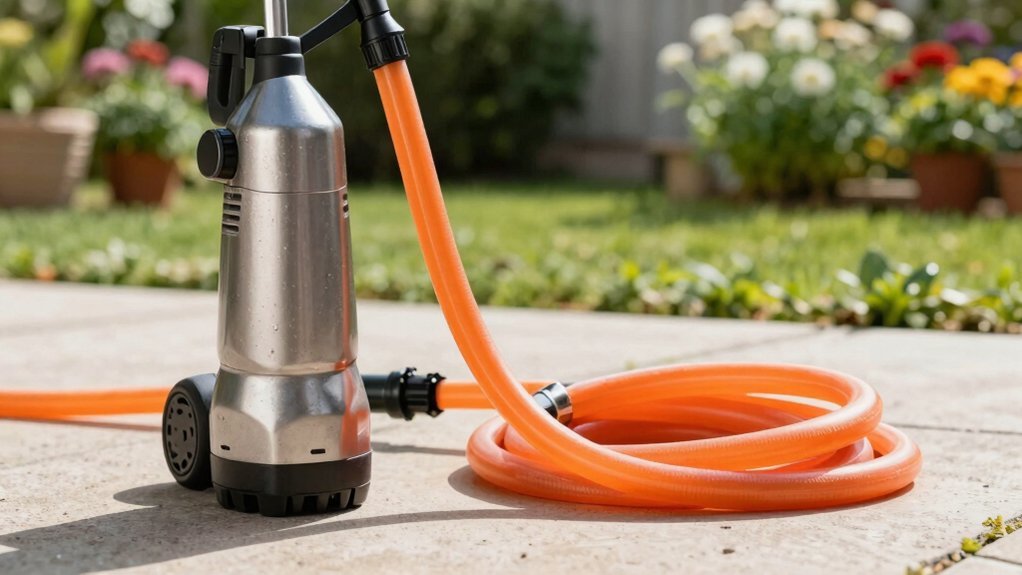
You can reliably link up to two 50‑foot garden hoses—roughly 100 feet total—before pressure loss, hose weight, and connector strain make extra sections impractical. Beyond that, friction and kinks start to sap flow, especially if you mix diameters or use cheap couplings. Sticking to a 5/8‑inch interior diameter and quality threaded or quick‑connect fittings helps preserve pressure, but the sweet spot stays around a hundred feet. Continue and you’ll uncover how boosters and larger‑diameter hoses can push those limits further.
How Many Hoses Can You Connect Before a Standard Garden Hose Extension?
A typical garden setup lets you join up to two 50‑foot hoses before you hit the practical limits of a standard ¾‑inch extension. You’ll notice that water flow consistency begins to wane once the total length approaches 100 feet, especially if you mix diameters. Stick to the common 5/8‑inch interior for residential use; it balances pressure and weight, keeping the hose manageable and the flow steady. When you exceed this range, the added weight compounds storage challenges, making the coil harder to stow and transport. Opt for two shorter segments with a reliable connector instead of a single long run; this preserves pressure, eases handling, and fits neatly in a shed or garage without sacrificing coverage. Larger hose diameter can significantly increase the gallons per minute delivered, especially under higher water pressure. Using a 1/4‑inch hose is ideal for light, short‑run watering tasks such as potted plants or small garden beds. Understanding flow rate helps you match hose size to the water demand of your garden.
What Factors Limit the Length of a Garden Hose Extension Run?
When you add more sections to a garden‑hose run, the combination of length, pressure loss, hose diameter, and connector quality determines how far water can travel before the flow becomes unusable. You’ll notice that each extra foot adds friction, so a 75‑foot line already shows a slight drop, while a 100‑foot run risks severe pressure loss that can cripple flow. Larger‑diameter hoses mitigate this, but smaller IDs amplify the drop, especially when connectors are plastic or loosely tightened. Hose movement constraints become evident as the run lengthens: twists, kinks, and handling difficulty rise, demanding more storage space requirements and careful coiling to avoid creases that weaken the pipe. Ultimately, pressure, diameter, and connector integrity set the practical limit. Using a plastic connector can help prevent leaks and reduce cost. Selecting the right hose material ensures long‑term durability and consistent performance. Understanding garden hose thread standards is essential for matching fittings correctly. For most homes, the water pressure typically sits around 50 psi which is within the optimal range for garden hose operation.
How Do You Choose the Right Coupling Size for a Garden Hose Extension?
Choosing the right coupling size starts with matching the hose’s inner diameter to the standard Garden Hose Thread (GHT) that fits your faucet or sprinkler—most U.S. systems use a 3/4‑inch GHT with 11.5 TPI, which works for 1/2‑inch, 5/8‑inch, and 3/4‑inch hoses alike. First, measure the hose’s ID using a caliper or tape; a 5/8‑inch ID signals a 5/8‑inch hose, which still pairs with the 3/4‑inch GHT. Verify that the external thread diameter and pitch match the ANSI‑governed 11.5 TPI spec for fitting compatibility. Next, consider material rigidity: brass or stainless steel couplings lock tighter, boosting extension stability under pressure. Finally, confirm the coupling’s internal bore aligns with the hose’s diameter to prevent leaks and wobble, ensuring a seamless, durable connection. The garden hose system uses parallel threads that allow different hose sizes to connect without issue. Understanding the tapered seal of NPT helps avoid mismatched adapters. Properly applying plumber’s tape can further seal the joint and stop leaks.
Which Connector Type: Quick‑Connect or Threaded: Works Best for Garden Hose Extensions?
Which connector type serves your garden hose extension best depends on how you balance speed, flow, and durability. Quick‑connect couplers win on convenience; their snap‑on design lets you switch faucets or nozzles in seconds, and brass pins keep connector durability high while maintaining full‑flow 3/4‑inch capacity. However, the smaller bore can limit pressure handling capability for high‑volume tasks. Threaded connectors, by contrast, lock with GHT threads, offering robust pressure handling capability and a watertight seal that resists over‑tightening leaks. They excel when you need a permanent, high‑flow link, though threading takes longer and may require a wrench. Choose quick‑connect for frequent changes and ease, or threaded for lasting, high‑pressure performance. The all‑brass construction of many quick‑connects adds durability and a premium feel, especially in higher‑end models. Selecting the right hose length also influences pressure retention, as longer hoses can cause a measurable drop in wash pressure due to friction.
When Should You Upgrade to a Larger‑Diameter Hose for a Longer Extension?
Quick‑connect couplers make swapping nozzles a breeze, but the moment you stretch a hose beyond a backyard’s typical 50‑foot span, the diameter takes center stage. You should upgrade when the run exceeds 75 feet, because smaller diameters can’t meet minimum flow requirements and the pressure difference compensation becomes noticeable. For lengths over 100 feet, a 3/4‑inch hose is the practical choice; it reduces friction, preserves GPM, and keeps sprinklers firing evenly. If your garden is large or you need to push water uphill, the wider hose maintains consistent spray and prevents weak patterns. Even high‑demand tasks—filling containers or running multiple emitters—benefit from the extra capacity, ensuring reliable performance across the extended distance. Longer hoses add extra bulk and weight when storing. Using a hose with a higher pressure rating ensures safety when connecting to a pressure washer. The Bernoulli principle explains why a larger diameter helps sustain flow despite increased length. Understanding friction loss helps you size the hose correctly for long runs.
How Much Flow‑Rate Is Lost When Adding Multiple Garden Hose Extensions?
When you add garden hose extensions, each extra segment lengthens the pathway and compounds friction, so the flow rate drops noticeably. The loss is roughly proportional to total length: a single 25‑foot hose may deliver 24 GPM, but four 25‑foot sections (100 ft) cut that to about 6 GPM, a 75 % reduction. Smaller diameters exacerbate the drop— a ½‑inch hose at 100 ft yields only 8 GPM, whereas a ¾‑inch hose of the same length reaches 22 GPM. Friction, kinks, and elevation changes all contribute to pressure loss reduction, which directly curtails flow rate performance. To maintain usable flow, match hose diameter to the cumulative length, avoid sharp bends, and keep extensions as short as practical. This analytical approach balances aesthetic garden design with functional water delivery. Using a pressure regulator can help compensate for loss changes and maintain consistent flow. Regularly inspect the hose for kinks and blockages to prevent additional pressure drops. Understanding pressure loss over distance is essential for selecting the right hose configuration.
Can a Pressure Booster Help Extend Your Garden Hose? Here’s How
The steep drop in flow you observed when chaining several hose sections can be offset by a pressure booster, which adds roughly 40 PSI to the line and restores the lost momentum. A booster pump’s 1/2‑HP motor and rubber impeller push water through cast‑iron housing, compensating for resistance in long runs. Choose a booster pump configuration that matches your hose diameter—3/4‑inch or standard thread—and attach brass adapters for a seamless fit. Install a pressure regulator to stabilize output, then perform booster pump maintenance: inspect fittings, clean debris, and replace corroded connectors. Straighten kinks, clear obstructions, and verify that the 115‑volt motor runs smoothly. This functional setup preserves steady flow, even across multiple extensions. The installation of a Trotec TGP1000ES pump can further improve water pressure for distant garden zones. Adding a pressure tank to the system can also reduce pump cycling and protect against water hammer. Remember that air‑compressor safety standards prohibit using garden hoses for compressed air because they lack the necessary pressure rating and burst‑strength.
Step‑by‑Step: Safely Join Multiple Garden Hose Extensions
Even if you’ve only a few extra feet of reach, joining multiple garden‑hose extensions safely requires more than just screwing them together; you must manage pressure loss, prevent kinks, and guarantee compatible fittings. First, choose a material selection that matches the original hose—rubber or reinforced PVC minimizes expansion under pressure. Next, inspect each coupling for wear; replace any cracked or corroded parts to preserve connection durability. Align the threads precisely, then hand‑tighten until you feel resistance, followed by a quarter‑turn with a wrench—over‑tightening deforms seals. After each joint, run a short burst of water to check for leaks; if any appear, re‑seat the fitting and repeat. Finally, support the assembled line with stakes or a hose reel to avoid sagging, which can cause kinks and accelerate wear. Quick coupler systems allow you to swap accessories without repeatedly threading them on and off. Using a pressure regulator can help maintain consistent water flow when multiple extensions are connected. Understanding the relationship between psi and gpm is crucial for predicting how much pressure will be lost as you add length to the hose.
What Proven Leak‑Prevention Hacks Keep Long Garden Hose Extensions Tight?
Wrapping Teflon tape around male threads, tightening high‑quality metal connectors, and checking pressure levels are three proven hacks that keep long garden hose extensions leak‑free. You’ll notice that two‑to‑three layers of Teflon tape, applied clockwise, create a smooth, lubricated seal that lets you finger‑tighten before a wrench finishes the job. Pair this with leak‑proof fittings—solid metal couplings that resist wear and maintain integrity under sustained flow. Finally, enforce pressure regulation: monitor the source gauge, stay within manufacturer limits, and adjust flow if you sense a drop. Regular inspections of threads and fittings catch wear early, while storing hoses on reels prevents kinks that could compromise seals. Together, these steps deliver a tight, reliable system. Teflon tape is an inexpensive way to seal leaks at both the spigot and sprayer connections. Proper winding technique ensures the tape adheres evenly and avoids gaps.
How Do You Troubleshoot Low‑Pressure Symptoms in Garden Hose Extension Setups?
One common sign of low pressure in a garden‑hose extension is a noticeably weak spray at the nozzle, and pinpointing the cause starts with a systematic check of the entire line. First, monitor water flow rate with a simple bucket test; a slower fill reveals friction loss or a blockage. Next, detect internal hose obstructions by running water through each segment while feeling for damp spots or drips that betray leaks or cracks. Inspect every fitting for looseness or corrosion, tightening or replacing as needed. Verify hose diameter and length—standard 5/8‑inch over 100 ft loses pressure, while a 3/4‑inch, shorter run restores vigor. Finally, confirm the source pressure and regulator settings, adding a booster pump if the supply is insufficient. This methodical approach isolates the fault and restores ideal spray. Rubber tubing can be tightened with an adjustable clamp to prevent leaks.