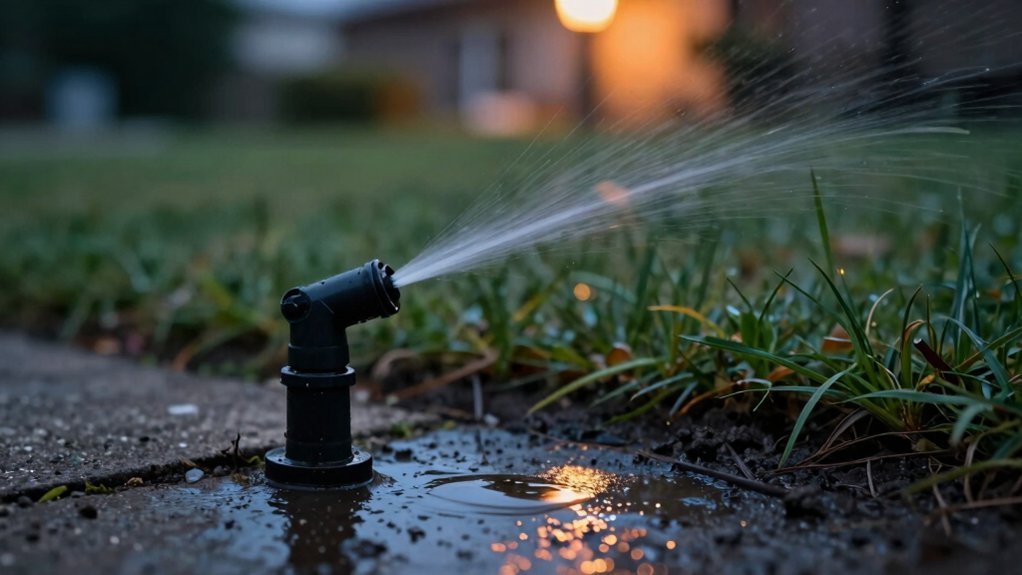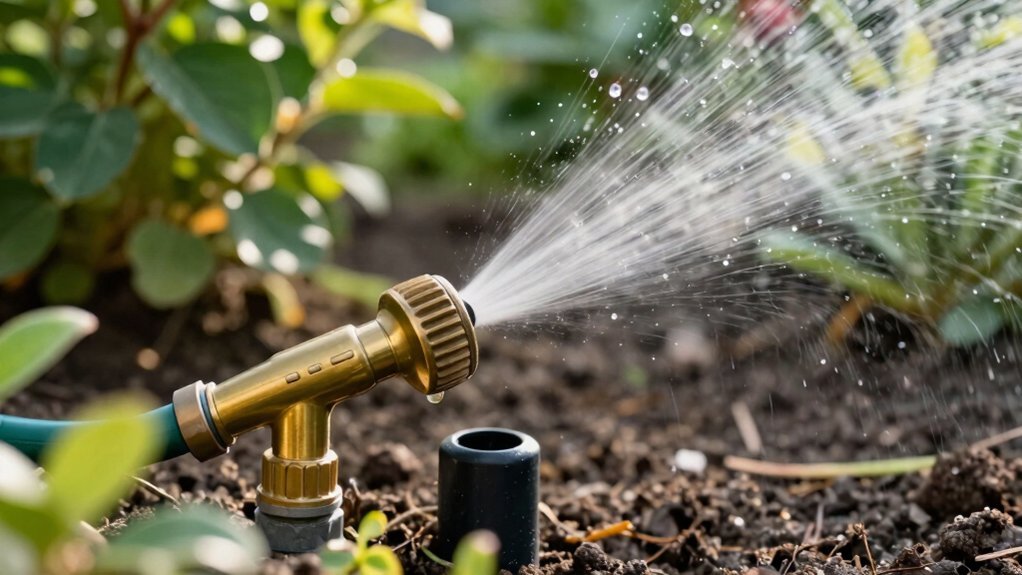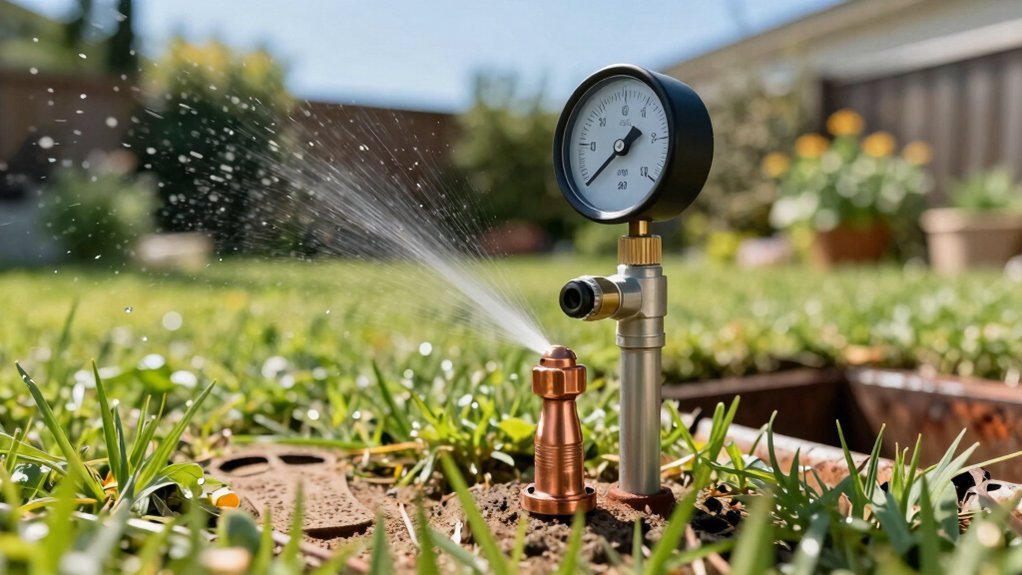
A sprinkler backflow preventer stops contaminated water from re‑entering your potable supply the automatically shutting off flow whenever downstream pressure exceeds upstream pressure. It blocks back‑pressure and back‑siphonage, preventing chemicals, soil, or microbes from entering the drinking‑water line. By isolating the irrigation circuit, it protects health, maintains code compliance, and avoids costly penalties. The device also alerts you to leaks or wear during routine inspections. Continue and and you’ll uncover which type fits your system and how to keep it reliable.
How Backflow Happens in Sprinkler Systems and Why It Matters
Backflow in sprinkler systems occurs when downstream pressure exceeds the upstream supply pressure, creating a back‑pressure condition that can reverse flow. You’ll see this when city‑main pressure drops during firefighting, when a pump is mis‑installed, or when a hose‑attached sprinkler pulls water from a contaminated source. The resulting back pressure hazards force fertilizers, pesticides, or bacteria into the potable line, compromising cross connection safety. Simultaneously, a sudden vacuum—back‑siphonage—can draw water backward if a main line breaks or a fire hydrant opens. Both mechanisms expose drinking water to chemical additives and microbial growth, posing serious public‑health risks. Understanding these dynamics lets you evaluate protective devices and maintain system integrity. Regular inspection of cross‑connection points helps prevent contamination before it occurs. Local plumbing codes often mandate a backflow preventer for irrigation to ensure compliance and protect public health. Proper installation of a double‑check valve near the water main further safeguards against backflow events.
How to Decide Which Sprinkler Backflow Preventer Fits Your System
Understanding the mechanisms that cause back‑pressure and back‑siphonage lets you match the hazard level of your irrigation network to the appropriate protective assembly. First, assess hazard level: low‑hazard systems can use a double‑check valve assembly (DCVA); high‑hazard or health‑risk scenarios demand a reduced‑pressure zone (RPZ) or reduced‑pressure principle (RP) device. Next, weigh installation considerations: RPZs and pressure‑vacuum breakers (PVB) must sit 12 inches above the highest point, require horizontal orientation, and need 12 inches clearance for testing; DCVAs permit underground placement up to 24 inches deep, while AVBs become impractical beyond six zones. Finally, conduct a device performance comparison: AVBs are cheapest but least reliable; DCVAs offer moderate protection with easier installation; RPZs/RPs deliver highest protection but stricter mounting and maintenance requirements. Choose the assembly that satisfies hazard, space, and performance criteria. Local codes often require an anti‑siphon valve when the irrigation system draws water from a public supply. Some municipalities also mandate a sprinkler permit before any backflow preventer can be installed. Properly sized sprinkler valves ensure consistent pressure throughout the system.
Types of Sprinkler Backflow Preventers and Their Ideal Uses
When you select a backflow preventer, match the device’s protection level and installation constraints to your irrigation layout. A Pressure Vacuum Breaker (PVB) handles low‑to‑medium hazard zones, sits 12 in. above the highest head, and meets most local code requirements for residential lawns. For high‑hazard or commercial sites, a Reduced Pressure Zone (RPZ) offers the highest back‑siphonage protection; its dual check valves and relief valve satisfy stringent standards compliance and can be installed above or below ground. A Double Check Assembly (DCA) fits underground, in‑line systems without elevation limits, ideal for fire‑protection loops and non‑health hazards. Atmospheric Vacuum Breakers (AVB) serve one‑ or two‑zone residential setups but are barred in constant‑pressure zones and often fail city code standards. Detector Assemblies—DCDA for low‑flow fire sprinklers and RPDA for health‑hazard detection—integrate flow meters and meet specialized compliance rules for fire‑system monitoring. Automatic sprinkler systems can rapid fire suppression] when a fire is detected, reducing property damage and enhancing safety. Wet‑pipe sprinkler systems provide quick activation and reliable water delivery in most climates.
Install a Sprinkler Pressure Vacuum Breaker (Step‑by‑Step)
Installing a pressure vacuum breaker (PVB) begins with locating the spot nearest the isolation valve and within a few inches of the trench that leads to the zone control valves, as shown on the site plan. Run the supply pipe to that point, use an elbow to turn vertically, and glue the riser into the elbow. Measure twelve inches on the riser, mark the outlet‑valve center, then cut at the inlet‑valve bottom mark; extend with a coupling if needed to achieve ideal riser height. Flush the line, close the valve, dry the pipe, and loosen the union to drain standing water. Apply sealant, connect the inlet shutoff valve with the inlet facing downward and bonnet up, ensuring proper valve orientation. Verify the assembly sits at least twelve inches above downstream piping, that the critical level aligns with the valve body bottom, and that access for testing remains clear. The compact housing often features a transparent cover that reveals the internal diaphragm controlling flow. Properly above‑ground mounting helps prevent contamination from ground water and eases maintenance access. Moisture‑resistant design ensures the valve can tolerate occasional exposure without compromising functionality.
Install a Sprinkler Reduced‑Pressure Backflow Preventer for High‑Hazard Irrigation
After placing the pressure vacuum breaker, you’ll move on to the reduced‑pressure backflow preventer (RPZ) for high‑hazard irrigation. Locate the RPZ 12‑60 inches above ground, upstream of the first branch, and keep a 12‑18‑inch clearance for testing. Connect the inlet to the service line, then attach the outlet to the sprinkler manifold, ensuring the relief valve drains to a safe location. Verify that the two check valves, relief valve, and differential pressure sensor are oriented per manufacturer diagrams. Perform the initial pressure‑differential test, then seal the assembly. Schedule reliable RPZ monitoring to detect valve leakage or pressure loss. When the unit reaches end‑of‑life, follow proper RPZ disposal procedures to prevent contaminant release. The system’s overall efficiency relies on a correctly sized main water line that supplies sufficient flow to all components. Always call 811 before digging to locate underground utilities and avoid accidental damage. Sprinklers are designed to activate only from sufficient heat, not from mere contact, because their thermal activation mechanism relies on a heat‑sensitive element that melts at a specific temperature.
Maintain and Test Your Sprinkler Backflow Preventer for Code Compliance
Regularly inspecting and testing your sprinkler backflow preventer keeps it compliant with code and protects water quality. Follow sprinkler backflow code requirements by checking joints, valves, and fittings for leaks each quarter, cleaning blockages, and flushing the device every 6–12 months to guarantee mineral buildup doesn’t occur. During spring startup, slowly pressurize the line, verify springs move freely, and reseal any loose connections. Schedule annual backflow testing procedures: a certified technician performs a forward‑flow test to confirm proper direction and a backflow performance test to verify reverse‑flow protection under higher downstream pressure. Document each inspection, test date, and any repairs in a log accessible to local authorities. Submit test results promptly to maintain legal compliance and avoid penalties. Routine inspections also help detect early signs of wear that could compromise the system’s ability to prevent fire spread and protect property. Hydrostatic testing ensures that the system can handle the required pressure without leaks. Using water‑tight conduit can further protect electrical connections from moisture‑induced corrosion.
Top 5 Sprinkler Backflow Preventer Installation Mistakes to Avoid
If you overlook the basics, you’ll end up with costly backflow failures; the top five installation mistakes stem from ignoring device selection criteria and installation recommendations. First, mis‑size the unit: a device too small throttles flow, causing pressure drops and plumbing damage, while an oversized one fails to block backflow. Second, position it improperly—mounting too high, against a wall, or at a wrong angle hampers function and access, and exposes the valve to freezing. Third, provide inadequate clearance; cramped spacing blocks testing, repairs, and may breach code. Fourth, omit essential components such as Y‑strainers, isolation valves, or air gaps, increasing debris intrusion and cross‑connection risk. Fifth, neglect manufacturer instructions; incorrect orientation, connections, and alignment void warranties and cause leaks. Follow these installation recommendations to guarantee reliable performance. Automated irrigation systems often rely on low‑voltage control circuits for monitoring and alarm integration. Properly sizing the low‑voltage power supply ensures consistent valve operation and reduces the risk of electrical failures. Understanding the wiring diagram helps prevent misconnections that could compromise system safety.
Pick the Best Sprinkler Backflow Preventer: Cost, Hazards, and Local Codes
Choosing the right sprinkler backflow preventer hinges on balancing cost, hazard level, and local code requirements. First, assess the proper application specific features: a residential sprinkler needs a single‑valve reduced‑pressure zone model, while commercial systems demand 2‑3 valves and higher‑capacity devices. Budget ranges from $100‑$600 for sprinkler units, plus $150‑$450 installation, permits starting at $50, and annual testing $30‑$350. Hazard mitigation focuses on preventing cross contamination risks—select industrial‑grade brands (Conbraco, Febco, Wilkins) with quarter‑turn valves or flood sensors to block reverse flow and bacterial ingress. Verify local codes: many cities mandate one valve for residential irrigation, multiple for commercial, and require yearly inspection. Align cost, hazard protection, and compliance to guarantee reliable, safe operation.