You’ll find expandable hoses perfect for tiny yards because they coil into a slim bundle, stay lightweight, and resist kinks, saving you storage space and hassle. They deliver adequate flow for everyday watering if you keep the pressure steady at 30‑40 seconds per burst, though the rate drops as the hose expands. Expect a 1‑3‑year lifespan with proper storage, UV protection, and brass or stainless‑steel connectors. If you want to compare them with rubber hoses and identify the best scenarios for each, the next section shows how.
Why Expandable Garden Hoses Make Small Gardens Look Neat
A compact, expandable hose lets you store a full‑length garden line in a fraction of the space, so your patio or balcony stays tidy instead of becoming a tangled mess. You’ll find hose storage options that slide into a corner or a small shed without wall‑mounted reels or drilling, giving you space‑saving flexibility. The lightweight design feels like a gallon of milk, so you carry it up stairs or across decks without fatigue. It resists kinks, letting you twist around planters and hanging baskets while keeping the garden’s appearance neat. When you coil it back, it shrinks to a slim bundle, eliminating sprawling chaos and preserving a clean, organized look for any small outdoor area. Proper storage and maintenance can extend the hose’s life, especially when you protect it from UV exposure and temperature extremes. Draining the hose before freezing prevents water expansion that can cause cracks.
What Water‑Pressure Trade‑offs Affect Expandable Garden Hoses?
If you turn the faucet on and the pressure stays steady, the hose will swell to its full length; if the pressure drops, it will start to shrink, affecting flow and reach. You’ll notice that expansion activation requirements demand at least 30‑40 seconds of uninterrupted flow at normal household pressure. Pressure fluctuation effects become evident when you switch to a high‑demand spray or fill a pool—low pressure forces the inner rubber tube to contract, shortening reach and reducing flow. Pocket hoses resist shrinkage best, while cheaper models snap back instantly once pressure fades. To keep the hose fully extended, start at half pressure, then raise it gradually, and close the wand between zones. This technique maximizes water delivery and minimizes unwanted contraction. The 3‑braid ply construction of the more expensive hose helps maintain consistent expansion under varying pressure. Using a pressure washer with a garden hose requires compatible connectors and adequate flow to avoid damage. Selecting a hose with a minimum pressure rating that matches your washer’s output ensures safe and efficient operation. Always verify the hose’s maximum flow capacity before connecting it to a power washer.

The Flexi Hose expandable garden hose automatically expands to the stated product length - roughly 3 times extension - with standard pressure when water is turned on and shortens to compact length when the water is turned off. Storing the Flexi Hose is a breeze!
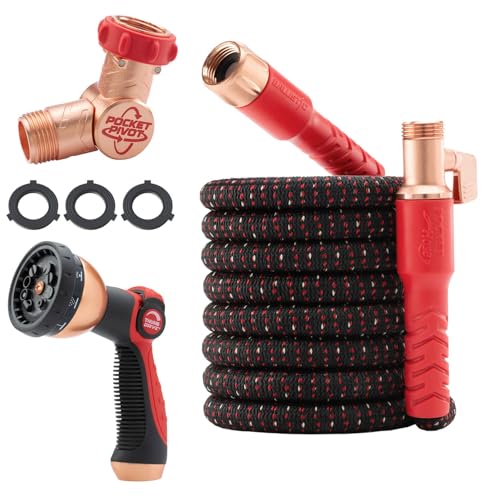
WORLD’S #1 EXPANDING HOSE — BACKED BY 100+ PATENTS: Pocket Hose Ballistic expands up to 3X into a full size hose, then shrinks back for compact, practically bone-dry storage. Lightweight, easy to handle, and built for everyday watering
How Many Uses Can an Expandable Garden Hose Expect?
Ever wondered how many tasks an expandable garden hose can actually handle before it quits? In practice, you’ll see an average lifespan under normal usage of about 1‑3 years if you keep up with maintenance. You can water lawns, wash cars, clean decks, and even fill kiddie pools, but each cycle of expansion and contraction chips away at the inner tube. To squeeze the most out of it, follow proper storage techniques for longevity: let the hose fully contract, dry it completely, and keep it in a cool, dry place away from sunlight. Avoid sharp bends, pressure‑holding when idle, and inspect regularly for cracks or leaks. With these habits, you’ll maximize the number of uses before replacement becomes inevitable. UV exposure can accelerate material degradation, shortening the hose’s useful life. Proper drainage after each use can prevent water‑induced corrosion that shortens the hose’s lifespan. Understanding the drum mechanism of a hose reel can help you avoid kinks and uneven winding.
Which Connector Materials Hold Up Best for Light‑Weight Hoses?
Choosing the right connector material can make or break a lightweight garden hose’s performance and longevity. For metal connector durability, brass tops the list: it’s stronger, corrosion‑resistant, and handles high‑temperature ductility without cracking. Chrome or nickel coating adds extra protection, and lead‑free ECO brass keeps water safe. Stainless‑steel pins, found in Bionic Steel and Dramm quick connects, also deliver leak‑proof, long‑lasting joints, especially under frequent use or harsh weather. If you prioritize plastic connector affordability, lightweight polymer fittings work fine in moderate climates. They’re cheap and corrosion‑resistant, but UV exposure can degrade them in 1‑2 years and extreme heat may cause cracks. Aluminum alternatives offer a middle ground—lightweight, anodized, and corrosion‑resistant, though they’re less common. Choose based on how often you’ll use the hose and the conditions it will face. The quick‑connect system is generally interchangeable across brands, allowing you to mix and match components for added convenience. Properly sealing the joint with plumber’s tape helps prevent leaks and extends the life of the connection. Understanding garden hose thread standards ensures compatibility when mixing different fitting sizes. Selecting the appropriate brass alloy grade can further enhance corrosion resistance and durability.
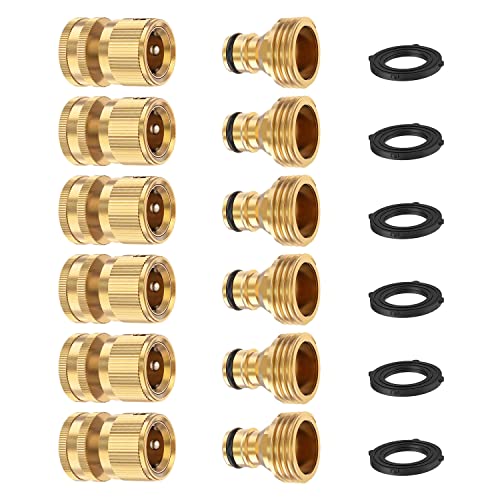
【 Premium Brass Construction】Made of high quality brass material. Durability & leak-free.
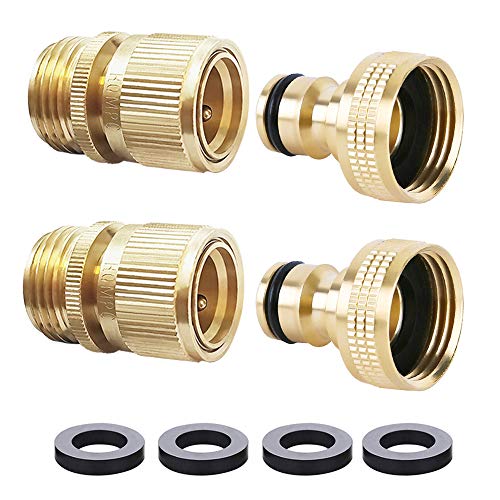
★【Standard 3/4 Inch GHT Garden Hose Quick Connect】-This garden hose quick connect sets including 2 brass female connectors + 2 brass male connectors+4 free washers.Use this hose quick connect fittings You can enjoy it work perfectly with any standard garden hose,faucets,hose bibs and watering devices.

【Solid Brass Hose Quick Connect】This hose quick connectors are with solid brass construction, heavy duty and rust proof, lasts season-after-season
Best Garden Situations for Expandable Garden Hoses vs. Rubber Hoses
After weighing connector durability, the next step is matching hose type to your garden’s layout and tasks. If you garden a small yard, patio, or city garden, an expandable hose gives you water flow flexibility while taking up almost no space. It expands three‑fold under pressure, then contracts for compact storage options, making it ideal for container plants, herb beds, or RV hookups. For larger yards with extensive flowerbeds, a rubber hose wins. Its fixed length, high durability, and resistance to kinks handle long runs and heavy‑duty watering without twisting. Choose the expandable model for light, tight‑space jobs and the rubber version for expansive, high‑pressure work. Expandable hoses are lightweight compared to bulkier rubber hoses. The flow rate of an expandable hose can be estimated by its inner diameter and water pressure. Understanding a hose’s pressure rating helps ensure it can handle the water force without bursting.

The Flexi Hose expandable garden hose automatically expands to the stated product length - roughly 3 times extension - with standard pressure when water is turned on and shortens to compact length when the water is turned off. Storing the Flexi Hose is a breeze!

WORLD’S #1 EXPANDING HOSE — BACKED BY 100+ PATENTS: Pocket Hose Ballistic expands up to 3X into a full size hose, then shrinks back for compact, practically bone-dry storage. Lightweight, easy to handle, and built for everyday watering

ORIGINAL HOSE THAT GROWS: the original “Hose That Grows” is so innovative it’s been awarded over 126 worldwide patents