You’ll find a sprinkler solenoid is universal when it uses a 24 VAC coil, a threaded base, and a color‑coded plunger—green for short‑stroke (≈1 mm), blue for medium‑stroke (≈2 mm), red for long‑stroke (≈3 mm)—that matches the valve’s pressure rating and flow direction. Verify voltage compatibility (24 VAC vs. 12 VDC or 9‑11 VDC DC‑latching) and guarantee the minimum differential pressure (≥0.5 bar for indirect, ≤50 psi for DC‑latching). Align the arrow on the valve body and check for proper wiring and seal condition. Continue and you’ll see how each brand’s fit guide and troubleshooting steps break down.
What Makes a Sprinkler Solenoid Universal?
Universal sprinker solonoids are built around three core parameters—voltage, plunger length, and base threading—that together dictate cross‑brand compatibility. You first verify voltage‑standardization: 24 V AC dominates irrigation controllers, so a universal solenoid must include a 24 V small‑base coil. Next, you assess plunger adaptability. Color‑coded short, medium, and long plungers set precise plunger positioning, and encapsulated designs protect against moisture, ensuring consistent upward motion under impulse. Finally, you evaluate threaded base stability. A universal adapter (EF/EFA) and threaded bases enable twist‑out replacement, preserving structural integrity across Toro, Hunter, Rain Bird, and similar brands. By quantifying these three metrics—voltage match, plunger length range, and thread compatibility—you confirm whether a solenoid truly functions as a universal replacement. Turn off water at the backflow device before beginning any work. You can also trace the wiring to confirm the correct voltage before installation. A common sign of a failing solenoid is irregular watering that can indicate voltage fluctuations. Most solenoids are polarity‑agnostic because they operate as simple electromagnetic actuators.

For replacing solenoids which open and close 24V automatic irrigation valves Stainless steel rod, copper core, insulated lead wires, and waterproof resin casing Compatible...
How to Decode Color‑Coded Plungers for Universal Solenoids?
A bright‑green plunger on a 24 V AC solenoid informs you it’s the short‑stroke version, typically 1 mm of travel, while a blue plunger signifies a medium‑stroke (≈2 mm) and a red plunger a long‑stroke (≈3 mm). First, note the color‑code chart; each hue corresponds to a specific travel distance and hence a defined flow rate. Second, perform plunger polarity identification by measuring coil resistance and applying a 24 VAC test pulse; correct polarity yields the expected 0.2‑0.4 A draw and a measurable displacement. Third, if displacement deviates, conduct plunger movement troubleshooting: inspect for debris, verify spring tension, and repeat the voltage test. Finally, record the travel data, compare it to the valve’s flow specifications, and confirm compatibility before installation. Some irrigation designs incorporate manual valve options for zones where electronic control is unnecessary. Understanding the solenoid valve operation helps prevent common failures. Also, verify the thread size matches the valve body to avoid mechanical incompatibility.

1/2" 24V AC SOLENOID VALVE: Heavy-duty 1/2 inch NPT, normally closed, semi-direct acting electric solenoid valve for air, non-potable water, and oil such as diesel, with reliable on/off shut-off from 1.45 to 145 PSI (0.1-10 bar)

Quick connect ports allow easy and leak free operation.

Operation Mode N/C (normally closed)
How Do Voltage and Pressure Specs Affect Universal Solenoid Compatibility?
The voltage and pressure specifications of a solenoid dictate whether it can be integrated into a universal valve system, because they directly control coil current, heating, and the minimum differential needed for the valve to open. You must compare the controller’s output (typically 24 VAC) with the solenoid’s nameplate; a 24 VAC coil on a 12 VDC source doubles current to 400‑500 mA, causing overheating. Voltage conversion requirements become critical when using DC‑latching models, which need exact 9‑11 VDC to stay within 85 % of rating. Pressure compatibility concerns arise from minimum differentials—indirect valves need ≥0.5 bar, while high‑pressure systems cap DC latching solenoids at 50 psi. Verify that pump cut‑in/out pressures stay within the valve’s range, otherwise actuation will fail. Sprinkler systems often incorporate built‑in pressure regulators to maintain consistent flow and protect solenoids from over‑pressure conditions. Proper system sizing ensures that all components operate within their designed limits. Schedule 40 PVC is generally not approved for high‑pressure irrigation lines, so alternative materials should be considered.

Captive hex plunger feature

Replacement solenoid for Rain Bird APAS, ASVF, ECV, CP, CPF model valves

Captive hex plunger feature
Which Brand‑Specific Fit Guide Do You Need? (Hunter, Rain Bird, Toro, Irritrol)
A quick glance at your irrigation controller’s brand reveals which fit guide you should follow:
If you use a Hunter controller, the DC‑latching solenoid P/N 458200 is the default retrofit option; it meets 6‑9 VDC, 4.8 Ω coil, and 200 PSI limits, eliminating most compatibility challenges. For Rain Bird systems, select the TBOSPSOL solenoid, which works with DV100/PEB100 valves and requires 9‑11 VDC on NODE‑BT or Wireless Valve Link controllers; pressure must stay below 150 PSI to avoid retrofitting issues. Toro installations lack a dedicated guide, so you must follow the general Hunter DC replacement procedure, respecting 18 AWG leads and a 150 PSI ceiling. Irritrol users also default to the Hunter DC solenoid, using 9‑11 VDC for battery controllers and observing the same pressure and wire‑distance constraints. Hunter valves are known for their robust construction and resistance to corrosion, which contributes to long‑term reliability. Regular maintenance can add life to any pump, with proper inspection extending service years beyond the typical range.

FITS ALL HUNTER PLASTIC VALVES: Works with Hunter's battery-powered controllers. Designed for battery/DC systems, not standard 24V AC controllers, so it delivers efficient, low-power pulses that open and close each valve.

Country Of Origin: China

Toro DCL Encapsulated Irritrol Irrigation Valve DC Latching Solenoid
Common Installation Issues With Universal Solenoids and How to Diagnose Them?
When you install a universal solenoid, three quantitative failure modes dominate: voltage mismatch, wiring errors, and incorrect flow direction, each measurable with a multimeter or visual inspection. First, verify that the controller output matches the solenoid rating (24 Vac or 9 Vdc). Use a multimeter on the zone wires; a deviation of more than ±5 % indicates a voltage mismatch and risks coil burnout. Second, check wiring connections for wire corrosion issues and moisture contamination problems. Inspect terminals, tighten watertight nuts, and confirm continuity; a short will read 0 Ω and an open circuit will read infinite. Third, confirm flow direction by aligning the arrow on the valve body; reverse installation shows no click and reduced pressure. Diagnose each step systematically before proceeding. Replacing the valve is often more cost‑effective than repeated rebuilding. Regularly inspect for low pressure to catch early signs of valve wear. Worn seals can also cause intermittent leaks, so examine the O‑rings during inspection. Properly grounding the controller helps prevent electrical noise that can mimic voltage mismatches.

Designed specifically for Orbit L-Series valves only - Compatible with In-Line L-Series and Anti-Siphon L-Series valves (NOT for 100-series, Jar Top, or other valve types)

The information below is per-pack only
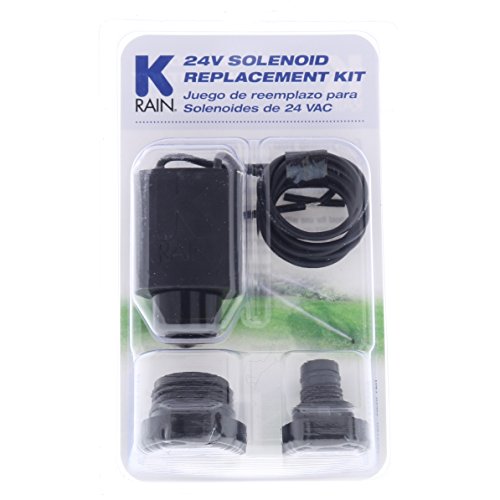
Authentic K-Rain Replacement Parts