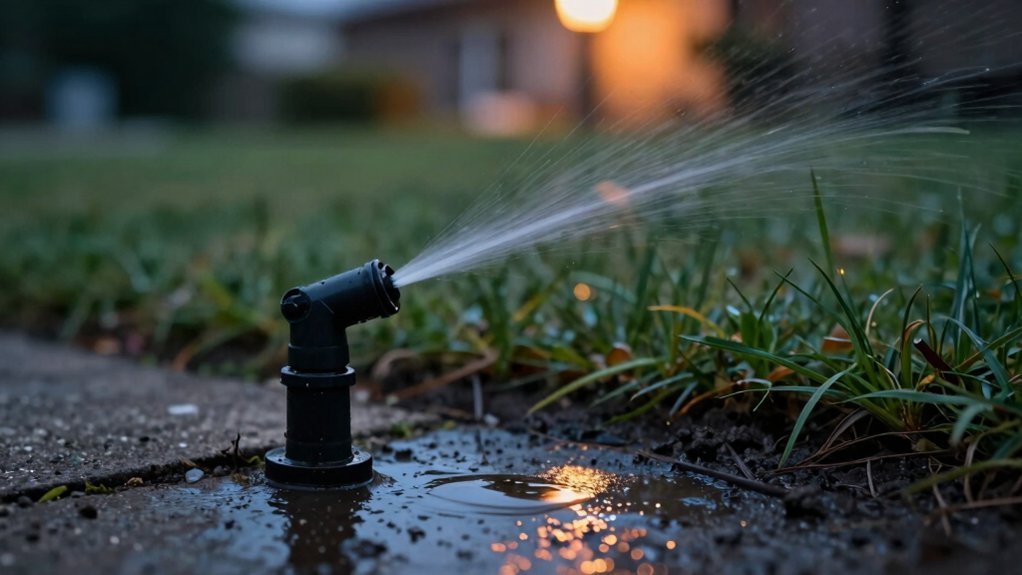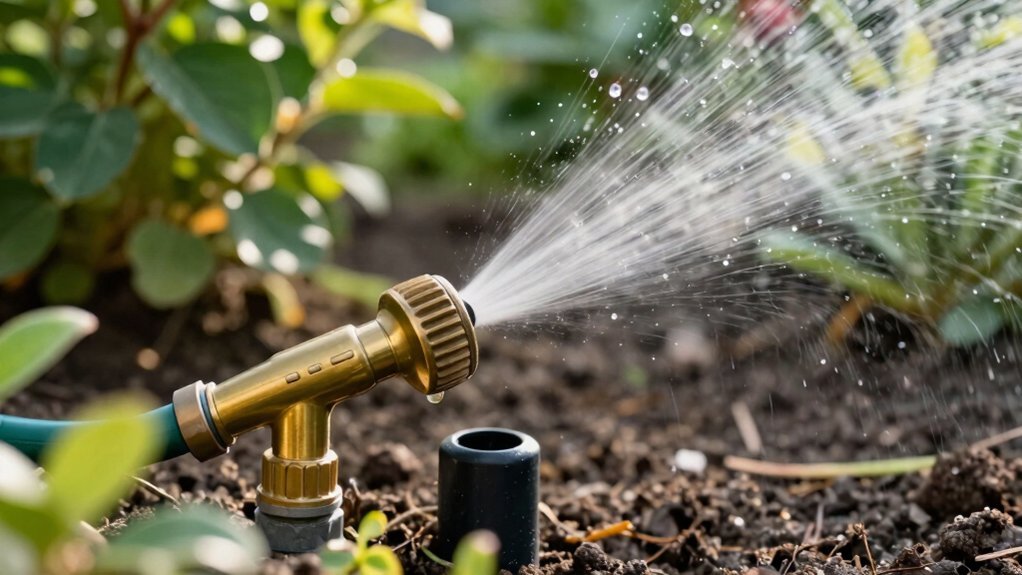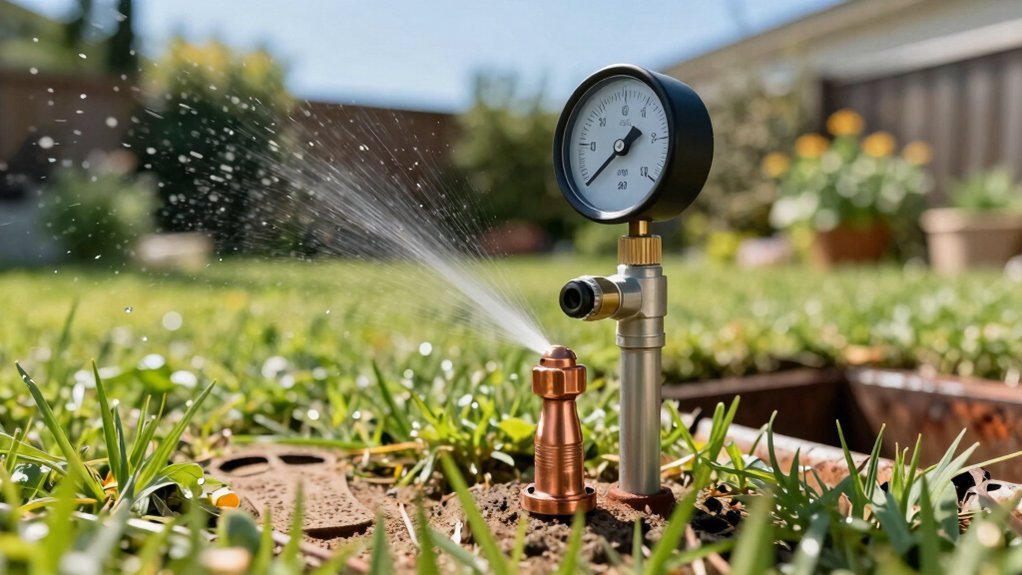
Pick a bar that fits your garden’s shape—use a fixed bar for rectangular beds and an oscillating or impact bar for irregular borders. Choose plastic for light, cheap setups, or brass metal for durability and temperature swings. Match the 1‑gal, 2‑gal, or 2.5‑gal capacity to your area and watering frequency. Select spout sizes that suit plant root zones, from micro‑sprayers for delicate annuals to rotary heads for larger beds. Opt for ergonomic, dual‑handle designs with corrosion‑resistant materials for comfortable, fatigue‑free carrying. Adjust flow‑control as needed, and you’ll uncover more tips ahead.
Choose the Right Sprinkler Bar for Your Garden
How do you match a sprinkler bar to your garden’s shape and needs? You start by mapping watering patterns to the layout: rectangular beds favor fixed bars, while irregular borders benefit from oscillating or impact bars. Measure the area, then select a bar length that yields a 10‑20‑foot width per section; telescoping bars let you fine‑tune length for tight corners. Check water pressure—30‑50 PSI is conducive for most models, and guarantee the bar’s pressure rating corresponds to your system to avoid misting. Position the sprinkler bar placement at the highest point of a slope, or use elevation mounts to counteract a 20‑30 % coverage loss. Align adjustable nozzles for a 15‑40‑foot radius, connect to a standard 3/4‑inch hose, and sync with timers for precise 1‑4‑hour cycles. This systematic approach assures efficient, uniform irrigation. Brass valves offer more durable internal components, making them a reliable choice for high‑pressure systems. Properly tighten the sprinkler head to prevent water leakage and maintain consistent flow. Understanding standard hose thread sizes helps ensure compatible connections between the hose and sprinkler bar. Selecting the correct garden hose thread size prevents leaks and maximizes water delivery.
Compare Plastic vs. Metal Sprinkler Bars
Choosing between plastic and metal sprinkler bars hinges on durability, corrosion resistance, cost, weight, and temperature performance. When you weigh durability considerations, glass‑filled nylon with reinforced rubber diaphragms handles high pressure, yet it softens under debris and UV, typically lasting 15‑20 years. Brass, by contrast, endures up to 50 years, resisting abrasion and temperature swings. Corrosion resistance factors favor polymer in aggressive water, as it won’t leach metal particles, while brass excels where municipal sand or metal particles are present. Cost‑effectiveness leans plastic: lower upfront price and lighter weight cut labor. Brass costs more and is heavier, demanding more effort to install. Temperature performance is split—brass tolerates extreme heat and freeze cycles, whereas plastic degrades faster under UV and hot water. Choose based on your garden’s climate, water quality, and budget. Plastic valves are the industry standard modern valve. Proper hose diameter selection helps maintain pressure over longer distances. Selecting the appropriate garden hose diameter ensures optimal flow rates for your irrigation system. Hose length also impacts pressure, so longer runs may require a larger diameter to compensate.
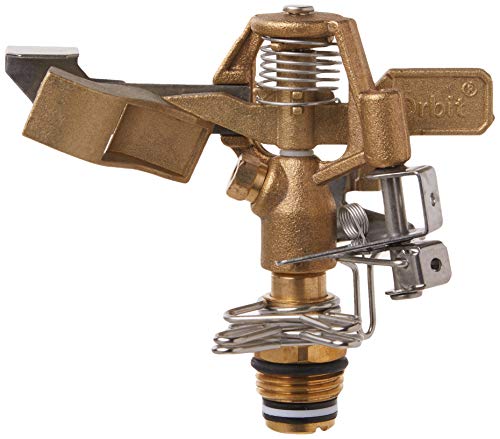
LARGE-AREA COVERAGE: Sprays up to 90 ft. in diameter, covering 6,360 sq. ft. when set to a full circle.

Wide Area Irrigation Performance: The Orbit Heavy Duty Brass Impact Sprinkler delivers dependable sprinkler performance, providing wide 360-degree coverage

For watering landscape areas which need high uniformity across the spray pattern
Select the Ideal Capacity (1‑Gal, 2‑Gal, 2.5‑Gal)
After weighing plastic versus metal for durability and cost, the next step is to match the sprinkler bar’s capacity to your garden’s size and watering habits. A 1‑gal can delivers precise water volume versatility for seedlings, herbs, and balcony pots, staying under 10 lb when full, which makes it ultra‑light for children or seniors and adds user friendly features like an easy‑fill opening. The 2‑gal model balances weight (≈16 lb) with moderate coverage, ideal for 100‑300 sq ft beds; its ergonomic handle and larger inlet reduce spill risk while preserving water volume versatility. The 2.5‑gal option cuts refill trips by two to three, handling up to 20 lb and larger lawns, yet its heft demands stronger users. Choose based on garden area, strength, and frequency to optimize efficiency. Properly cleaning the threads on the old nozzle prevents leakage when reinstalling the new one. Maintaining water pressure within the optimal range of 40‑80 psi ensures consistent spray performance. Check for kinks before each use to avoid reduced flow.
Match Sprinkler Bar Spout Size to Plant Types
When you match a sprinkler bar’s spout size to the plants you’re watering, you guarantee each species receives the right amount of moisture without waste. Choose a micro‑sprayer for delicate, shallow‑rooted annuals; its fine mist delivers low GPM, keeping soil surface moist but not saturated. For shrubs and flower beds, a low‑precipitation spray head with a quarter or half‑circle pattern aligns the spray pattern to planting layout, providing uniform coverage while limiting runoff. Larger beds or young trees benefit from rotary heads whose higher GPM matches deeper root zones, and adjustable full‑circle or three‑quarter patterns distribute water evenly. Always correlate sprinkler bar GPM to plant water needs, selecting nozzle codes that balance droplet size and pressure for ideal uptake. The spray pattern must match the spacing between heads to ensure head‑to‑head coverage. Selecting the proper nozzle code ensures compatibility with the equipment’s pressure range and flow rate. Properly assessing soil type helps determine the optimal flow rate and pressure for each head type. Modern systems often include moisture sensors that automatically adjust watering schedules based on real‑time soil conditions.

Package total 90 pcs:30 PCS Micro Sprayers with 90 Degree Fan Jet Spray Pattern,30 PCS Micro Sprayers with 180 Degree Fan Jet Spray Pattern,30 PCS Micro Sprayers with 360 Degree Fan Jet Spray Pattern,

For use with 2. 0GPM 12V pumps

Poly adjustable nozzle (181822), poly cap nut (181804), Viton flat seal (181812), low volume foaming nozzle assembly (180266), high volume foaming nozzle (182187)
Pick a Comfortable Handle Design for Easy Carry
A well‑engineered handle can make the difference between a smooth pour and a strained wrist. You should choose a dual‑handle design that distributes weight evenly, letting you carry a full 2.6‑gallon can without jerky strain. Look for corrosion‑resistant metal or UV‑stabilized plastic that holds up to sun and rain, while beech wood adds a natural aesthetic. Hinged or side‑mounted options keep the filling hole clear, letting you refill without awkward twists. Noise‑dampening handles reduce clatter when you set the can down, and secure carrying straps lock the can to your wrist or shoulder for hands‑free transport. Prioritize ergonomic positioning that aligns with your natural grip, ensuring a comfortable, fatigue‑free pour across the garden. Use plumber’s tape on any threaded connections to prevent leaks. Selecting a washer with a high flow rate ensures consistent coverage even on larger lawns. Choosing a quick‑connect fitting simplifies swapping hoses and reduces setup time.

Large 2-gallon capacity with measurement markings for precise control.

Chapin Watering Can: Designed for standard lawn and garden water tasks, the half gallon black poly water tank means it is lightweight to carry and the convenient large top opening ensures easy filling - making this watering can a versatile tool for all your watering needs

PRECISE POURING FOR PLANTS: Long & slender spout reaches deep into dense foliage to deliver hydration directly to the roots without spilling on leaves or disturbing soil
Adjust Flow‑Control for Different Watering Needs
A few simple adjustments to your flow‑control settings can match any watering need, from high‑volume rotors to delicate spray heads. You’ll set the valve to keep rotors above 50 psi while dialing spray heads down to 30 psi, then fine‑tune the knob to reduce pressure for solid streams. Use a pressure regulator to maintain consistency, preventing misting and wind drift that waste water. Install flow sensors to monitor water pressure and compare actual versus expected flow, letting you adjust spray patterns in real time. Zone‑specific valves let you allocate high pressure to rotors and lower pressure to micro‑sprinklers, preserving emitter life while delivering the precise volume each plant type requires. This technical, aesthetic approach maximizes efficiency and protects your system. Adding a pressure regulator is essential because it keeps the system within the ideal operating range and avoids damage to components. Some manufacturers embed a built‑in pressure regulator directly into the valve body, simplifying installation and ensuring accurate pressure control. Understanding nozzle flow restriction helps explain how reducing the outlet size can lower pressure while maintaining flow. The distinction between a nozzle and a valve is crucial, as a flow‑shaping device determines how the water is directed and dispersed.

Protects RV/Marine Plumbing: Keep your RV/marine plumbing safe with this brass Camco water pressure regulator. Safeguard against high-pressure city water to protect your hoses & plumbing from potential damage.
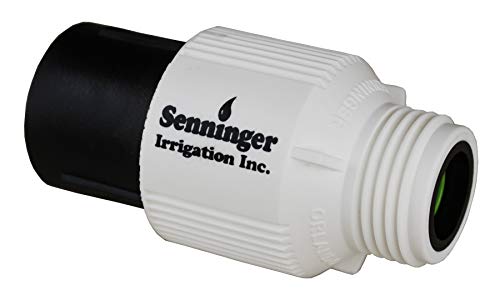
Ideal for installations requiring lower flows such as solid set, drip line, soaker hose and other low pressure agriculture, residential and commercial irrigation. This PRLG (Pressure Regulator Landscape Grade) maintains a constant outlet pressure of 25 PSI (1.72 bar) with a flow range between 0.5 - 7 GPM (114 - 1590 L/hr).
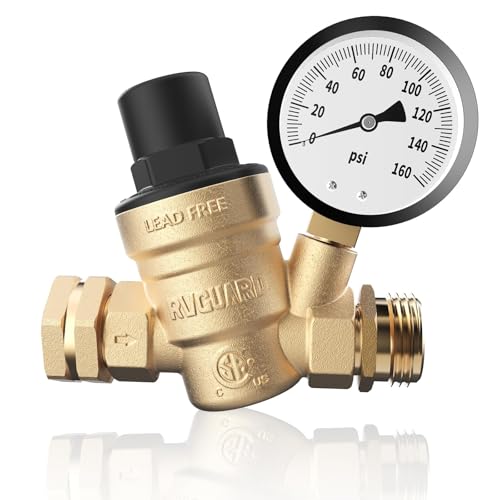
Function: Prevent water pipes from being damaged due to high pressure, suitable for campers, trailers, and RV plumbing systems.
Quick Leak‑Proof & Easy‑Fill Checklist
Fine‑tuning flow‑control sets the stage for a system that not only delivers the right pressure but also stays sealed and ready to refill in seconds. First, pick a can with a sealed cap design and a thumb‑seal lid hole; this prevents leakage while you transport water from a rain barrel or dunk bucket. Choose push‑fit hose attachments that overlap two inches to lock joints securely, and confirm that all fittings and unions are tight. Opt for durable materials such as heavy‑duty recycled milk‑gallon bottles; they resist cracking and hold up after repeated drilling. For storage efficiency, mount wire handles on the rear and hook the cans on railings, keeping them accessible yet out of the way. This checklist guarantees quick, leak‑proof refills and reliable garden watering. Use a rigid pipe to extend the watering can for deeper root watering. A typical garden hose can use up to 600 gallons per hour, so minimizing leaks is essential. Understanding the water flow rate helps you estimate the true cost of running a hose for an hour.
Maintain and Clean Your Sprinkler Bar for Longevity
When you finish watering, rinse the bar thoroughly with clean water to guarantee out soil and plant debris before any detergent or natural descaling method. Then apply a mild detergent with a soft brush, swirling water to loosen residue, and rinse again until no suds remain. For mineral buildup, soak the can in a one‑part white vinegar to two‑parts warm water solution for 30 minutes, or use a baking‑soda paste for stubborn stains. Clean the spout and rose with a bottle brush, old toothbrush, or pipe cleaner, and clear clogged holes with a toothpick. Invert the can to air‑dry completely, then apply a rust‑resistant spray. Perform regular preventative maintenance by inspecting seams, handles, and leaks, and follow proper storage techniques—store in a dry, upside‑down position away from moisture to certify longevity.