You can pull a tractor‑mounted sprinkler up to about 200 feet with a 5/8‑inch hose if the ground is smooth, the hose stays taut, and you keep water pressure between 30‑60 psi. Maintain consistent pressure—20 % swings only change flow by 10 %—and avoid friction loss by using a clean, smooth‑walled hose. Choose high gear for longer pulls at ¼‑inch application, or low gear for slower, deeper watering. Keep the hose diameter large enough to limit pressure drop, and balance weight and cost. Follow these tips for reliable performance and uncover deeper setup details ahead.
How Far Can a Tractor Sprinkler Pull on a 5/8‑Inch Hose?
How far can you pull a tractor‑mounted sprinkler on a 5/8‑inch hose? You can extend it up to 200 feet on a standard garden hose, provided the terrain meets smooth terrain requirements and you maintain consistent hose tension. The tractor’s spiked rear wheels prevent dragging on gentle slopes, and the cast‑iron body keeps the unit stable without stalling. Use a 5/8‑inch hose; heavier rubber variants may fail beyond 100 feet. Keep the hose level, avoid uphill bulk, and monitor tension to prevent kinks. At 200 feet you’ll cover roughly 13,500 sq ft with a 15‑55 ft spray radius, operating between 10‑100 PSI. Adjust speed—low gear (21 ft/h) for 1/2‑inch water flow, high gear (37 ft/h) for 1/4‑inch—while the system self‑propels via water pressure. The flow rate is also influenced by hose diameter which determines the gallons per minute achievable. 1/4‑inch hoses are ideal for light, short‑run watering tasks. Selecting the correct GHT thread ensures a leak‑free connection between hose and sprinkler.

Automated Lawn Coverage: The Orbit Traveling Tractor Water Sprinkler delivers hands-free irrigation using a traveling sprinkler design that moves along the hose path as a water powered lawn tractor

【Wide-Coverage Irrigation】Achieves uniform tractor sprinkler coverage for large lawns with wide-area water distribution. This traveling sprinkler system ensures your entire yard gets lush, healthy grass with minimal effort – perfect for lawn tractor sprinkler needs
How Do Water Pressure and Flow Rate Set Tractor Sprinkler Pull Distance?
You’ll find that the tractor‑sprinkler’s pull distance is dictated primarily by the water pressure feeding the system and the resulting flow rate through the hose. Consistent pressure ratings across the line keep the flow steady; a 20 % pressure swing yields roughly a 10 % flow change, directly shrinking or extending reach. At 60‑100 psi you can sustain 14‑20 L/min, enough to push spray 45‑50 ft with a 45‑degree arm angle, while 30‑40 psi limits spray to 15‑20 ft. Friction loss grows with hose length, so longer runs demand higher inlet pressure to maintain the optimum sprinkler design. Use pressure regulators near each nozzle to preserve consistent pressure, ensuring the pull distance stays within the calculated 60‑120 ft extra reach beyond hose length. Sprinkler head flow rates are a key factor in determining the total water demand for the system. Proper soil moisture sensors can further fine‑tune irrigation schedules, reducing waste and enhancing efficiency.
Which Gear Setting and Travel Speed Maximize Tractor Sprinkler Pull?
Choosing the right gear and travel speed is the key to extending a tractor‑sprinkler’s pull distance while keeping water application within target rates. For maximum pull, select high gear; it moves 37 ft/h and lets you stretch the hose toward the 200‑ft limit without sacrificing coverage. High gear favors distance, delivering a ¼‑inch water application rate, which is sufficient for light irrigation. If you need deeper saturation, switch to low gear—21 ft/h doubles the water application rate to ½ inch but reduces pull length. Use neutral only for spot watering where travel isn’t required. Match gear selection to field size: high gear for large, low‑need areas; low gear for smaller zones demanding more water per pass. Test both settings on site to confirm ideal performance. The sprinkler’s adjustable spray width can be set from 11 to 56 feet to suit different lawn configurations. Proper system design ensures that water pressure remains within optimal ranges for consistent sprinkler performance. Modern systems often incorporate moisture sensors to further reduce waste.

DRIVE COMPONENT:Replacement worm gear designed to support the internal transmission operation of compatible yard tractor sprinkler systems.

DRIVE FUNCTION: Replaces a worn worm gear in compatible tractor sprinkler mechanisms to help restore internal drive movement during lawn watering

3-PACK VALUE: Includes three replacement main drive gears, giving you extras on hand for future repairs.
How Do Hose Length, Diameter, and Friction Influence Tractor Sprinkler Pull?
Gear choice sets the speed, but the hose itself determines how far that speed can be sustained. You’ll see friction loss rise linearly with hose length; each 100‑ft segment adds a fixed pressure drop that compounds over the run. Selecting a larger diameter cuts the water‑wall contact percentage, so a 1‑inch hose at 10 GPM loses far less PSI than a ¾‑inch line at the same flow. Material matters: smooth interior surface quality in polyethylene or PVC reduces friction compared with rough metal or corroded interiors, where turbulence spikes pressure loss. Balance diameter against weight and cost, and keep total friction below the 5 ft/s velocity threshold to maintain reliable tractor sprinkler pull. Polyethylene pipe allows insert fittings, which can simplify connections and reduce additional friction points. Ensure the pipe meets the applicable plumbing code for irrigation, as Schedule 40 PVC is often prohibited for sprinkler systems due to its pressure rating limitations. Understanding the difference between garden hose thread and NPT connections helps select the proper fittings for low‑pressure irrigation setups. A well‑designed layout can also minimize sharp bends that increase turbulence and pressure loss.

Tubing Details - Black vinyl tubing, 1 inch (25.4mm) inner diameter, 1-1/4 inch outer diameter, wall thickness 1/8 inch, 10 feet length. Working temperature: 23°F to 149°F (-5°C to 65°C), Hardness: 73A (firm), Max working Pressure: 30PSI. Can be used for low pressure applications.

Pool hose inside diameter: 1 inch; length: 100 feet, Come with 4 hose clamps
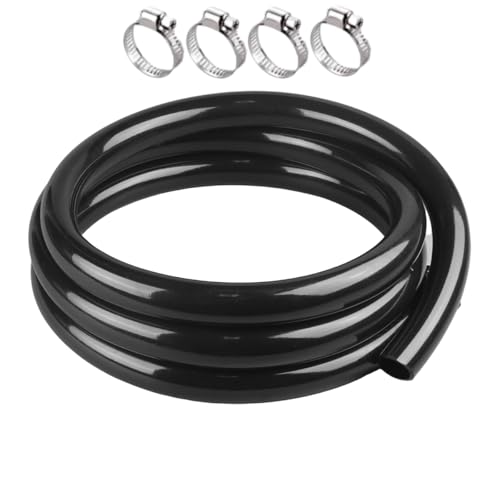
Tubing Details - Black PVC vinyl tubing, ID: 1", OD: 1-1/4", 10 feet, Wall thickness: 3.2mm; Hardness: 73A (firm); Temperature Range : 23°F to 149°F (-5°C to 65°C); Working Pressure: 30PSI.
How to Optimize Your Setup for the Longest Reliable Tractor Sprinkler Pull?
A solid setup starts with a balanced hose‑drum‑anchor system that lets the turbine‑driven drum unwind smoothly while the cart stays on a straight, tension‑free path. Begin by feeding 30 ft of hose behind the drum, then attach the front end to the hydrant and the rear to the travel cart. Use hose tension management: keep the hose loose enough to avoid drag but tight enough to prevent sagging, and anchor the cable opposite the field end to maintain direction. For ramp placement optimization, position the shut‑off ramp exactly where you want the cart to stop; align the front wheel trigger with the ramp and guarantee the back wheels bypass the plunger. Select nozzle size and pressure that match a 30‑60 PSI inlet, and run the sprinkler 30‑45 minutes before engaging travel gear to stabilize flow. This precise arrangement maximizes pull length while preserving reliability. Attach arms to side of sprinkler. Properly grouping plants by sun exposure can further reduce water waste. Understanding flow rate limits helps prevent overloading the hose and ensures consistent coverage. Water conservation is a key benefit of automated irrigation systems.