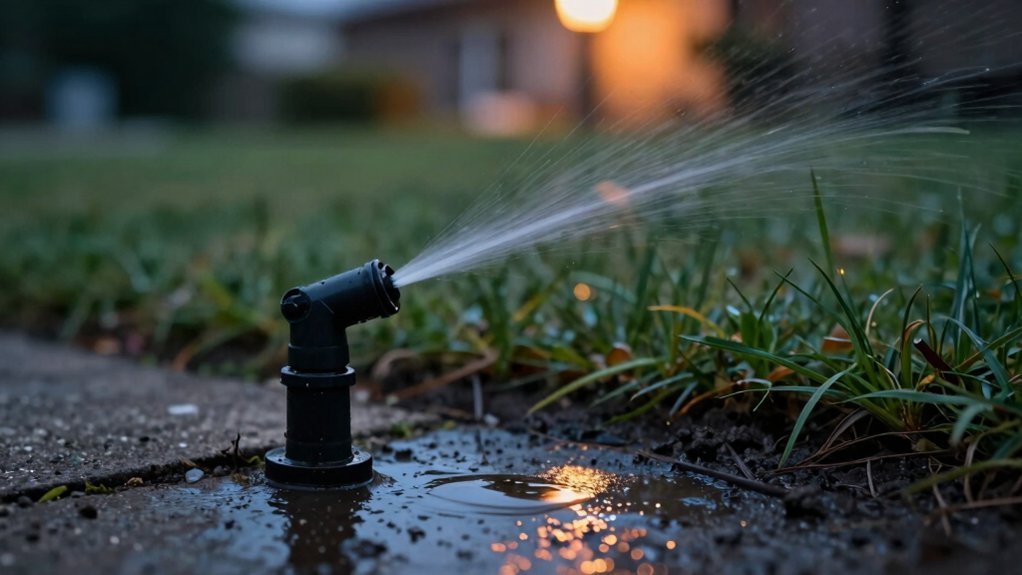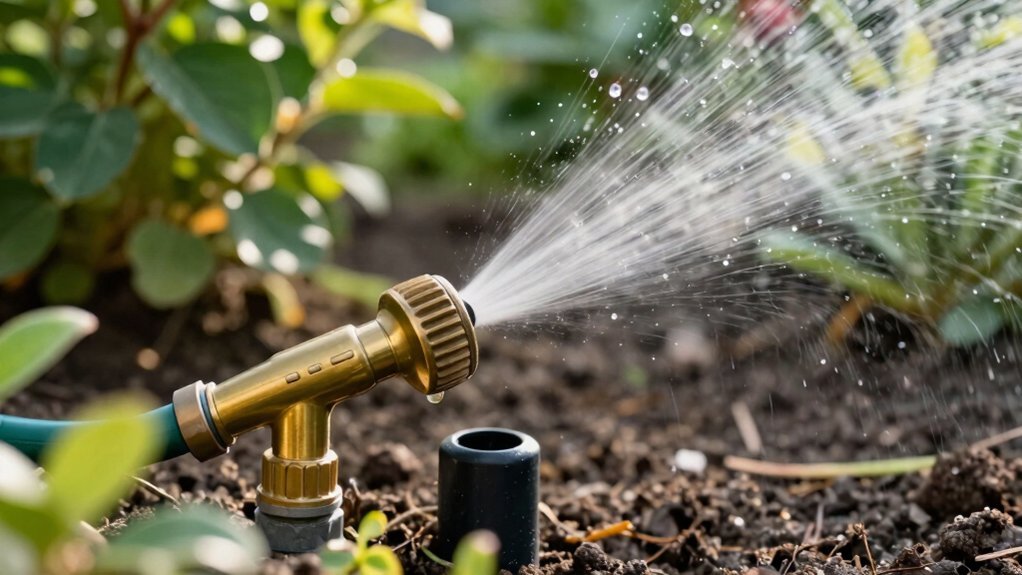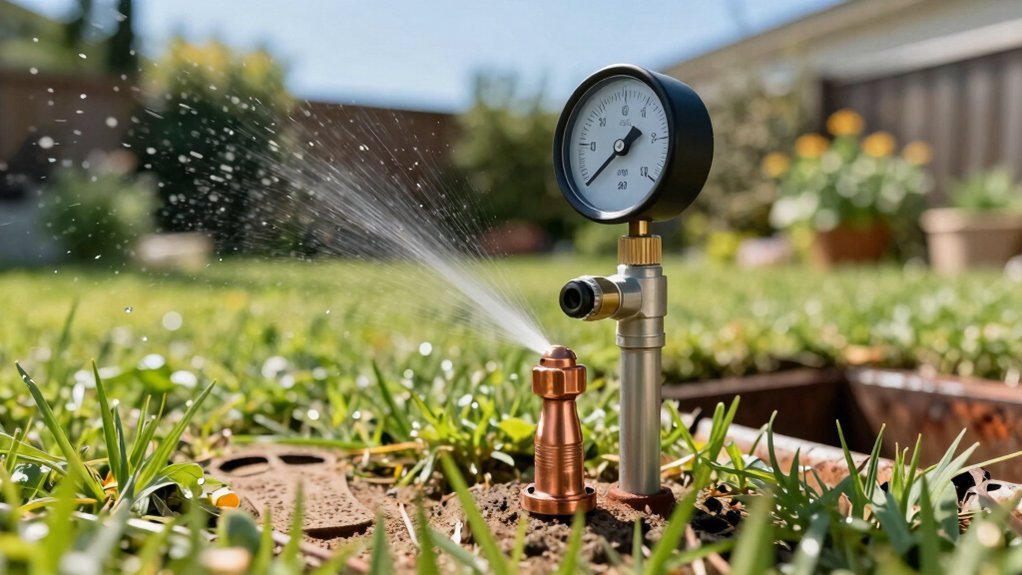
First check the current PSI with a gauge, then shut off all fixtures and turn on the farthest zone. Open the main valve and unscrew each head, rinse the filter, and soak it in a 50/50 vinegar‑water mix for 30 minutes. Flush the line by removing the last head and running water for 3‑5 minutes before re‑attaching it. Adjust rotor or impact heads using the appropriate key or collar to reach 30‑50 PSI, ensuring proper coverage and preventing dry patches—continue for further step‑by‑step guidance.
Lower Sprinkler Pressure in Just 5 Minutes
Even if you’ve never measured it before, you can lower sprinkler pressure in under five minutes by first confirming the current PSI with a gauge and pitot tube (or adapter tee for spray heads), shutting off all household fixtures, and activating the farthest zone. Next, open the main water valve and each sprinkler shut‑off counterclockwise until fully open, keeping the backflow preventer handles parallel to the pipe. Then, unscrew each head, rinse the filter screen, brush debris, and soak the head in a 50/50 vinegar‑water mix for 30 minutes before reinstalling. Finally, flush the line by removing the last head, running water for three to five minutes, and re‑attaching the head. This sequence evenly distributes water and helps minimize sprinkler noise while restoring ideal pressure. The garden’s well pump provides 4 gallons per minute, ensuring adequate flow after the restrictive devices are removed. Proper pump sizing depends on elevation change and system flow requirements. Understanding municipal water pressure can also guide adjustments for optimal performance. Installing a proper pressure regulator at the well outlet can further stabilize system pressure and protect downstream components.

Easily converts a 1/2" riser or existing shrub spray to low volume Drip watering system

25 PSI Pressure Regulators: the 25 PSI preset pressure regulators are designed to reduce and regulate incoming water pressure, ensuring a precise operating pressure of 25 PSI for drip irrigation and micro sprinkler systems; With an inlet size of ¾" FHT and outlet size of ¾" MHT, they easily connect to standard outdoor faucets, water hose or irrigation systems
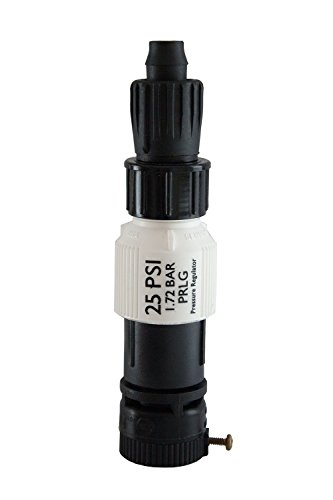
Ensure accurate and reliable drip system performance with this all-in-one faucet to drip irrigation connection kit. Connect your drip irrigation system to your water supply, keep out debris with a filter, maintain optimally low flow water pressure, and prevent backflow all with a single pre-assembled unit.
Why Proper Sprinkler Pressure Keeps Your Lawn Green
After lowering the pressure, you’ll notice how maintaining the correct PSI keeps the lawn uniformly green. Proper pressure (30–50 PSI) forces each head to emit larger droplets, reducing evaporation and wind drift. The resulting steady flow delivers water directly to root zones, encouraging deep root development and preventing stress‑induced browning. Consistent coverage eliminates dry patches and weed hotspots, which in turn lowers fertilizer and disease‑control needs. By keeping pressure within the ideal range, the system operates at peak efficiency, cutting runoff and overspray that waste water and raise utility costs. This disciplined approach supports long‑term maintenance, extending component life and preserving soil integrity while delivering a lush, resilient lawn. For most residential hoses, optimal performance is achieved between 40–80 psi and ensures even distribution across all sprinkler heads. Modern systems often incorporate soil moisture sensors to fine‑tune irrigation timing and further reduce water waste. Understanding sprinkler head spacing helps achieve uniform coverage and prevents overlapping spray zones.
Diagnose Over‑Pressure Symptoms Before Adjusting
Where do you see the tell‑tale signs of over‑pressure before even touching a wrench? First, scan the lawn for dry patches and misted edges; high pressure forces water into a fine spray that skips distant zones. Next, check for soggy spots or runoff near heads—excess flow overwhelms soil absorption. Listen for buzzing pumps or rattling valves, which indicate pressure spikes. Then, inspect each head for bending, corrosion, or misalignment; physical damage often stems from sustained over‑pressure. Finally, monitor water meter measurements while the system runs and compare them to design specifications. Any deviation suggests a flaw in pipe sizing or valve settings. By systematically analyzing system design flaws and correlating observed symptoms, you pinpoint over‑pressure before making adjustments. A well‑designed system typically loses about 15 lbs of pressure from the source to the head. Selecting the proper garden hose fitting ensures a secure connection that can withstand these pressures. Longer hoses increase friction loss which can further reduce pressure at the sprinkler heads. Use the correct standard hose thread to match your sprinkler’s connector size.
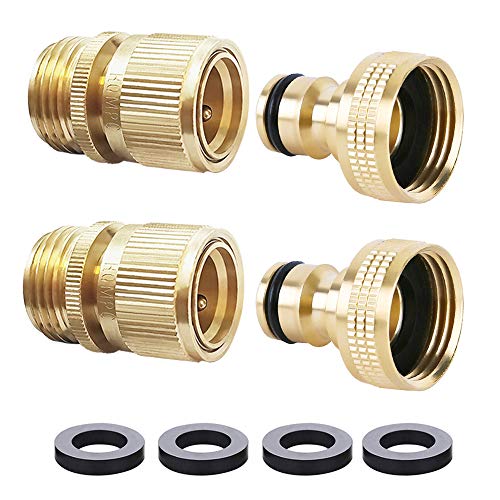
★【Standard 3/4 Inch GHT Garden Hose Quick Connect】-This garden hose quick connect sets including 2 brass female connectors + 2 brass male connectors+4 free washers.Use this hose quick connect fittings You can enjoy it work perfectly with any standard garden hose,faucets,hose bibs and watering devices.

【Universal 3/4" GHT Fit Most Garden Equipment】 This versatile garden hose adapter seamlessly bridges connections, making it the ideal quick connect garden hose fitting for faucets, sprinklers, spray nozzles, pressure washers, and other watering tools

Durable Stainless Steel Garden Hose Adapter Set: Made from stainless steel, these 3/4 inch GHT garden hose quick connect fittings are built for outdoor water hose connections. The male and female hose adapter set works as a garden hose connector, water hose adapter, and hose fitting for sprinklers, pressure washers, faucets, and hose bibs. Quick connect design helps make instant connection easy, while the heavy duty body supports high pressure water flow.
Reduce Pressure on Rotor Heads – Step‑by‑Step
When you notice the sprinkler head spraying beyond its intended arc, start by turning off the water and locating the adjustment screw or key specific to your rotor type; then follow these steps.
- Identify your rotor model (Hunter, Orbit, Rain Bird).
- Insert the appropriate plastic key or flat‑head screwdriver into the top adjustment socket or pattern slot.
- Turn clockwise to reduce pressure: for Hunter, a full 360° turn shortens the arc; for Orbit, a counter‑clockwise turn while holding the turret at its right stop narrows the pattern; for Rain Bird, tighten the radius screw.
- Verify that the nozzle remains seated; excess turns cause adjustable nozzle wear.
- Perform off season maintenance by cleaning the nozzle, checking the screw threads, and confirming the seal before re‑pressurizing.
Adjust the left stop to fine‑tune the arc without forcing the turret.
Understanding the spray pattern helps you select the correct nozzle size for optimal coverage.
Ensuring uniform coverage across the lawn prevents water waste and promotes healthy growth.
Consider the soil type when adjusting pressure, as sandy soils may require a finer mist to reduce runoff.

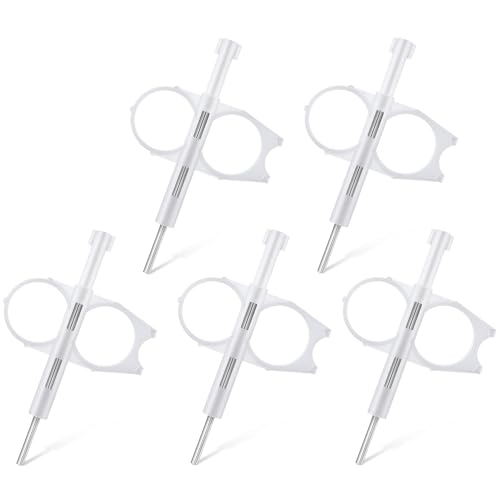
[Professional Sprinkler Adjustment Tool Set]This sprinkler head adjustment tool allows precise arc and radius tuning for lawn irrigation systems, helping improve watering accuracy and coverage

⭐【4 Pack Sprinkler Key Tool Set】This 4 pack sprinkler head tool set includes 1 pc rotor adjustment screwdriver and 3 pcs rotary sprinkler tool. Designed compatible with Rain Bird and compatible with Hunter, this sprinkler head adjustment tool kit helps you easily adjust rotor heads, replace nozzles, and maintain your sprinkler system with one convenient set
Adjust Impact Sprinkler Stops to Balance Pressure‑Based Coverage
One effective way to balance pressure‑based coverage is to adjust the impact sprinkler’s friction collars and trip lever so the spray arc matches your lawn’s layout. First, pinch the friction collars together to narrow the arc; each degree of closure reduces the spray pattern width and concentrates nozzle coverage where you need it. If you require a broader sweep, separate the collars to expand the arc up to 360°. Next, set the trip lever: flip it up for full‑circle operation, or push it down for partial circles, ensuring the lever sits outside the trip stops. Adjust the trip pin by screwing it in slightly to diffuse the stream into a fan spray pattern, which softens the spray and improves even nozzle coverage across the target area. Finally, fine‑tune the deflector shield clockwise to shorten radius and soften the mist, achieving a balanced pressure distribution without altering source flow. Impact heads require at least 15 psi to function properly.
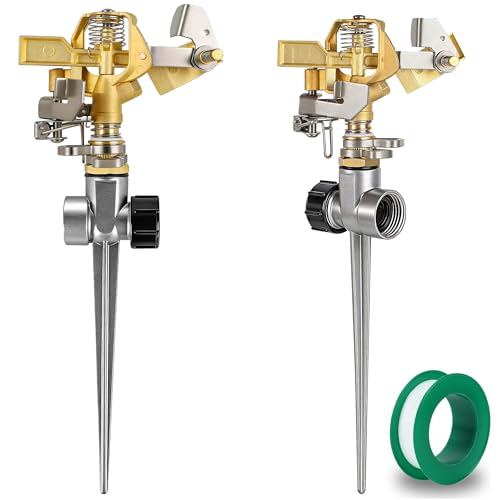
All-Metal Construction: Built for durability and long-term outdoor performance, this sprinkler features a heavy-duty brass impact sprinkler head and a sturdy aluminum alloy spike base. It is completely waterproof and rust-proof, ensuring reliable operation season after season.

【ALL METAL DESIGN FOR DURABILITY】Both the base and the head of this impact sprinkler are constructed from long-lasting zinc alloy. Zinc alloy makes the sprinkler resistant to rust and corrosion. And its all-metal construction is designed to hold up against the typical wear and tear that most impact sprinklers experience, like moisture and severe weather conditions, giving you years of dependable use.

Package Includes:Measuring 4.9 inches in height and 4.7 inches in length. Compatible with 1/2-inch water tubes, includes tripod sprinkler and sprinkler hose
Choose the Correct Nozzle Size for Flow Control
Choosing the right nozzle size is essential for controlling flow and preserving balanced pressure across your irrigation zone. Consult nozzle sizing charts to match the desired GPM with the system’s operating pressure. For a residential rotor set at 45 PSI, a full‑circle 8 GPM nozzle, a half‑circle 4 GPM, or a quarter‑circle 2 GPM will keep sprinkler head nozzle flow within limits. Sum the individual GPM values; if the total exceeds the 16‑18 GPM zone capacity, reduce nozzle size—e.g., replace an 8 GPM with a 6 GPM and a 4 GPM with a 3 GPM. Align arc coverage by pairing quarter‑circle nozzles (2 GPM) with half‑circle (4 GPM) and full‑circle (8 GPM) units. Maintain uniform spacing (30‑40 in) to preserve even pressure and prevent overspray. The nozzle shape also influences flow speed, with streamlined designs reducing turbulence and increasing efficiency. Proper spray pattern selection further optimizes water distribution and minimizes waste. Selecting the appropriate quick‑fill gas can nozzle ensures a leak‑free connection and consistent performance.

PRECISION ARC CONTROL FROM 0° TO 360°: Get pinpoint accuracy for any zone shape or edge. Whether you're watering a narrow walkway or full lawn circle, fine-tuned arc settings ensure no water is wasted.

Matched precipitation rates across sets and across patterns in 5 series, 8 series, 10 series, 12 series, and 15 series

Fits all RainBird Sprinklers and Shrub Adapters
Quick Field Checks to Verify Your Adjustments
A quick field check starts with a static pressure test: attach a gauge to the outdoor faucet, shut off all indoor water use, fully open the faucet, and record the psi reading—repeat at several locations and use the lowest value for calculations, since residential systems typically sit between 30 and 50 psi. Next, verify closed valves by walking the line from the gauge to each zone shut off valve, confirming none are unintentionally throttling flow. Perform a dynamic pressure test at the filter test port; compare the static reading to the dynamic one—significant drop flags a blockage or hidden sprinkler line diagnosis need. Observe each head for proper pop‑up and throw; misting indicates excess pressure, dry spots signal deficiency. Record findings, adjust zone shut off valves, and repeat tests until the system holds a stable 35 psi during operation. Understanding pipe size is essential because larger diameters reduce friction loss and help maintain desired pressure across the network. Proper sizing of the main line ensures consistent flow to all zones. Properly burying sprinkler lines at a depth of 6 to 12 inches helps protect them from frost damage and foot traffic.